
Contents
- 🚫 Introduction to DDoS Attacks
- 🌐 The Evolution of DDoS
- 🤖 Types of DDoS Attacks
- 📊 The Impact of DDoS on Businesses
- 🚨 Real-World Examples of DDoS Attacks
- 🛡️ Defending Against DDoS Attacks
- 📈 The Future of DDoS Attacks
- 👮♂️ The Role of Law Enforcement in DDoS
- 💻 DDoS Attack Tools and Techniques
- 📊 Measuring the Effectiveness of DDoS Mitigation
- 🤝 Collaboration and Information Sharing
- 🔒 The Importance of Cybersecurity in Preventing DDoS
- Frequently Asked Questions
- Related Topics
Overview
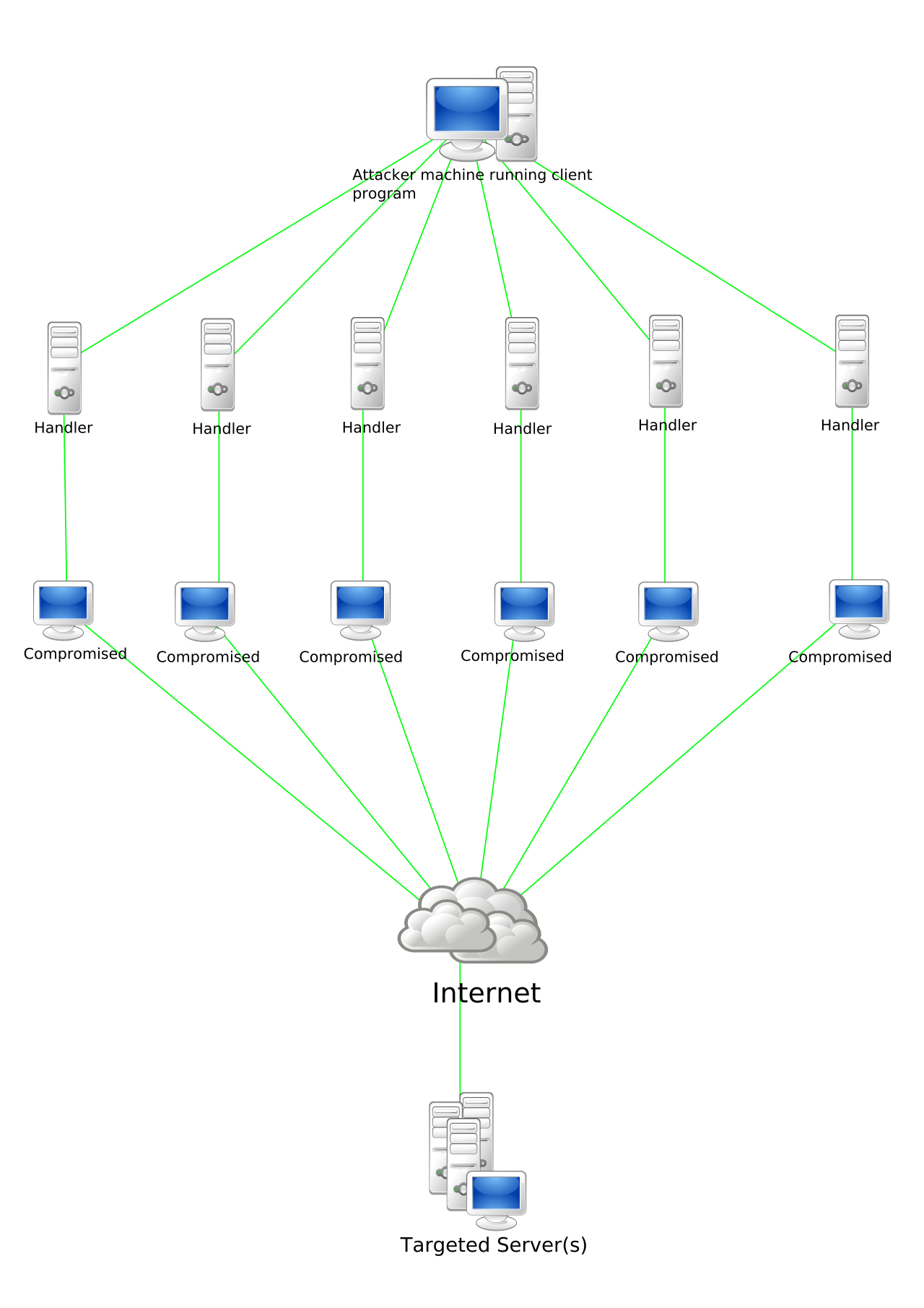
A DDoS attack, short for Distributed Denial-of-Service, is a malicious attempt to disrupt the normal traffic of a targeted server, service, or network by overwhelming it with a flood of internet traffic. This is often achieved through a network of compromised devices, known as bots or zombies, which are controlled remotely by an attacker. The history of DDoS attacks dates back to the early 2000s, with notable instances including the attack on Yahoo! in 2000 and the more recent assault on Dyn in 2016, which affected major websites like Twitter and Netflix. The impact of DDoS attacks can be severe, leading to significant financial losses and reputational damage. As technology advances, so do the methods and tools used by attackers, making it crucial for organizations to stay vigilant and implement robust security measures. With a vibe score of 8, indicating a high level of cultural energy and relevance, the topic of DDoS attacks is both controversial and highly debated, with experts arguing over the best defense strategies and the ethical implications of such attacks.
🚫 Introduction to DDoS Attacks
A DDoS attack is a type of cyber attack that seeks to make a machine or network resource unavailable to its intended users by temporarily or indefinitely disrupting services of a host connected to a network. This is typically accomplished by flooding the targeted machine or resource with superfluous requests in an attempt to overload systems and prevent some or all legitimate requests from being fulfilled. The range of attacks varies widely, spanning from inundating a server with millions of requests to slow its performance, overwhelming a server with a substantial amount of invalid data, to submitting requests with an illegitimate IP address. According to cybersecurity experts, DDoS attacks are becoming increasingly common and can have devastating effects on businesses and individuals. For example, a DDoS attack on a bank can prevent customers from accessing their accounts, leading to financial losses and damage to the bank's reputation.
🌐 The Evolution of DDoS
The evolution of DDoS attacks has been significant over the years. From the early days of internet usage, DDoS attacks have been a major concern for cybersecurity experts. The first recorded DDoS attack occurred in 1996, when a university student launched a DDoS attack on a server using a malware program. Since then, DDoS attacks have become more sophisticated and frequent, with the use of botnets and other malicious software. Today, DDoS attacks are a major threat to cybersecurity, with the potential to cause significant financial losses and damage to reputation. Companies like Akamai and Cloudflare are working to develop new technologies to prevent and mitigate DDoS attacks.
🤖 Types of DDoS Attacks
There are several types of DDoS attacks, including volumetric attacks, protocol attacks, and application layer attacks. Volumetric attacks involve flooding a network with a large amount of traffic in an attempt to overwhelm it. Protocol attacks involve exploiting vulnerabilities in network protocols to disrupt communication. Application layer attacks involve targeting specific applications or services to disrupt their functionality. For example, a DDoS attack on an e-commerce website can prevent customers from making purchases, leading to financial losses. Companies like Imperva and F5 are working to develop new technologies to prevent and mitigate these types of attacks.
📊 The Impact of DDoS on Businesses
The impact of DDoS attacks on businesses can be significant. A DDoS attack can prevent customers from accessing a company's website or services, leading to financial losses and damage to reputation. According to a study by Ponemon Institute, the average cost of a DDoS attack is over $1 million. Additionally, DDoS attacks can also lead to data breaches, which can result in the theft of sensitive customer data. Companies like Google and Amazon are working to develop new technologies to prevent and mitigate DDoS attacks. For example, Google Cloud offers a range of DDoS protection services to help businesses protect themselves against DDoS attacks.
🚨 Real-World Examples of DDoS Attacks
There have been several high-profile DDoS attacks in recent years. For example, in 2016, a DDoS attack on Dyn caused widespread outages and disruptions to major websites such as Twitter and Netflix. In 2017, a DDoS attack on memcached servers caused significant disruptions to several major websites. These attacks highlight the importance of cybersecurity and the need for businesses to take steps to protect themselves against DDoS attacks. Companies like Cyberark and Check Point are working to develop new technologies to prevent and mitigate DDoS attacks.
🛡️ Defending Against DDoS Attacks
Defending against DDoS attacks requires a multi-layered approach. This includes implementing firewalls and intrusion detection systems to detect and block malicious traffic. Additionally, businesses can use content delivery networks and load balancing to distribute traffic and prevent overload. Companies like F5 and Citrix are working to develop new technologies to help businesses defend against DDoS attacks. For example, F5 Big-IP offers a range of DDoS protection services to help businesses protect themselves against DDoS attacks.
📈 The Future of DDoS Attacks
The future of DDoS attacks is likely to involve more sophisticated and targeted attacks. As IoT devices become more prevalent, they are likely to be used in DDoS attacks, making it more difficult for businesses to defend themselves. Additionally, the use of AI and ML in DDoS attacks is likely to increase, making it more challenging for businesses to detect and mitigate these attacks. Companies like Google and Microsoft are working to develop new technologies to prevent and mitigate DDoS attacks. For example, Google Cloud AI offers a range of DDoS protection services to help businesses protect themselves against DDoS attacks.
👮♂️ The Role of Law Enforcement in DDoS
The role of law enforcement in DDoS attacks is critical. Law enforcement agencies can help to investigate and prosecute individuals who launch DDoS attacks. Additionally, law enforcement agencies can work with businesses to provide guidance and support on how to prevent and mitigate DDoS attacks. Companies like FBI and Europol are working to develop new technologies to help law enforcement agencies investigate and prosecute DDoS attacks. For example, the FBI IC3 offers a range of cybercrime reporting services to help businesses report and investigate cybercrimes.
💻 DDoS Attack Tools and Techniques
There are several DDoS attack tools and techniques that are used by attackers. These include botnets, malware, and social engineering. Botnets are networks of compromised devices that are used to launch DDoS attacks. Malware is software that is designed to harm or exploit a computer system. Social engineering is the use of psychological manipulation to trick individuals into divulging sensitive information. Companies like Symantec and Trend Micro are working to develop new technologies to prevent and mitigate DDoS attacks. For example, Symantec Endpoint Protection offers a range of DDoS protection services to help businesses protect themselves against DDoS attacks.
📊 Measuring the Effectiveness of DDoS Mitigation
Measuring the effectiveness of DDoS mitigation is critical. This can be done by monitoring network traffic and system performance. Additionally, businesses can use DDoS simulation tools to test their defenses and identify vulnerabilities. Companies like Imperva and F5 are working to develop new technologies to help businesses measure the effectiveness of DDoS mitigation. For example, Imperva Incapsula offers a range of DDoS protection services to help businesses protect themselves against DDoS attacks.
🤝 Collaboration and Information Sharing
Collaboration and information sharing are critical in preventing and mitigating DDoS attacks. Businesses can work together to share information and best practices on how to prevent and mitigate DDoS attacks. Additionally, businesses can work with cybersecurity experts and law enforcement agencies to stay informed about the latest threats and trends. Companies like ISC2 and SANS Institute are working to develop new technologies to help businesses collaborate and share information on DDoS attacks. For example, the ISC2 Cybersecurity Conference offers a range of cybersecurity training services to help businesses stay informed about the latest threats and trends.
🔒 The Importance of Cybersecurity in Preventing DDoS
The importance of cybersecurity in preventing DDoS attacks cannot be overstated. Businesses must take a proactive approach to cybersecurity, including implementing firewalls and intrusion detection systems, as well as providing cybersecurity training to employees. Additionally, businesses must stay informed about the latest threats and trends, and work with cybersecurity experts and law enforcement agencies to stay ahead of the threats. Companies like Cyberark and Check Point are working to develop new technologies to help businesses protect themselves against DDoS attacks. For example, Cyberark Privileged Access Security offers a range of DDoS protection services to help businesses protect themselves against DDoS attacks.
Key Facts
- Year
- 2000
- Origin
- USA
- Category
- Cybersecurity
- Type
- Cyber Threat
Frequently Asked Questions
What is a DDoS attack?
A DDoS attack is a type of cyberattack that seeks to make a machine or network resource unavailable to its intended users by temporarily or indefinitely disrupting services of a host connected to a network. This is typically accomplished by flooding the targeted machine or resource with superfluous requests in an attempt to overload systems and prevent some or all legitimate requests from being fulfilled. For more information, see DDoS.
How can I protect my business from DDoS attacks?
To protect your business from DDoS attacks, you should implement a multi-layered approach to cybersecurity. This includes implementing firewalls and intrusion detection systems to detect and block malicious traffic. Additionally, you can use content delivery networks and load balancing to distribute traffic and prevent overload. For more information, see Cybersecurity.
What are the different types of DDoS attacks?
There are several types of DDoS attacks, including volumetric attacks, protocol attacks, and application layer attacks. Volumetric attacks involve flooding a network with a large amount of traffic in an attempt to overwhelm it. Protocol attacks involve exploiting vulnerabilities in network protocols to disrupt communication. Application layer attacks involve targeting specific applications or services to disrupt their functionality. For more information, see DDoS Attack.
How can I measure the effectiveness of DDoS mitigation?
Measuring the effectiveness of DDoS mitigation is critical. This can be done by monitoring network traffic and system performance. Additionally, you can use DDoS simulation tools to test your defenses and identify vulnerabilities. For more information, see DDoS Mitigation.
What is the role of law enforcement in DDoS attacks?
The role of law enforcement in DDoS attacks is critical. Law enforcement agencies can help to investigate and prosecute individuals who launch DDoS attacks. Additionally, law enforcement agencies can work with businesses to provide guidance and support on how to prevent and mitigate DDoS attacks. For more information, see Law Enforcement.
How can I stay informed about the latest DDoS threats and trends?
To stay informed about the latest DDoS threats and trends, you should work with cybersecurity experts and law enforcement agencies to stay informed about the latest threats and trends. Additionally, you can attend cybersecurity conferences and cybersecurity training sessions to stay up-to-date on the latest information. For more information, see Cybersecurity.
What is the importance of cybersecurity in preventing DDoS attacks?
The importance of cybersecurity in preventing DDoS attacks cannot be overstated. Businesses must take a proactive approach to cybersecurity, including implementing firewalls and intrusion detection systems, as well as providing cybersecurity training to employees. For more information, see Cybersecurity.