
Contents
- 🏛️ Introduction to the Congress of Vienna
- 📅 Historical Context: The Rise and Fall of Napoleon
- 👥 Key Players: The Representatives of European Powers
- 📝 The Congress of Vienna: Objectives and Outcomes
- 🗺️ Redrawing the Map of Europe: Territorial Adjustments
- 🤝 The Role of Klemens von Metternich: Chairman of the Congress
- 📊 The Congress of Vienna: A Balance of Power
- 🔍 The Legacy of the Congress of Vienna: Lasting Impact
- 🌎 The Congress of Vienna in a Global Context: International Relations
- 📚 Conclusion: The Significance of the Congress of Vienna
- Frequently Asked Questions
- Related Topics
Overview
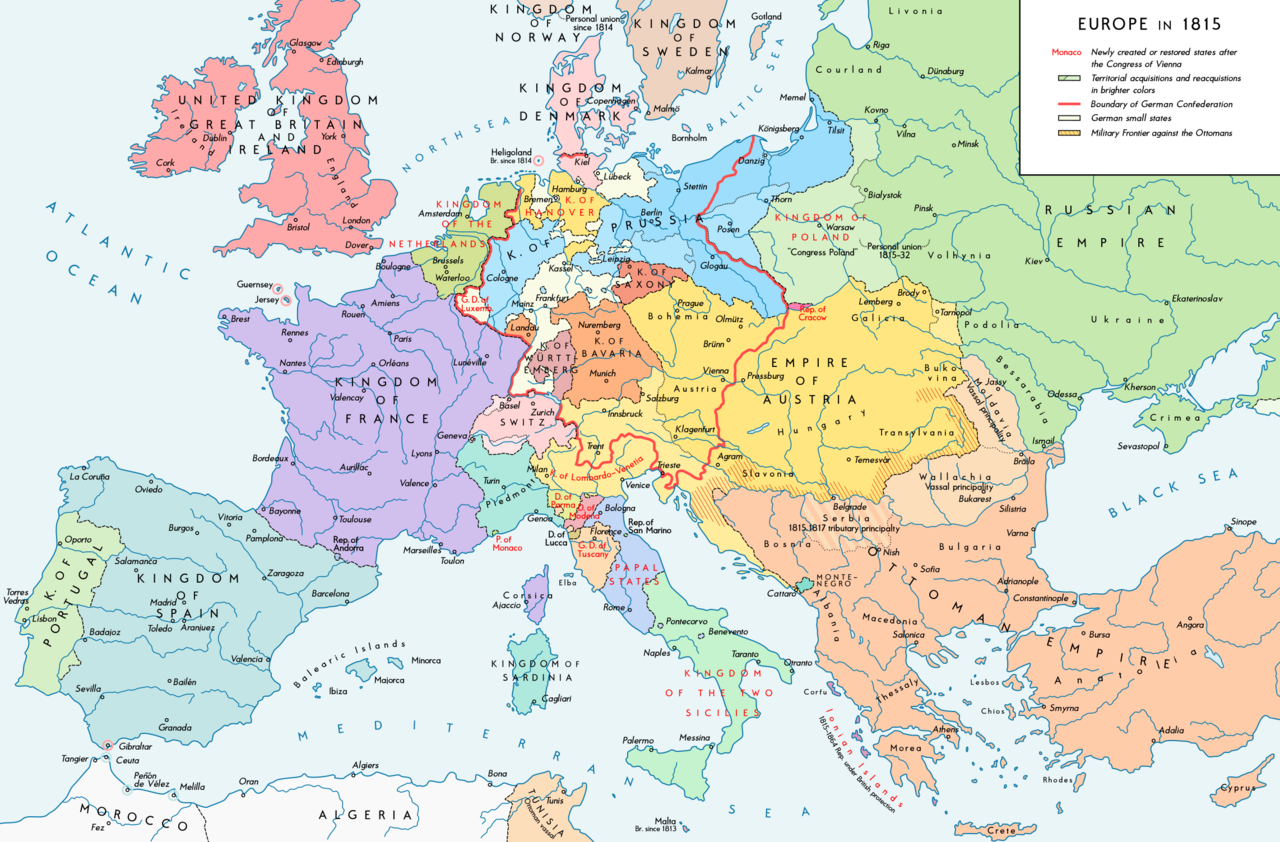
The Congress of Vienna, held from September 1814 to June 1815, was a pivotal gathering of European leaders aimed at reorganizing the continent after the defeat of Napoleon Bonaparte. The congress, attended by representatives from over 200 European states and kingdoms, was dominated by the 'Big Four' - Austria, Britain, Prussia, and Russia. The negotiations led to the redrawing of Europe's map, with significant territorial adjustments, including the reconstitution of the German Confederation and the establishment of the Kingdom of the Netherlands. The Congress of Vienna also marked the beginning of the Concert of Europe, a system of diplomacy and collective security that would shape European politics for decades to come. However, the congress has also been criticized for its conservative and reactionary nature, seeking to restore the pre-Napoleonic order and suppress liberal and nationalist movements. With a Vibe score of 8, the Congress of Vienna remains a highly influential and debated event in European history, with its legacy continuing to impact international relations and global politics. The influence of the Congress of Vienna can be seen in the works of historians such as Henry Kissinger, who has written extensively on the subject, and the event has been referenced in numerous literary works, including those by authors such as Tolstoy and Dickens.
🏛️ Introduction to the Congress of Vienna
The Congress of Vienna was a pivotal event in European history, marking the end of the Napoleonic Wars and the beginning of a new era of international relations. The Congress was convened in response to the downfall of Napoleon Bonaparte, who had dominated European politics for over a decade. The meetings were attended by representatives of all European powers, including Austria, Prussia, Russia, and Great Britain. The Congress was chaired by Austrian statesman Klemens von Metternich, who played a crucial role in shaping the negotiations. The Congress of Vienna was a complex and multifaceted event, involving discussions on territorial adjustments, diplomacy, and the balance of power in Europe.
📅 Historical Context: The Rise and Fall of Napoleon
The historical context of the Congress of Vienna is essential to understanding its significance. The French Revolution had sparked a wave of revolutionary fervor across Europe, leading to the rise of Napoleon Bonaparte and the Napoleonic Wars. The Congress of Vienna was an attempt to restore stability and order to Europe after the turmoil of the previous decades. The representatives of European powers gathered in Vienna to discuss and agree upon a new layout of the European political and constitutional order. The Congress was influenced by the ideas of conservatism and the principles of the Ancien Régime. The negotiations were also shaped by the interests of the great powers, including Austria, Prussia, and Russia.
👥 Key Players: The Representatives of European Powers
The key players at the Congress of Vienna were the representatives of European powers, including Austria, Prussia, Russia, and Great Britain. These representatives were tasked with negotiating a new balance of power in Europe, taking into account the interests of their respective countries. The Congress was also attended by other stakeholders, including smaller European states and the Ottoman Empire. The representatives of European powers were influenced by the ideas of Realpolitik and the principles of diplomacy. The negotiations were complex and often contentious, with different powers pursuing their own interests. The Congress of Vienna was also influenced by the ideas of liberalism and the principles of the Enlightenment.
📝 The Congress of Vienna: Objectives and Outcomes
The Congress of Vienna had several key objectives, including the reorganization of Europe and the establishment of a new balance of power. The representatives of European powers discussed and agreed upon a range of issues, including territorial adjustments, the restoration of monarchies, and the establishment of a new system of international relations. The Congress also addressed the issue of nationalism, which had become a major force in European politics. The negotiations were influenced by the ideas of conservatism and the principles of the Ancien Régime. The Congress of Vienna resulted in the signing of the Treaty of Vienna, which established a new order in Europe and marked the beginning of a period of relative peace and stability. The Treaty of Vienna was influenced by the ideas of Realpolitik and the principles of diplomacy.
🗺️ Redrawing the Map of Europe: Territorial Adjustments
The Congress of Vienna resulted in significant territorial adjustments, with several European states gaining or losing territory. The Kingdom of Sardinia gained territory in northern Italy, while the Kingdom of Poland was reconstituted under Russian control. The Ottoman Empire also lost territory, particularly in the Balkans. The territorial adjustments were influenced by the ideas of nationalism and the principles of self-determination. The Congress of Vienna also established a new system of international relations, with the great powers agreeing to work together to maintain stability and order in Europe. The Congress was influenced by the ideas of liberalism and the principles of the Enlightenment.
🤝 The Role of Klemens von Metternich: Chairman of the Congress
Klemens von Metternich played a crucial role in the Congress of Vienna, serving as the chairman of the negotiations. Metternich was a skilled diplomat and strategist, who was able to balance the competing interests of the great powers. He was a key figure in the development of the Congress System, which was a system of international relations that emphasized cooperation and diplomacy. Metternich was influenced by the ideas of conservatism and the principles of the Ancien Régime. He was also a strong advocate for the principles of monarchism and the restoration of monarchies in Europe. The Congress of Vienna was influenced by the ideas of Realpolitik and the principles of diplomacy.
📊 The Congress of Vienna: A Balance of Power
The Congress of Vienna was an attempt to establish a balance of power in Europe, with the great powers agreeing to work together to maintain stability and order. The Congress resulted in the establishment of a new system of international relations, with the great powers agreeing to cooperate on issues such as trade, security, and diplomacy. The balance of power was influenced by the ideas of Realpolitik and the principles of diplomacy. The Congress of Vienna also marked the beginning of a period of relative peace and stability in Europe, with the great powers avoiding major conflicts for several decades. The Congress was influenced by the ideas of liberalism and the principles of the Enlightenment.
🔍 The Legacy of the Congress of Vienna: Lasting Impact
The legacy of the Congress of Vienna is complex and multifaceted. The Congress marked the beginning of a new era of international relations, with the great powers agreeing to work together to maintain stability and order in Europe. The Congress also established a new system of international relations, with the great powers cooperating on issues such as trade, security, and diplomacy. However, the Congress has also been criticized for its failure to address the issue of nationalism and the principles of self-determination. The Congress of Vienna was influenced by the ideas of conservatism and the principles of the Ancien Régime. The Congress was also influenced by the ideas of Realpolitik and the principles of diplomacy.
🌎 The Congress of Vienna in a Global Context: International Relations
The Congress of Vienna was not an isolated event, but rather part of a broader global context. The Congress was influenced by the ideas of liberalism and the principles of the Enlightenment, which were spreading across the globe. The Congress also marked the beginning of a new era of international relations, with the great powers agreeing to work together to maintain stability and order in Europe. The Congress of Vienna was influenced by the ideas of Realpolitik and the principles of diplomacy. The Congress was also influenced by the ideas of nationalism and the principles of self-determination.
📚 Conclusion: The Significance of the Congress of Vienna
In conclusion, the Congress of Vienna was a pivotal event in European history, marking the end of the Napoleonic Wars and the beginning of a new era of international relations. The Congress was a complex and multifaceted event, involving discussions on territorial adjustments, diplomacy, and the balance of power in Europe. The Congress of Vienna was influenced by the ideas of conservatism and the principles of the Ancien Régime. The Congress was also influenced by the ideas of liberalism and the principles of the Enlightenment. The legacy of the Congress of Vienna continues to shape international relations to this day, with the great powers continuing to cooperate on issues such as trade, security, and diplomacy.
Key Facts
- Year
- 1815
- Origin
- Vienna, Austria
- Category
- History
- Type
- Historical Event
Frequently Asked Questions
What was the main objective of the Congress of Vienna?
The main objective of the Congress of Vienna was to reorganize Europe and establish a new balance of power after the downfall of Napoleon Bonaparte. The Congress aimed to restore stability and order in Europe, and to establish a new system of international relations. The Congress was influenced by the ideas of conservatism and the principles of the Ancien Régime. The Congress of Vienna was also influenced by the ideas of Realpolitik and the principles of diplomacy.
Who were the key players at the Congress of Vienna?
The key players at the Congress of Vienna were the representatives of European powers, including Austria, Prussia, Russia, and Great Britain. These representatives were tasked with negotiating a new balance of power in Europe, taking into account the interests of their respective countries. The Congress was also attended by other stakeholders, including smaller European states and the Ottoman Empire. The representatives of European powers were influenced by the ideas of Realpolitik and the principles of diplomacy.
What were the main outcomes of the Congress of Vienna?
The main outcomes of the Congress of Vienna were the establishment of a new balance of power in Europe, the reorganization of European territories, and the establishment of a new system of international relations. The Congress resulted in the signing of the Treaty of Vienna, which marked the beginning of a period of relative peace and stability in Europe. The Treaty of Vienna was influenced by the ideas of Realpolitik and the principles of diplomacy. The Congress of Vienna was also influenced by the ideas of liberalism and the principles of the Enlightenment.
How did the Congress of Vienna shape international relations?
The Congress of Vienna marked the beginning of a new era of international relations, with the great powers agreeing to work together to maintain stability and order in Europe. The Congress established a new system of international relations, with the great powers cooperating on issues such as trade, security, and diplomacy. The Congress of Vienna was influenced by the ideas of Realpolitik and the principles of diplomacy. The Congress was also influenced by the ideas of liberalism and the principles of the Enlightenment.
What is the legacy of the Congress of Vienna?
The legacy of the Congress of Vienna is complex and multifaceted. The Congress marked the beginning of a new era of international relations, with the great powers agreeing to work together to maintain stability and order in Europe. The Congress also established a new system of international relations, with the great powers cooperating on issues such as trade, security, and diplomacy. However, the Congress has also been criticized for its failure to address the issue of nationalism and the principles of self-determination. The Congress of Vienna was influenced by the ideas of conservatism and the principles of the Ancien Régime.