
Contents
- 🔬 Introduction to Chemical Laboratories
- 🧬 History of Chemical Laboratories
- 🎯 Equipment and Instrumentation
- 🔍 Laboratory Safety and Regulations
- 👥 The Role of Chemists and Laboratory Personnel
- 💡 Research and Development in Chemical Laboratories
- 🌎 Applications of Chemical Laboratories
- 📊 Laboratory Management and Funding
- 🚀 Future Directions in Chemical Laboratories
- 🤝 Collaboration and Knowledge Sharing
- 📚 Education and Training in Chemical Laboratories
- 👀 Challenges and Controversies in Chemical Laboratories
- Frequently Asked Questions
- Related Topics
Overview
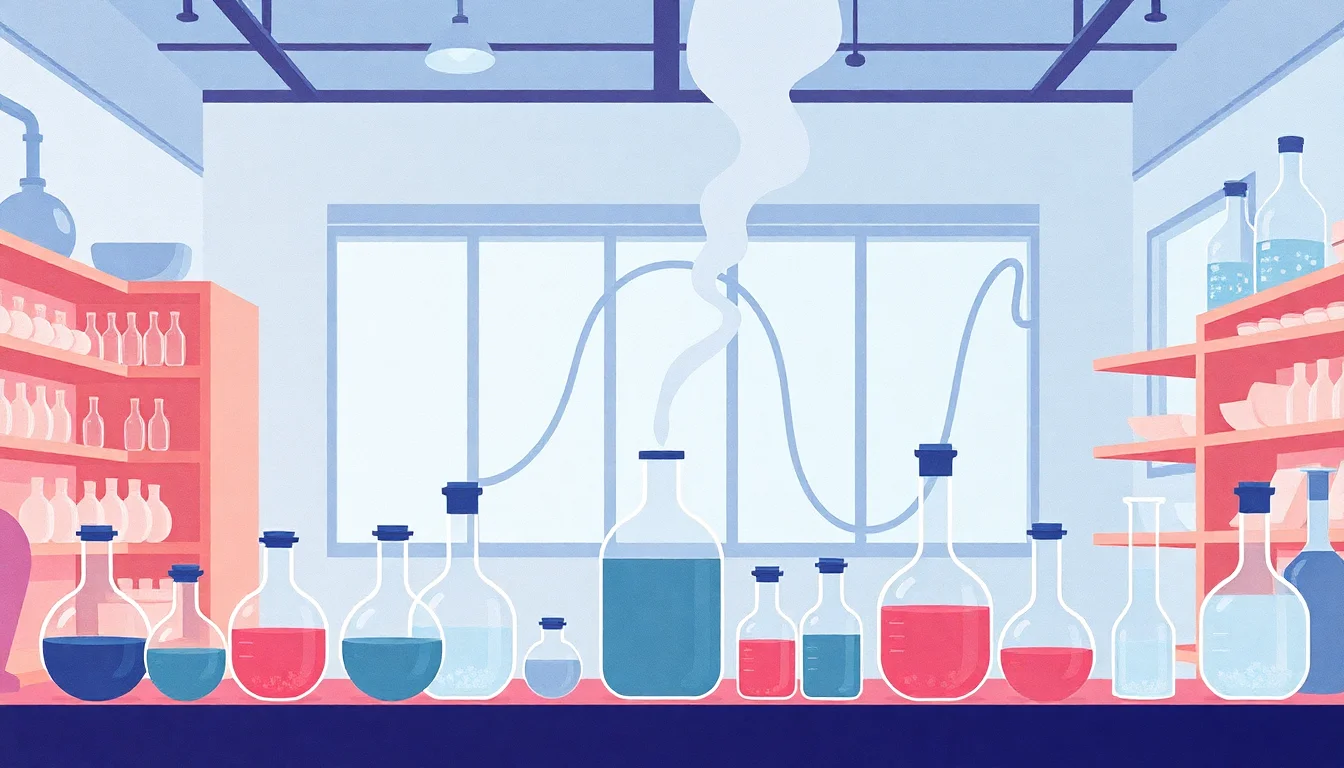
Chemical laboratories are the heart of scientific discovery, where scientists and researchers conduct experiments, analyze data, and develop new theories and products. These laboratories are equipped with state-of-the-art equipment and instrumentation, such as Spectroscopy and Chromatography, which enable scientists to study the properties and behavior of molecules and materials. The work conducted in chemical laboratories has a significant impact on our daily lives, from the development of new medicines and materials to the understanding of environmental processes and the improvement of industrial manufacturing processes. For example, the discovery of Penicillin by Alexander Fleming in 1928 revolutionized the treatment of bacterial infections. Today, chemical laboratories continue to play a crucial role in advancing our knowledge of the world and improving our quality of life. As we move forward, it is essential to consider the Ethics of scientific research and the potential consequences of new discoveries.
🧬 History of Chemical Laboratories
The history of chemical laboratories dates back to the early days of Alchemy, when scientists such as Isaac Newton and Robert Boyle conducted experiments and developed new theories about the nature of matter. Over time, the field of chemistry evolved, and the development of new equipment and techniques, such as Gas Chromatography and Mass Spectrometry, enabled scientists to study the properties and behavior of molecules and materials in greater detail. The establishment of the first modern chemical laboratories in the 19th century, such as the laboratory of Justus von Liebig, marked a significant milestone in the development of the field. Today, chemical laboratories can be found in universities, research institutions, and industries around the world, and they continue to play a vital role in advancing our knowledge of the world. The work of scientists such as Marie Curie and Linus Pauling has had a lasting impact on the field of chemistry and has paved the way for future generations of scientists. For more information on the history of chemistry, see History of Chemistry.
🎯 Equipment and Instrumentation
Chemical laboratories are equipped with a wide range of equipment and instrumentation, including Microscopes, Spectrophotometers, and Chromatography systems. These instruments enable scientists to study the properties and behavior of molecules and materials, and to develop new theories and products. The choice of equipment and instrumentation depends on the specific research question or problem being addressed, as well as the available resources and budget. For example, a laboratory studying the properties of Nanomaterials may require specialized equipment such as Transmission Electron Microscopy and Atomic Force Microscopy. In contrast, a laboratory conducting routine Quality Control analyses may use more basic equipment such as pH Meters and Balances. The development of new equipment and instrumentation is an ongoing process, and scientists and engineers are continually working to improve the sensitivity, accuracy, and efficiency of laboratory equipment. See Laboratory Equipment for more information.
🔍 Laboratory Safety and Regulations
Laboratory safety and regulations are critical components of chemical laboratory operations. Scientists and researchers must follow strict protocols and guidelines to ensure their own safety, as well as the safety of their colleagues and the environment. This includes wearing personal protective equipment (PPE) such as Gloves and Goggles, following proper procedures for handling and disposing of hazardous materials, and maintaining a clean and organized workspace. Laboratories must also comply with relevant regulations and laws, such as those related to Occupational Safety and Environmental Protection. For example, laboratories working with Radioactive Materials must follow strict guidelines for handling and storage, and must comply with regulations related to Nuclear Safety. The importance of laboratory safety and regulations cannot be overstated, as accidents and incidents can have serious consequences for individuals and the environment. See Laboratory Safety for more information.
👥 The Role of Chemists and Laboratory Personnel
Chemists and laboratory personnel play a vital role in the operation of chemical laboratories. These individuals are responsible for conducting experiments, analyzing data, and developing new theories and products. They must have a strong foundation in Chemistry and related fields, as well as excellent laboratory skills and attention to detail. Chemists and laboratory personnel must also be able to work effectively in teams, communicate complex ideas and results, and adapt to changing circumstances and priorities. The role of chemists and laboratory personnel is not limited to research and development; they also play a critical role in Quality Control, Regulatory Affairs, and Education and Training. For example, chemists may work in industry, developing new products and processes, or in academia, teaching and mentoring students. See Chemists for more information.
💡 Research and Development in Chemical Laboratories
Research and development (R&D) is a critical component of chemical laboratory operations. Scientists and researchers conduct experiments, analyze data, and develop new theories and products, which can lead to significant advances in our understanding of the world and improvements in our quality of life. R&D in chemical laboratories can focus on a wide range of topics, from the development of new Medicines and Materials to the understanding of environmental processes and the improvement of industrial manufacturing processes. For example, researchers may study the properties and behavior of Nanomaterials, or develop new Catalysts for industrial processes. The R&D process involves several stages, including Literature Review, Experiment Design, Data Analysis, and Results Interpretation. See Research and Development for more information.
🌎 Applications of Chemical Laboratories
Chemical laboratories have a wide range of applications, from the development of new Medicines and Materials to the understanding of environmental processes and the improvement of industrial manufacturing processes. For example, chemical laboratories are used in the development of new Vaccines and Therapies for diseases, as well as in the production of Food and Beverages. Chemical laboratories are also used in Forensic Science, where scientists analyze evidence and develop new methods for detecting and identifying Crimes. In addition, chemical laboratories play a critical role in Environmental Monitoring, where scientists study the impact of human activities on the environment and develop new methods for mitigating and remediating environmental damage. See Applications of Chemistry for more information.
📊 Laboratory Management and Funding
Laboratory management and funding are critical components of chemical laboratory operations. Laboratories must be managed effectively to ensure that resources are allocated efficiently, and that research and development activities are conducted safely and responsibly. This includes managing budgets, personnel, and equipment, as well as ensuring compliance with relevant regulations and laws. Funding for chemical laboratories can come from a variety of sources, including government agencies, private industry, and non-profit organizations. For example, the National Institutes of Health (NIH) provides funding for research in the life sciences, while the National Science Foundation (NSF) provides funding for research in the physical sciences. See Laboratory Management for more information.
🚀 Future Directions in Chemical Laboratories
The future of chemical laboratories is exciting and rapidly evolving. New technologies and techniques, such as Artificial Intelligence and Machine Learning, are being developed and applied in chemical laboratories, enabling scientists to conduct research and development more efficiently and effectively. For example, Robotics and Automation are being used to streamline laboratory processes and improve productivity. In addition, the development of new Sustainable Materials and Renewable Energy sources is a major focus of research in chemical laboratories. As we move forward, it is essential to consider the potential consequences of new discoveries and technologies, and to ensure that they are developed and applied responsibly. See Future of Chemistry for more information.
🤝 Collaboration and Knowledge Sharing
Collaboration and knowledge sharing are critical components of chemical laboratory operations. Scientists and researchers must work together to share ideas, expertise, and resources, and to advance our understanding of the world. This includes collaborating with colleagues from other disciplines, such as Biology and Physics, as well as with industry partners and other stakeholders. For example, the development of new Medicines and Therapies often requires collaboration between scientists from multiple disciplines. In addition, knowledge sharing and dissemination are critical for advancing our understanding of the world and improving our quality of life. This includes publishing research results in scientific journals, presenting at conferences, and engaging with the broader community. See Collaboration for more information.
📚 Education and Training in Chemical Laboratories
Education and training are essential components of chemical laboratory operations. Scientists and researchers must have a strong foundation in Chemistry and related fields, as well as excellent laboratory skills and attention to detail. Education and training programs can include degree programs in chemistry and related fields, as well as continuing education and professional development opportunities. For example, the American Chemical Society (ACS) offers a range of education and training programs for chemists and laboratory personnel. In addition, many universities and research institutions offer degree programs and research opportunities in chemistry and related fields. See Education and Training for more information.
👀 Challenges and Controversies in Chemical Laboratories
Chemical laboratories are not without challenges and controversies. For example, the use of Animal Testing in chemical laboratories is a highly debated topic, with some arguing that it is necessary for advancing our understanding of human health and disease, while others argue that it is unethical and unnecessary. In addition, the development of new Chemicals and Materials raises concerns about environmental impact and human health. For example, the use of Plastics and other synthetic materials has been linked to environmental pollution and human health problems. As we move forward, it is essential to consider the potential consequences of new discoveries and technologies, and to ensure that they are developed and applied responsibly. See Challenges in Chemistry for more information.
Key Facts
- Year
- 2023
- Origin
- Ancient Greece and China, with modern labs emerging in 17th-century Europe
- Category
- Science and Technology
- Type
- Research Institution
Frequently Asked Questions
What is the purpose of a chemical laboratory?
The purpose of a chemical laboratory is to conduct experiments, analyze data, and develop new theories and products. Chemical laboratories are used in a wide range of fields, including medicine, materials science, and environmental science. They are equipped with state-of-the-art equipment and instrumentation, and are staffed by trained scientists and researchers. For more information, see Chemical Laboratories.
What kind of equipment is used in a chemical laboratory?
Chemical laboratories are equipped with a wide range of equipment and instrumentation, including Microscopes, Spectrophotometers, and Chromatography systems. The specific equipment used depends on the research question or problem being addressed, as well as the available resources and budget. For example, a laboratory studying the properties of Nanomaterials may require specialized equipment such as Transmission Electron Microscopy and Atomic Force Microscopy.
What are the safety protocols in a chemical laboratory?
Laboratory safety and regulations are critical components of chemical laboratory operations. Scientists and researchers must follow strict protocols and guidelines to ensure their own safety, as well as the safety of their colleagues and the environment. This includes wearing personal protective equipment (PPE) such as Gloves and Goggles, following proper procedures for handling and disposing of hazardous materials, and maintaining a clean and organized workspace. For more information, see Laboratory Safety.
What kind of research is conducted in a chemical laboratory?
Chemical laboratories conduct a wide range of research, from the development of new Medicines and Materials to the understanding of environmental processes and the improvement of industrial manufacturing processes. For example, researchers may study the properties and behavior of Nanomaterials, or develop new Catalysts for industrial processes. The research conducted in chemical laboratories has a significant impact on our daily lives, from the development of new products and technologies to the improvement of our health and well-being.
How are chemical laboratories managed and funded?
Laboratory management and funding are critical components of chemical laboratory operations. Laboratories must be managed effectively to ensure that resources are allocated efficiently, and that research and development activities are conducted safely and responsibly. Funding for chemical laboratories can come from a variety of sources, including government agencies, private industry, and non-profit organizations. For example, the National Institutes of Health (NIH) provides funding for research in the life sciences, while the National Science Foundation (NSF) provides funding for research in the physical sciences.
What are the future directions in chemical laboratories?
The future of chemical laboratories is exciting and rapidly evolving. New technologies and techniques, such as Artificial Intelligence and Machine Learning, are being developed and applied in chemical laboratories, enabling scientists to conduct research and development more efficiently and effectively. For example, Robotics and Automation are being used to streamline laboratory processes and improve productivity. In addition, the development of new Sustainable Materials and Renewable Energy sources is a major focus of research in chemical laboratories.
What are the challenges and controversies in chemical laboratories?
Chemical laboratories are not without challenges and controversies. For example, the use of Animal Testing in chemical laboratories is a highly debated topic, with some arguing that it is necessary for advancing our understanding of human health and disease, while others argue that it is unethical and unnecessary. In addition, the development of new Chemicals and Materials raises concerns about environmental impact and human health. For example, the use of Plastics and other synthetic materials has been linked to environmental pollution and human health problems.