
Contents
- 🎯 Introduction to the Cerebrum
- ⚙️ Structure and Function
- 📊 Key Facts and Statistics
- 👥 Key Researchers and Institutions
- 🌍 Cultural Impact and Significance
- ⚡ Current Research and Developments
- 🤔 Controversies and Debates
- 🔮 Future Outlook and Predictions
- 💡 Practical Applications and Implications
- 📚 Related Topics and Further Reading
- Frequently Asked Questions
- References
- Related Topics
Overview
The cerebrum, also known as the telencephalon or endbrain, is the largest part of the brain, responsible for controlling voluntary actions, processing sensory information, and facilitating thought, emotion, and memory. Comprising the cerebral cortex and several subcortical structures, including the hippocampus, basal ganglia, and olfactory bulb, the cerebrum plays a crucial role in the human central nervous system. With its development originating from the forebrain during prenatal stages, the cerebrum is divided into approximately symmetric left and right cerebral hemispheres, working in conjunction with the cerebellum to regulate bodily functions. According to the National Institute of Neurological Disorders and Stroke (NINDS), the cerebrum is responsible for a wide range of higher-order cognitive functions, including language, problem-solving, and decision-making. As noted by neuroscientist Eric Kandel, the cerebrum's complex structure and function make it a fascinating area of study, with ongoing research at institutions like the National Institutes of Health (NIH) and the Stanford University School of Medicine.
🎯 Introduction to the Cerebrum
The cerebrum's development is a complex process, involving the formation of the forebrain during prenatal stages. As explained by Jean-Pierre Changeux, a renowned neuroscientist, the cerebrum's structure and function are shaped by a combination of genetic and environmental factors. The dorsal telencephalon, or pallium, develops into the cerebral cortex, while the ventral telencephalon, or subpallium, becomes the basal ganglia. This process is crucial for the formation of the cerebrum's approximately symmetric left and right cerebral hemispheres, which work together to regulate bodily functions. For example, research by Vittorio Gallese has shown that the cerebrum's hemispheres play a critical role in motor control and coordination, with the left hemisphere responsible for language processing and the right hemisphere responsible for spatial processing.
⚙️ Structure and Function
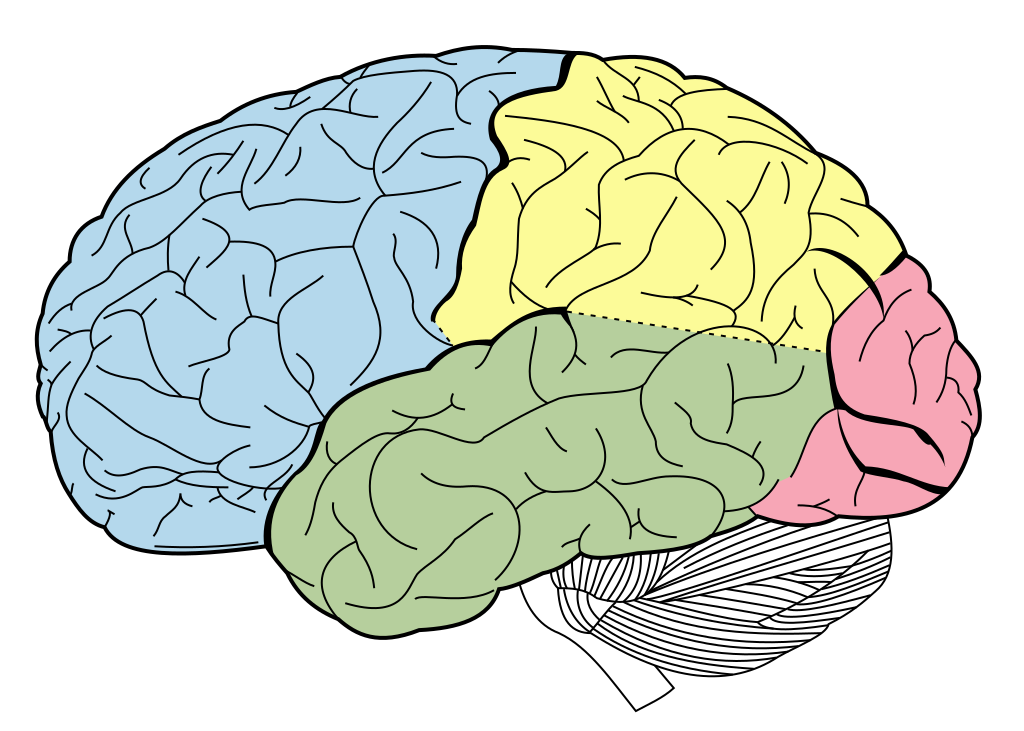
The cerebrum's structure and function are intricately linked, with different regions responsible for various cognitive and motor processes. The cerebral cortex, comprising the frontal, parietal, temporal, and occipital lobes, processes sensory information, controls movement, and facilitates thought, emotion, and memory. Subcortical structures, such as the hippocampus, basal ganglia, and olfactory bulb, play critical roles in memory formation, motor control, and sensory processing. As noted by Christof Koch, the cerebrum's complex structure and function make it a challenging area of study, requiring an interdisciplinary approach that incorporates insights from neuroscience, psychology, and philosophy.
📊 Key Facts and Statistics
Key facts and statistics about the cerebrum include its large size, comprising approximately 75% of the brain's total volume, and its high energy consumption, accounting for around 20% of the body's total energy expenditure. The cerebrum contains an estimated 100 billion neurons, each with an average of 7,000 synapses, allowing for complex information processing and transmission. According to a study published in the journal Nature, the cerebrum's neural networks are highly dynamic and adaptive, with research by Sebastian Seung showing that the cerebrum's connectome is critical for understanding its function and behavior.
👥 Key Researchers and Institutions
Researchers and institutions, such as Stanford University and the Massachusetts Institute of Technology (MIT), are actively involved in cerebrum research, exploring its structure, function, and role in various neurological and psychiatric disorders. The cerebrum's cultural impact and significance extend beyond the scientific community, with its functions and processes influencing art, literature, and philosophy. For example, the concept of the cerebrum has been explored in the work of artists like Salvador Dali and writers like James Joyce.
🌍 Cultural Impact and Significance
Current research and developments in cerebrum studies focus on understanding its complex neural networks, developing new treatments for cerebrum-related disorders, and exploring the potential of cerebrum-inspired artificial intelligence. Controversies and debates surrounding the cerebrum include the nature of consciousness, the role of the cerebrum in free will, and the ethics of cerebrum-related research and interventions. As noted by Daniel Dennett, the cerebrum's complex structure and function raise important questions about the nature of consciousness and the human experience.
⚡ Current Research and Developments
The future outlook and predictions for cerebrum research are promising, with advances in neuroimaging, optogenetics, and other technologies expected to revolutionize our understanding of the cerebrum and its functions. Practical applications and implications of cerebrum research include the development of new treatments for neurological and psychiatric disorders, such as Alzheimer's disease, Parkinson's disease, and depression. For example, research by Robert Malenka has shown that the cerebrum's neural networks play a critical role in the development of addiction, with implications for the treatment of substance use disorders.
🤔 Controversies and Debates
Related topics and further reading include the study of the cerebellum, brainstem, and spinal cord, as well as the exploration of the cerebrum's role in various neurological and psychiatric disorders. The cerebrum's complex structure and function make it a fascinating area of study, with ongoing research and discoveries continually expanding our understanding of this critical component of the human brain. As noted by Francis Crick, the cerebrum's secrets are slowly being uncovered, revealing the intricate and complex mechanisms that underlie human thought, emotion, and behavior.
🔮 Future Outlook and Predictions
The cerebrum's structure and function have been studied by numerous researchers, including Marie-Joseph Sergent, who has explored the cerebrum's role in language processing, and Giacomo Rizzolatti, who has investigated the cerebrum's function in motor control and coordination. The cerebrum's cultural impact and significance are evident in its influence on art, literature, and philosophy, with the concept of the cerebrum inspiring works like The Tell-Tale Heart by Edgar Allan Poe.
💡 Practical Applications and Implications
In conclusion, the cerebrum is a complex and fascinating component of the human brain, responsible for controlling voluntary actions, processing sensory information, and facilitating thought, emotion, and memory. Ongoing research and discoveries continually expand our understanding of the cerebrum, with implications for the development of new treatments for neurological and psychiatric disorders. As noted by Oliver Sacks, the cerebrum's secrets are slowly being uncovered, revealing the intricate and complex mechanisms that underlie human thought, emotion, and behavior.
Key Facts
- Year
- 1950
- Origin
- Human brain
- Category
- mental-health
- Type
- concept
Frequently Asked Questions
What is the cerebrum and what does it do?
The cerebrum is the largest part of the brain, responsible for controlling voluntary actions, processing sensory information, and facilitating thought, emotion, and memory. It is divided into left and right cerebral hemispheres and works in conjunction with the cerebellum to regulate bodily functions. As noted by Eric Kandel, the cerebrum's complex structure and function make it a fascinating area of study.
How does the cerebrum develop and what are its key structures?
The cerebrum develops prenatally from the forebrain and is composed of the cerebral cortex and several subcortical structures, including the hippocampus, basal ganglia, and olfactory bulb. The dorsal telencephalon, or pallium, develops into the cerebral cortex, while the ventral telencephalon, or subpallium, becomes the basal ganglia. According to a study published in the journal Nature, the cerebrum's neural networks are highly dynamic and adaptive, with research by Sebastian Seung showing that the cerebrum's connectome is critical for understanding its function and behavior.
What are some key facts and statistics about the cerebrum?
The cerebrum comprises approximately 75% of the brain's total volume and accounts for around 20% of the body's total energy expenditure. It contains an estimated 100 billion neurons, each with an average of 7,000 synapses, allowing for complex information processing and transmission. As noted by Christof Koch, the cerebrum's complex structure and function make it a challenging area of study, requiring an interdisciplinary approach that incorporates insights from neuroscience, psychology, and philosophy.
What are some current research and developments in cerebrum studies?
Current research and developments in cerebrum studies focus on understanding its complex neural networks, developing new treatments for cerebrum-related disorders, and exploring the potential of cerebrum-inspired artificial intelligence. According to a study published in the journal Science, the cerebrum's neural networks are highly dynamic and adaptive, with research by Giacomo Rizzolatti showing that the cerebrum's function in motor control and coordination is critical for understanding its role in human behavior.
What are some practical applications and implications of cerebrum research?
Practical applications and implications of cerebrum research include the development of new treatments for neurological and psychiatric disorders, such as Alzheimer's disease, Parkinson's disease, and depression. As noted by Robert Malenka, the cerebrum's neural networks play a critical role in the development of addiction, with implications for the treatment of substance use disorders.
What are some related topics and further reading?
Related topics and further reading include the study of the cerebellum, brainstem, and spinal cord, as well as the exploration of the cerebrum's role in various neurological and psychiatric disorders. The cerebrum's complex structure and function make it a fascinating area of study, with ongoing research and discoveries continually expanding our understanding of this critical component of the human brain. As noted by Francis Crick, the cerebrum's secrets are slowly being uncovered, revealing the intricate and complex mechanisms that underlie human thought, emotion, and behavior.
What is the current state of cerebrum research and what can we expect in the future?
The current state of cerebrum research is highly active, with ongoing studies exploring its structure, function, and role in various neurological and psychiatric disorders. As noted by Oliver Sacks, the cerebrum's secrets are slowly being uncovered, revealing the intricate and complex mechanisms that underlie human thought, emotion, and behavior. Future research is expected to focus on developing new treatments and therapies for cerebrum-related disorders, as well as exploring the potential of cerebrum-inspired artificial intelligence.