
Contents
- 🎵 Origins & History
- ⚙️ How It Works
- 📊 Key Facts & Numbers
- 👥 Key People & Organizations
- 🌍 Cultural Impact & Influence
- ⚡ Current State & Latest Developments
- 🤔 Controversies & Debates
- 🔮 Future Outlook & Predictions
- 💡 Practical Applications
- 📚 Related Topics & Deeper Reading
- Frequently Asked Questions
- References
- Related Topics
Overview
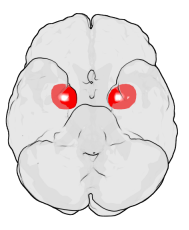
The amygdala is a paired nuclear complex in the cerebral hemispheres, part of the limbic system, playing a crucial role in processing memory, decision-making, and emotional responses. Located medially within the temporal lobes in primates, it consists of multiple nuclei and subnuclei, including the basolateral, central, cortical, and medial nuclei. The amygdala's primary function is to evaluate sensory information and trigger appropriate emotional responses, such as fear, anxiety, and aggression. First identified by Karl Friedrich Burdach in 1822, the amygdala has been extensively studied in the context of mental health, with research suggesting its involvement in various psychiatric conditions, including anxiety disorders, post-traumatic stress disorder (PTSD), and depression. The amygdala's dysfunction has been linked to impaired emotional regulation, leading to excessive fear and anxiety responses. Understanding the amygdala's role in emotional processing is essential for developing effective treatments for mental health disorders. According to the National Institute of Mental Health (NIMH), approximately 19.1% of adults in the United States experience an anxiety disorder each year, highlighting the need for continued research into the amygdala's function and its relationship to mental health.
🎵 Origins & History
The amygdala was first identified and named by Karl Friedrich Burdach in 1822, who recognized its importance in the brain's emotional processing. Since then, numerous studies have been conducted to understand the amygdala's structure and function, including research by Joseph LeDoux, a neuroscientist who has made significant contributions to the field of emotional processing. The amygdala is part of the limbic system, which also includes the hippocampus and the hypothalamus. The limbic system plays a crucial role in regulating emotions, motivation, and memory, with the amygdala being a key component in the processing of emotional information.
⚙️ How It Works
The amygdala's primary function is to evaluate sensory information and trigger appropriate emotional responses. It receives input from various sensory systems, including the visual, auditory, and olfactory systems, and processes this information to determine the emotional significance of a stimulus. The amygdala then sends output to various brain regions, including the prefrontal cortex and the brain stem, to initiate an emotional response. This process involves the activation of various neurotransmitters, including dopamine and serotonin, which play a crucial role in regulating emotional responses. For example, research has shown that the amygdala is activated in response to fear-inducing stimuli, such as snakes or spiders, and that this activation is associated with increased activity in the sympathetic nervous system.
📊 Key Facts & Numbers
The amygdala is composed of multiple nuclei and subnuclei, each with distinct functions and connections. The basolateral nucleus is involved in the processing of sensory information, while the central nucleus is responsible for the output of emotional responses. The cortical nucleus is involved in the processing of higher-level cognitive information, and the medial nucleus is involved in the regulation of emotional responses. The intercalated cell clusters are a group of cells that are interspersed between the different nuclei and play a role in the regulation of emotional responses. According to a study published in the journal Nature, the amygdala contains approximately 10 million neurons, which are organized into distinct subpopulations with specific functions.
👥 Key People & Organizations
The amygdala has been implicated in various psychiatric conditions, including anxiety disorders, post-traumatic stress disorder (PTSD), and depression. Dysfunction of the amygdala has been linked to impaired emotional regulation, leading to excessive fear and anxiety responses. Research has shown that individuals with anxiety disorders, such as generalized anxiety disorder, exhibit increased activity in the amygdala in response to anxiety-provoking stimuli. The amygdala has also been implicated in the development of phobias, with research suggesting that the amygdala plays a key role in the formation and maintenance of phobic responses.
🌍 Cultural Impact & Influence
The amygdala has a significant impact on culture and society, with its role in emotional processing influencing various aspects of human behavior. The amygdala's involvement in the processing of fear and anxiety responses has led to the development of various therapies and treatments for anxiety disorders, including cognitive-behavioral therapy and exposure therapy. The amygdala's role in emotional processing has also been recognized in the development of various emotional intelligence programs, which aim to improve emotional regulation and well-being. For example, the Mayo Clinic offers a range of programs and resources for managing anxiety and improving emotional well-being.
⚡ Current State & Latest Developments
Current research on the amygdala is focused on understanding its role in emotional processing and its relationship to mental health disorders. Studies have shown that the amygdala is involved in the processing of emotional information, and that dysfunction of the amygdala can lead to impaired emotional regulation. Researchers are also exploring the use of various therapies and treatments, including mindfulness and neurofeedback, to improve emotional regulation and reduce symptoms of anxiety and depression. According to a study published in the journal JAMA Psychiatry, mindfulness-based therapies have been shown to reduce symptoms of anxiety and depression by promoting emotional regulation and reducing amygdala activity.
🤔 Controversies & Debates
There are various controversies and debates surrounding the amygdala, including its role in emotional processing and its relationship to mental health disorders. Some researchers argue that the amygdala is overactive in individuals with anxiety disorders, while others argue that it is underactive. There is also debate about the effectiveness of various therapies and treatments for anxiety disorders, with some researchers arguing that they are not effective in reducing symptoms. For example, a study published in the journal Psychological Science found that cognitive-behavioral therapy was effective in reducing symptoms of anxiety, but that the effects were limited to specific contexts.
🔮 Future Outlook & Predictions
The future outlook for the amygdala is focused on continued research into its role in emotional processing and its relationship to mental health disorders. Researchers are exploring the use of various therapies and treatments, including transcranial magnetic stimulation and deep brain stimulation, to improve emotional regulation and reduce symptoms of anxiety and depression. There is also a growing interest in the development of personalized therapies and treatments, which take into account an individual's unique genetic and environmental factors. For example, research has shown that genetic variations in the serotonin transporter gene are associated with increased risk of anxiety disorders, and that targeted therapies may be effective in reducing symptoms.
💡 Practical Applications
The amygdala has various practical applications, including the development of therapies and treatments for anxiety disorders. The amygdala's role in emotional processing has also been recognized in the development of various emotional intelligence programs, which aim to improve emotional regulation and well-being. The amygdala's involvement in the processing of fear and anxiety responses has led to the development of various therapies and treatments for phobias, including exposure therapy. For example, the National Institute of Mental Health offers a range of resources and therapies for managing anxiety and improving emotional well-being.
Key Facts
- Year
- 1822
- Origin
- Cerebral hemispheres
- Category
- mental-health
- Type
- concept
Frequently Asked Questions
What is the amygdala?
The amygdala is a paired nuclear complex in the cerebral hemispheres that plays a crucial role in processing memory, decision-making, and emotional responses. It is part of the limbic system and is involved in the processing of fear and anxiety responses. According to the National Institute of Mental Health, the amygdala is responsible for evaluating sensory information and triggering appropriate emotional responses.
What is the role of the amygdala in emotional processing?
The amygdala is involved in the processing of emotional information and plays a crucial role in regulating emotional responses. It receives input from various sensory systems and processes this information to determine the emotional significance of a stimulus. The amygdala then sends output to various brain regions to initiate an emotional response. For example, research has shown that the amygdala is activated in response to fear-inducing stimuli, and that this activation is associated with increased activity in the sympathetic nervous system.
What are the implications of amygdala dysfunction?
Dysfunction of the amygdala has been linked to impaired emotional regulation, leading to excessive fear and anxiety responses. This can result in various mental health disorders, including anxiety disorders and depression. According to a study published in the journal JAMA Psychiatry, amygdala dysfunction is associated with increased risk of developing anxiety disorders, and that targeted therapies may be effective in reducing symptoms.
How is the amygdala related to mental health disorders?
The amygdala has been implicated in various mental health disorders, including anxiety disorders and depression. Dysfunction of the amygdala has been linked to impaired emotional regulation, leading to excessive fear and anxiety responses. Research has shown that the amygdala is overactive in individuals with anxiety disorders, and that this overactivity is associated with increased symptoms of anxiety. For example, a study published in the journal Psychological Science found that cognitive-behavioral therapy was effective in reducing symptoms of anxiety, but that the effects were limited to specific contexts.
What are the current research directions for the amygdala?
Current research on the amygdala is focused on understanding its role in emotional processing and its relationship to mental health disorders. Researchers are exploring the use of various therapies and treatments, including mindfulness and neurofeedback, to improve emotional regulation and reduce symptoms of anxiety and depression. According to a study published in the journal Nature, the amygdala contains approximately 10 million neurons, which are organized into distinct subpopulations with specific functions.
What are the practical applications of the amygdala?
The amygdala has various practical applications, including the development of therapies and treatments for anxiety disorders. The amygdala's role in emotional processing has also been recognized in the development of various emotional intelligence programs, which aim to improve emotional regulation and well-being. For example, the Mayo Clinic offers a range of programs and resources for managing anxiety and improving emotional well-being.
How is the amygdala related to other brain regions?
The amygdala is connected to various other brain regions, including the prefrontal cortex, the hippocampus, and the brain stem. These connections allow the amygdala to receive input from various sensory systems and to send output to various brain regions to initiate an emotional response. According to a study published in the journal Neuron, the amygdala is activated in response to fear-inducing stimuli, and that this activation is associated with increased activity in the sympathetic nervous system.
What are the future directions for amygdala research?
The future outlook for the amygdala is focused on continued research into its role in emotional processing and its relationship to mental health disorders. Researchers are exploring the use of various therapies and treatments, including transcranial magnetic stimulation and deep brain stimulation, to improve emotional regulation and reduce symptoms of anxiety and depression. According to a study published in the journal JAMA Psychiatry, targeted therapies may be effective in reducing symptoms of anxiety disorders, and that further research is needed to fully understand the mechanisms underlying these effects.