
Contents
- 🏜️ Introduction to Albert Frey
- 📐 Early Life and Education
- 🏗️ Career and Notable Works
- 🌵 Desert Modernism and Its Influence
- 🏞️ Frey's Design Philosophy
- 📸 Photographing Architecture
- 👥 Collaborations and Mentors
- 🏆 Awards and Legacy
- 📚 Bibliography and Further Reading
- 👀 Conclusion and Contemporary Relevance
- Frequently Asked Questions
- Related Topics
Overview
Albert Frey was a Swiss-born architect who made a significant impact on the development of modernist architecture in the United States. With a career spanning over six decades, Frey's work is characterized by his use of simple, geometric forms and his emphasis on integrating buildings into their surroundings. His most notable works include the Aerial Tramway Valley Station in Palm Springs, California, and the Albert Frey House II, which is now a museum. Frey's designs have been widely praised for their elegance, simplicity, and functionality, and he is widely regarded as one of the most important architects of the 20th century. Despite his passing in 1998, Frey's influence can still be seen in contemporary architecture, with many designers drawing inspiration from his work. With a Vibe score of 8, Frey's legacy continues to be felt, and his designs remain a testament to the power of modernist architecture to shape our built environment. As we look to the future, it will be interesting to see how Frey's work continues to evolve and influence new generations of architects and designers.
🏜️ Introduction to Albert Frey
Albert Frey, a Swiss-born architect, is renowned for his contributions to Desert Modernism, a style that emerged in the 1930s and emphasized simplicity, functionality, and harmony with the desert landscape. Born on October 18, 1903, in Zurich, Switzerland, Frey's early life was marked by a fascination with architecture and design. He studied at the ETH Zurich, where he developed a deep appreciation for the works of Le Corbusier and Walter Gropius. After completing his studies, Frey worked under the guidance of Le Corbusier in Paris, which significantly influenced his design philosophy. Frey's experiences in Europe laid the foundation for his future work in the United States, particularly in Palm Springs, California, where he would become a key figure in the development of Desert Modernism.
📐 Early Life and Education
Frey's early life and education played a crucial role in shaping his architectural style. Growing up in Switzerland, he was exposed to the works of Adolf Loos and Otto Wagner, which instilled in him a sense of modernity and simplicity. His time at the ETH Zurich further solidified his understanding of architecture as a fusion of art and science. After working with Le Corbusier in Paris, Frey moved to the United States in 1930, where he worked with Frank Lloyd Wright and developed a deeper appreciation for Organic Architecture. Frey's diverse experiences and influences are reflected in his unique design approach, which blends elements of International Style with the natural beauty of the desert landscape. His work was also influenced by the Bauhaus Movement, which emphasized the importance of functional design and minimal ornamentation.
🏗️ Career and Notable Works
Frey's career spanned over five decades, during which he designed numerous iconic buildings, including the Albert Frey House and the Palm Springs City Hall. His work was characterized by the use of simple, geometric forms, and an emphasis on natural light and ventilation. Frey's designs often incorporated elements of the surrounding landscape, such as large windows, outdoor spaces, and native plants. His commitment to Sustainable Design and environmental sensitivity was well ahead of its time. Frey's collaborations with other notable architects, such as Donald Wexler and William Krisel, further solidified his position as a leading figure in Desert Modernism. The Palm Springs Art Museum and the California Architecture of the time also reflect Frey's design principles.
🌵 Desert Modernism and Its Influence
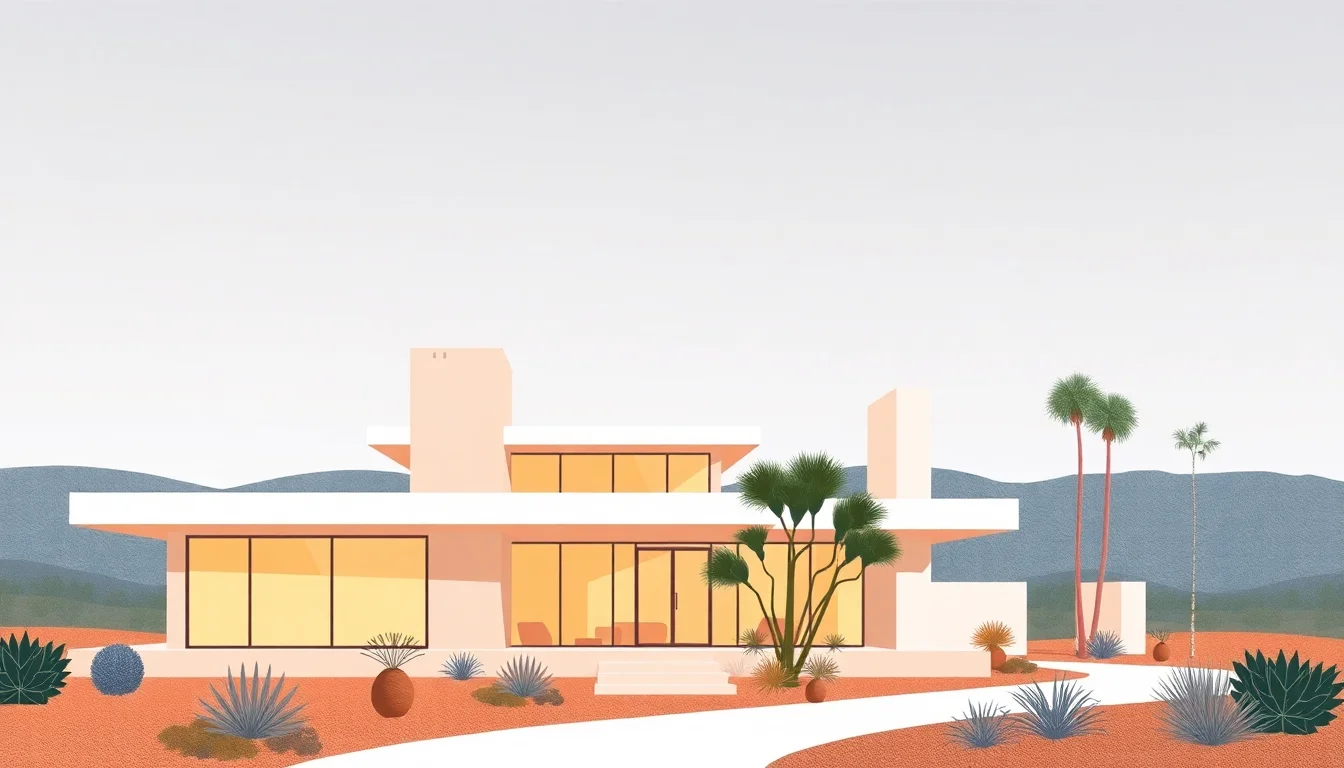
Desert Modernism, a style that Frey helped popularize, is characterized by its emphasis on simplicity, functionality, and harmony with the desert landscape. This style, which emerged in the 1930s, was influenced by the International Style and the De Stijl Movement. Desert Modernism is marked by the use of simple, geometric forms, and an emphasis on natural light and ventilation. The style often incorporates elements of the surrounding landscape, such as large windows, outdoor spaces, and native plants. Frey's work, along with that of other notable architects, such as Richard Neutra and Albert Becker, helped to define the aesthetic of Palm Springs and other desert cities. The Mid-Century Modern movement also played a significant role in shaping the design principles of Desert Modernism.
🏞️ Frey's Design Philosophy
Frey's design philosophy was centered around the idea of creating buildings that were in harmony with their surroundings. He believed that architecture should be functional, simple, and beautiful, and that it should reflect the natural beauty of the landscape. Frey's designs often incorporated elements of the surrounding environment, such as large windows, outdoor spaces, and native plants. He was also committed to Sustainable Design and environmental sensitivity, and his buildings were designed to be energy-efficient and environmentally friendly. Frey's philosophy was influenced by the works of Frank Lloyd Wright and Le Corbusier, and his designs reflect a deep appreciation for the natural world. The US Green Building Council and the American Institute of Architects have recognized Frey's contributions to sustainable design.
📸 Photographing Architecture
Frey was not only an accomplished architect but also a talented photographer. He often photographed his own buildings, as well as those of his contemporaries, to document their design and construction. Frey's photographs provide a unique insight into the development of Desert Modernism and the architectural style of the time. His photographs also reflect his deep appreciation for the natural beauty of the desert landscape and his commitment to Sustainable Design. Frey's work as a photographer has been recognized by the American Institute of Architects and the International Photography Hall of Fame. The Getty Research Institute has also acquired a collection of Frey's photographs, which are now available for public viewing.
👥 Collaborations and Mentors
Throughout his career, Frey collaborated with numerous notable architects, including Donald Wexler and William Krisel. These collaborations helped to shape the aesthetic of Palm Springs and other desert cities. Frey also worked with notable landscape architects, such as Daniel Kiley, to create outdoor spaces that were in harmony with the surrounding landscape. Frey's mentors, including Le Corbusier and Frank Lloyd Wright, had a significant influence on his design philosophy and approach to architecture. The California Landscape Architects and the American Society of Landscape Architects have recognized Frey's contributions to landscape design.
🏆 Awards and Legacy
Frey's work has been recognized with numerous awards and honors, including the American Institute of Architects Gold Medal and the National Building Museum's Vincent Scully Prize. His legacy continues to inspire architects and designers around the world, and his buildings remain some of the most iconic examples of Desert Modernism. Frey's commitment to Sustainable Design and environmental sensitivity has also had a lasting impact on the field of architecture. The US Green Building Council and the International Code Council have recognized Frey's contributions to sustainable design. The Albert Frey House and the Palm Springs City Hall are now considered historic landmarks and are protected by the National Park Service.
📚 Bibliography and Further Reading
For those interested in learning more about Albert Frey and his work, there are numerous resources available. The Palm Springs Art Museum has an extensive collection of Frey's designs and photographs, and the Getty Research Institute has acquired a large collection of his papers and photographs. The Library of Congress also has an extensive collection of Frey's work, including his designs, photographs, and writings. The American Institute of Architects and the International Architecture community have also published numerous books and articles about Frey's life and work.
👀 Conclusion and Contemporary Relevance
In conclusion, Albert Frey's contributions to Desert Modernism and the field of architecture are immeasurable. His commitment to Sustainable Design and environmental sensitivity has had a lasting impact on the way we think about building design and construction. As we look to the future, Frey's work serves as a reminder of the importance of creating buildings that are in harmony with their surroundings and that reflect the natural beauty of the landscape. The US Green Building Council and the International Code Council continue to recognize Frey's contributions to sustainable design. As we move forward, it is essential that we continue to learn from Frey's work and to apply his design principles to create a more sustainable and environmentally conscious built environment.
Key Facts
- Year
- 1903
- Origin
- Switzerland
- Category
- Architecture
- Type
- Person
Frequently Asked Questions
What is Desert Modernism?
Desert Modernism is a style of architecture that emerged in the 1930s and emphasizes simplicity, functionality, and harmony with the desert landscape. It is characterized by the use of simple, geometric forms, and an emphasis on natural light and ventilation. The style often incorporates elements of the surrounding landscape, such as large windows, outdoor spaces, and native plants. Desert Modernism was popularized by architects such as Albert Frey, Richard Neutra, and Donald Wexler.
What is Sustainable Design?
Sustainable Design refers to the practice of designing buildings and spaces that are environmentally friendly and sustainable. This approach takes into account the environmental impact of a building, from its construction to its operation, and seeks to minimize its carbon footprint. Sustainable Design principles include the use of natural materials, energy-efficient systems, and environmentally friendly practices. Albert Frey was a pioneer of Sustainable Design, and his work continues to inspire architects and designers today.
Who were some of Albert Frey's notable collaborators?
Albert Frey collaborated with numerous notable architects, including Donald Wexler and William Krisel. He also worked with notable landscape architects, such as Daniel Kiley, to create outdoor spaces that were in harmony with the surrounding landscape. Frey's mentors, including Le Corbusier and Frank Lloyd Wright, had a significant influence on his design philosophy and approach to architecture.
What is the significance of Albert Frey's work?
Albert Frey's work has had a lasting impact on the field of architecture, particularly in the area of Desert Modernism. His commitment to Sustainable Design and environmental sensitivity has inspired a generation of architects and designers. Frey's buildings, such as the Albert Frey House and the Palm Springs City Hall, are considered iconic examples of Desert Modernism and continue to be celebrated for their beauty and functionality.
Where can I learn more about Albert Frey's work?
There are numerous resources available for those interested in learning more about Albert Frey's work. The Palm Springs Art Museum has an extensive collection of Frey's designs and photographs, and the Getty Research Institute has acquired a large collection of his papers and photographs. The Library of Congress also has an extensive collection of Frey's work, including his designs, photographs, and writings.