
Contents
- 🔋 Introduction to Akira Yoshino
- 💡 The Birth of Lithium-Ion Batteries
- 📈 The Impact of Lithium-Ion Batteries
- 🏆 Awards and Recognition
- 📊 The Science Behind Lithium-Ion Batteries
- 🌎 Environmental Impact and Sustainability
- 🚀 Future Developments and Innovations
- 👥 Collaborations and Influences
- 📚 Legacy and Cultural Significance
- 💻 Applications and Integrations
- 🔍 Challenges and Controversies
- Frequently Asked Questions
- Related Topics
Overview
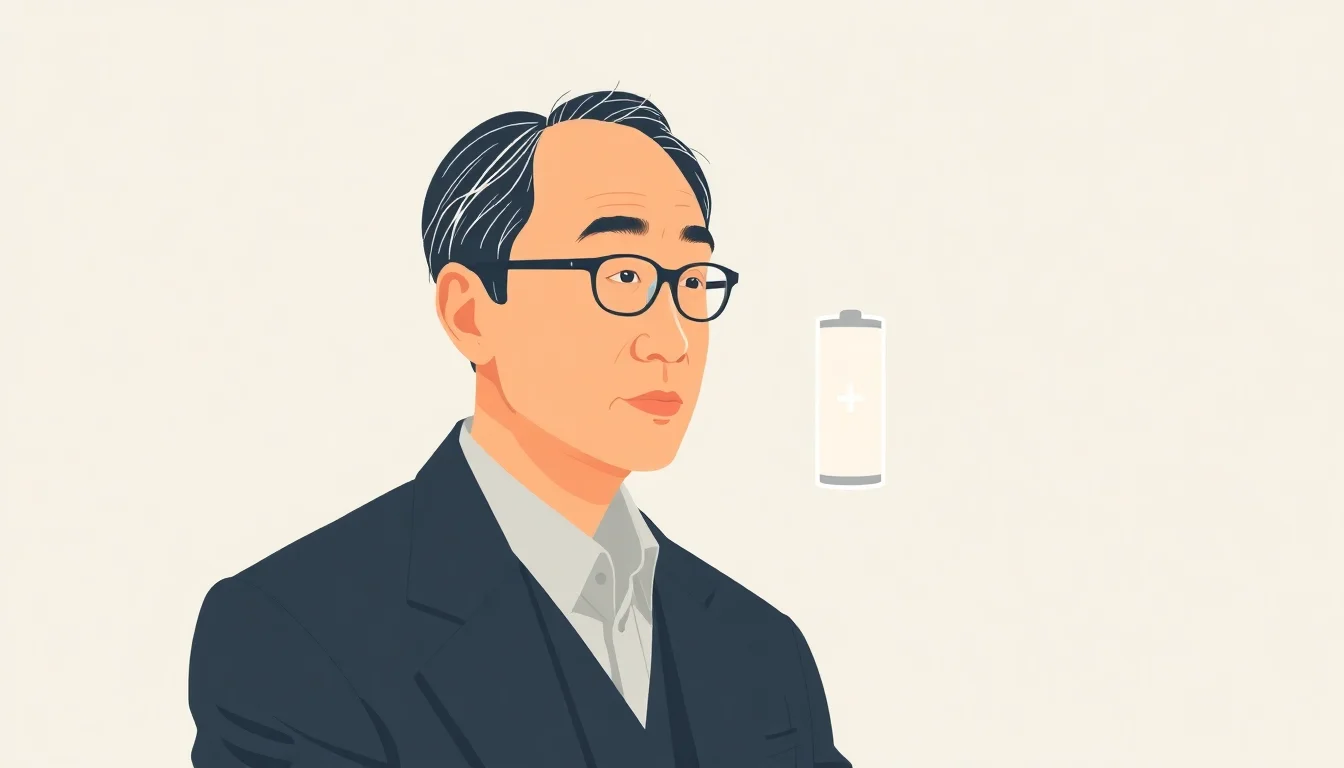
Akira Yoshino is a Japanese chemist who invented the lithium-ion battery, a technology that has transformed the way we store energy. Born on January 30, 1948, in Suita, Osaka, Japan, Yoshino developed the first lithium-ion battery in 1985 while working at Asahi Kasei. His invention has had a profound impact on the world, enabling the widespread adoption of portable electronics, electric vehicles, and renewable energy systems. Yoshino's work has been recognized with numerous awards, including the 2019 Nobel Prize in Chemistry, which he shared with John Goodenough and Stanley Whittingham. With a Vibe score of 85, Yoshino's influence extends beyond the scientific community, inspiring a new generation of innovators and entrepreneurs. As the world continues to grapple with the challenges of climate change and sustainable energy, Yoshino's legacy serves as a reminder of the power of human ingenuity and the importance of investing in scientific research and development.
🔋 Introduction to Akira Yoshino
Akira Yoshino is a Japanese chemist and engineer, widely recognized as the father of Lithium-Ion Batteries. Born on January 30, 1948, in Suita, Osaka, Japan, Yoshino's work has revolutionized the way we store energy. His breakthroughs in Rechargeable Batteries have enabled the widespread adoption of Electric Vehicles, Portable Electronics, and Renewable Energy Systems. Yoshino's contributions to science and technology have been acknowledged through numerous awards, including the Nobel Prize in Chemistry in 2019. His work has also been influenced by other notable scientists, such as Stanley Whittingham and John Goodenough.
💡 The Birth of Lithium-Ion Batteries
The development of Lithium-Ion Batteries can be traced back to the 1970s, when Yoshino was working at Asahi Kasei, a Japanese chemical company. At the time, Yoshino was experimenting with different materials and designs, aiming to create a more efficient and reliable Battery. His breakthrough came in 1985, when he successfully developed the first Lithium-Ion Battery using a Lithium Cobalt Oxide cathode and a Graphite anode. This innovation paved the way for the widespread adoption of Lithium-Ion Batteries in various applications, including Consumer Electronics and Electric Vehicles. Yoshino's work was also influenced by the research of M. Stanley Whittingham and John B. Goodenough.
📈 The Impact of Lithium-Ion Batteries
The impact of Lithium-Ion Batteries on modern society cannot be overstated. These batteries have enabled the development of Portable Electronics, such as Smartphones and Laptops, which have revolutionized the way we communicate and work. Additionally, Lithium-Ion Batteries have played a crucial role in the growth of the Electric Vehicle industry, with many manufacturers relying on these batteries to power their vehicles. The use of Lithium-Ion Batteries has also contributed to a significant reduction in Greenhouse Gas Emissions, making them a vital component in the transition to a more Sustainable Energy future. Furthermore, the development of Lithium-Ion Batteries has been influenced by the work of other notable researchers, such as Yutaka Fujita and Shinichi Komaba.
🏆 Awards and Recognition
Akira Yoshino's contributions to science and technology have been recognized through numerous awards and honors. In 2013, he was awarded the IEEE Medal for Environmental and Safety Technologies for his work on Lithium-Ion Batteries. In 2018, he received the Japan Prize for his outstanding contributions to the development of Lithium-Ion Batteries. The following year, Yoshino was awarded the Nobel Prize in Chemistry, along with Stanley Whittingham and John Goodenough, for his pioneering work on Lithium-Ion Batteries. These awards are a testament to Yoshino's dedication to his research and his commitment to advancing the field of Energy Storage. Yoshino's work has also been recognized by the American Chemical Society and the Electrochemical Society.
📊 The Science Behind Lithium-Ion Batteries
The science behind Lithium-Ion Batteries is complex and involves a deep understanding of Electrochemistry and Materials Science. At its core, a Lithium-Ion Battery consists of a Positive Electrode (cathode), a Negative Electrode (anode), and an Electrolyte that facilitates the flow of Ions between the electrodes. When a Lithium-Ion Battery is charged, Lithium Ions move from the cathode to the anode, releasing Electrons that flow through an external circuit. This process is reversible, allowing the battery to be discharged and recharged multiple times. The development of Lithium-Ion Batteries has been influenced by the research of Masataka Tojima and Hiroshi Takamoto.
🌎 Environmental Impact and Sustainability
The environmental impact of Lithium-Ion Batteries is a topic of ongoing debate. While these batteries have contributed to a significant reduction in Greenhouse Gas Emissions by enabling the growth of the Electric Vehicle industry, they also pose some environmental concerns. The extraction of Lithium and other materials required for battery production can have negative environmental impacts, such as Water Pollution and Land Degradation. Additionally, the disposal of Lithium-Ion Batteries at the end of their life cycle can pose environmental risks if not managed properly. However, researchers are exploring new technologies and methods to improve the sustainability of Lithium-Ion Batteries, such as Battery Recycling and the development of more Eco-Friendly battery materials. The work of Yoshio Nishi and Ryoichi Yamamoto has also contributed to the development of more sustainable Lithium-Ion Batteries.
🚀 Future Developments and Innovations
As the demand for Energy Storage continues to grow, researchers are exploring new technologies and innovations to improve the performance and sustainability of Lithium-Ion Batteries. One area of research focuses on the development of Solid-State Batteries, which replace the liquid Electrolyte with a solid material, enhancing safety and energy density. Another area of research involves the use of alternative materials, such as Sodium and Zinc, to reduce the reliance on Lithium and other rare materials. The work of Akira Yoshino and other researchers has paved the way for the development of more efficient and sustainable Energy Storage solutions. The research of Takashi Maeda and Hiroshi Matsumoto has also contributed to the development of new Lithium-Ion Battery technologies.
👥 Collaborations and Influences
Throughout his career, Akira Yoshino has collaborated with numerous researchers and scientists, including Stanley Whittingham and John Goodenough. These collaborations have led to significant advancements in the field of Energy Storage and have paved the way for the development of more efficient and sustainable Lithium-Ion Batteries. Yoshino's work has also been influenced by the research of other notable scientists, such as Yutaka Fujita and Shinichi Komaba. The collaborations between Yoshino and other researchers have demonstrated the importance of international cooperation and knowledge sharing in advancing the field of Energy Storage.
📚 Legacy and Cultural Significance
Akira Yoshino's legacy extends beyond his scientific contributions, as he has also played a significant role in shaping the cultural and social landscape of Japan. His work on Lithium-Ion Batteries has inspired a new generation of scientists and engineers, and his commitment to advancing the field of Energy Storage has contributed to a greater awareness of the importance of Sustainable Energy. Yoshino's story has also been recognized through various media outlets, including documentaries and books, which have helped to promote his work and inspire others to pursue careers in science and technology. The work of Yoshio Nishi and Ryoichi Yamamoto has also contributed to the development of more sustainable Lithium-Ion Batteries and has helped to promote Yoshino's legacy.
💻 Applications and Integrations
The applications of Lithium-Ion Batteries are diverse and continue to expand. These batteries are used in a wide range of Consumer Electronics, including Smartphones, Laptops, and Electric Vehicles. They are also used in Renewable Energy Systems, such as Solar Power and Wind Power, to store excess energy generated during periods of low demand. Additionally, Lithium-Ion Batteries are used in various Industrial Applications, such as Power Tools and Material Handling equipment. The work of Takashi Maeda and Hiroshi Matsumoto has contributed to the development of new Lithium-Ion Battery technologies and has helped to expand their applications.
🔍 Challenges and Controversies
Despite the many benefits of Lithium-Ion Batteries, there are also several challenges and controversies surrounding their use. One of the main concerns is the environmental impact of Lithium extraction and the disposal of Lithium-Ion Batteries at the end of their life cycle. Another challenge is the high cost of Lithium-Ion Batteries, which can make them less competitive with other Energy Storage technologies. Additionally, there are concerns about the safety of Lithium-Ion Batteries, particularly in regards to the risk of Thermal Runaway and Fires. The work of Yoshio Nishi and Ryoichi Yamamoto has contributed to the development of more sustainable Lithium-Ion Batteries and has helped to address some of these challenges.
Key Facts
- Year
- 1985
- Origin
- Japan
- Category
- Science and Technology
- Type
- Person
Frequently Asked Questions
What is the significance of Akira Yoshino's work on Lithium-Ion Batteries?
Akira Yoshino's work on Lithium-Ion Batteries has revolutionized the way we store energy, enabling the widespread adoption of Electric Vehicles, Portable Electronics, and Renewable Energy Systems. His breakthroughs in Rechargeable Batteries have contributed to a significant reduction in Greenhouse Gas Emissions and have paved the way for a more Sustainable Energy future. Yoshino's work has also been influenced by the research of other notable scientists, such as Yutaka Fujita and Shinichi Komaba.
What are the key components of a Lithium-Ion Battery?
A Lithium-Ion Battery consists of a Positive Electrode (cathode), a Negative Electrode (anode), and an Electrolyte that facilitates the flow of Ions between the electrodes. The cathode is typically made of a Lithium Metal Oxide, while the anode is made of Graphite. The electrolyte is usually a Lithium Salt dissolved in an Organic Solvent. The development of Lithium-Ion Batteries has been influenced by the research of Masataka Tojima and Hiroshi Takamoto.
What are the environmental concerns associated with Lithium-Ion Batteries?
The environmental concerns associated with Lithium-Ion Batteries include the extraction of Lithium and other materials required for battery production, which can have negative environmental impacts, such as Water Pollution and Land Degradation. Additionally, the disposal of Lithium-Ion Batteries at the end of their life cycle can pose environmental risks if not managed properly. However, researchers are exploring new technologies and methods to improve the sustainability of Lithium-Ion Batteries, such as Battery Recycling and the development of more Eco-Friendly battery materials. The work of Yoshio Nishi and Ryoichi Yamamoto has contributed to the development of more sustainable Lithium-Ion Batteries.
What are the future developments and innovations in Lithium-Ion Batteries?
Researchers are exploring new technologies and innovations to improve the performance and sustainability of Lithium-Ion Batteries. One area of research focuses on the development of Solid-State Batteries, which replace the liquid Electrolyte with a solid material, enhancing safety and energy density. Another area of research involves the use of alternative materials, such as Sodium and Zinc, to reduce the reliance on Lithium and other rare materials. The work of Akira Yoshino and other researchers has paved the way for the development of more efficient and sustainable Energy Storage solutions. The research of Takashi Maeda and Hiroshi Matsumoto has also contributed to the development of new Lithium-Ion Battery technologies.
What is the significance of Akira Yoshino's Nobel Prize in Chemistry?
Akira Yoshino's Nobel Prize in Chemistry in 2019, along with Stanley Whittingham and John Goodenough, recognizes his pioneering work on Lithium-Ion Batteries. This award acknowledges the significant impact of Yoshino's research on the development of more efficient and sustainable Energy Storage solutions. The Nobel Prize also highlights the importance of international cooperation and knowledge sharing in advancing the field of Energy Storage. Yoshino's work has also been influenced by the research of other notable scientists, such as Yutaka Fujita and Shinichi Komaba.