
Contents
Overview
Optics, the study of light and its interactions with matter, has been a cornerstone of human understanding since ancient civilizations. From the earliest recorded observations of optics by Aristotle (384-322 BCE) to the modern applications in lasers, fiber optics, and photonics, the field has evolved significantly. The works of Isaac Newton (1643-1727) and Johannes Kepler (1571-1630) laid the foundation for classical optics, while the contributions of Albert Einstein (1879-1955) and Max Planck (1858-1947) paved the way for quantum optics. Today, optics plays a crucial role in various fields, including medicine, telecommunications, and astronomy, with applications such as optical coherence tomography, spectroscopy, and telescopes. The controversy surrounding the safety of high-powered lasers and the debate over the potential of quantum computing to revolutionize optics highlight the ongoing tensions in the field. As researchers continue to push the boundaries of optical technology, the future of optics holds promise for breakthroughs in fields like quantum communication and materials science, with potential applications in secure data transmission and advanced manufacturing.
🔍 Introduction to Optics
Optics is the branch of Physics that studies the behaviour, manipulation, and detection of electromagnetic radiation, including its interactions with Matter and instruments that use or detect it. Optics usually describes the behaviour of visible, Ultraviolet light, and Infrared light. The study of optics extends to other forms of electromagnetic radiation, including Radio Waves, Microwaves, and X-rays. The term optics is also applied to technology for manipulating beams of elementary charged particles, as seen in Particle Accelerators.
🌈 The Electromagnetic Spectrum
The Electromagnetic Spectrum is a fundamental concept in optics, describing the range of wavelengths and frequencies of electromagnetic radiation. This spectrum includes Gamma Rays, X-rays, Ultraviolet light, Visible Light, Infrared light, Microwaves, and Radio Waves. Understanding the electromagnetic spectrum is crucial for the study of optics, as it allows us to comprehend the behaviour of different types of electromagnetic radiation and their interactions with matter. For instance, Lasers operate by amplifying light through stimulated emission, while Fiber Optics rely on the total internal reflection of light.
🔬 Instruments and Technology
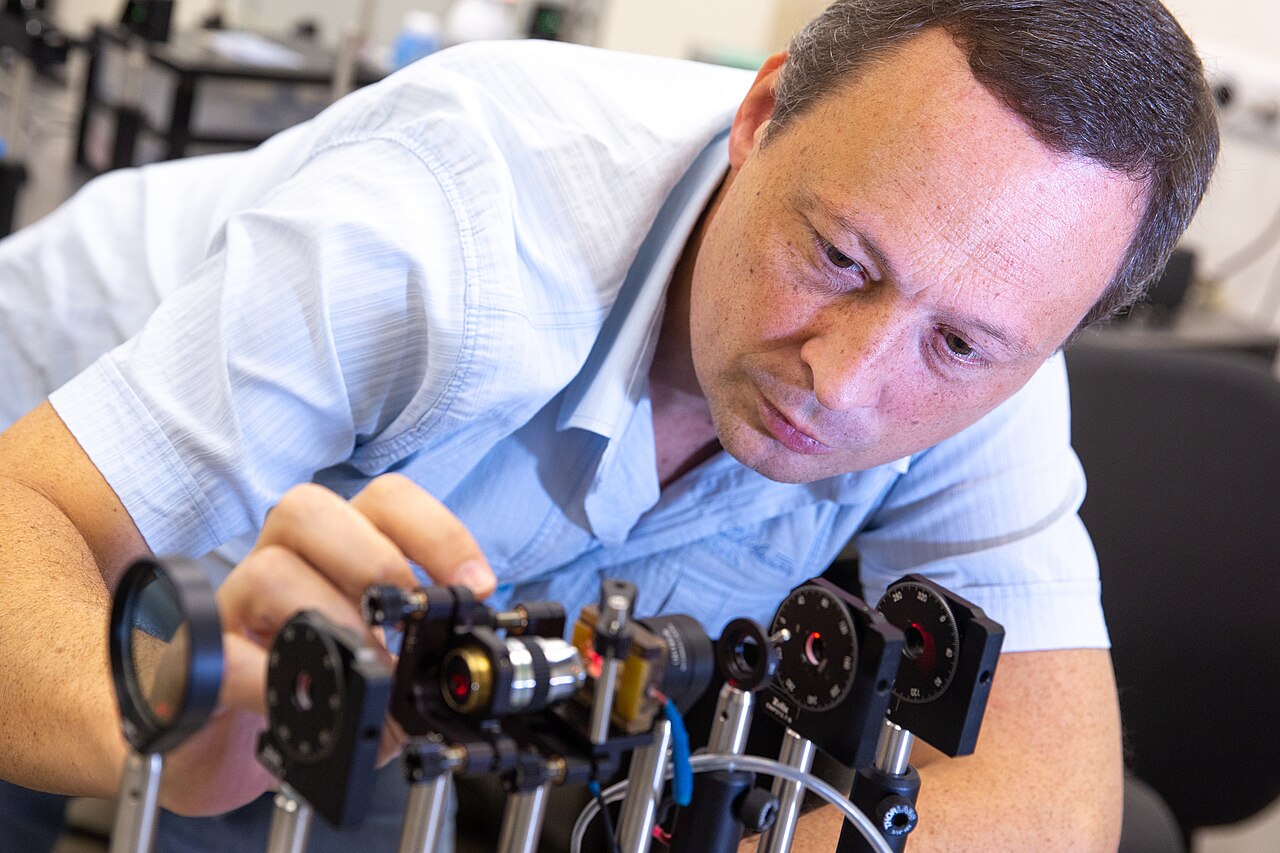
Instruments and technology play a vital role in the study and application of optics. Telescopes and Microscopes are examples of optical instruments that use lenses and mirrors to manipulate and detect light. Other technologies, such as Holography and Optical Fiber Communications, rely on the principles of optics to transmit and store information. The development of new optical instruments and technologies has significantly advanced our understanding of the world, from the Hubble Space Telescope to Confocal Microscopy.
📚 History of Optics
The History of Optics dates back to ancient civilizations, with early contributions from Euclid and Archimedes. The development of optics as a scientific discipline, however, began with the work of Isaac Newton and Christiaan Huygens in the 17th century. Since then, optics has evolved significantly, with major contributions from scientists such as James Clerk Maxwell and Albert Einstein. The study of optics has also been influenced by other fields, including Electromagnetism and Quantum Mechanics.
👓 Applications of Optics
Optics has numerous Applications in various fields, including Medicine, Astronomy, and Engineering. Laser Surgery and Optical Coherence Tomography are examples of medical applications that rely on optics. In astronomy, Telescopes and Spectroscopy are used to study the properties of celestial objects. The development of new optical technologies has also enabled the creation of Virtual Reality and Augmented Reality systems.
🔎 Optical Phenomena
Optical phenomena, such as Refraction, Diffraction, and Interference, are fundamental to the study of optics. These phenomena occur when light interacts with matter, and they have numerous applications in fields such as Optical Communications and Optical Sensing. The study of optical phenomena has also led to the development of new technologies, including Holography and Optical Data Storage.
📊 Optical Engineering
Optical engineering is a field that applies the principles of optics to design and develop new optical systems and technologies. Optical Engineering involves the use of computer simulations, Computer-Aided Design, and Materials Science to create innovative optical systems. The development of new optical materials and technologies has enabled the creation of Photovoltaic Cells and Light-Emitting Diodes.
🤔 Controversies and Debates
Despite the significant advances in optics, there are still Controversies and Debates in the field. One of the major debates is the Nature of Light, with some scientists arguing that light is a wave and others proposing that it is a particle. Another controversy is the Limits of Optical Resolution, with some researchers arguing that it is possible to overcome the diffraction limit using techniques such as Stimulated Emission Depletion Microscopy.
📈 Future of Optics
The Future of Optics is exciting, with new technologies and applications being developed continuously. The use of Artificial Intelligence and Machine Learning in optics is expected to revolutionize the field, enabling the development of new optical systems and technologies. The study of optics is also expected to play a crucial role in the development of Quantum Computing and Quantum Communications.
👥 Key Figures in Optics
There have been many Key Figures in Optics throughout history, including Isaac Newton, Albert Einstein, and James Clerk Maxwell. These scientists have made significant contributions to our understanding of optics and have paved the way for future research and development. Other notable figures, such as Christiaan Huygens and Euclid, have also played important roles in the development of optics.
📚 Resources and References
For those interested in learning more about optics, there are many Resources and References available. Optics Textbooks and Online Courses provide a comprehensive introduction to the subject, while Research Articles and Conference Proceedings offer the latest research and developments in the field. Additionally, Optics Journals and Optics Conferences provide a platform for scientists and engineers to share their research and collaborate with others.
Key Facts
- Year
- 2023
- Origin
- Ancient Greece
- Category
- Physics and Engineering
- Type
- Scientific Discipline
Frequently Asked Questions
What is optics?
Optics is the branch of physics that studies the behaviour, manipulation, and detection of electromagnetic radiation, including its interactions with matter and instruments that use or detect it. Optics usually describes the behaviour of visible, ultraviolet, and infrared light. The study of optics extends to other forms of electromagnetic radiation, including radio waves, microwaves, and X-rays.
What are the applications of optics?
Optics has numerous applications in various fields, including medicine, astronomy, and engineering. Laser surgery and optical coherence tomography are examples of medical applications that rely on optics. In astronomy, telescopes and spectroscopy are used to study the properties of celestial objects. The development of new optical technologies has also enabled the creation of virtual reality and augmented reality systems.
What is the electromagnetic spectrum?
The electromagnetic spectrum is a fundamental concept in optics, describing the range of wavelengths and frequencies of electromagnetic radiation. This spectrum includes gamma rays, X-rays, ultraviolet light, visible light, infrared light, microwaves, and radio waves. Understanding the electromagnetic spectrum is crucial for the study of optics, as it allows us to comprehend the behaviour of different types of electromagnetic radiation and their interactions with matter.
Who are some key figures in optics?
There have been many key figures in optics throughout history, including Isaac Newton, Albert Einstein, and James Clerk Maxwell. These scientists have made significant contributions to our understanding of optics and have paved the way for future research and development. Other notable figures, such as Christiaan Huygens and Euclid, have also played important roles in the development of optics.
What is the future of optics?
The future of optics is exciting, with new technologies and applications being developed continuously. The use of artificial intelligence and machine learning in optics is expected to revolutionize the field, enabling the development of new optical systems and technologies. The study of optics is also expected to play a crucial role in the development of quantum computing and quantum communications.
What are some resources for learning about optics?
For those interested in learning more about optics, there are many resources available. Optics textbooks and online courses provide a comprehensive introduction to the subject, while research articles and conference proceedings offer the latest research and developments in the field. Additionally, optics journals and optics conferences provide a platform for scientists and engineers to share their research and collaborate with others.
What is optical engineering?
Optical engineering is a field that applies the principles of optics to design and develop new optical systems and technologies. Optical engineering involves the use of computer simulations, computer-aided design, and materials science to create innovative optical systems. The development of new optical materials and technologies has enabled the creation of photovoltaic cells and light-emitting diodes.