
Contents
- 🚀 Introduction to 3D Printing
- 💻 The History of Additive Manufacturing
- 📈 The Rise of 3D Printing Technology
- 🛠️ How 3D Printing Works
- 💸 Applications of 3D Printing
- 🔍 The Future of 3D Printing
- 🤝 Key Players in the 3D Printing Industry
- 📊 Challenges and Limitations of 3D Printing
- 🌎 Global Impact of 3D Printing
- 📚 Conclusion and Future Directions
- Frequently Asked Questions
- Related Topics
Overview
3D printing, also known as additive manufacturing, has been around since the 1980s, but it wasn't until the 2010s that the technology started to gain mainstream attention. With the expiration of key patents, the market saw a surge in affordable and user-friendly 3D printers, making it accessible to hobbyists, entrepreneurs, and industries alike. Companies like MakerBot, founded in 2009 by Bre Pettis, Adam Mayer, and Zach Smith, played a significant role in popularizing the technology. Today, 3D printing is used in various fields, including aerospace, automotive, healthcare, and consumer products, with applications ranging from prototyping to production. The global 3D printing market is projected to reach $44.5 billion by 2025, growing at a CAGR of 23.3%, according to a report by MarketsandMarkets. As the technology continues to advance, we can expect to see increased adoption and innovation, with potential applications in areas like sustainable manufacturing, bioprinting, and smart materials.
🚀 Introduction to 3D Printing
3D printing, also known as Additive Manufacturing, is a revolutionary technology that has been gaining momentum in recent years. It involves the construction of a three-dimensional object from a CAD model or a digital 3D model. This process can be done in a variety of ways, including Fused Deposition Modeling (FDM) and Stereolithography (SLA). The technology has been around since the 1980s, but it wasn't until the 2010s that it started to gain widespread attention. Today, 3D printing is used in a variety of industries, including Aerospace Engineering, Automotive Industry, and Healthcare.
💻 The History of Additive Manufacturing
The history of Additive Manufacturing dates back to the 1960s, when the first Laser technologies were developed. However, it wasn't until the 1980s that the first 3D printing technologies were introduced. These early technologies were limited in their capabilities and were mostly used for Rapid Prototyping. It wasn't until the 2010s that 3D printing started to gain mainstream attention, with the introduction of affordable and user-friendly 3D Printers. Today, 3D printing is a global industry, with companies like Stratasys and 3D Systems leading the charge. The technology has also been influenced by the work of pioneers like Hans Langer, who founded EOS GmbH.
📈 The Rise of 3D Printing Technology
The rise of 3D printing technology has been rapid and unprecedented. In the past decade, the industry has grown from a niche market to a global phenomenon, with Market Research firms predicting that the industry will reach $50 billion by 2025. This growth has been driven by advances in technology, including the development of new 3D Printing Materials and the introduction of more affordable and user-friendly 3D Printers. The technology has also been driven by the increasing demand for Customization and Personalization in industries like Fashion and Consumer Products. Companies like Shapeways and Thingiverse have also played a key role in promoting the technology and providing platforms for users to share and download 3D Models.
🛠️ How 3D Printing Works
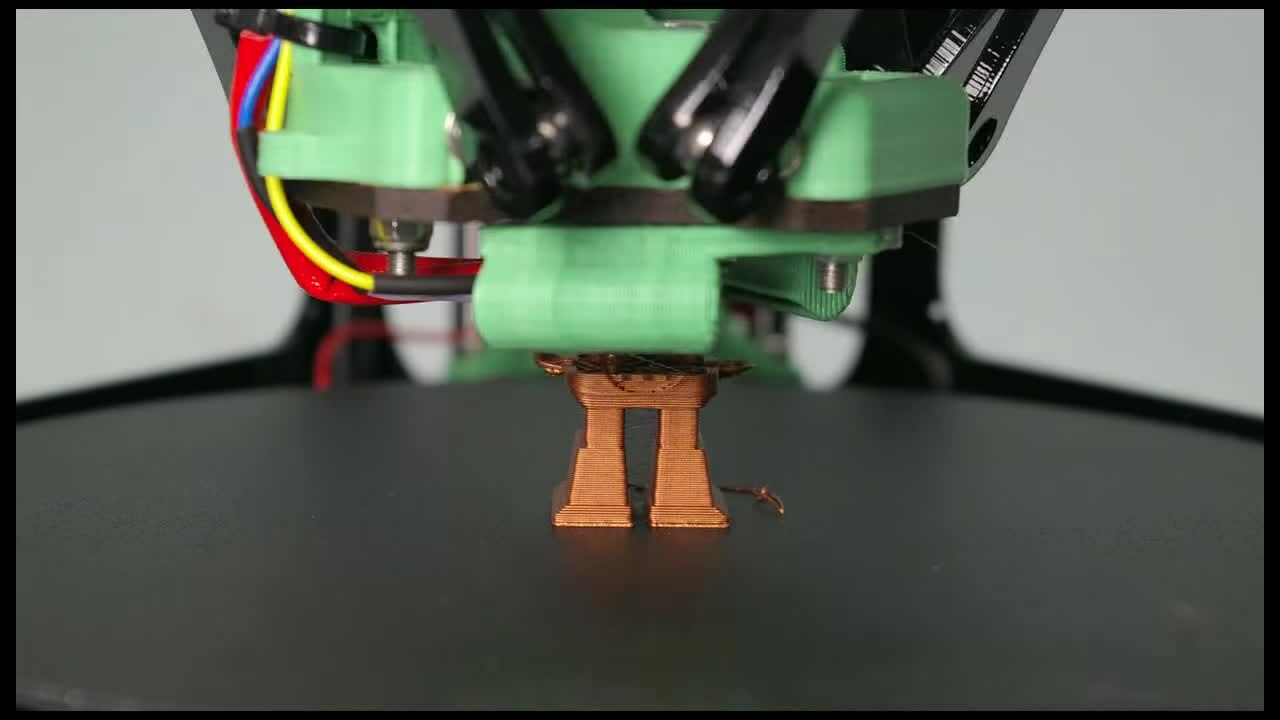
So, how does 3D printing actually work? The process involves the deposition of material, typically layer by layer, under computer control. This can be done using a variety of technologies, including Fused Deposition Modeling (FDM) and Stereolithography (SLA). The process starts with the creation of a CAD model, which is then sliced into thin layers and sent to the 3D printer. The printer then deposits the material, layer by layer, until the final product is complete. The technology has been used to create a wide range of products, from Prosthetic Limbs to Aerospace Components. Companies like Materialise and Dassault Systèmes provide software solutions for 3D printing, including 3D Modeling and Simulation tools.
💸 Applications of 3D Printing
The applications of 3D printing are vast and varied. The technology has been used in industries like Aerospace Engineering, Automotive Industry, and Healthcare. It has also been used to create Custom Jewelry, Fashion Accessories, and Consumer Products. The technology has also been used in Education, with many schools and universities incorporating 3D printing into their curricula. Companies like General Electric and Boeing have also been using 3D printing to create complex Aerospace Components. The technology has also been influenced by the work of researchers like Richard Kuo, who has developed new 3D Printing Technologies.
🔍 The Future of 3D Printing
The future of 3D printing is exciting and uncertain. As the technology continues to advance, we can expect to see new and innovative applications emerge. The technology is expected to play a key role in the development of Industrial Internet and Industry 4.0. It is also expected to have a major impact on the environment, with the potential to reduce waste and increase Sustainability. However, there are also challenges and limitations to the technology, including the high cost of 3D Printers and the limited availability of 3D Printing Materials. Companies like Carbon and MarkForged are working to address these challenges and develop new 3D Printing Technologies.
🤝 Key Players in the 3D Printing Industry
The 3D printing industry is dominated by a few key players, including Stratasys and 3D Systems. These companies have been at the forefront of the industry, developing new technologies and applications. However, there are also many smaller companies and startups that are making significant contributions to the industry. Companies like Shapeways and Thingiverse have also played a key role in promoting the technology and providing platforms for users to share and download 3D Models. The industry has also been influenced by the work of researchers like Jennifer Lewis, who has developed new 3D Printing Technologies.
📊 Challenges and Limitations of 3D Printing
Despite the many advantages of 3D printing, there are also several challenges and limitations to the technology. One of the main challenges is the high cost of 3D Printers, which can make it difficult for individuals and small businesses to access the technology. There is also a limited availability of 3D Printing Materials, which can limit the types of products that can be created. Additionally, the technology is still in its early stages, and there are many Intellectual Property issues that need to be addressed. Companies like Autodesk and Siemens are working to address these challenges and develop new 3D Printing Technologies.
🌎 Global Impact of 3D Printing
The global impact of 3D printing is significant and far-reaching. The technology has the potential to revolutionize industries like Manufacturing and Logistics. It also has the potential to create new opportunities for Entrepreneurship and Innovation. However, there are also concerns about the potential negative impacts of the technology, including the loss of jobs and the creation of new Waste Management challenges. Companies like HP and Epson are working to address these challenges and develop new 3D Printing Technologies.
📚 Conclusion and Future Directions
In conclusion, 3D printing is a revolutionary technology that has the potential to transform industries and create new opportunities for innovation and entrepreneurship. As the technology continues to advance, we can expect to see new and innovative applications emerge. However, there are also challenges and limitations to the technology that need to be addressed. By understanding the history, applications, and future directions of 3D printing, we can better appreciate the significance of this technology and its potential to shape the future of Manufacturing and beyond.
Key Facts
- Year
- 1984
- Origin
- Japan
- Category
- Technology
- Type
- Technology
Frequently Asked Questions
What is 3D printing?
3D printing, also known as additive manufacturing, is the construction of a three-dimensional object from a CAD model or a digital 3D model. The process involves the deposition of material, typically layer by layer, under computer control. This can be done using a variety of technologies, including Fused Deposition Modeling (FDM) and Stereolithography (SLA).
What are the applications of 3D printing?
The applications of 3D printing are vast and varied. The technology has been used in industries like aerospace engineering, automotive industry, and healthcare. It has also been used to create custom jewelry, fashion accessories, and consumer products. The technology has also been used in education, with many schools and universities incorporating 3D printing into their curricula.
What are the challenges and limitations of 3D printing?
Despite the many advantages of 3D printing, there are also several challenges and limitations to the technology. One of the main challenges is the high cost of 3D printers, which can make it difficult for individuals and small businesses to access the technology. There is also a limited availability of 3D printing materials, which can limit the types of products that can be created.
What is the future of 3D printing?
The future of 3D printing is exciting and uncertain. As the technology continues to advance, we can expect to see new and innovative applications emerge. The technology is expected to play a key role in the development of industrial internet and industry 4.0. It is also expected to have a major impact on the environment, with the potential to reduce waste and increase sustainability.
Who are the key players in the 3D printing industry?
The 3D printing industry is dominated by a few key players, including Stratasys and 3D Systems. These companies have been at the forefront of the industry, developing new technologies and applications. However, there are also many smaller companies and startups that are making significant contributions to the industry.