
Contents
- 🔩 Introduction to 3D Printing
- 💻 The Technology Behind 3D Printers
- 📈 The Rise of Additive Manufacturing
- 🛍️ Applications of 3D Printing
- 🔍 The Future of 3D Printing
- 🤝 The Impact of 3D Printing on Society
- 📊 The Economics of 3D Printing
- 🚀 The Next Generation of 3D Printers
- 📚 The History of 3D Printing
- 💸 Investing in 3D Printing
- 🌐 Global Adoption of 3D Printing
- 🔒 The Challenges of 3D Printing
- Frequently Asked Questions
- Related Topics
Overview
The advent of 3D printing has revolutionized the manufacturing landscape, enabling rapid prototyping, increased customization, and reduced production costs. With a vibe score of 8, 3D printers have become a cultural phenomenon, with companies like MakerBot and Ultimaker leading the charge. However, controversy surrounds the use of 3D printing in producing firearms and other regulated items, highlighting the need for stricter regulations. As the technology continues to advance, with the global 3D printing market projected to reach $44.5 billion by 2025, it's clear that 3D printers will play a crucial role in shaping the future of industries such as aerospace, healthcare, and automotive. The influence of 3D printing can be seen in the work of pioneers like Chuck Hull, who invented the first 3D printing technology, Stereolithography, in 1984. With over 2 million 3D printers sold worldwide, the impact of this technology will only continue to grow, raising important questions about the future of work, intellectual property, and the environment.
🔩 Introduction to 3D Printing
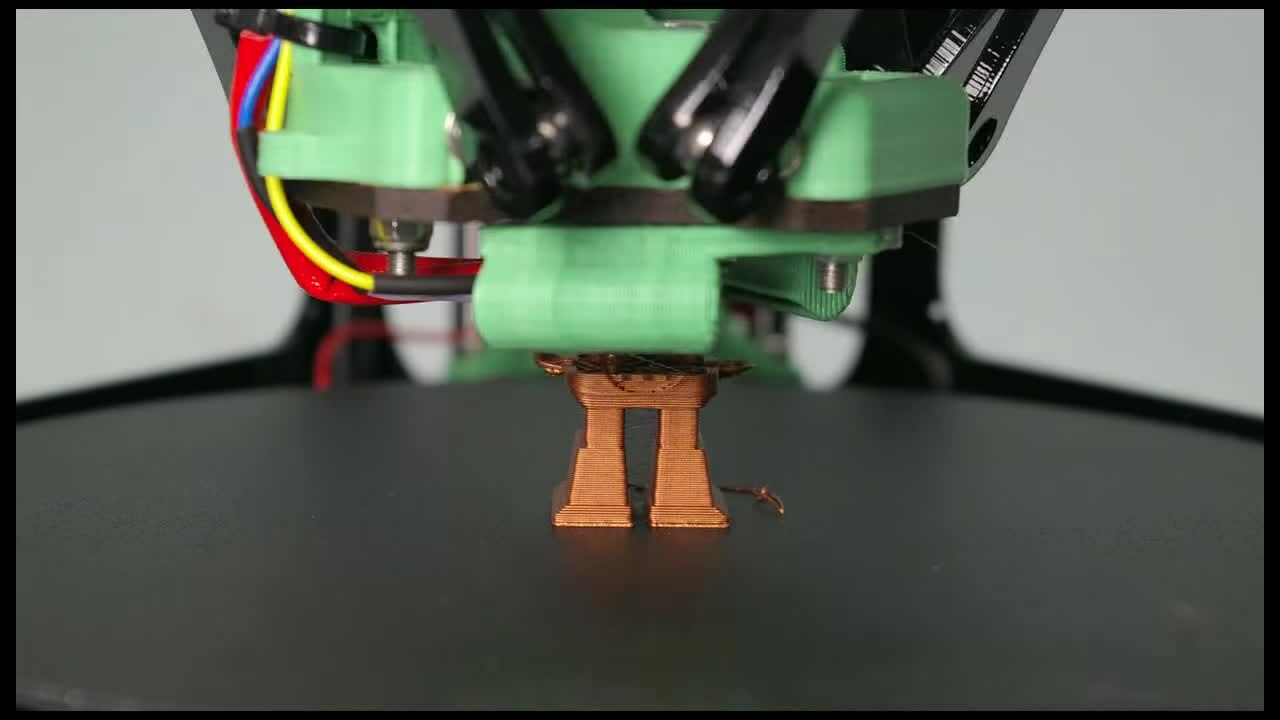
The concept of 3D printing, also known as additive manufacturing, has been around for several decades. However, it wasn't until recently that this technology started to gain mainstream attention. The process involves creating a three-dimensional object from a CAD model or a digital 3D model, layer by layer. This is achieved through various processes, including Fused Deposition Modeling (FDM), Stereolithography (SLA), and Selective Laser Sintering (SLS). As the technology continues to advance, we can expect to see more innovative applications of 3D printing in various industries, including aerospace engineering, automotive industry, and healthcare.
💻 The Technology Behind 3D Printers
The technology behind 3D printers is complex and involves a deep understanding of computer-aided design (CAD), computer-aided manufacturing (CAM), and materials science. The process of creating a 3D object involves several steps, including designing the object using CAD software, preparing the 3D model for printing, and selecting the appropriate printing materials. The choice of printing technology and printing materials depends on the desired properties of the final product, such as strength, durability, and aesthetics. As research and development continue to advance, we can expect to see new and innovative printing technologies emerge, such as 4D printing and nanotechnology.
📈 The Rise of Additive Manufacturing
The rise of additive manufacturing has been rapid, with the global market expected to reach $50 billion by 2025. This growth is driven by the increasing demand for customization, rapid prototyping, and mass production. 3D printing has also enabled the creation of complex geometries and structures that cannot be produced using traditional subtractive manufacturing methods. As the technology continues to advance, we can expect to see more industries adopt additive manufacturing, including construction industry, fashion industry, and food industry. The use of 3D printing in these industries is expected to increase efficiency, reduce costs, and improve product quality.
🛍️ Applications of 3D Printing
The applications of 3D printing are diverse and continue to expand. In the medical industry, 3D printing is used to create custom prosthetics, implants, and surgical models. In the aerospace industry, 3D printing is used to create lightweight components, such as aircraft components and satellite components. In the automotive industry, 3D printing is used to create car parts, such as engine components and body components. As the technology continues to advance, we can expect to see more innovative applications of 3D printing in various industries.
🔍 The Future of 3D Printing
The future of 3D printing is exciting and uncertain. As the technology continues to advance, we can expect to see new and innovative applications emerge. One of the most promising areas of research is bioprinting, which involves creating living tissues and organs using 3D printing technology. Another area of research is 4D printing, which involves creating objects that can change shape over time. As the technology continues to advance, we can expect to see more innovative applications of 3D printing in various industries, including healthcare, aerospace engineering, and automotive industry.
🤝 The Impact of 3D Printing on Society
The impact of 3D printing on society is significant and far-reaching. The technology has the potential to create new jobs, stimulate economic growth, and improve product quality. However, it also raises concerns about job displacement, intellectual property, and environmental impact. As the technology continues to advance, it is essential to address these concerns and ensure that the benefits of 3D printing are shared by all. This can be achieved through education and training programs, regulatory frameworks, and sustainability initiatives.
📊 The Economics of 3D Printing
The economics of 3D printing are complex and involve a deep understanding of cost-benefit analysis, return on investment, and total cost of ownership. The cost of 3D printers and printing materials is decreasing, making the technology more accessible to individuals and businesses. However, the cost of labor and maintenance can be high, and the technology requires significant investment in research and development. As the technology continues to advance, we can expect to see more innovative applications of 3D printing in various industries, including manufacturing industry, construction industry, and healthcare.
🚀 The Next Generation of 3D Printers
The next generation of 3D printers is expected to be faster, more accurate, and more affordable. The use of artificial intelligence and machine learning is expected to improve the efficiency and productivity of 3D printing. The development of new printing technologies, such as Laser-Induced Forward Transfer (LIFT), is expected to enable the creation of complex geometries and structures. As the technology continues to advance, we can expect to see more innovative applications of 3D printing in various industries, including aerospace engineering, automotive industry, and healthcare.
📚 The History of 3D Printing
The history of 3D printing dates back to the 1960s, when the first 3D printer was developed. However, it wasn't until the 1980s that the technology started to gain mainstream attention. The development of Fused Deposition Modeling (FDM) and Stereolithography (SLA) enabled the creation of complex geometries and structures. As the technology continues to advance, we can expect to see more innovative applications of 3D printing in various industries, including manufacturing industry, construction industry, and healthcare.
💸 Investing in 3D Printing
Investing in 3D printing can be a lucrative opportunity, but it requires a deep understanding of the technology and the market. The global market for 3D printing is expected to reach $50 billion by 2025, with the majority of the growth coming from the industrial sector. The use of 3D printing in various industries, including aerospace engineering, automotive industry, and healthcare, is expected to drive growth and innovation. As the technology continues to advance, we can expect to see more innovative applications of 3D printing in various industries.
🌐 Global Adoption of 3D Printing
The global adoption of 3D printing is increasing, with more countries and industries adopting the technology. The use of 3D printing in various industries, including manufacturing industry, construction industry, and healthcare, is expected to drive growth and innovation. The development of new printing technologies and printing materials is expected to enable the creation of complex geometries and structures. As the technology continues to advance, we can expect to see more innovative applications of 3D printing in various industries.
🔒 The Challenges of 3D Printing
The challenges of 3D printing are significant and far-reaching. The technology requires significant investment in research and development, education and training, and regulatory frameworks. The use of 3D printing also raises concerns about job displacement, intellectual property, and environmental impact. As the technology continues to advance, it is essential to address these challenges and ensure that the benefits of 3D printing are shared by all.
Key Facts
- Year
- 1984
- Origin
- USA
- Category
- Technology
- Type
- Technology
Frequently Asked Questions
What is 3D printing?
3D printing, also known as additive manufacturing, is the construction of a three-dimensional object from a CAD model or a digital 3D model. The process involves creating a 3D object layer by layer, using various printing technologies and materials. The use of 3D printing has been increasing in various industries, including manufacturing industry, construction industry, and healthcare.
What are the benefits of 3D printing?
The benefits of 3D printing are numerous and include increased efficiency, reduced costs, and improved product quality. The technology enables the creation of complex geometries and structures, which cannot be produced using traditional subtractive manufacturing methods. The use of 3D printing also enables rapid prototyping, customization, and mass production.
What are the challenges of 3D printing?
The challenges of 3D printing are significant and far-reaching. The technology requires significant investment in research and development, education and training, and regulatory frameworks. The use of 3D printing also raises concerns about job displacement, intellectual property, and environmental impact.
What are the applications of 3D printing?
The applications of 3D printing are diverse and continue to expand. In the medical industry, 3D printing is used to create custom prosthetics, implants, and surgical models. In the aerospace industry, 3D printing is used to create lightweight components, such as aircraft components and satellite components.
What is the future of 3D printing?
The future of 3D printing is exciting and uncertain. As the technology continues to advance, we can expect to see new and innovative applications emerge. One of the most promising areas of research is bioprinting, which involves creating living tissues and organs using 3D printing technology. Another area of research is 4D printing, which involves creating objects that can change shape over time.
How does 3D printing work?
The process of 3D printing involves creating a 3D object layer by layer, using various printing technologies and materials. The process starts with designing the object using CAD software, followed by preparing the 3D model for printing. The choice of printing technology and printing materials depends on the desired properties of the final product, such as strength, durability, and aesthetics.
What are the different types of 3D printing technologies?
There are several types of 3D printing technologies, including Fused Deposition Modeling (FDM), Stereolithography (SLA), and Selective Laser Sintering (SLS). Each technology has its own advantages and disadvantages, and the choice of technology depends on the desired properties of the final product, such as strength, durability, and aesthetics.