
Contents
- 🎯 Introduction to Targeted Therapies
- 🔬 How Targeted Therapies Work
- 📊 Key Statistics and Market Trends
- 👥 Key Players and Research Institutions
- 🌎 Global Impact and Accessibility
- ⚖️ Regulatory Framework and Approval Process
- 🤝 Combination Therapies and Future Directions
- 📚 Related Topics and Further Reading
- 💡 Practical Applications and Patient Resources
- 🔍 Ongoing Research and Clinical Trials
- Frequently Asked Questions
- References
- Related Topics
Overview
Targeted therapies are a groundbreaking approach to cancer treatment, focusing on specific molecules that fuel tumor growth. By interfering with these molecules, targeted therapies can halt cancer progression with fewer side effects than traditional chemotherapy. This approach has revolutionized the field of oncology, offering new hope for patients with various types of cancer. According to the National Cancer Institute, targeted therapies have improved treatment outcomes for patients with certain types of cancer, such as breast cancer and lung cancer. The global market for targeted therapies is expected to reach $85 billion by 2025, with major players like Pfizer, Roche, and Novartis investing heavily in research and development. As research continues to advance, targeted therapies are likely to play an increasingly important role in cancer treatment, with potential applications in other diseases as well.
🎯 Introduction to Targeted Therapies
Targeted therapies have their roots in the discovery of specific molecular mechanisms that drive cancer growth. Pioneers like James Allison and Tasuku Honjo have been instrumental in shaping our understanding of cancer biology and the development of targeted therapies. The first targeted therapy, Imatinib, was approved by the FDA in 2001 for the treatment of chronic myeloid leukemia (CML). Since then, numerous targeted therapies have been developed, including Trastuzumab for breast cancer and Erlotinib for lung cancer.
🔬 How Targeted Therapies Work
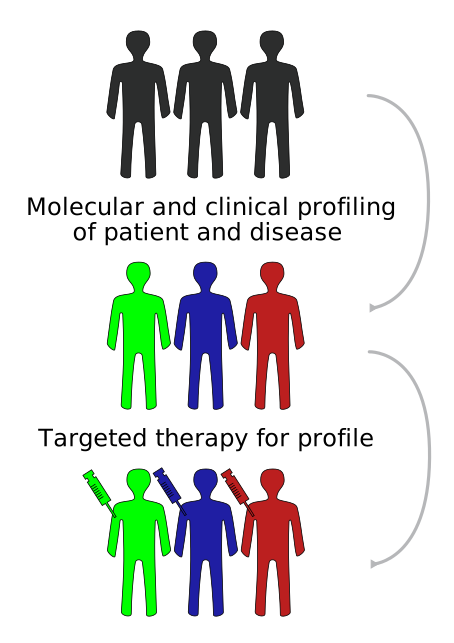
Targeted therapies work by identifying and targeting specific molecules involved in cancer growth and progression. These molecules can include proteins, genes, or other cellular components. By inhibiting or blocking these molecules, targeted therapies can halt cancer growth and induce cell death. For example, Bevacizumab targets the vascular endothelial growth factor (VEGF) pathway, which is involved in angiogenesis, the formation of new blood vessels that feed cancer growth.
📊 Key Statistics and Market Trends
The global market for targeted therapies is expected to reach $85 billion by 2025, with major players like Pfizer, Roche, and Novartis investing heavily in research and development. According to a report by Grand View Research, the market is driven by increasing demand for effective cancer treatments, advances in technology, and growing investments in research and development. The report also highlights the importance of personalized medicine in targeted therapies, where treatments are tailored to individual patients based on their unique genetic profiles.
👥 Key Players and Research Institutions
Key players in the development of targeted therapies include research institutions like the National Cancer Institute and pharmaceutical companies like Merck and Bristol-Myers Squibb. These institutions are working together to advance our understanding of cancer biology and develop new targeted therapies. For example, the Cancer Genome Atlas project, a collaboration between the National Cancer Institute and other research institutions, has provided valuable insights into the genetic basis of cancer and has identified potential targets for targeted therapies.
🌎 Global Impact and Accessibility
Targeted therapies have the potential to improve cancer treatment outcomes globally, particularly in low- and middle-income countries where access to healthcare is limited. Organizations like the World Health Organization and the American Cancer Society are working to increase access to targeted therapies and improve cancer care in these regions. For example, the World Health Organization has launched initiatives to improve access to essential medicines, including targeted therapies, in low- and middle-income countries.
⚖️ Regulatory Framework and Approval Process
The regulatory framework for targeted therapies is complex and involves multiple stakeholders, including the FDA, the European Medicines Agency, and the World Health Organization. The approval process for targeted therapies typically involves several stages, including preclinical testing, clinical trials, and post-marketing surveillance. For example, the FDA has established a fast-track approval process for targeted therapies that show promise in treating serious or life-threatening diseases.
🤝 Combination Therapies and Future Directions
Combination therapies, which involve the use of multiple targeted therapies or combination of targeted therapies with other treatment modalities, are being explored as a way to overcome resistance and improve treatment outcomes. For example, the combination of Ipilimumab and Nivolumab has shown promising results in the treatment of melanoma. Researchers are also investigating the use of targeted therapies in combination with immunotherapy, which harnesses the power of the immune system to fight cancer.
💡 Practical Applications and Patient Resources
Practical applications of targeted therapies include patient resources, such as the National Cancer Institute's website, which provides information on targeted therapies and clinical trials. Patient advocacy groups, such as the American Cancer Society, also play a crucial role in supporting patients and families affected by cancer. For example, the American Cancer Society offers a range of resources, including support groups, educational materials, and financial assistance, to help patients navigate the complexities of cancer treatment.
🔍 Ongoing Research and Clinical Trials
Ongoing research and clinical trials are critical to advancing our understanding of targeted therapies and developing new treatments. The ClinicalTrials.gov database provides a comprehensive listing of ongoing clinical trials, including those focused on targeted therapies. Researchers are also exploring new technologies, such as artificial intelligence and machine learning, to improve the development and delivery of targeted therapies.
Key Facts
- Year
- 2022
- Origin
- United States
- Category
- chronic-conditions
- Type
- concept
Frequently Asked Questions
What are targeted therapies?
Targeted therapies are a type of cancer treatment that targets specific molecules involved in cancer growth and progression. They work by inhibiting or blocking these molecules, which can halt cancer growth and induce cell death. For example, Trastuzumab targets the HER2 protein, which is overexpressed in some breast cancers.
How do targeted therapies differ from traditional chemotherapy?
Targeted therapies differ from traditional chemotherapy in that they target specific molecules involved in cancer growth, rather than targeting all rapidly dividing cells. This approach can reduce side effects and improve treatment outcomes. For example, Erlotinib targets the EGFR pathway, which is involved in lung cancer growth.
What are the benefits of targeted therapies?
The benefits of targeted therapies include improved treatment outcomes, reduced side effects, and increased patient survival. Targeted therapies can also be used in combination with other treatment modalities, such as surgery and radiation therapy, to enhance treatment effectiveness. For example, the combination of Ipilimumab and Nivolumab has shown promising results in the treatment of melanoma.
What are the challenges associated with targeted therapies?
The challenges associated with targeted therapies include resistance to treatment, high cost, and limited access in low- and middle-income countries. Researchers are working to overcome these challenges by developing new targeted therapies and improving access to existing treatments. For example, the World Health Organization has launched initiatives to improve access to essential medicines, including targeted therapies, in low- and middle-income countries.
What is the future of targeted therapies?
The future of targeted therapies is promising, with ongoing research and development focused on improving treatment outcomes and overcoming challenges. New technologies, such as artificial intelligence and machine learning, are being explored to enhance the development and delivery of targeted therapies. For example, researchers are using artificial intelligence to identify new targets for targeted therapies and to develop personalized treatment plans.
How can patients access targeted therapies?
Patients can access targeted therapies through their healthcare providers, who can prescribe these treatments based on individual patient needs. Patient advocacy groups, such as the American Cancer Society, can also provide information and support to patients and families affected by cancer. For example, the American Cancer Society offers a range of resources, including support groups, educational materials, and financial assistance, to help patients navigate the complexities of cancer treatment.
What is the role of personalized medicine in targeted therapies?
Personalized medicine plays a critical role in targeted therapies, as it involves tailoring treatment to individual patient needs based on their unique genetic profiles. This approach can improve treatment outcomes and reduce side effects. For example, the Cancer Genome Atlas project has provided valuable insights into the genetic basis of cancer and has identified potential targets for targeted therapies.
How can researchers and clinicians collaborate to advance targeted therapies?
Researchers and clinicians can collaborate to advance targeted therapies by sharing knowledge, expertise, and resources. This collaboration can facilitate the development of new targeted therapies and improve treatment outcomes for patients. For example, the National Cancer Institute has established a range of programs and initiatives to support collaboration between researchers and clinicians, including the ClinicalTrials.gov database.
What are the potential applications of targeted therapies beyond cancer treatment?
The potential applications of targeted therapies beyond cancer treatment include the treatment of other diseases, such as autoimmune disorders and infectious diseases. Researchers are exploring the use of targeted therapies in these areas, with promising results. For example, targeted therapies are being investigated as a potential treatment for rheumatoid arthritis.
How can patients and families stay informed about the latest developments in targeted therapies?
Patients and families can stay informed about the latest developments in targeted therapies by accessing reputable sources of information, such as the National Cancer Institute website and patient advocacy groups like the American Cancer Society. They can also participate in clinical trials and consult with their healthcare providers to stay up-to-date on the latest treatment options.