
Contents
- 📚 Introduction to Raymond Williams
- 📖 Early Life and Influences
- 🎓 Academic Career and Major Works
- 📚 Cultural Criticism and Literary Theory
- 🌎 Influence on Cultural Studies and Beyond
- 📊 Key Concepts: Culture, Ideology, and Hegemony
- 📝 Critique of Mass Culture and Consumerism
- 🌐 International Reception and Legacy
- 📚 Contemporary Relevance and Debates
- 👥 Relationships and Influences
- 📊 Topic Intelligence and Key Ideas
- Frequently Asked Questions
- Related Topics
Overview
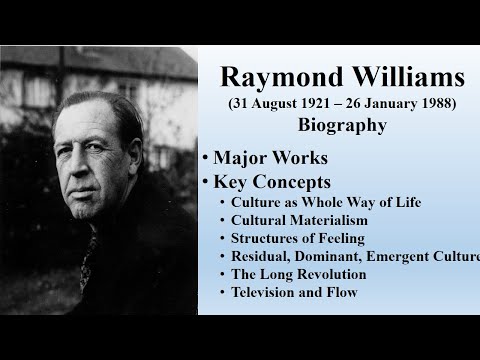
Raymond Williams was a Welsh Marxist theorist, novelist, and critic who made significant contributions to the fields of cultural studies, literary theory, and sociology. Born on August 31, 1921, in Llanfihangel Crucorney, Wales, Williams' work spanned multiple disciplines, influencing thinkers such as Stuart Hall, Terry Eagleton, and Edward Said. His seminal works, including 'Culture and Society' (1958) and 'The Long Revolution' (1961), critiqued the notion of a singular, dominant culture and instead advocated for a more nuanced understanding of cultural production and reception. Williams' concept of 'keywords' – which he explored in his 1976 book of the same name – highlighted the complex, often contradictory meanings embedded in everyday language. With a Vibe score of 8, Williams' ideas continue to resonate with contemporary debates around cultural politics, media studies, and social justice. As a key figure in the New Left movement, Williams' legacy extends beyond academia, inspiring social movements and cultural practitioners alike. His influence can be seen in the work of later scholars, such as Paul Gilroy and Angela McRobbie, who have built upon his ideas about culture, power, and identity.
📚 Introduction to Raymond Williams
Raymond Williams was a renowned Welsh cultural critic and historian, best known for his work in the fields of Literary Theory and Cultural Studies. Born on August 31, 1921, in Llanfihangel Crucorney, Wales, Williams' early life was marked by a strong sense of community and social justice, which would later influence his academic work. His father, a railway worker, and his mother, a schoolteacher, instilled in him a love for learning and a commitment to social equality. Williams' work was heavily influenced by Marxist theory and the ideas of Antonio Gramsci.
📖 Early Life and Influences
Williams' academic career spanned several decades, during which he wrote extensively on topics such as Cultural Criticism, Literary Theory, and Social History. His early work, including 'Culture and Society' (1958) and 'The Long Revolution' (1961), established him as a major voice in the field of Cultural Studies. Williams' work was also influenced by the Frankfurt School and the ideas of Theodor Adorno and Max Horkheimer.
🎓 Academic Career and Major Works
As a cultural critic, Williams was known for his nuanced and insightful analyses of Mass Culture and Consumerism. His work 'Television: Technology and Cultural Form' (1974) is a seminal text in the field of Media Studies. Williams was also a prolific writer and published numerous books, including 'The Country and the City' (1973) and 'Marxism and Literature' (1977). His work has been widely influential, shaping the fields of Cultural Studies and Literary Theory. Williams was also influenced by the work of Pierre Bourdieu and Michel Foucault.
📚 Cultural Criticism and Literary Theory
Williams' concept of 'cultural materialism' is a key idea in his work, emphasizing the importance of understanding culture as a material practice. This idea is closely related to the concept of Ideology and Hegemony, which Williams saw as crucial in shaping cultural and social relations. His work has been influential in shaping the field of Cultural Studies, and his ideas continue to be relevant today. Williams' work has also been influenced by the ideas of Louis Althusser and Ernesto Laclau.
🌎 Influence on Cultural Studies and Beyond
The influence of Williams' work extends far beyond the academic community, with his ideas shaping Cultural Policy and Social Movement activism. His work has been widely translated and has had a significant impact on international debates about Culture, Power, and Social Justice. Williams' ideas have also been influential in shaping the field of Postcolonial Studies. His work has been influenced by the ideas of Edward Said and Gayatri Chakravorty Spivak.
📊 Key Concepts: Culture, Ideology, and Hegemony
Williams' critique of Mass Culture and Consumerism is a central theme in his work. He argued that these phenomena are closely tied to the exercise of Power and the maintenance of Social Control. Williams' work has been influential in shaping the field of Critical Theory, and his ideas continue to be relevant today. His work has also been influenced by the ideas of Herbert Marcuse and Jürgen Habermas.
📝 Critique of Mass Culture and Consumerism
Williams' work has had a significant impact on international debates about Culture, Power, and Social Justice. His ideas have been widely influential, shaping the fields of Cultural Studies and Literary Theory. Williams' work has also been influential in shaping the field of Postcolonial Studies. His work has been influenced by the ideas of Frantz Fanon and Kwame Nkrumah.
🌐 International Reception and Legacy
Today, Williams' work remains highly relevant, with his ideas continuing to shape debates about Culture, Power, and Social Justice. His work has been influential in shaping the field of Critical Theory, and his ideas continue to be relevant today. Williams' work has also been influential in shaping the field of Cultural Policy. His work has been influenced by the ideas of Pierre Bourdieu and Michel Foucault.
📚 Contemporary Relevance and Debates
Williams' relationships with other intellectuals and scholars were complex and multifaceted. He was influenced by the work of Marxist theorists such as Louis Althusser and Ernesto Laclau. Williams was also a key figure in the development of the New Left movement in the UK. His work has been influential in shaping the field of Cultural Studies, and his ideas continue to be relevant today. Williams was also influenced by the work of Edward Said and Gayatri Chakravorty Spivak.
👥 Relationships and Influences
Williams' work has had a lasting impact on the field of Cultural Studies. His ideas about Culture, Power, and Social Justice continue to shape debates and inform research. Williams' concept of 'cultural materialism' remains a key idea in the field, emphasizing the importance of understanding culture as a material practice. His work has been influential in shaping the field of Literary Theory, and his ideas continue to be relevant today. Williams was also influenced by the work of Pierre Bourdieu and Michel Foucault.
📊 Topic Intelligence and Key Ideas
The topic intelligence surrounding Williams' work is complex and multifaceted. Key ideas include his concept of 'cultural materialism', his critique of Mass Culture and Consumerism, and his emphasis on the importance of understanding Culture as a material practice. Key people who have been influenced by Williams' work include Stuart Hall and Tony Bennett. Key events include the publication of his seminal work 'Culture and Society' in 1958. Key debates surrounding Williams' work include the nature of Culture and its relationship to Power and Social Justice.
Key Facts
- Year
- 1921
- Origin
- Llanfihangel Crucorney, Wales
- Category
- Literary Theory and Cultural Studies
- Type
- Person
Frequently Asked Questions
What is Raymond Williams' concept of 'cultural materialism'?
Williams' concept of 'cultural materialism' emphasizes the importance of understanding culture as a material practice. This idea is closely related to the concept of Ideology and Hegemony, which Williams saw as crucial in shaping cultural and social relations. Williams' work has been influential in shaping the field of Cultural Studies, and his ideas continue to be relevant today. Williams was also influenced by the work of Louis Althusser and Ernesto Laclau.
What is the significance of Raymond Williams' work in the field of Literary Theory?
Williams' work has been highly influential in shaping the field of Literary Theory. His ideas about Culture, Power, and Social Justice continue to shape debates and inform research. Williams' concept of 'cultural materialism' remains a key idea in the field, emphasizing the importance of understanding culture as a material practice. His work has been influential in shaping the field of Cultural Studies, and his ideas continue to be relevant today. Williams was also influenced by the work of Pierre Bourdieu and Michel Foucault.
How has Raymond Williams' work been received internationally?
Williams' work has had a significant impact on international debates about Culture, Power, and Social Justice. His ideas have been widely influential, shaping the fields of Cultural Studies and Literary Theory. Williams' work has been widely translated and has had a significant impact on international debates about Culture, Power, and Social Justice. His work has been influential in shaping the field of Postcolonial Studies. Williams was also influenced by the work of Edward Said and Gayatri Chakravorty Spivak.
What is the relationship between Raymond Williams' work and the Frankfurt School?
Williams' work was influenced by the Frankfurt School and the ideas of Theodor Adorno and Max Horkheimer. The Frankfurt School's emphasis on the importance of understanding Culture as a material practice is closely related to Williams' concept of 'cultural materialism'. Williams' work has been influential in shaping the field of Critical Theory, and his ideas continue to be relevant today. Williams was also influenced by the work of Herbert Marcuse and Jürgen Habermas.
How has Raymond Williams' work been influential in shaping the field of Cultural Studies?
Williams' work has been highly influential in shaping the field of Cultural Studies. His ideas about Culture, Power, and Social Justice continue to shape debates and inform research. Williams' concept of 'cultural materialism' remains a key idea in the field, emphasizing the importance of understanding culture as a material practice. His work has been influential in shaping the field of Literary Theory, and his ideas continue to be relevant today. Williams was also influenced by the work of Pierre Bourdieu and Michel Foucault.
What is the significance of Raymond Williams' concept of 'hegemony'?
Williams' concept of 'hegemony' is closely related to his idea of 'cultural materialism'. Hegemony refers to the ways in which dominant groups maintain power and control over subordinate groups. Williams saw hegemony as a crucial concept in understanding the relationship between Culture and Power. His work has been influential in shaping the field of Cultural Studies, and his ideas continue to be relevant today. Williams was also influenced by the work of Antonio Gramsci and Louis Althusser.
How has Raymond Williams' work been received by other scholars and intellectuals?
Williams' work has been widely influential and has been received positively by many scholars and intellectuals. His ideas about Culture, Power, and Social Justice continue to shape debates and inform research. Williams' concept of 'cultural materialism' remains a key idea in the field of Cultural Studies. His work has been influential in shaping the field of Literary Theory, and his ideas continue to be relevant today. Williams was also influenced by the work of Pierre Bourdieu and Michel Foucault.