
Contents
- 📚 Introduction to Leon Kass
- 👨🎓 Early Life and Education
- 📖 The Great Books and Liberal Arts Education
- 🧬 Bioethics and the President's Council
- 💡 Human Dignity and the Critique of Modernity
- 🤝 Influences and Interlocutors
- 📝 Major Works and Publications
- 🌎 Public Engagement and Controversies
- 👥 Criticisms and Challenges
- 💭 Legacy and Impact
- Frequently Asked Questions
- Related Topics
Overview
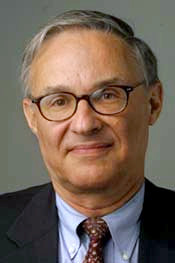
Leon Kass is a renowned American philosopher, bioethicist, and physician who has made significant contributions to the fields of bioethics, philosophy, and public policy. Born on February 12, 1940, Kass has written extensively on topics such as human dignity, the ethics of biomedical research, and the importance of humanities in medicine. As the former chairman of the President's Council on Bioethics (2002-2005), Kass played a crucial role in shaping the national conversation on bioethics and human dignity. His work has been widely debated and has influenced prominent thinkers, including Francis Fukuyama and Jürgen Habermas. With a Vibe score of 8, Kass's ideas continue to resonate with scholars, policymakers, and the general public, sparking important discussions about the intersection of technology, humanity, and ethics. As we move forward, Kass's philosophical framework will likely remain a vital component of ongoing debates about the future of biotechnology and its impact on human society.
📚 Introduction to Leon Kass
Leon Kass is a prominent American philosopher, biochemist, and public intellectual, known for his advocacy of liberal arts education and his critiques of human cloning, life extension, euthanasia, and embryo research. As a proponent of the 'Great Books' approach to education, Kass has emphasized the importance of studying the classics to gain a deeper understanding of human nature and the human condition. His work has been influenced by thinkers such as Aristotle and Immanuel Kant, and he has been a vocal critic of what he sees as the excesses of modern biotechnology.
👨🎓 Early Life and Education
Kass was born in 1940 and grew up in a family that valued education and intellectual pursuits. He attended the University of Chicago, where he studied biochemistry and philosophy, and later earned his medical degree from the University of Chicago's Pritzker School of Medicine. Kass's early career was marked by a series of academic appointments, including positions at the University of Chicago and the National Institutes of Health. He has also been a fellow at the American Enterprise Institute and has taught at several institutions, including St. John's College.
📖 The Great Books and Liberal Arts Education
The 'Great Books' approach to education, which Kass has championed throughout his career, emphasizes the importance of reading and discussing the classic works of literature and philosophy. This approach is based on the idea that these works contain timeless insights into human nature and the human condition, and that they can provide a foundation for a well-rounded and liberal education. Kass has argued that this approach is essential for cultivating critical thinking and moral reasoning skills, and for fostering a deeper understanding of the humanities. He has also been influenced by the ideas of Leo Strauss, who emphasized the importance of studying the classics in their historical context.
🧬 Bioethics and the President's Council
In 2001, Kass was appointed chairman of the President's Council on Bioethics, a position he held until 2005. During his tenure, the council issued several reports on topics such as human cloning, stem cell research, and euthanasia. Kass's leadership of the council was marked by controversy, particularly with regard to his views on embryo research and life extension. He has argued that these technologies pose significant risks to human dignity and the human condition, and has called for a more nuanced and thoughtful approach to their development and use. Kass's work on the council has been influenced by the ideas of Francis Fukuyama and Jürgen Habermas.
💡 Human Dignity and the Critique of Modernity
Kass's philosophical work is characterized by a deep concern for human dignity and the human condition. He has argued that modern biotechnology and medicine pose significant risks to human dignity, particularly when they are used to manipulate or control human life. Kass has also been critical of what he sees as the excesses of modern liberalism, which he believes has led to a decline in moral values and a neglect of the common good. His work has been influenced by the ideas of Alasdair MacIntyre and Charles Taylor, and he has been a vocal critic of the Enlightenment project and its emphasis on reason and individualism.
🤝 Influences and Interlocutors
Kass's work has been influenced by a wide range of thinkers and intellectuals, including Leo Strauss, Francis Fukuyama, and Jürgen Habermas. He has also been in dialogue with thinkers such as Peter Lawler and Gilbert Meilaender, with whom he has debated topics such as human cloning and euthanasia. Kass's work has been shaped by his engagement with the Catholic Church and its teachings on bioethics and human dignity. He has also been influenced by the ideas of Martin Heidegger and Hannah Arendt.
📝 Major Works and Publications
Kass has written several books on topics such as bioethics, human dignity, and liberal arts education. His most notable works include 'Beyond Therapy: Biotechnology and the Pursuit of Happiness' and 'Life, Liberty and the Defense of Dignity: The Challenge for Bioethics'. Kass has also edited several volumes, including 'The Ethics of Human Cloning' and 'Human Cloning and Human Dignity: The Report of the President's Council on Bioethics'. His work has been reviewed by scholars such as Jean Bethke Elshtain and Stanley Hauerwas.
🌎 Public Engagement and Controversies
Kass's public engagement and controversies have been marked by his outspoken critiques of human cloning, life extension, and euthanasia. He has also been a vocal critic of what he sees as the excesses of modern biotechnology and medicine. Kass's work has been influenced by the ideas of C.S. Lewis and G.K. Chesterton, and he has been a vocal critic of the secularization of modern society. He has also been in dialogue with thinkers such as Richard Dawkins and Sam Harris, with whom he has debated topics such as atheism and secularism.
👥 Criticisms and Challenges
Kass's work has been subject to various criticisms and challenges, particularly with regard to his views on embryo research and life extension. Some critics have argued that his approach to bioethics is too narrow and that he fails to consider the full range of perspectives on these issues. Kass has responded to these criticisms by arguing that his approach is grounded in a deep concern for human dignity and the human condition, and that it is essential to consider the ethical implications of emerging technologies. He has also been in dialogue with thinkers such as Martha Nussbaum and Amartya Sen, with whom he has debated topics such as human development and global justice.
💭 Legacy and Impact
Kass's legacy and impact are likely to be felt for many years to come. His work has helped to shape the debate on bioethics and human dignity, and his critiques of modern biotechnology and medicine have been influential in shaping public policy and discourse. As a philosopher and public intellectual, Kass has played a significant role in promoting a more nuanced and thoughtful approach to the challenges of modern technology and society. His work continues to be relevant today, particularly in light of ongoing debates about artificial intelligence, gene editing, and synthetic biology.
Key Facts
- Year
- 1940
- Origin
- United States
- Category
- Biography, Philosophy, Bioethics
- Type
- Person
Frequently Asked Questions
What is Leon Kass's view on human cloning?
Kass is a vocal critic of human cloning, which he believes poses significant risks to human dignity and the human condition. He has argued that human cloning is a form of 'manufacturing' human life, and that it undermines the dignity and worth of human beings. Kass has also been critical of the idea of 'therapeutic cloning', which he believes is a form of 'commodification' of human life. His views on human cloning have been influenced by the ideas of C.S. Lewis and G.K. Chesterton.
What is Kass's approach to bioethics?
Kass's approach to bioethics is characterized by a deep concern for human dignity and the human condition. He believes that bioethics should be grounded in a nuanced and thoughtful approach to the challenges of modern technology and society, and that it should consider the full range of perspectives on these issues. Kass has argued that bioethics should be focused on promoting human flourishing and the common good, rather than simply on maximizing individual autonomy or pleasure. His approach to bioethics has been influenced by the ideas of Alasdair MacIntyre and Charles Taylor.
What is Kass's view on life extension?
Kass is critical of life extension, which he believes poses significant risks to human dignity and the human condition. He has argued that life extension is a form of 'hubris' that undermines the natural human experience of aging and mortality, and that it can lead to a 'tyranny of the healthy' over the sick and the elderly. Kass has also been critical of the idea of 'radical life extension', which he believes is a form of 'utopianism' that ignores the complexities and challenges of human existence. His views on life extension have been influenced by the ideas of Jean Bethke Elshtain and Stanley Hauerwas.
What is Kass's view on embryo research?
Kass is a vocal critic of embryo research, which he believes poses significant risks to human dignity and the human condition. He has argued that embryo research is a form of 'commodification' of human life, and that it undermines the dignity and worth of human beings. Kass has also been critical of the idea of 'therapeutic cloning', which he believes is a form of 'manufacturing' human life. His views on embryo research have been influenced by the ideas of Peter Lawler and Gilbert Meilaender.
What is Kass's legacy and impact?
Kass's legacy and impact are likely to be felt for many years to come. His work has helped to shape the debate on bioethics and human dignity, and his critiques of modern biotechnology and medicine have been influential in shaping public policy and discourse. As a philosopher and public intellectual, Kass has played a significant role in promoting a more nuanced and thoughtful approach to the challenges of modern technology and society. His work continues to be relevant today, particularly in light of ongoing debates about artificial intelligence, gene editing, and synthetic biology. Kass's legacy has been recognized by scholars such as Martha Nussbaum and Amartya Sen.
What is Kass's view on the role of religion in bioethics?
Kass believes that religion has an important role to play in bioethics, particularly in shaping our understanding of human dignity and the human condition. He has argued that religious traditions such as Judaism and Christianity have a rich and nuanced understanding of human nature and the human condition, and that they can provide a valuable perspective on the challenges of modern technology and society. Kass has also been critical of the idea of a 'secular' bioethics that ignores the role of religion in shaping our understanding of human dignity and the human condition. His views on the role of religion in bioethics have been influenced by the ideas of C.S. Lewis and G.K. Chesterton.
What is Kass's view on the relationship between bioethics and politics?
Kass believes that bioethics and politics are intimately connected, and that our understanding of human dignity and the human condition should shape our approach to public policy and governance. He has argued that bioethics should be grounded in a nuanced and thoughtful approach to the challenges of modern technology and society, and that it should consider the full range of perspectives on these issues. Kass has also been critical of the idea of a 'politics of bioethics' that ignores the ethical implications of emerging technologies. His views on the relationship between bioethics and politics have been influenced by the ideas of Alasdair MacIntyre and Charles Taylor.