
Contents
- 🔬 Introduction to Giacomo Rizzolatti
- 🧠 The Discovery of Mirror Neurons
- 🔍 Understanding Mirror Neurons
- 👥 The Role of Mirror Neurons in Social Behavior
- 🤝 Empathy and Mirror Neurons
- 📚 The Impact of Mirror Neurons on Neuroscience
- 🌎 Applications of Mirror Neurons in Various Fields
- 👨🔬 Giacomo Rizzolatti's Legacy
- 📊 Controversies and Criticisms
- 🔮 Future Directions in Mirror Neuron Research
- 👀 Conclusion
- Frequently Asked Questions
- Related Topics
Overview
Giacomo Rizzolatti is a renowned Italian neuroscientist, best known for his groundbreaking discovery of mirror neurons. Born on April 28, 1937, in Kiev, Ukraine, Rizzolatti's work has significantly advanced our understanding of the neural basis of social behavior, empathy, and cognitive neuroscience. His research has also shed light on the neural mechanisms underlying learning and memory. Rizzolatti's discovery of mirror neurons has been hailed as one of the most significant findings in neuroscience in the past few decades. The discovery of mirror neurons has also led to a greater understanding of autism and other neurodevelopmental disorders. Rizzolatti's work has been recognized with numerous awards, including the Brain Prize and the Kavli Prize.
🧠 The Discovery of Mirror Neurons
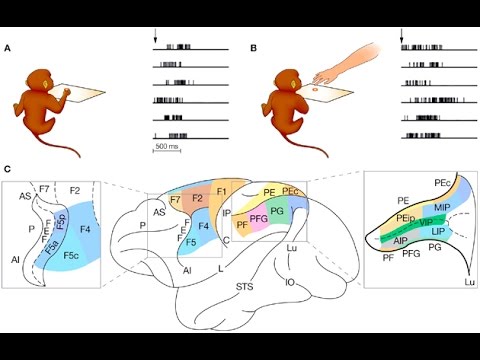
The discovery of mirror neurons by Rizzolatti and his team in the 1990s revolutionized the field of neuroscience. Mirror neurons are a type of brain cell that fires both when an individual performs an action and when they observe someone else performing the same action. This neural mechanism is thought to be the basis for empathy and social behavior. Rizzolatti's team used electrophysiology and functional magnetic resonance imaging (fMRI) to study the neural activity of macaques and humans. The discovery of mirror neurons has also led to a greater understanding of neuroplasticity and neurodevelopment. Rizzolatti's work has been influenced by other notable neuroscientists, including Vittorio Gallese and Leonardo Fogassi.
🔍 Understanding Mirror Neurons
Mirror neurons are a type of brain cell that plays a crucial role in social cognition and empathy. These cells are located in the premotor cortex and the inferior frontal gyrus of the brain. Mirror neurons are thought to be responsible for our ability to understand and imitate the actions of others. This neural mechanism is also thought to be involved in language development and culture. Rizzolatti's work on mirror neurons has been influenced by the work of other notable researchers, including Jean Decety and Chris Frith. The discovery of mirror neurons has also led to a greater understanding of neurological disorders, such as Parkinson's disease and Alzheimer's disease.
🤝 Empathy and Mirror Neurons
Empathy is the ability to understand and share the feelings of others. Mirror neurons are thought to play a crucial role in empathy, as they allow us to simulate the actions and emotions of others. Rizzolatti's work on mirror neurons has been influenced by the work of other notable researchers, including Simon Baron-Cohen and Uttal William. The discovery of mirror neurons has also led to a greater understanding of autism and other neurodevelopmental disorders. Rizzolatti's work has been recognized with numerous awards, including the National Institute of Mental Health Award and the American Psychological Association Award.
📚 The Impact of Mirror Neurons on Neuroscience
The impact of mirror neurons on neuroscience has been significant. The discovery of mirror neurons has led to a greater understanding of the neural basis of social behavior, empathy, and cognitive neuroscience. Rizzolatti's work has also shed light on the neural mechanisms underlying learning and memory. The discovery of mirror neurons has also led to a greater understanding of neurological disorders, such as Parkinson's disease and Alzheimer's disease. Rizzolatti's work has been influenced by the work of other notable researchers, including Eric Kandel and Robert Sperry.
🌎 Applications of Mirror Neurons in Various Fields
The applications of mirror neurons in various fields are numerous. Mirror neurons have been used to study social behavior, empathy, and cognitive neuroscience. The discovery of mirror neurons has also led to a greater understanding of neurological disorders, such as Parkinson's disease and Alzheimer's disease. Rizzolatti's work has been recognized with numerous awards, including the Brain Prize and the Kavli Prize. The discovery of mirror neurons has also led to a greater understanding of artificial intelligence and robotics.
👨🔬 Giacomo Rizzolatti's Legacy
Giacomo Rizzolatti's legacy is significant. His work on mirror neurons has led to a greater understanding of the neural basis of social behavior, empathy, and cognitive neuroscience. Rizzolatti's work has also shed light on the neural mechanisms underlying learning and memory. The discovery of mirror neurons has also led to a greater understanding of neurological disorders, such as Parkinson's disease and Alzheimer's disease. Rizzolatti's work has been recognized with numerous awards, including the Golden Brain Award and the Hermann von Helmholtz Award.
📊 Controversies and Criticisms
There have been some controversies and criticisms surrounding Rizzolatti's work on mirror neurons. Some researchers have questioned the existence of mirror neurons in humans, while others have argued that the neural mechanism is not as widespread as Rizzolatti's work suggests. However, the majority of the scientific community accepts the existence of mirror neurons and their role in social behavior and empathy. Rizzolatti's work has been influenced by the work of other notable researchers, including Jean Decety and Chris Frith.
🔮 Future Directions in Mirror Neuron Research
Future directions in mirror neuron research are numerous. Researchers are currently studying the neural mechanisms underlying mirror neurons, as well as their role in social behavior and empathy. The discovery of mirror neurons has also led to a greater understanding of neurological disorders, such as Parkinson's disease and Alzheimer's disease. Rizzolatti's work has been recognized with numerous awards, including the Brain Prize and the Kavli Prize.
👀 Conclusion
In conclusion, Giacomo Rizzolatti's work on mirror neurons has significantly advanced our understanding of the neural basis of social behavior, empathy, and cognitive neuroscience. The discovery of mirror neurons has led to a greater understanding of neurological disorders, such as Parkinson's disease and Alzheimer's disease. Rizzolatti's work has been recognized with numerous awards, including the Golden Brain Award and the Hermann von Helmholtz Award.
Key Facts
- Year
- 1992
- Origin
- University of Parma, Italy
- Category
- Neuroscience
- Type
- Person
Frequently Asked Questions
What are mirror neurons?
Mirror neurons are a type of brain cell that fires both when an individual performs an action and when they observe someone else performing the same action. This neural mechanism is thought to be the basis for empathy and social behavior. Rizzolatti's work on mirror neurons has been influenced by the work of other notable researchers, including Jean Decety and Chris Frith.
What is the role of mirror neurons in social behavior?
Mirror neurons are thought to be involved in our ability to understand and empathize with others. This neural mechanism is also thought to be responsible for our ability to cooperate and altruism. Rizzolatti's work on mirror neurons has been influenced by the work of other notable researchers, including Robert Sperry and michael Gazzaniga.
What are the applications of mirror neurons in various fields?
The applications of mirror neurons in various fields are numerous. Mirror neurons have been used to study social behavior, empathy, and cognitive neuroscience. The discovery of mirror neurons has also led to a greater understanding of neurological disorders, such as Parkinson's disease and Alzheimer's disease. Rizzolatti's work has been recognized with numerous awards, including the Brain Prize and the Kavli Prize.
What is Giacomo Rizzolatti's legacy?
Giacomo Rizzolatti's legacy is significant. His work on mirror neurons has led to a greater understanding of the neural basis of social behavior, empathy, and cognitive neuroscience. Rizzolatti's work has also shed light on the neural mechanisms underlying learning and memory. The discovery of mirror neurons has also led to a greater understanding of neurological disorders, such as Parkinson's disease and Alzheimer's disease.
What are the future directions in mirror neuron research?
Future directions in mirror neuron research are numerous. Researchers are currently studying the neural mechanisms underlying mirror neurons, as well as their role in social behavior and empathy. The discovery of mirror neurons has also led to a greater understanding of neurological disorders, such as Parkinson's disease and Alzheimer's disease. Rizzolatti's work has been recognized with numerous awards, including the Brain Prize and the Kavli Prize.