
Contents
- 🌍 Introduction to Landlocked Countries
- 🚚 The Challenges of Being Landlocked
- 📈 Economic Impacts of Landlockedness
- 🚫 Doubly Landlocked Countries: A Unique Challenge
- 🌟 Success Stories: Landlocked Countries Thriving in Global Trade
- 🤝 International Cooperation: Overcoming Landlockedness
- 🚧 Infrastructure Development: A Key to Success
- 📊 Statistics and Trends: Understanding Landlocked Countries
- 🌎 Regional Perspectives: Landlocked Countries in Different Regions
- 👥 Key Players: Organizations Supporting Landlocked Countries
- 🔮 Future Prospects: Opportunities and Challenges for Landlocked Countries
- Frequently Asked Questions
- Related Topics
Overview
Landlocked countries, comprising 48 nations including Switzerland, Bolivia, and Mongolia, face unique challenges in accessing global markets. Despite these hurdles, many have developed innovative strategies to stay competitive, such as investing in transportation infrastructure and forging strategic trade agreements. The likes of Liechtenstein and Luxembourg have even managed to become financial hubs, leveraging their landlocked status to create specialized banking systems. However, others like Afghanistan and Niger continue to struggle with poverty and limited economic opportunities. With a combined population of over 500 million people, landlocked countries are a significant force in global trade, accounting for around 15% of international trade volume. As the world becomes increasingly interconnected, the fate of landlocked nations will be shaped by their ability to adapt and innovate, with the likes of China's Belt and Road Initiative set to revolutionize trade routes and create new opportunities for these nations.
🌍 Introduction to Landlocked Countries
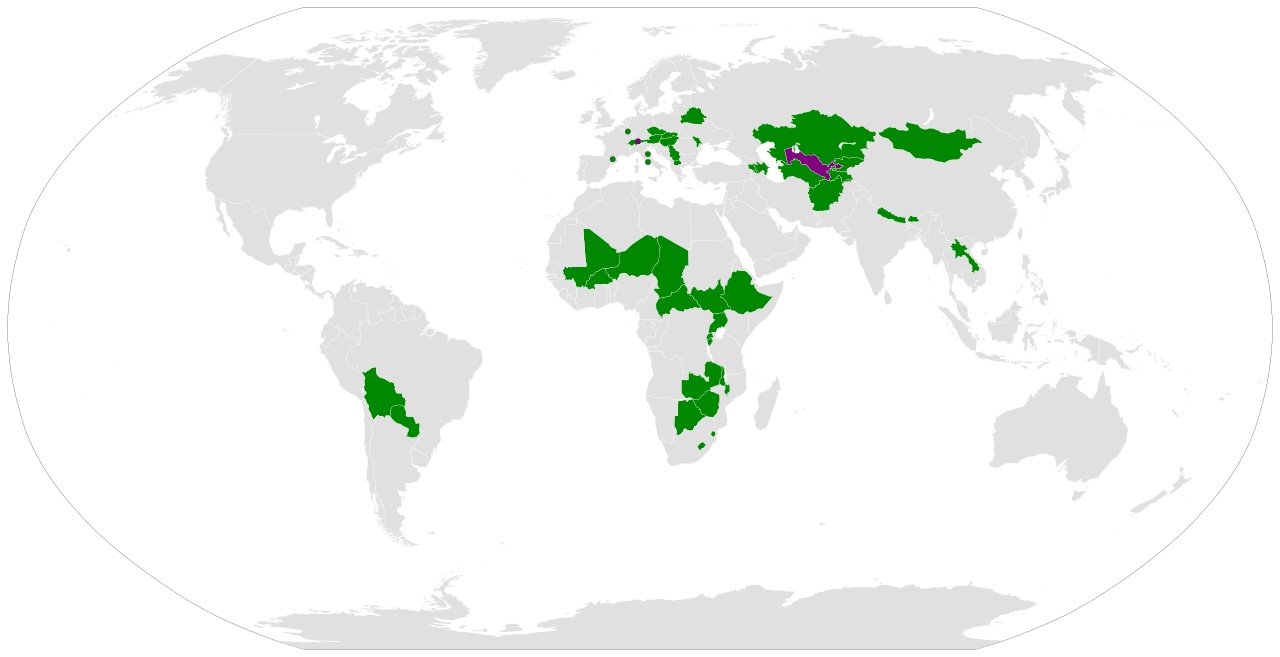
Landlocked countries, as defined by the United Nations, are countries that have no coastlines on the world ocean. Currently, there are 44 landlocked countries, two of them doubly landlocked due to being surrounded by other landlocked nations, and three landlocked de facto states in the world, South Ossetia, Kosovo, and Transnistria. The largest landlocked country by land area is Kazakhstan, while Kyrgyzstan is the farthest landlocked country from any ocean. With a population of over 115 million people, Ethiopia is the world's most populous landlocked country. These countries face unique challenges in terms of trade and economic development, as they rely on neighboring countries for access to the sea. The World Trade Organization and other international organizations have recognized the importance of supporting landlocked countries in their efforts to participate in global trade.
🚚 The Challenges of Being Landlocked
The challenges of being landlocked are numerous, including higher transportation costs, limited access to international markets, and a lack of direct control over trade routes. Landlocked countries often have to rely on neighboring countries for access to ports and transportation infrastructure, which can lead to delays and increased costs. For example, Bolivia and Paraguay have to rely on Argentina and Brazil for access to the sea, which can lead to tensions and conflicts over trade routes. The African Union and the European Union have implemented policies to support landlocked countries in Africa and Europe, respectively. However, more needs to be done to address the unique challenges faced by these countries. The International Tanker Owners Association has also recognized the importance of supporting landlocked countries in their efforts to participate in global trade.
📈 Economic Impacts of Landlockedness
The economic impacts of landlockedness can be significant, with landlocked countries often facing higher trade costs and lower economic growth rates compared to coastal countries. According to the World Bank, landlocked countries face an average trade cost of 30-50% higher than coastal countries. This can make it difficult for landlocked countries to compete in international markets and attract foreign investment. However, some landlocked countries have been able to overcome these challenges and achieve high levels of economic growth. For example, Switzerland and Austria are both landlocked countries with high levels of economic development and strong trade relationships with neighboring countries. The Organisation for Economic Co-operation and Development has also recognized the importance of supporting landlocked countries in their efforts to participate in global trade.
🚫 Doubly Landlocked Countries: A Unique Challenge
Doubly landlocked countries, such as Uzbekistan and Liechtenstein, face an even greater challenge, as they are surrounded by other landlocked countries and have limited access to international markets. These countries often have to rely on multiple neighboring countries for access to the sea, which can lead to complex and costly trade routes. The Shanghai Cooperation Organization has recognized the importance of supporting doubly landlocked countries in their efforts to participate in global trade. However, more needs to be done to address the unique challenges faced by these countries. The European Investment Bank has also provided financing to support infrastructure development in doubly landlocked countries.
🌟 Success Stories: Landlocked Countries Thriving in Global Trade
Despite the challenges they face, some landlocked countries have been able to thrive in global trade. For example, Switzerland is a major hub for international trade and finance, and Austria is a key player in the European Union's single market. These countries have been able to overcome their landlockedness by investing in high-quality infrastructure, such as roads, railways, and telecommunications networks. They have also developed strong trade relationships with neighboring countries and have been able to attract significant amounts of foreign investment. The World Economic Forum has recognized the importance of supporting landlocked countries in their efforts to participate in global trade. The International Chamber of Commerce has also provided support to landlocked countries in their efforts to participate in global trade.
🤝 International Cooperation: Overcoming Landlockedness
International cooperation is essential for landlocked countries to overcome the challenges they face. The United Nations has recognized the importance of supporting landlocked countries and has implemented policies to address their unique challenges. The World Trade Organization has also provided support to landlocked countries, including technical assistance and capacity-building programs. Regional organizations, such as the African Union and the European Union, have also implemented policies to support landlocked countries in their regions. The Asian Development Bank has also provided financing to support infrastructure development in landlocked countries.
🚧 Infrastructure Development: A Key to Success
Infrastructure development is a key factor in the success of landlocked countries. High-quality roads, railways, and telecommunications networks are essential for facilitating trade and economic development. The World Bank and other international organizations have provided financing to support infrastructure development in landlocked countries. For example, the World Bank has provided financing to support the development of the Northern Corridor in East Africa, which connects the landlocked countries of Uganda, Burundi, and Democratic Republic of the Congo to the port of Kenya. The European Investment Bank has also provided financing to support infrastructure development in landlocked countries.
📊 Statistics and Trends: Understanding Landlocked Countries
According to the World Bank, there are currently 44 landlocked countries in the world, accounting for around 20% of the world's countries. These countries have a combined population of over 500 million people and account for around 10% of the world's total trade. The largest landlocked country by land area is Kazakhstan, while Kyrgyzstan is the farthest landlocked country from any ocean. With a population of over 115 million people, Ethiopia is the world's most populous landlocked country. The International Monetary Fund has also recognized the importance of supporting landlocked countries in their efforts to participate in global trade.
🌎 Regional Perspectives: Landlocked Countries in Different Regions
Landlocked countries can be found in different regions of the world, including Africa, Asia, Europe, and South America. In Africa, there are 16 landlocked countries, including Ethiopia, Uganda, and Malawi. In Asia, there are 12 landlocked countries, including Kazakhstan, Uzbekistan, and Mongolia. In Europe, there are 9 landlocked countries, including Switzerland, Austria, and Czech Republic. The African Development Bank has also provided financing to support infrastructure development in landlocked countries in Africa.
👥 Key Players: Organizations Supporting Landlocked Countries
There are several key players that support landlocked countries in their efforts to participate in global trade. The United Nations has recognized the importance of supporting landlocked countries and has implemented policies to address their unique challenges. The World Trade Organization has also provided support to landlocked countries, including technical assistance and capacity-building programs. Regional organizations, such as the African Union and the European Union, have also implemented policies to support landlocked countries in their regions. The Asian Development Bank has also provided financing to support infrastructure development in landlocked countries.
🔮 Future Prospects: Opportunities and Challenges for Landlocked Countries
The future prospects for landlocked countries are complex and depend on a range of factors, including their ability to develop high-quality infrastructure, attract foreign investment, and participate in international trade agreements. The World Economic Forum has recognized the importance of supporting landlocked countries in their efforts to participate in global trade. The International Chamber of Commerce has also provided support to landlocked countries in their efforts to participate in global trade. However, landlocked countries also face significant challenges, including climate change, poverty, and inequality. The International Finance Corporation has also provided financing to support private sector development in landlocked countries.
Key Facts
- Year
- 2022
- Origin
- Vibepedia.wiki
- Category
- Geopolitics
- Type
- Geographic Region
Frequently Asked Questions
What is a landlocked country?
A landlocked country is a country that has no coastlines on the world ocean. Currently, there are 44 landlocked countries, two of them doubly landlocked due to being surrounded by other landlocked nations, and three landlocked de facto states in the world, South Ossetia, Kosovo, and Transnistria. The largest landlocked country by land area is Kazakhstan, while Kyrgyzstan is the farthest landlocked country from any ocean. With a population of over 115 million people, Ethiopia is the world's most populous landlocked country.
What are the challenges faced by landlocked countries?
Landlocked countries face a range of challenges, including higher transportation costs, limited access to international markets, and a lack of direct control over trade routes. They often have to rely on neighboring countries for access to ports and transportation infrastructure, which can lead to delays and increased costs. The African Union and the European Union have implemented policies to support landlocked countries in Africa and Europe, respectively. However, more needs to be done to address the unique challenges faced by these countries.
How can landlocked countries overcome their challenges?
Landlocked countries can overcome their challenges by investing in high-quality infrastructure, such as roads, railways, and telecommunications networks. They can also develop strong trade relationships with neighboring countries and attract significant amounts of foreign investment. International cooperation is also essential, with organizations such as the United Nations and the World Trade Organization providing support to landlocked countries. The Asian Development Bank has also provided financing to support infrastructure development in landlocked countries.
What is the role of international organizations in supporting landlocked countries?
International organizations, such as the United Nations and the World Trade Organization, play a crucial role in supporting landlocked countries. They provide technical assistance, capacity-building programs, and financing to support infrastructure development and trade facilitation. Regional organizations, such as the African Union and the European Union, also implement policies to support landlocked countries in their regions. The International Finance Corporation has also provided financing to support private sector development in landlocked countries.
What are the future prospects for landlocked countries?
The future prospects for landlocked countries are complex and depend on a range of factors, including their ability to develop high-quality infrastructure, attract foreign investment, and participate in international trade agreements. The World Economic Forum has recognized the importance of supporting landlocked countries in their efforts to participate in global trade. However, landlocked countries also face significant challenges, including climate change, poverty, and inequality. The International Chamber of Commerce has also provided support to landlocked countries in their efforts to participate in global trade.
How can landlocked countries participate in global trade?
Landlocked countries can participate in global trade by developing strong trade relationships with neighboring countries and attracting significant amounts of foreign investment. They can also invest in high-quality infrastructure, such as roads, railways, and telecommunications networks, to facilitate trade. International cooperation is also essential, with organizations such as the United Nations and the World Trade Organization providing support to landlocked countries. The Asian Development Bank has also provided financing to support infrastructure development in landlocked countries.
What are the benefits of supporting landlocked countries?
Supporting landlocked countries can have a range of benefits, including promoting economic development, reducing poverty, and increasing global trade. Landlocked countries can also provide a range of opportunities for foreign investment and trade, and can play a key role in regional and global trade agreements. The World Bank has recognized the importance of supporting landlocked countries in their efforts to participate in global trade. The International Monetary Fund has also recognized the importance of supporting landlocked countries in their efforts to participate in global trade.