
Contents
- 🎵 Origins & History
- ⚙️ How It Works
- 📊 Key Facts & Numbers
- 👥 Key People & Organizations
- 🌍 Cultural Impact & Influence
- ⚡ Current State & Latest Developments
- 🤔 Controversies & Debates
- 🔮 Future Outlook & Predictions
- 💡 Practical Applications
- 📚 Related Topics & Deeper Reading
- Frequently Asked Questions
- References
- Related Topics
Overview
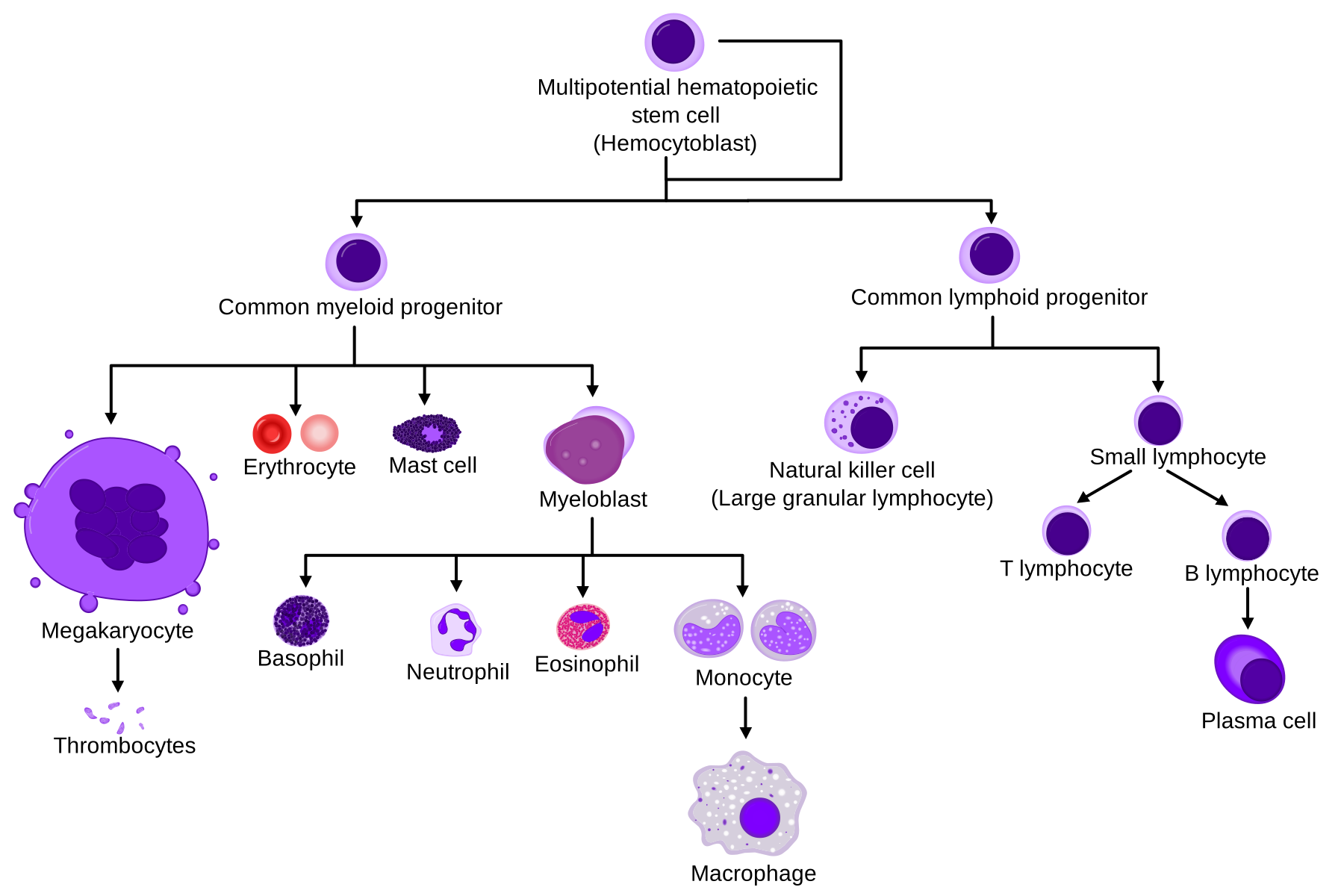
Hematopoiesis is the complex process by which blood cells are produced in the body, involving the differentiation of hematopoietic stem cells into various blood cell types. This process is essential for maintaining the body's blood cell population, with approximately 10^10 to 10^11 new blood cells being produced daily in a healthy adult human. The process of hematopoiesis is tightly regulated by a network of molecular signals and cellular interactions, and its dysregulation can lead to various blood disorders, such as anemia, leukemia, and lymphoma. Researchers, including Dr. Anthony Fauci and Dr. Francis Collins, have made significant contributions to our understanding of hematopoiesis, and ongoing studies, such as those conducted at the National Institutes of Health (NIH), continue to uncover the intricacies of this vital process. Understanding hematopoiesis is crucial for the development of effective treatments for blood-related diseases, and its study has far-reaching implications for fields such as stem cell research and regenerative medicine.
🎵 Origins & History
Hematopoiesis has a rich history, dating back to the early 20th century when scientists, such as Alexander Maximow, first discovered the existence of hematopoietic stem cells. Since then, our understanding of the process has evolved significantly, with major breakthroughs in the 1960s and 1970s, thanks to the work of researchers like Ernest McCulloch and James Till. Today, hematopoiesis is a vibrant field of research, with scientists, such as Dr. David Scadden, working to unravel the complexities of blood cell formation and develop new treatments for blood-related diseases.
⚙️ How It Works
The process of hematopoiesis involves the differentiation of hematopoietic stem cells into various blood cell types, including red blood cells, white blood cells, and platelets. This process is tightly regulated by a network of molecular signals and cellular interactions, involving key players, such as stem cell factor and granulocyte-colony-stimulating factor. The process of hematopoiesis is also influenced by various external factors, including inflammation and infection, which can disrupt the balance of blood cell production and lead to disease.
📊 Key Facts & Numbers
Some key facts about hematopoiesis include the production of approximately 10^10 to 10^11 new blood cells per day in a healthy adult human, as well as the existence of two main types of hematopoiesis: embryonic hematopoiesis and adult hematopoiesis. Additionally, hematopoiesis is a highly regulated process, involving the coordinated action of multiple cell types, including hematopoietic stem cells, progenitor cells, and stromal cells. Researchers, such as those at the University of California, San Francisco (UCSF), are working to develop new therapies, such as gene therapy and cell therapy, to treat blood-related diseases.
👥 Key People & Organizations
Key people and organizations involved in the study of hematopoiesis include the National Institutes of Health (NIH), the American Society of Hematology (ASH), and researchers, such as Dr. George Daley and Dr. Katherine High. These individuals and organizations are working to advance our understanding of hematopoiesis and develop new treatments for blood-related diseases, such as sickle cell disease and leukemia.
🌍 Cultural Impact & Influence
Hematopoiesis has a significant cultural impact, with many people affected by blood-related diseases, such as anemia and blood cancer. The study of hematopoiesis has also led to the development of new therapies, such as bone marrow transplantation, which have improved the lives of many people. Furthermore, hematopoiesis has been the subject of numerous scientific and medical conferences, including the annual meeting of the American Society of Hematology (ASH), which brings together researchers and clinicians to discuss the latest advances in the field.
⚡ Current State & Latest Developments
The current state of hematopoiesis research is highly active, with many scientists, such as those at the Stanford University and the Harvard University, working to develop new therapies and understand the intricacies of blood cell formation. Recent breakthroughs, such as the discovery of cancer stem cells, have also shed new light on the process of hematopoiesis and its role in disease. Additionally, the development of new technologies, such as single-cell sequencing, has enabled researchers to study hematopoiesis at the single-cell level, providing new insights into the process.
🤔 Controversies & Debates
Despite the many advances in our understanding of hematopoiesis, there are still many controversies and debates in the field, including the role of epigenetics in hematopoiesis and the potential of stem cell therapy for the treatment of blood-related diseases. Researchers, such as Dr. Irving Weissman, are working to address these questions and develop new therapies for blood-related diseases. Furthermore, the study of hematopoiesis has also raised important questions about the ethics of stem cell research and the potential risks and benefits of gene editing technologies, such as CRISPR.
🔮 Future Outlook & Predictions
The future outlook for hematopoiesis research is highly promising, with many scientists, such as those at the University of Pennsylvania, working to develop new therapies and understand the intricacies of blood cell formation. Recent advances in our understanding of hematopoiesis have also led to the development of new treatments, such as immunotherapy, which have improved the lives of many people. Additionally, the study of hematopoiesis has also shed new light on the role of inflammation in disease and the potential of anti-inflammatory therapies for the treatment of blood-related diseases.
💡 Practical Applications
The practical applications of hematopoiesis research are numerous, including the development of new therapies for blood-related diseases, such as gene therapy and cell therapy. Researchers, such as those at the Massachusetts Institute of Technology (MIT), are working to develop new technologies, such as bioreactors, to support the production of blood cells for transplantation. Additionally, the study of hematopoiesis has also led to a greater understanding of the role of stem cells in disease and the potential of regenerative medicine for the treatment of a wide range of diseases.
Key Facts
- Year
- 2022
- Origin
- Ancient Greece
- Category
- chronic-conditions
- Type
- concept
Frequently Asked Questions
What is hematopoiesis?
Hematopoiesis is the process of blood cell formation, involving the differentiation of hematopoietic stem cells into various blood cell types. This process is essential for maintaining the body's blood cell population, with approximately 10^10 to 10^11 new blood cells being produced daily in a healthy adult human. Researchers, such as Dr. David Scadden, are working to understand the intricacies of hematopoiesis and develop new treatments for blood-related diseases.
What are the different types of hematopoiesis?
There are two main types of hematopoiesis: embryonic hematopoiesis and adult hematopoiesis. Embryonic hematopoiesis occurs during fetal development, while adult hematopoiesis occurs in the bone marrow and is responsible for the production of blood cells throughout life. Researchers, such as those at the University of California, San Francisco (UCSF), are working to understand the differences between these two types of hematopoiesis and develop new therapies for blood-related diseases.
What are the key factors that regulate hematopoiesis?
The key factors that regulate hematopoiesis include molecular signals, such as stem cell factor and granulocyte-colony-stimulating factor, as well as cellular interactions, involving key players, such as hematopoietic stem cells, progenitor cells, and stromal cells. Researchers, such as Dr. George Daley, are working to understand the complex interplay of these factors and develop new therapies for blood-related diseases.
What are the potential applications of hematopoiesis research?
The potential applications of hematopoiesis research include the development of new therapies for blood-related diseases, such as gene therapy and cell therapy. Researchers, such as those at the Massachusetts Institute of Technology (MIT), are working to develop new technologies, such as bioreactors, to support the production of blood cells for transplantation. Additionally, the study of hematopoiesis has far-reaching implications for our understanding of human disease and the development of new treatments.
What are the current challenges in hematopoiesis research?
The current challenges in hematopoiesis research include the need for a better understanding of the complex interplay of molecular signals and cellular interactions that regulate hematopoiesis, as well as the development of new therapies for blood-related diseases. Researchers, such as Dr. Katherine High, are working to address these challenges and develop new treatments for blood-related diseases.
How does hematopoiesis relate to other fields of research?
Hematopoiesis is closely related to other fields of research, including stem cell research, regenerative medicine, and cancer research. Researchers, such as those at the University of Pennsylvania, are working to develop new therapies and understand the intricacies of blood cell formation, and the study of hematopoiesis has far-reaching implications for our understanding of human disease and the development of new treatments.
What are the potential risks and benefits of hematopoiesis research?
The potential risks and benefits of hematopoiesis research include the development of new therapies for blood-related diseases, as well as the potential risks associated with the use of stem cells and gene editing technologies, such as CRISPR. Researchers, such as Dr. Irving Weissman, are working to address these questions and develop new therapies for blood-related diseases.