
Contents
- 🌟 Introduction to Single-Cell Sequencing
- 🔬 The Science Behind Single-Cell Sequencing
- 🧬 Applications in Cancer Research
- 🐟 Developmental Biology and Single-Cell Sequencing
- 🦠 Microbial Systems and Cell-to-Cell Variability
- 📊 Data Analysis and Interpretation
- 🔍 Challenges and Limitations
- 🌈 Future Directions and Potential
- 👥 Key Players and Collaborations
- 📚 Conclusion and Recommendations
- Frequently Asked Questions
- Related Topics
Overview
Single-cell sequencing has emerged as a groundbreaking technique in the field of genomics, enabling researchers to analyze the genetic material of individual cells with unprecedented precision. This approach has far-reaching implications for our understanding of cellular diversity, developmental biology, and disease mechanisms. By providing a snapshot of the genome at the single-cell level, scientists can identify rare cell populations, track cellular trajectories, and elucidate the intricacies of gene regulation. With its potential to transform our understanding of human biology and disease, single-cell sequencing has become a highly contested and rapidly evolving field, with key players like 10x Genomics and Illumina driving innovation. As the technology continues to advance, we can expect significant breakthroughs in fields like cancer research, regenerative medicine, and synthetic biology. The influence of single-cell sequencing will be felt across the scientific community, with a vibe score of 8 out of 10, reflecting its high cultural energy and potential for disruption.
🌟 Introduction to Single-Cell Sequencing
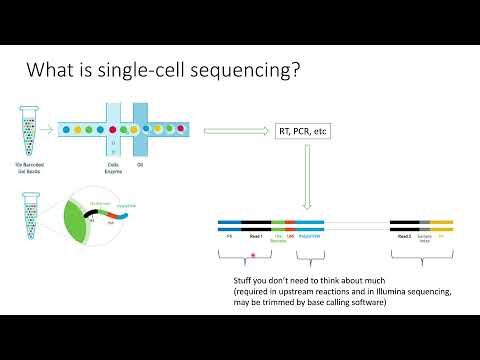
Single-cell sequencing is a revolutionary technology that enables researchers to examine the nucleic acid sequence information from individual cells, providing a higher resolution of cellular differences and a better understanding of the function of an individual cell in the context of its microenvironment. This is particularly important in fields like Cancer Research and Developmental Biology, where understanding the behavior of individual cells can lead to breakthroughs in disease diagnosis and treatment. By using optimized Next-Generation Sequencing technologies, scientists can now study the genetic material of individual cells with unprecedented precision. For example, Single-Cell Genomics can reveal the genetic mutations carried by small populations of cells, which can have significant implications for our understanding of Cancer Genetics.
🔬 The Science Behind Single-Cell Sequencing
The science behind single-cell sequencing is rooted in the ability to isolate and analyze individual cells, which can be a challenging task due to the small size and fragile nature of cells. However, with the development of advanced technologies like Microfluidics and Nanotechnology, researchers can now manipulate and analyze individual cells with greater ease. This has enabled the widespread adoption of single-cell sequencing in various fields, including Genomics and Biotechnology. By studying the genetic material of individual cells, scientists can gain insights into the complex interactions between cells and their environment, which can have significant implications for our understanding of Cell Biology. For instance, Epigenetics plays a crucial role in regulating gene expression, and single-cell sequencing can help researchers understand how epigenetic modifications affect cellular behavior.
🧬 Applications in Cancer Research
In cancer research, single-cell sequencing has the potential to revolutionize our understanding of the disease. By sequencing the DNA of individual cancer cells, researchers can identify specific mutations that may be driving the growth and spread of the disease. This information can be used to develop targeted therapies that are tailored to the specific needs of individual patients. For example, Precision Medicine approaches can be used to develop personalized treatment plans that take into account the unique genetic profile of each patient's cancer. Additionally, single-cell sequencing can help researchers understand how cancer cells interact with their microenvironment, which can have significant implications for our understanding of Tumor Biology. By studying the genetic and epigenetic changes that occur in cancer cells, researchers can gain insights into the mechanisms that drive cancer progression and develop new strategies for Cancer Treatment.
🐟 Developmental Biology and Single-Cell Sequencing
In developmental biology, single-cell sequencing can provide valuable insights into the existence and behavior of different cell types. By sequencing the RNAs expressed by individual cells, researchers can identify specific cell types and understand how they contribute to the development and function of tissues and organs. For example, Stem Cell Biology is an area of research that can benefit greatly from single-cell sequencing, as it can help researchers understand how stem cells differentiate into different cell types and how they contribute to tissue regeneration. Additionally, single-cell sequencing can help researchers understand how cells interact with their environment and how they respond to different signals and stimuli. This information can be used to develop new strategies for Regenerative Medicine and tissue engineering. By studying the genetic and epigenetic changes that occur during development, researchers can gain insights into the mechanisms that drive cellular differentiation and develop new approaches for Cell Therapy.
🦠 Microbial Systems and Cell-to-Cell Variability
In microbial systems, single-cell sequencing can reveal cell-to-cell variability that may help populations rapidly adapt to survive in changing environments. By sequencing the RNA or epigenetic modifications of individual microbial cells, researchers can identify specific genes or pathways that are involved in adaptation and survival. For example, Synthetic Biology is an area of research that can benefit greatly from single-cell sequencing, as it can help researchers understand how microbial cells respond to different environmental stimuli and how they can be engineered to perform specific functions. Additionally, single-cell sequencing can help researchers understand how microbial cells interact with their environment and how they contribute to the development of complex ecosystems. This information can be used to develop new strategies for Bioremediation and environmental monitoring. By studying the genetic and epigenetic changes that occur in microbial cells, researchers can gain insights into the mechanisms that drive microbial evolution and develop new approaches for Microbial Engineering.
📊 Data Analysis and Interpretation
Data analysis and interpretation are critical steps in single-cell sequencing, as they require specialized tools and techniques to handle the large amounts of data generated by these experiments. For example, Bioinformatics is a field of research that can provide valuable insights into the analysis and interpretation of single-cell sequencing data. By using advanced computational tools and statistical methods, researchers can identify patterns and trends in the data that may not be apparent through visual inspection alone. Additionally, data analysis and interpretation can help researchers identify potential biases and artifacts in the data, which can have significant implications for the validity and reliability of the results. For instance, Data Validation is an essential step in ensuring the accuracy and precision of single-cell sequencing data. By using robust statistical methods and data visualization techniques, researchers can gain insights into the complex interactions between cells and their environment, which can have significant implications for our understanding of Systems Biology.
🔍 Challenges and Limitations
Despite the many advances in single-cell sequencing, there are still several challenges and limitations that need to be addressed. For example, Sample Preparation is a critical step in single-cell sequencing, as it can affect the quality and accuracy of the data. Additionally, the cost and complexity of single-cell sequencing experiments can be prohibitive for many researchers, which can limit the widespread adoption of this technology. Furthermore, the analysis and interpretation of single-cell sequencing data require specialized expertise and resources, which can be a challenge for researchers who are new to this field. However, by using Cloud Computing and Machine Learning approaches, researchers can overcome some of these challenges and develop new strategies for Single-Cell Analysis. For instance, Collaborative Research initiatives can provide a platform for researchers to share data, resources, and expertise, which can accelerate the discovery and development of new therapies.
🌈 Future Directions and Potential
The future of single-cell sequencing is exciting and full of possibilities. As the technology continues to evolve and improve, we can expect to see new applications and innovations in fields like Personalized Medicine and Synthetic Biology. For example, Gene Editing is an area of research that can benefit greatly from single-cell sequencing, as it can help researchers understand how genetic modifications affect cellular behavior and develop new strategies for Gene Therapy. Additionally, single-cell sequencing can help researchers understand how cells interact with their environment and how they respond to different signals and stimuli, which can have significant implications for our understanding of Cell Signaling and Cell Behavior. By using single-cell sequencing in combination with other technologies like Imaging Techniques and Omics Technologies, researchers can gain insights into the complex interactions between cells and their environment, which can have significant implications for our understanding of Biological Systems.
👥 Key Players and Collaborations
Several key players and collaborations are driving the development and application of single-cell sequencing. For example, Research Institutions like the Broad Institute and the Sanger Institute are leading the way in the development of new single-cell sequencing technologies and applications. Additionally, companies like Illumina and Thermo Fisher are providing critical support and resources for single-cell sequencing research. By working together, researchers and industry leaders can accelerate the discovery and development of new therapies and technologies, which can have significant implications for our understanding of Human Disease and Public Health. For instance, Global Health Initiatives can provide a platform for researchers to share data, resources, and expertise, which can help address some of the most pressing health challenges facing our world today.
📚 Conclusion and Recommendations
In conclusion, single-cell sequencing is a powerful technology that has the potential to revolutionize our understanding of biology and disease. By providing a higher resolution of cellular differences and a better understanding of the function of individual cells, single-cell sequencing can help researchers develop new strategies for Disease Diagnosis and Disease Treatment. As the technology continues to evolve and improve, we can expect to see new applications and innovations in fields like Regenerative Medicine and Synthetic Biology. By working together and sharing our knowledge and expertise, we can accelerate the discovery and development of new therapies and technologies, which can have significant implications for our understanding of Human Biology and Public Health.
Key Facts
- Year
- 2019
- Origin
- The first single-cell sequencing experiments were performed in the early 2000s, but the field has experienced rapid growth and innovation in recent years, driven by advances in sequencing technologies and computational methods.
- Category
- Genomics and Biotechnology
- Type
- Biotechnology
Frequently Asked Questions
What is single-cell sequencing?
Single-cell sequencing is a technology that enables researchers to examine the nucleic acid sequence information from individual cells, providing a higher resolution of cellular differences and a better understanding of the function of an individual cell in the context of its microenvironment. This technology has the potential to revolutionize our understanding of biology and disease, and has applications in fields like Cancer Research and Developmental Biology.
How does single-cell sequencing work?
Single-cell sequencing works by isolating and analyzing individual cells, which can be a challenging task due to the small size and fragile nature of cells. However, with the development of advanced technologies like Microfluidics and Nanotechnology, researchers can now manipulate and analyze individual cells with greater ease. This has enabled the widespread adoption of single-cell sequencing in various fields, including Genomics and Biotechnology.
What are the applications of single-cell sequencing?
The applications of single-cell sequencing are diverse and include fields like Cancer Research, Developmental Biology, and Regenerative Medicine. By providing a higher resolution of cellular differences and a better understanding of the function of individual cells, single-cell sequencing can help researchers develop new strategies for Disease Diagnosis and Disease Treatment.
What are the challenges and limitations of single-cell sequencing?
Despite the many advances in single-cell sequencing, there are still several challenges and limitations that need to be addressed. For example, Sample Preparation is a critical step in single-cell sequencing, as it can affect the quality and accuracy of the data. Additionally, the cost and complexity of single-cell sequencing experiments can be prohibitive for many researchers, which can limit the widespread adoption of this technology.
What is the future of single-cell sequencing?
The future of single-cell sequencing is exciting and full of possibilities. As the technology continues to evolve and improve, we can expect to see new applications and innovations in fields like Personalized Medicine and Synthetic Biology. By working together and sharing our knowledge and expertise, we can accelerate the discovery and development of new therapies and technologies, which can have significant implications for our understanding of Human Biology and Public Health.