
Contents
- 🔍 Introduction to Polypeptide Chains and Protein Structure
- 🧬 The Basics of Polypeptide Chains
- 🔗 The Relationship Between Polypeptide Chains and Protein Structure
- 🌈 Types of Protein Structures
- 🔬 Methods for Determining Protein Structure
- 📊 The Importance of Understanding Protein Structure
- 👥 The Role of Polypeptide Chains in Protein Function
- 🔑 Unraveling the Complexity of Protein Folding
- 🌐 The Impact of Protein Structure on Human Health
- 🔮 Current Research and Future Directions
- 📚 Conclusion and Future Perspectives
- Frequently Asked Questions
- Related Topics
Overview
The distinction between a polypeptide chain and a protein structure is a fundamental concept in biochemistry, with significant implications for our understanding of biological function and disease. A polypeptide chain, comprising a sequence of amino acids linked by peptide bonds, is the primary building block of proteins. However, the native conformation of a protein, resulting from the folding of one or more polypeptide chains, is what ultimately determines its biological activity. This folding process is influenced by various factors, including hydrogen bonding, hydrophobic interactions, and disulfide bridges. The complexity of protein structure is exemplified by the fact that a single polypeptide chain can give rise to multiple distinct protein conformations, a phenomenon known as protein isoforms. With a Vibe score of 8, the study of polypeptide chains and protein structure continues to be an active area of research, with significant advances in fields such as structural biology and proteomics, and notable contributions from scientists like Christian Anfinsen and Jane Richardson, who have shed light on the intricate relationships between sequence, structure, and function.
🔍 Introduction to Polypeptide Chains and Protein Structure
The study of polypeptide chains and protein structure is a fundamental aspect of biochemistry, as it helps us understand the intricate relationships between the sequence of amino acids and the resulting 3D structure of proteins. Biochemistry is a field that has made tremendous progress in recent years, thanks to advances in techniques such as X-ray crystallography and Nuclear Magnetic Resonance (NMR) Spectroscopy. The structure of proteins is crucial for their function, and understanding the relationship between polypeptide chains and protein structure is essential for understanding how proteins work. Protein structure is a complex and multifaceted field that has many applications in fields such as medicine and biotechnology. The Protein Data Bank is a valuable resource for researchers, providing access to a vast repository of protein structures.
🧬 The Basics of Polypeptide Chains
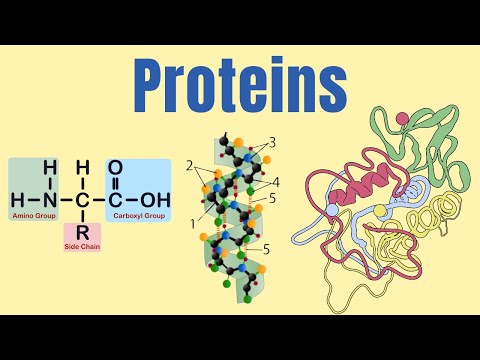
Polypeptide chains are the building blocks of proteins, consisting of a sequence of amino acids linked together by peptide bonds. The sequence of amino acids in a polypeptide chain determines the overall structure and function of the protein. Amino acids are the fundamental components of proteins, and their properties and interactions play a crucial role in determining the structure and function of proteins. The sequence of amino acids in a polypeptide chain is determined by the genetic code, which is the set of rules that dictates how the sequence of nucleotides in DNA is translated into a sequence of amino acids. Molecular biology is a field that has made significant contributions to our understanding of the relationship between polypeptide chains and protein structure.
🔗 The Relationship Between Polypeptide Chains and Protein Structure
The relationship between polypeptide chains and protein structure is complex and multifaceted. The sequence of amino acids in a polypeptide chain determines the overall structure and function of the protein, but the structure of the protein is also influenced by other factors such as the environment and interactions with other molecules. Protein folding is the process by which a polypeptide chain assumes its native conformation, and it is a critical step in the formation of functional proteins. Biophysics is a field that has made significant contributions to our understanding of the relationship between polypeptide chains and protein structure, using techniques such as Circular Dichroism and Infrared Spectroscopy.
🌈 Types of Protein Structures
Proteins can have a wide range of structures, from simple globular proteins to complex multi-subunit enzymes. The structure of a protein is determined by the sequence of amino acids and the interactions between them, as well as the environment and other factors. Enzyme kinetics is a field that studies the rates of enzyme-catalyzed reactions, and it is closely related to the structure and function of proteins. Structural biology is a field that uses techniques such as X-ray crystallography and NMR Spectroscopy to determine the structure of proteins and other biological molecules. The Protein Structure Prediction is a challenging task that has been addressed by many research groups, using techniques such as Homology Modeling and Ab Initio Prediction.
🔬 Methods for Determining Protein Structure
Determining the structure of a protein is a complex and challenging task, requiring the use of advanced techniques such as X-ray crystallography and NMR Spectroscopy. These techniques provide detailed information about the arrangement of atoms in a protein, allowing researchers to build accurate models of protein structure. Biophysical chemistry is a field that uses techniques such as Circular Dichroism and Infrared Spectroscopy to study the structure and function of proteins. The Protein Crystallization is a critical step in the determination of protein structure, and it requires careful control of conditions such as temperature, pH, and concentration.
📊 The Importance of Understanding Protein Structure
Understanding the structure of proteins is essential for understanding their function and behavior. Proteins play a wide range of roles in living organisms, from catalyzing metabolic reactions to regulating gene expression. Molecular recognition is a field that studies the interactions between proteins and other molecules, and it is closely related to the structure and function of proteins. Biotechnology is a field that uses techniques such as Genetic Engineering and Protein Engineering to develop new products and therapies. The Protein Structure-Function Relationship is a complex and multifaceted field that has many applications in fields such as medicine and agriculture.
👥 The Role of Polypeptide Chains in Protein Function
Polypeptide chains play a critical role in protein function, as they provide the framework for the formation of functional proteins. The sequence of amino acids in a polypeptide chain determines the overall structure and function of the protein, and interactions between polypeptide chains can influence the behavior of proteins. Protein-protein interactions are a critical aspect of protein function, and they are closely related to the structure and function of proteins. Cell biology is a field that studies the behavior of cells and the interactions between proteins and other molecules. The Protein Degradation is a critical process that helps to regulate protein function and prevent the accumulation of damaged or dysfunctional proteins.
🔑 Unraveling the Complexity of Protein Folding
Unraveling the complexity of protein folding is a challenging task that has been addressed by many research groups. Protein folding is the process by which a polypeptide chain assumes its native conformation, and it is a critical step in the formation of functional proteins. Protein folding dynamics is a field that studies the kinetics and thermodynamics of protein folding, and it is closely related to the structure and function of proteins. The Protein Folding Mechanisms are complex and multifaceted, and they involve the formation of intermediate states and the interaction with molecular chaperones.
🌐 The Impact of Protein Structure on Human Health
The structure of proteins has a significant impact on human health, as proteins play a wide range of roles in living organisms. Understanding the structure of proteins is essential for understanding their function and behavior, and for developing new therapies and treatments for diseases. Protein-related diseases are a significant burden on human health, and they include conditions such as Alzheimer's disease and Parkinson's disease. Personalized medicine is a field that uses techniques such as Genetic Testing and Proteomics to develop tailored therapies and treatments for individual patients.
🔮 Current Research and Future Directions
Current research in the field of protein structure and function is focused on developing new techniques and methods for determining protein structure and understanding protein function. Protein structure prediction is a challenging task that has been addressed by many research groups, using techniques such as Homology Modeling and Ab Initio Prediction. The Protein Design is a field that uses computational methods to design new proteins with specific functions and properties. Synthetic biology is a field that uses techniques such as Genetic Engineering and Protein Engineering to develop new biological systems and organisms.
📚 Conclusion and Future Perspectives
In conclusion, the study of polypeptide chains and protein structure is a fundamental aspect of biochemistry, and it has many applications in fields such as medicine and biotechnology. Understanding the structure of proteins is essential for understanding their function and behavior, and for developing new therapies and treatments for diseases. Biochemistry is a field that has made tremendous progress in recent years, thanks to advances in techniques such as X-ray crystallography and NMR Spectroscopy. The Protein Structure and Function is a complex and multifaceted field that has many applications in fields such as medicine and agriculture.
Key Facts
- Year
- 1958
- Origin
- The concept of protein structure and function was first elucidated by Frederick Sanger, who determined the sequence of insulin in 1958, marking a major milestone in the field of biochemistry.
- Category
- Biochemistry
- Type
- Biological Concept
- Format
- comparison
Frequently Asked Questions
What is the difference between a polypeptide chain and a protein?
A polypeptide chain is a sequence of amino acids linked together by peptide bonds, while a protein is a functional molecule that consists of one or more polypeptide chains. Protein structure is a complex and multifaceted field that has many applications in fields such as medicine and biotechnology. The Protein Function is closely related to the structure of the protein, and it is influenced by factors such as the environment and interactions with other molecules.
How do polypeptide chains determine protein structure?
The sequence of amino acids in a polypeptide chain determines the overall structure and function of the protein. The sequence of amino acids influences the formation of secondary, tertiary, and quaternary structures, which are the different levels of protein structure. Secondary structure is the local arrangement of amino acids, while Tertiary structure is the overall 3D arrangement of the protein. The Quaternary structure is the arrangement of multiple polypeptide chains in a protein.
What are the different types of protein structures?
Proteins can have a wide range of structures, from simple globular proteins to complex multi-subunit enzymes. The structure of a protein is determined by the sequence of amino acids and the interactions between them, as well as the environment and other factors. Globular proteins are spherical in shape, while Fibrous proteins are elongated and filamentous. The Membrane proteins are embedded in the cell membrane and play a critical role in cell signaling and transport.
How do researchers determine protein structure?
Determining the structure of a protein is a complex and challenging task, requiring the use of advanced techniques such as X-ray crystallography and NMR Spectroscopy. These techniques provide detailed information about the arrangement of atoms in a protein, allowing researchers to build accurate models of protein structure. Electron Microscopy is another technique that is used to determine protein structure, particularly for large and complex proteins.
Why is understanding protein structure important?
Understanding the structure of proteins is essential for understanding their function and behavior, and for developing new therapies and treatments for diseases. Proteins play a wide range of roles in living organisms, from catalyzing metabolic reactions to regulating gene expression. Protein-related diseases are a significant burden on human health, and they include conditions such as Alzheimer's disease and Parkinson's disease. The Protein Structure-Function Relationship is a complex and multifaceted field that has many applications in fields such as medicine and agriculture.
What are the current challenges and future directions in the field of protein structure and function?
Current research in the field of protein structure and function is focused on developing new techniques and methods for determining protein structure and understanding protein function. Protein structure prediction is a challenging task that has been addressed by many research groups, using techniques such as Homology Modeling and Ab Initio Prediction. The Protein Design is a field that uses computational methods to design new proteins with specific functions and properties. Synthetic biology is a field that uses techniques such as Genetic Engineering and Protein Engineering to develop new biological systems and organisms.
How does the structure of proteins impact human health?
The structure of proteins has a significant impact on human health, as proteins play a wide range of roles in living organisms. Understanding the structure of proteins is essential for understanding their function and behavior, and for developing new therapies and treatments for diseases. Protein-related diseases are a significant burden on human health, and they include conditions such as Alzheimer's disease and Parkinson's disease. The Personalized medicine is a field that uses techniques such as Genetic Testing and Proteomics to develop tailored therapies and treatments for individual patients.