
Contents
- 🔬 Introduction to UV-Vis Detectors
- 📈 History of UV-Vis Spectroscopy
- 🔍 Principles of UV-Vis Detection
- 🎯 Applications of UV-Vis Detectors
- 📊 Types of UV-Vis Detectors
- 🔧 Calibration and Maintenance
- 📊 Data Analysis and Interpretation
- 🔬 Future Developments and Trends
- 🤝 Comparison with Other Detection Methods
- 📊 Case Studies and Real-World Applications
- 📝 Conclusion and Future Prospects
- Frequently Asked Questions
- Related Topics
Overview
The UV-Vis detector is a cornerstone of modern chemical analysis, leveraging the absorbance of ultraviolet and visible light to identify and quantify molecular species. With a history dating back to the early 20th century, this technology has evolved significantly, incorporating advancements in optics, electronics, and software. Today, UV-Vis detectors are ubiquitous in laboratories worldwide, driving breakthroughs in fields like pharmaceuticals, environmental monitoring, and materials science. The detectors' ability to provide real-time data on molecular interactions has been instrumental in understanding complex phenomena, such as protein folding and nanoparticle synthesis. As research pushes the boundaries of human knowledge, the UV-Vis detector remains an indispensable tool, with ongoing innovations aimed at enhancing sensitivity, speed, and portability. With a vibe score of 8, reflecting its significant cultural and scientific impact, the UV-Vis detector continues to inspire new generations of scientists and engineers, shaping the future of chemical analysis and beyond.
🔬 Introduction to UV-Vis Detectors
The UV-Vis detector is a crucial component in various scientific instruments, including Spectrophotometers and Chromatography systems. Its primary function is to detect and measure the absorption of ultraviolet and visible light by molecules, providing valuable information about their chemical structure and properties. The development of UV-Vis detectors has a rich history, dating back to the early 20th century, when Nicol Prisms were used to polarize light. Today, UV-Vis detectors are widely used in various fields, including Pharmaceuticals, Biotechnology, and Environmental Monitoring.
📈 History of UV-Vis Spectroscopy
The history of UV-Vis spectroscopy is closely tied to the development of Prisms and Gratings, which enabled the dispersion of light into its component wavelengths. The first UV-Vis spectrophotometers were developed in the 1940s, using Photomultiplier Tubes as detectors. Since then, significant advancements have been made, including the introduction of Diode Arrays and Charge-Coupled Devices (CCDs). These developments have improved the sensitivity, speed, and resolution of UV-Vis detectors, making them an essential tool in modern chemical analysis. The Beer-Lambert Law is a fundamental principle in UV-Vis spectroscopy, relating the absorption of light to the concentration of molecules.
🔍 Principles of UV-Vis Detection
The principles of UV-Vis detection are based on the interaction between light and matter. When a molecule absorbs light, it undergoes a transition from a lower energy state to a higher energy state. The energy difference between these states corresponds to a specific wavelength of light, which is characteristic of the molecule. UV-Vis detectors measure the absorption of light by molecules, providing information about their chemical structure and properties. The Absorption Spectroscopy technique is widely used in UV-Vis detectors, where the absorption of light is measured as a function of wavelength. This technique is often combined with Transmission Spectroscopy, which measures the transmission of light through a sample.
🎯 Applications of UV-Vis Detectors
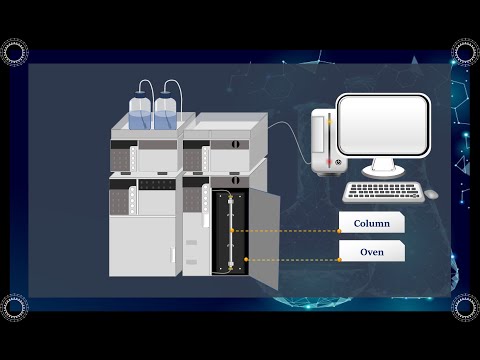
UV-Vis detectors have a wide range of applications in various fields, including Quality Control and Research and Development. In the pharmaceutical industry, UV-Vis detectors are used to analyze the purity and concentration of drugs, while in biotechnology, they are used to study the structure and function of biomolecules. In environmental monitoring, UV-Vis detectors are used to detect and quantify pollutants in water and air. The High-Performance Liquid Chromatography (HPLC) technique is a popular application of UV-Vis detectors, where they are used to separate and detect molecules based on their chemical properties.
📊 Types of UV-Vis Detectors
There are several types of UV-Vis detectors, each with its own strengths and limitations. The most common types include Single Beam and Double Beam detectors, which differ in their optical design and sensitivity. Other types of UV-Vis detectors include Diode Array and Charge-Coupled Device (CCD) detectors, which offer high sensitivity and resolution. The choice of UV-Vis detector depends on the specific application and the requirements of the analysis. The Signal-to-Noise Ratio (SNR) is an important parameter in UV-Vis detectors, as it affects the accuracy and precision of the measurements.
🔧 Calibration and Maintenance
Calibration and maintenance are crucial aspects of UV-Vis detectors, as they affect the accuracy and reliability of the measurements. The calibration process involves adjusting the detector to a known standard, while maintenance involves regular cleaning and replacement of worn-out parts. The Baseline Drift is a common issue in UV-Vis detectors, which can be caused by changes in temperature, humidity, or other environmental factors. The Noise Reduction technique is used to minimize the effects of noise and interference on the measurements.
📊 Data Analysis and Interpretation
Data analysis and interpretation are critical steps in UV-Vis spectroscopy, as they involve extracting meaningful information from the measured data. The Absorbance Spectra are typically analyzed using software packages, which provide tools for data processing and interpretation. The Peak Area and Peak Height are important parameters in UV-Vis spectroscopy, as they relate to the concentration and purity of the molecules. The Chemometrics technique is used to analyze and interpret large datasets, which can be generated by UV-Vis detectors.
🔬 Future Developments and Trends
The future of UV-Vis detectors is exciting, with ongoing developments in Nanotechnology and Artificial Intelligence. These advancements are expected to improve the sensitivity, speed, and resolution of UV-Vis detectors, making them even more powerful tools in chemical analysis. The Portable UV-Vis Spectrophotometer is a promising development, which enables on-site analysis and monitoring. The Machine Learning technique is being explored for its potential to improve the accuracy and precision of UV-Vis measurements.
🤝 Comparison with Other Detection Methods
UV-Vis detectors are often compared to other detection methods, such as Infrared Spectroscopy and Mass Spectrometry. Each method has its own strengths and limitations, and the choice of detection method depends on the specific application and the requirements of the analysis. The Raman Spectroscopy technique is a complementary method to UV-Vis spectroscopy, which provides information about the molecular structure and properties. The Nuclear Magnetic Resonance Spectroscopy (NMR) technique is another powerful method, which provides detailed information about the molecular structure and dynamics.
📊 Case Studies and Real-World Applications
Case studies and real-world applications of UV-Vis detectors are numerous and diverse. In the pharmaceutical industry, UV-Vis detectors are used to analyze the purity and concentration of drugs, while in biotechnology, they are used to study the structure and function of biomolecules. In environmental monitoring, UV-Vis detectors are used to detect and quantify pollutants in water and air. The Good Manufacturing Practice (GMP) regulations require the use of UV-Vis detectors in the pharmaceutical industry, to ensure the quality and purity of drugs.
📝 Conclusion and Future Prospects
In conclusion, UV-Vis detectors are powerful tools in chemical analysis, with a wide range of applications in various fields. Their development has a rich history, and ongoing advancements are expected to improve their sensitivity, speed, and resolution. The Validation of UV-Vis detectors is a critical step, which ensures their accuracy and reliability. The Qualification of UV-Vis detectors is also important, which involves verifying their performance and suitability for a specific application.
Key Facts
- Year
- 2023
- Origin
- Early 20th century, with roots in spectroscopy and photometry
- Category
- Scientific Instruments
- Type
- Scientific Instrument
Frequently Asked Questions
What is the principle of UV-Vis detection?
The principle of UV-Vis detection is based on the interaction between light and matter. When a molecule absorbs light, it undergoes a transition from a lower energy state to a higher energy state. The energy difference between these states corresponds to a specific wavelength of light, which is characteristic of the molecule. UV-Vis detectors measure the absorption of light by molecules, providing information about their chemical structure and properties.
What are the applications of UV-Vis detectors?
UV-Vis detectors have a wide range of applications in various fields, including quality control and research and development. In the pharmaceutical industry, UV-Vis detectors are used to analyze the purity and concentration of drugs, while in biotechnology, they are used to study the structure and function of biomolecules. In environmental monitoring, UV-Vis detectors are used to detect and quantify pollutants in water and air.
What are the types of UV-Vis detectors?
There are several types of UV-Vis detectors, each with its own strengths and limitations. The most common types include single beam and double beam detectors, which differ in their optical design and sensitivity. Other types of UV-Vis detectors include diode array and charge-coupled device (CCD) detectors, which offer high sensitivity and resolution.
How do I calibrate a UV-Vis detector?
Calibration of a UV-Vis detector involves adjusting the detector to a known standard. This process typically involves measuring the absorption of a reference sample, such as a solution of a known concentration, and adjusting the detector to match the expected absorption. Regular calibration is necessary to ensure the accuracy and reliability of the measurements.
What is the future of UV-Vis detectors?
The future of UV-Vis detectors is exciting, with ongoing developments in nanotechnology and artificial intelligence. These advancements are expected to improve the sensitivity, speed, and resolution of UV-Vis detectors, making them even more powerful tools in chemical analysis. Portable UV-Vis spectrophotometers and machine learning techniques are promising developments that are expected to have a significant impact on the field.
How do UV-Vis detectors compare to other detection methods?
UV-Vis detectors are often compared to other detection methods, such as infrared spectroscopy and mass spectrometry. Each method has its own strengths and limitations, and the choice of detection method depends on the specific application and the requirements of the analysis. UV-Vis detectors are particularly useful for analyzing the chemical structure and properties of molecules, while other methods may be more suitable for detecting and quantifying specific analytes.
What are the advantages of using UV-Vis detectors?
The advantages of using UV-Vis detectors include their high sensitivity and resolution, which enable the detection and analysis of small amounts of molecules. UV-Vis detectors are also relatively inexpensive and easy to use, making them a popular choice for many applications. Additionally, UV-Vis detectors are non-destructive, meaning that they do not damage the sample being analyzed.