
Contents
- 🎵 Origins & History
- ⚙️ How It Works
- 📊 Key Facts & Numbers
- 👥 Key People & Organizations
- 🌍 Cultural Impact & Influence
- ⚡ Current State & Latest Developments
- 🤔 Controversies & Debates
- 🔮 Future Outlook & Predictions
- 💡 Practical Applications
- 📚 Related Topics & Deeper Reading
- Frequently Asked Questions
- References
- Related Topics
Overview
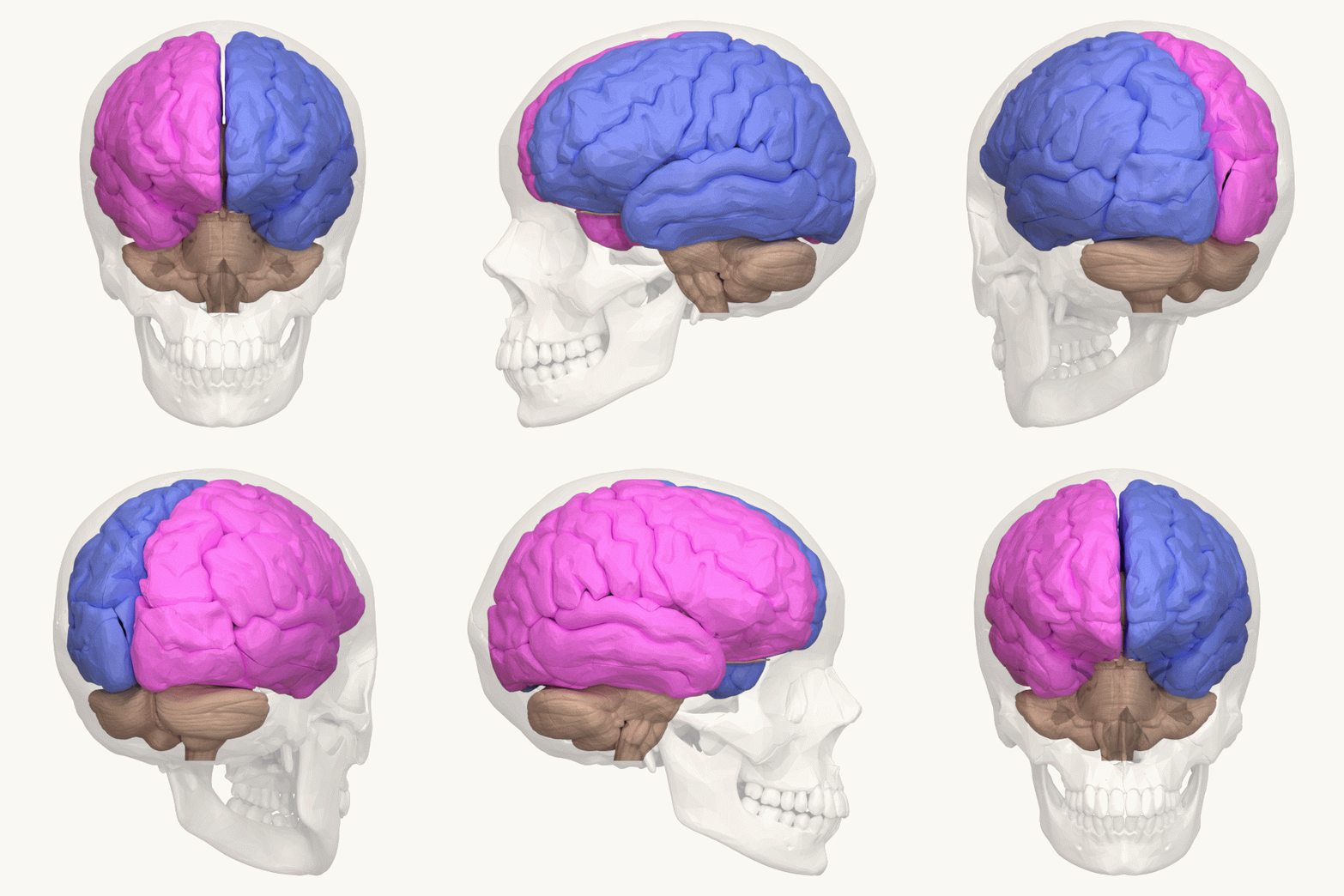
The human brain is a complex and dynamic organ, comprising two distinct cerebral hemispheres connected by the corpus callosum. The lateralization of brain function refers to the tendency for certain neural functions or cognitive processes to be specialized to one side of the brain or the other. This concept has been studied extensively using both healthy and split-brain patients, revealing unique brain asymmetries in structure and neuronal network composition. However, each human's brain develops differently, leading to individualized lateralization patterns. Understanding the human brain and its functions is crucial for advancing fields like neuroscience, psychology, and medicine, with applications in diagnosis, treatment, and prevention of neurological and psychiatric disorders. According to the National Institute of Mental Health, approximately 1 in 5 adults in the United States experience a mental illness each year, highlighting the need for continued research into brain function and behavior. The World Health Organization also emphasizes the importance of brain health, citing the significant burden of neurological and psychiatric disorders on global health systems. By exploring the intricacies of brain function, we can better comprehend the intricate relationships between brain, behavior, and overall well-being, as discussed by experts like Dr. Andrew Huberman and Dr. Lisa Feldman Barrett.
🎵 Origins & History
The study of the human brain and its functions has a rich history, dating back to ancient civilizations like the Egyptians and Greeks. The concept of lateralization of brain function, however, gained significant attention in the 19th century with the work of Paul Broca and Carl Wernicke. Their discoveries on the specialization of language processing in the left hemisphere laid the foundation for modern understanding of brain function. The University of California, Los Angeles (UCLA) and the Massachusetts Institute of Technology (MIT) have been at the forefront of brain research, with notable contributions from researchers like Dr. Roger Sperry and Dr. Michael Merzenich.
⚙️ How It Works
The human brain operates through a complex network of neurons, glial cells, and other supporting structures. The cerebral hemispheres, connected by the corpus callosum, exhibit brain asymmetries in both structure and neuronal network composition. This asymmetry is associated with specialized functions, such as language processing in the left hemisphere and spatial processing in the right hemisphere. The Allen Institute for Brain Science has developed detailed maps of the brain, including the Allen Brain Atlas, which provides a comprehensive understanding of brain structure and function. Furthermore, research by Dr. David Eagleman has shown that the brain's neural networks are highly dynamic and adaptable, allowing for reorganization and compensation in response to injury or disease.
📊 Key Facts & Numbers
Key facts about the human brain and its functions include: the brain contains approximately 86 billion neurons, with each neuron forming an average of 7,000 synapses. The brain's neural networks are highly dynamic, with research suggesting that the brain's wiring is reorganized continuously throughout life. According to a study published in the Journal of Neuroscience, the brain's default mode network is active during tasks that require introspection and self-reflection. The brain's energy consumption is significant, accounting for approximately 20% of the body's total energy expenditure, despite comprising only 2% of the body's mass. The National Science Foundation has funded numerous studies on brain function and behavior, including research on the neural basis of decision-making and the development of new treatments for neurological disorders.
👥 Key People & Organizations
Key people and organizations involved in the study of the human brain and its functions include: the National Institutes of Health (NIH), the World Health Organization (WHO), and the American Psychological Association (APA). Researchers like Dr. Andrew Huberman, Dr. Lisa Feldman Barrett, and Dr. David Eagleman have made significant contributions to our understanding of brain function and behavior. The Stanford University and the Harvard University have been at the forefront of brain research, with notable contributions from researchers like Dr. Robert Sapolsky and Dr. Helen Mayberg.
🌍 Cultural Impact & Influence
The study of the human brain and its functions has had a significant cultural impact and influence. The concept of lateralization of brain function has been used to explain individual differences in cognitive abilities and behavioral tendencies. The idea of 'left-brained' or 'right-brained' individuals has become a popular notion, although it is not entirely supported by scientific evidence. The TED Conference has featured numerous talks on brain function and behavior, including presentations by Dr. Daniel Kahneman and Dr. Brené Brown. Furthermore, the development of neurotechnologies like functional magnetic resonance imaging (fMRI) and electroencephalography (EEG) has enabled researchers to non-invasively study brain function and behavior, leading to a greater understanding of the neural basis of human behavior.
⚡ Current State & Latest Developments
The current state of research on the human brain and its functions is rapidly evolving, with new technologies and methodologies being developed continuously. The use of artificial intelligence and machine learning algorithms has enabled researchers to analyze large datasets and identify patterns in brain function and behavior. The Google Brain team has developed advanced algorithms for analyzing brain data, including the use of deep learning techniques to identify patterns in neural activity. Furthermore, the development of brain-computer interfaces (BCIs) has enabled people to control devices with their thoughts, holding promise for the treatment of neurological disorders like paralysis and ALS. The Facebook Neuroscience team has also made significant contributions to the development of BCIs, including the use of functional near-infrared spectroscopy (fNIRS) to measure brain activity.
🤔 Controversies & Debates
Controversies and debates surrounding the study of the human brain and its functions include: the extent to which brain function can be localized to specific regions, the role of genetics versus environment in shaping brain development and function, and the ethics of using neurotechnologies to enhance or manipulate brain function. The Neuroethics Society has been at the forefront of discussions on the ethical implications of neurotechnologies, including the use of brain-computer interfaces and neurostimulation techniques. Researchers like Dr. Francis Crick and Dr. Christof Koch have argued that the brain's neural networks are highly distributed and interconnected, making it difficult to pinpoint specific functions to specific regions. Others, like Dr. Vilayanur Ramachandran, have suggested that the brain's plasticity and adaptability are key to understanding its functions and behaviors.
🔮 Future Outlook & Predictions
The future outlook for research on the human brain and its functions is promising, with new technologies and methodologies being developed continuously. The use of artificial intelligence and machine learning algorithms is expected to play a major role in advancing our understanding of brain function and behavior. The Allen Institute for Brain Science has launched several initiatives to map the brain and develop new treatments for neurological disorders. Furthermore, the development of brain-computer interfaces and neuroprosthetics is expected to revolutionize the treatment of neurological disorders and enhance human cognition and behavior. The MIT Media Lab has been at the forefront of developing new neurotechnologies, including the use of brain-computer interfaces to control robots and other devices.
💡 Practical Applications
Practical applications of research on the human brain and its functions include: the development of new treatments for neurological and psychiatric disorders, the creation of brain-computer interfaces and neuroprosthetics, and the enhancement of human cognition and behavior. The Stanford University and the Harvard University have been at the forefront of developing new treatments for neurological disorders, including the use of deep brain stimulation and transcranial magnetic stimulation. Furthermore, the development of neurotechnologies like functional magnetic resonance imaging (fMRI) and electroencephalography (EEG) has enabled researchers to non-invasively study brain function and behavior, leading to a greater understanding of the neural basis of human behavior.
Key Facts
- Year
- 2020
- Origin
- United States
- Category
- mental-health
- Type
- concept
Frequently Asked Questions
What is the lateralization of brain function?
The lateralization of brain function refers to the tendency for certain neural functions or cognitive processes to be specialized to one side of the brain or the other. This concept has been studied extensively using both healthy and split-brain patients, revealing unique brain asymmetries in structure and neuronal network composition. According to research by Dr. Roger Sperry, the lateralization of brain function is a key aspect of human cognition and behavior. The National Institute of Mental Health has also funded numerous studies on the lateralization of brain function, including research on the effects of brain asymmetries on cognitive abilities.
What are the key facts about the human brain and its functions?
Key facts about the human brain and its functions include: the brain contains approximately 86 billion neurons, with each neuron forming an average of 7,000 synapses. The brain's neural networks are highly dynamic, with research suggesting that the brain's wiring is reorganized continuously throughout life. According to a study published in the Journal of Neuroscience, the brain's default mode network is active during tasks that require introspection and self-reflection. The brain's energy consumption is significant, accounting for approximately 20% of the body's total energy expenditure, despite comprising only 2% of the body's mass. The National Science Foundation has funded numerous studies on brain function and behavior, including research on the neural basis of decision-making and the development of new treatments for neurological disorders.
What are the practical applications of research on the human brain and its functions?
Practical applications of research on the human brain and its functions include: the development of new treatments for neurological and psychiatric disorders, the creation of brain-computer interfaces and neuroprosthetics, and the enhancement of human cognition and behavior. The Stanford University and the Harvard University have been at the forefront of developing new treatments for neurological disorders, including the use of deep brain stimulation and transcranial magnetic stimulation. Furthermore, the development of neurotechnologies like functional magnetic resonance imaging (fMRI) and electroencephalography (EEG) has enabled researchers to non-invasively study brain function and behavior, leading to a greater understanding of the neural basis of human behavior.
What are the related topics and deeper reading?
Related topics and deeper reading include: the study of brain development and plasticity, the role of genetics and environment in shaping brain function, and the ethics of using neurotechnologies to enhance or manipulate brain function. The National Institute of Mental Health has funded numerous studies on brain development and plasticity, including research on the effects of early life experiences on brain development. The World Health Organization has also emphasized the importance of brain health, citing the significant burden of neurological and psychiatric disorders on global health systems. Researchers like Dr. Andrew Huberman and Dr. Lisa Feldman Barrett have written extensively on the topic of brain function and behavior, including the role of emotions and social interactions in shaping brain development and function.
What is the current state of research on the human brain and its functions?
The current state of research on the human brain and its functions is rapidly evolving, with new technologies and methodologies being developed continuously. The use of artificial intelligence and machine learning algorithms has enabled researchers to analyze large datasets and identify patterns in brain function and behavior. The Google Brain team has developed advanced algorithms for analyzing brain data, including the use of deep learning techniques to identify patterns in neural activity. Furthermore, the development of brain-computer interfaces (BCIs) has enabled people to control devices with their thoughts, holding promise for the treatment of neurological disorders like paralysis and ALS. The Facebook Neuroscience team has also made significant contributions to the development of BCIs, including the use of functional near-infrared spectroscopy (fNIRS) to measure brain activity.
What are the controversies and debates surrounding the study of the human brain and its functions?
Controversies and debates surrounding the study of the human brain and its functions include: the extent to which brain function can be localized to specific regions, the role of genetics versus environment in shaping brain development and function, and the ethics of using neurotechnologies to enhance or manipulate brain function. The Neuroethics Society has been at the forefront of discussions on the ethical implications of neurotechnologies, including the use of brain-computer interfaces and neurostimulation techniques. Researchers like Dr. Francis Crick and Dr. Christof Koch have argued that the brain's neural networks are highly distributed and interconnected, making it difficult to pinpoint specific functions to specific regions. Others, like Dr. Vilayanur Ramachandran, have suggested that the brain's plasticity and adaptability are key to understanding its functions and behaviors.
What is the future outlook for research on the human brain and its functions?
The future outlook for research on the human brain and its functions is promising, with new technologies and methodologies being developed continuously. The use of artificial intelligence and machine learning algorithms is expected to play a major role in advancing our understanding of brain function and behavior. The Allen Institute for Brain Science has launched several initiatives to map the brain and develop new treatments for neurological disorders. Furthermore, the development of brain-computer interfaces and neuroprosthetics is expected to revolutionize the treatment of neurological disorders and enhance human cognition and behavior. The MIT Media Lab has been at the forefront of developing new neurotechnologies, including the use of brain-computer interfaces to control robots and other devices.
How can I learn more about the human brain and its functions?
There are many resources available to learn more about the human brain and its functions, including online courses, books, and research articles. The Coursera platform offers a variety of courses on neuroscience and brain function, including courses taught by Dr. Andrew Huberman and Dr. Lisa Feldman Barrett. The National Institute of Mental Health also provides a wealth of information on brain function and behavior, including research articles and educational resources. Additionally, the World Health Organization has published several reports on brain health and neurological disorders, including the World Health Organization Mental Health Report.
What are the implications of brain function and behavior for society?
The implications of brain function and behavior for society are significant, with applications in fields such as education, healthcare, and law. The National Institute of Mental Health has funded numerous studies on the social and economic implications of brain function and behavior, including research on the effects of mental illness on productivity and economic growth. The World Health Organization has also emphasized the importance of brain health, citing the significant burden of neurological and psychiatric disorders on global health systems. Researchers like Dr. Andrew Huberman and Dr. Lisa Feldman Barrett have written extensively on the topic of brain function and behavior, including the role of emotions and social interactions in shaping brain development and function.