
Contents
- 🌪️ Introduction to Turbulent Flow
- 💧 Laminar Flow: The Calm Before the Storm
- 🌊 The Onset of Turbulence
- 📊 Mathematical Modeling of Turbulent Flow
- 🔬 Experimental Methods for Studying Turbulence
- 🌈 Applications of Turbulent Flow
- 🚨 Challenges and Limitations in Turbulence Research
- 🔮 Future Directions in Turbulent Flow Research
- 📚 Historical Perspectives on Turbulence
- 👥 Key Researchers in Turbulence
- 📊 Computational Fluid Dynamics and Turbulence
- 🌐 Real-World Examples of Turbulent Flow
- Frequently Asked Questions
- Related Topics
Overview
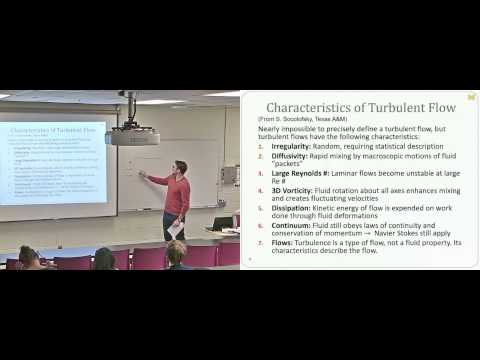
Turbulent flow, characterized by chaotic and irregular motion, has been a subject of fascination and frustration for scientists and engineers alike. First described by Osborne Reynolds in 1883, turbulent flow is a complex phenomenon that arises when a fluid's velocity exceeds a certain threshold, causing the formation of eddies and whirlpools. The study of turbulence has far-reaching implications, from optimizing pipeline flow and aircraft design to understanding ocean currents and weather patterns. Despite significant advances, turbulence remains one of the most challenging problems in physics, with many open questions and debates. Researchers like Werner Heisenberg and Kolmogorov have made significant contributions to the field, but the quest for a complete understanding of turbulent flow continues. With a Vibe score of 80, turbulent flow is a topic of high cultural energy, reflecting its importance and intrigue in the scientific community.
🌪️ Introduction to Turbulent Flow
Turbulent flow is a fundamental concept in fluid dynamics, characterized by chaotic changes in pressure and flow velocity. In contrast to Laminar Flow, which occurs when a fluid flows in parallel layers with no disruption between those layers, turbulent flow is marked by irregular, chaotic motion. This phenomenon is crucial in understanding various natural and engineered systems, such as Ocean Currents and Pipeline Flow. Researchers like Osborne Reynolds have made significant contributions to the field, laying the groundwork for modern turbulence research. The study of turbulent flow has far-reaching implications, from Weather Forecasting to Aerodynamics.
💧 Laminar Flow: The Calm Before the Storm
Laminar flow, on the other hand, is a smooth, continuous flow regime that occurs when a fluid flows in parallel layers with no disruption between those layers. This type of flow is characterized by a low Reynolds Number, which is a dimensionless quantity used to predict the nature of fluid flow. Laminar flow is often seen in Blood Flow and Airflow in certain conditions. However, as the Reynolds number increases, the flow becomes more unstable, and the onset of turbulence occurs. Understanding laminar flow is essential to grasping the complexities of Turbulent Flow. Researchers have used Computational Fluid Dynamics to model and simulate laminar flow, gaining valuable insights into the underlying physics.
🌊 The Onset of Turbulence
The onset of turbulence is a complex phenomenon that has been studied extensively in the field of fluid dynamics. It is characterized by a sudden transition from laminar to turbulent flow, often marked by an increase in the Reynolds Number. This transition can be triggered by various factors, including changes in flow velocity, pressure, or surface roughness. Researchers have used Experimental Methods to study the onset of turbulence, including Particle Image Velocimetry and Laser Doppler Velocimetry. These studies have shed light on the underlying mechanisms driving the transition to turbulence, with significant implications for fields like Aerodynamics and Hydrodynamics.
📊 Mathematical Modeling of Turbulent Flow
Mathematical modeling of turbulent flow is a challenging task due to the complex, chaotic nature of the phenomenon. Researchers have developed various mathematical models, including the Navier-Stokes Equations, to describe and predict turbulent flow. These models are often based on simplifying assumptions and empirical correlations, which can limit their accuracy and applicability. However, advances in Computational Power and Numerical Methods have enabled the development of more sophisticated models, such as Large Eddy Simulation and Direct Numerical Simulation. These models have been used to study various aspects of turbulent flow, from Turbulence Kinetics to Turbulence Transport.
🔬 Experimental Methods for Studying Turbulence
Experimental methods play a crucial role in studying turbulent flow, as they provide valuable insights into the underlying physics and allow for the validation of mathematical models. Researchers have used a range of experimental techniques, including Hot Wire Anemometry and Particle Image Velocimetry, to measure flow velocity, pressure, and other relevant parameters. These experiments have been conducted in various flow configurations, from Pipe Flow to Boundary Layer Flow. The data obtained from these experiments have been used to develop and refine mathematical models, such as the K-Epsilon Model, and to study the behavior of turbulent flows in different regimes.
🌈 Applications of Turbulent Flow
Turbulent flow has numerous applications in various fields, from Aerodynamics and Hydrodynamics to Chemical Engineering and Biomedical Engineering. Understanding and predicting turbulent flow is essential for the design and optimization of various systems, including Aircraft, Ships, and Pipelines. Turbulent flow also plays a critical role in natural phenomena, such as Weather Patterns and Ocean Currents. Researchers have used Computational Fluid Dynamics to simulate and predict turbulent flow in these systems, enabling the development of more efficient and effective designs.
🚨 Challenges and Limitations in Turbulence Research
Despite significant advances in turbulence research, there are still many challenges and limitations that need to be addressed. One of the major challenges is the development of accurate and efficient mathematical models that can capture the complex, chaotic nature of turbulent flow. Another challenge is the experimental measurement of turbulent flow parameters, which can be difficult and costly. Furthermore, the simulation of turbulent flow using Computational Fluid Dynamics requires significant computational resources and expertise. Researchers are working to overcome these challenges by developing new mathematical models, experimental techniques, and computational methods, such as Machine Learning and Artificial Intelligence.
🔮 Future Directions in Turbulent Flow Research
Future directions in turbulence research are likely to involve the development of more sophisticated mathematical models and computational methods, as well as the integration of experimental and numerical techniques. Researchers are exploring new approaches, such as Data-Driven Modeling and Physics-Informed Neural Networks, to improve the accuracy and efficiency of turbulence simulations. Additionally, the increasing availability of High-Performance Computing resources is enabling the simulation of more complex and realistic flow configurations, such as Multiphase Flow and Compressible Flow.
📚 Historical Perspectives on Turbulence
The study of turbulent flow has a rich history, dating back to the early 20th century. Researchers like Osborne Reynolds and Ludwig Prandtl made significant contributions to the field, laying the groundwork for modern turbulence research. The development of Computational Fluid Dynamics in the 1960s and 1970s revolutionized the field, enabling the simulation and prediction of turbulent flow in complex geometries. Today, turbulence research is a vibrant and interdisciplinary field, with contributions from physicists, engineers, and mathematicians. The study of turbulent flow has far-reaching implications, from Weather Forecasting to Aerodynamics.
👥 Key Researchers in Turbulence
Key researchers in turbulence have made significant contributions to the field, advancing our understanding of the complex, chaotic nature of turbulent flow. Researchers like Stephen Pope and Charles Meneveau have developed new mathematical models and computational methods, such as Large Eddy Simulation and Direct Numerical Simulation. Others, like Jerry Westervelt and Kenneth Moffatt, have made important contributions to the experimental study of turbulence, using techniques like Particle Image Velocimetry. These researchers have helped shape our understanding of turbulent flow and its applications in various fields.
📊 Computational Fluid Dynamics and Turbulence
Computational fluid dynamics (CFD) has become a crucial tool in the study of turbulent flow, enabling the simulation and prediction of complex flow configurations. CFD involves the numerical solution of the Navier-Stokes Equations, which describe the motion of fluids. Researchers have developed various CFD techniques, including Finite Element Method and Finite Volume Method, to simulate turbulent flow in different regimes. These simulations have been used to study various aspects of turbulent flow, from Turbulence Kinetics to Turbulence Transport.
🌐 Real-World Examples of Turbulent Flow
Real-world examples of turbulent flow can be seen in various natural and engineered systems, from Ocean Currents to Aircraft. Turbulent flow plays a critical role in shaping our environment, from Weather Patterns to Landscape Formation. Understanding and predicting turbulent flow is essential for the design and optimization of various systems, including Ships and Pipelines. Researchers have used Computational Fluid Dynamics to simulate and predict turbulent flow in these systems, enabling the development of more efficient and effective designs.
Key Facts
- Year
- 1883
- Origin
- Osborne Reynolds' experiments on fluid dynamics
- Category
- Physics
- Type
- Concept
Frequently Asked Questions
What is turbulent flow?
Turbulent flow is a type of fluid motion characterized by chaotic changes in pressure and flow velocity. It is in contrast to laminar flow, which occurs when a fluid flows in parallel layers with no disruption between those layers. Turbulent flow is a complex, nonlinear phenomenon that is difficult to predict and model. Researchers have developed various mathematical models and computational methods to study turbulent flow, including the Navier-Stokes Equations and Large Eddy Simulation.
What are the applications of turbulent flow?
Turbulent flow has numerous applications in various fields, from Aerodynamics and Hydrodynamics to Chemical Engineering and Biomedical Engineering. Understanding and predicting turbulent flow is essential for the design and optimization of various systems, including Aircraft, Ships, and Pipelines. Turbulent flow also plays a critical role in natural phenomena, such as Weather Patterns and Ocean Currents.
How is turbulent flow studied?
Turbulent flow is studied using a combination of experimental and numerical techniques. Researchers have developed various mathematical models, such as the Navier-Stokes Equations, to describe and predict turbulent flow. These models are often based on simplifying assumptions and empirical correlations, which can limit their accuracy and applicability. Experimental methods, such as Hot Wire Anemometry and Particle Image Velocimetry, are used to measure flow velocity, pressure, and other relevant parameters. Computational fluid dynamics (CFD) is also used to simulate and predict turbulent flow in complex geometries.
What are the challenges in turbulence research?
Despite significant advances in turbulence research, there are still many challenges and limitations that need to be addressed. One of the major challenges is the development of accurate and efficient mathematical models that can capture the complex, chaotic nature of turbulent flow. Another challenge is the experimental measurement of turbulent flow parameters, which can be difficult and costly. Furthermore, the simulation of turbulent flow using Computational Fluid Dynamics requires significant computational resources and expertise.
What are the future directions in turbulence research?
Future directions in turbulence research are likely to involve the development of more sophisticated mathematical models and computational methods, as well as the integration of experimental and numerical techniques. Researchers are exploring new approaches, such as Data-Driven Modeling and Physics-Informed Neural Networks, to improve the accuracy and efficiency of turbulence simulations. Additionally, the increasing availability of High-Performance Computing resources is enabling the simulation of more complex and realistic flow configurations.
Who are some key researchers in turbulence?
Key researchers in turbulence have made significant contributions to the field, advancing our understanding of the complex, chaotic nature of turbulent flow. Researchers like Stephen Pope and Charles Meneveau have developed new mathematical models and computational methods, such as Large Eddy Simulation and Direct Numerical Simulation. Others, like Jerry Westervelt and Kenneth Moffatt, have made important contributions to the experimental study of turbulence, using techniques like Particle Image Velocimetry.
What is the role of computational fluid dynamics in turbulence research?
Computational fluid dynamics (CFD) has become a crucial tool in the study of turbulent flow, enabling the simulation and prediction of complex flow configurations. CFD involves the numerical solution of the Navier-Stokes Equations, which describe the motion of fluids. Researchers have developed various CFD techniques, including Finite Element Method and Finite Volume Method, to simulate turbulent flow in different regimes. These simulations have been used to study various aspects of turbulent flow, from Turbulence Kinetics to Turbulence Transport.