
Contents
- 🌎 Introduction to Tropic of Cancer
- 📐 Geographical Significance
- 🕰️ Solstices and the Tropic of Cancer
- 🌞 The Sun's Path
- 📊 Calculating the Tropic of Cancer
- 🌍 Location and Climate
- 🌊 Oceanic and Terrestrial Boundaries
- 🌴 Cultural and Historical Significance
- 📚 Astronomical Observations
- 🔍 Controversies and Debates
- 🌈 Future Implications
- Frequently Asked Questions
- Related Topics
Overview
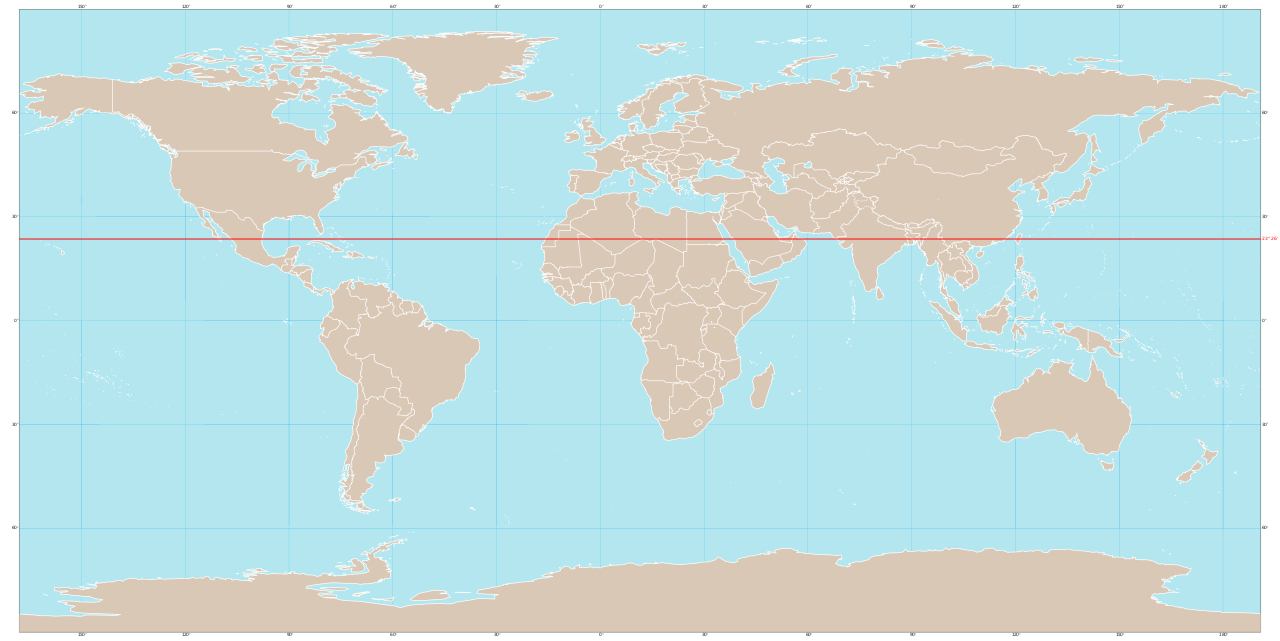
The Tropic of Cancer, located at 23.5° north of the equator, is an imaginary line that marks the northernmost point on Earth where the sun can be directly overhead at noon. This line of latitude passes through eight countries, including Mexico, the Bahamas, and India, and has significant cultural and environmental implications. The region surrounding the Tropic of Cancer is home to a diverse range of ecosystems, including tropical rainforests, deserts, and coral reefs. The Tropic of Cancer has also been the subject of literary and artistic works, including Henry Miller's novel of the same name, which explores themes of identity, morality, and the human condition. With a vibe score of 8, the Tropic of Cancer is a topic of interest for those who value cultural and environmental significance. The Tropic of Cancer has been a topic of interest for centuries, with ancient civilizations such as the Greeks and Romans recognizing its importance in navigation and astronomy. Today, the Tropic of Cancer continues to be an important reference point for scientists, travelers, and artists alike.
🌎 Introduction to Tropic of Cancer
The Tropic of Cancer, also known as the Northern Tropic, is the Earth's northernmost circle of latitude where the Sun can be seen directly overhead. This phenomenon occurs on the June solstice, when the Northern Hemisphere is tilted toward the Sun to its maximum extent, as explained in Astronomy and Earth Science. The Tropic of Cancer is currently located at 23°26′09.1″ (or 23.43587°) north of the Equator, as calculated using a continuously updated formula. This circle of latitude plays a crucial role in understanding the Earth's axial tilt and its effects on the planet's climate, which is further discussed in Climatology and Geography. The Tropic of Cancer is also closely related to the Tropic of Capricorn, which is the southernmost circle of latitude where the Sun can be seen directly overhead.
📐 Geographical Significance
The Tropic of Cancer has significant geographical implications, as it marks the boundary between the Northern Hemisphere and the tropics. This circle of latitude is also used as a reference point for navigation and cartography, as seen in Cartography and Navigation. The Tropic of Cancer passes through several countries, including Mexico, the Bahamas, and India, and its location has a profound impact on the climate and ecosystems of these regions, which is explored in Ecology and Environmental Science. The unique geography of the Tropic of Cancer has also led to the development of distinct cultural and historical practices, as discussed in Anthropology and History.
🕰️ Solstices and the Tropic of Cancer
The Tropic of Cancer is closely tied to the solstices, which occur when the Sun is at its maximum or minimum declination. On the June solstice, the Northern Hemisphere is tilted toward the Sun, resulting in the longest day of the year and the Sun being directly overhead at the Tropic of Cancer. Conversely, on the December solstice, the Northern Hemisphere is tilted away from the Sun, resulting in the shortest day of the year and the Sun being 90 degrees below the horizon at solar midnight, as explained in Solar System and Seasons. This phenomenon is also related to the Equinoxes, which occur when the Sun is directly overhead at the Equator.
🌞 The Sun's Path
The Sun's path across the sky is a critical component in understanding the Tropic of Cancer. As the Earth rotates, the Sun appears to move across the sky, and its position changes throughout the year due to the planet's axial tilt. The Tropic of Cancer marks the northernmost point where the Sun can be seen directly overhead, and its location is determined by the Earth's tilt and the Sun's declination, as discussed in Astronomical Observations and Solar Physics. The Sun's energy has a significant impact on the climate and ecosystems of the regions near the Tropic of Cancer, which is further explored in Renewable Energy and Sustainability.
📊 Calculating the Tropic of Cancer
Calculating the Tropic of Cancer requires a continuously updated formula that takes into account the Earth's axial tilt and the Sun's declination. This formula is used to determine the precise location of the Tropic of Cancer, which is currently at 23°26′09.1″ (or 23.43587°) north of the Equator. The calculation of the Tropic of Cancer is a complex process that involves understanding the Earth's rotation, the Sun's motion, and the planet's axial tilt, as explained in Mathematics and Physics. The Tropic of Cancer is also related to the Tropics, which are the regions of the Earth where the Sun can be seen directly overhead at some point during the year.
🌍 Location and Climate
The location and climate of the Tropic of Cancer are closely tied to its geographical significance. The Tropic of Cancer passes through several countries, including Mexico, the Bahamas, and India, and its location has a profound impact on the climate and ecosystems of these regions. The regions near the Tropic of Cancer are generally warm and humid, with high levels of rainfall and tropical vegetation, as discussed in Tropical Ecology and Biogeography. The unique climate and geography of the Tropic of Cancer have also led to the development of distinct cultural and historical practices, as explored in Cultural Geography and Historical Geography.
🌊 Oceanic and Terrestrial Boundaries
The Tropic of Cancer has significant implications for oceanic and terrestrial boundaries. The circle of latitude marks the boundary between the Northern Hemisphere and the tropics, and its location has a profound impact on the climate and ecosystems of the regions near it. The Tropic of Cancer also passes through several major oceanic bodies, including the Atlantic Ocean, the Pacific Ocean, and the Indian Ocean, as seen in Oceanography and Marine Biology. The unique geography and climate of the Tropic of Cancer have also led to the development of distinct cultural and historical practices, as discussed in Coastal Geography and Island Ecology.
🌴 Cultural and Historical Significance
The Tropic of Cancer has significant cultural and historical significance, as it marks the boundary between the Northern Hemisphere and the tropics. The unique geography and climate of the Tropic of Cancer have led to the development of distinct cultural and historical practices, as explored in Cultural Anthropology and Historical Anthropology. The Tropic of Cancer has also been an important reference point for navigation and cartography, as seen in Navigation History and Cartography History. The cultural and historical significance of the Tropic of Cancer is also closely tied to the Equator, which is the circle of latitude that marks the boundary between the Northern Hemisphere and the Southern Hemisphere.
📚 Astronomical Observations
Astronomical observations of the Tropic of Cancer are critical for understanding its significance. The Tropic of Cancer is closely tied to the solstices, which occur when the Sun is at its maximum or minimum declination. The Sun's path across the sky is also a critical component in understanding the Tropic of Cancer, as it marks the northernmost point where the Sun can be seen directly overhead. Astronomical observations of the Tropic of Cancer are also related to the Moon and the Planets, which have a significant impact on the Earth's climate and ecosystems, as discussed in Astronomy and Astrology.
🔍 Controversies and Debates
There are several controversies and debates surrounding the Tropic of Cancer, including its precise location and its significance in modern times. Some argue that the Tropic of Cancer is no longer a relevant reference point, as it is not as widely used in navigation and cartography as it once was. Others argue that the Tropic of Cancer remains an important cultural and historical landmark, as it marks the boundary between the Northern Hemisphere and the tropics. The controversy surrounding the Tropic of Cancer is also closely tied to the Geography and Astronomy of the region, as discussed in Geography Debates and Astronomy Debates.
🌈 Future Implications
The future implications of the Tropic of Cancer are significant, as it continues to play a crucial role in understanding the Earth's climate and ecosystems. The Tropic of Cancer is closely tied to the solstices, which occur when the Sun is at its maximum or minimum declination. As the Earth's climate continues to change, the Tropic of Cancer may shift, which could have significant implications for the regions near it. The future implications of the Tropic of Cancer are also closely tied to the Renewable Energy and Sustainability of the region, as discussed in Energy Policy and Environmental Policy.
Key Facts
- Year
- 1910
- Origin
- Ancient Greece
- Category
- Geography and Astronomy
- Type
- Geographic Feature
Frequently Asked Questions
What is the Tropic of Cancer?
The Tropic of Cancer is the Earth's northernmost circle of latitude where the Sun can be seen directly overhead. It is currently located at 23°26′09.1″ (or 23.43587°) north of the Equator. The Tropic of Cancer marks the boundary between the Northern Hemisphere and the tropics, and its location has a profound impact on the climate and ecosystems of the regions near it. The Tropic of Cancer is also closely related to the Tropic of Capricorn, which is the southernmost circle of latitude where the Sun can be seen directly overhead. As discussed in Astronomy and Geography, the Tropic of Cancer plays a crucial role in understanding the Earth's axial tilt and its effects on the planet's climate.
What is the significance of the Tropic of Cancer?
The Tropic of Cancer has significant geographical, cultural, and historical implications. It marks the boundary between the Northern Hemisphere and the tropics, and its location has a profound impact on the climate and ecosystems of the regions near it. The Tropic of Cancer is also an important reference point for navigation and cartography, as seen in Cartography and Navigation. The unique geography and climate of the Tropic of Cancer have led to the development of distinct cultural and historical practices, as explored in Cultural Geography and Historical Geography. As discussed in Anthropology and History, the Tropic of Cancer has significant cultural and historical significance, and its location is closely tied to the Equator.
How is the Tropic of Cancer calculated?
The Tropic of Cancer is calculated using a continuously updated formula that takes into account the Earth's axial tilt and the Sun's declination. This formula is used to determine the precise location of the Tropic of Cancer, which is currently at 23°26′09.1″ (or 23.43587°) north of the Equator. The calculation of the Tropic of Cancer is a complex process that involves understanding the Earth's rotation, the Sun's motion, and the planet's axial tilt, as explained in Mathematics and Physics. As discussed in Astronomy and Geography, the Tropic of Cancer is closely tied to the solstices, which occur when the Sun is at its maximum or minimum declination.
What are the implications of the Tropic of Cancer for climate and ecosystems?
The Tropic of Cancer has significant implications for climate and ecosystems, as it marks the boundary between the Northern Hemisphere and the tropics. The regions near the Tropic of Cancer are generally warm and humid, with high levels of rainfall and tropical vegetation, as discussed in Tropical Ecology and Biogeography. The unique climate and geography of the Tropic of Cancer have led to the development of distinct cultural and historical practices, as explored in Cultural Geography and Historical Geography. As the Earth's climate continues to change, the Tropic of Cancer may shift, which could have significant implications for the regions near it, as discussed in Climate Change and Ecology.
What are the cultural and historical significance of the Tropic of Cancer?
The Tropic of Cancer has significant cultural and historical significance, as it marks the boundary between the Northern Hemisphere and the tropics. The unique geography and climate of the Tropic of Cancer have led to the development of distinct cultural and historical practices, as explored in Cultural Anthropology and Historical Anthropology. The Tropic of Cancer has also been an important reference point for navigation and cartography, as seen in Navigation History and Cartography History. As discussed in Anthropology and History, the Tropic of Cancer has significant cultural and historical significance, and its location is closely tied to the Equator.
What are the future implications of the Tropic of Cancer?
The future implications of the Tropic of Cancer are significant, as it continues to play a crucial role in understanding the Earth's climate and ecosystems. The Tropic of Cancer is closely tied to the solstices, which occur when the Sun is at its maximum or minimum declination. As the Earth's climate continues to change, the Tropic of Cancer may shift, which could have significant implications for the regions near it, as discussed in Climate Change and Ecology. The future implications of the Tropic of Cancer are also closely tied to the Renewable Energy and Sustainability of the region, as discussed in Energy Policy and Environmental Policy.
How does the Tropic of Cancer relate to other geographical features?
The Tropic of Cancer is closely related to other geographical features, such as the Equator and the Tropic of Capricorn. The Tropic of Cancer marks the boundary between the Northern Hemisphere and the tropics, and its location has a profound impact on the climate and ecosystems of the regions near it. The Tropic of Cancer is also closely tied to the Solstices and the Equinoxes, which occur when the Sun is at its maximum or minimum declination. As discussed in Geography and Astronomy, the Tropic of Cancer plays a crucial role in understanding the Earth's axial tilt and its effects on the planet's climate.