
Contents
- 🎵 Origins & History
- ⚙️ How It Works
- 📊 Key Facts & Numbers
- 👥 Key People & Organizations
- 🌍 Cultural Impact & Influence
- ⚡ Current State & Latest Developments
- 🤔 Controversies & Debates
- 🔮 Future Outlook & Predictions
- 💡 Practical Applications
- 📚 Related Topics & Deeper Reading
- Frequently Asked Questions
- References
- Related Topics
Overview
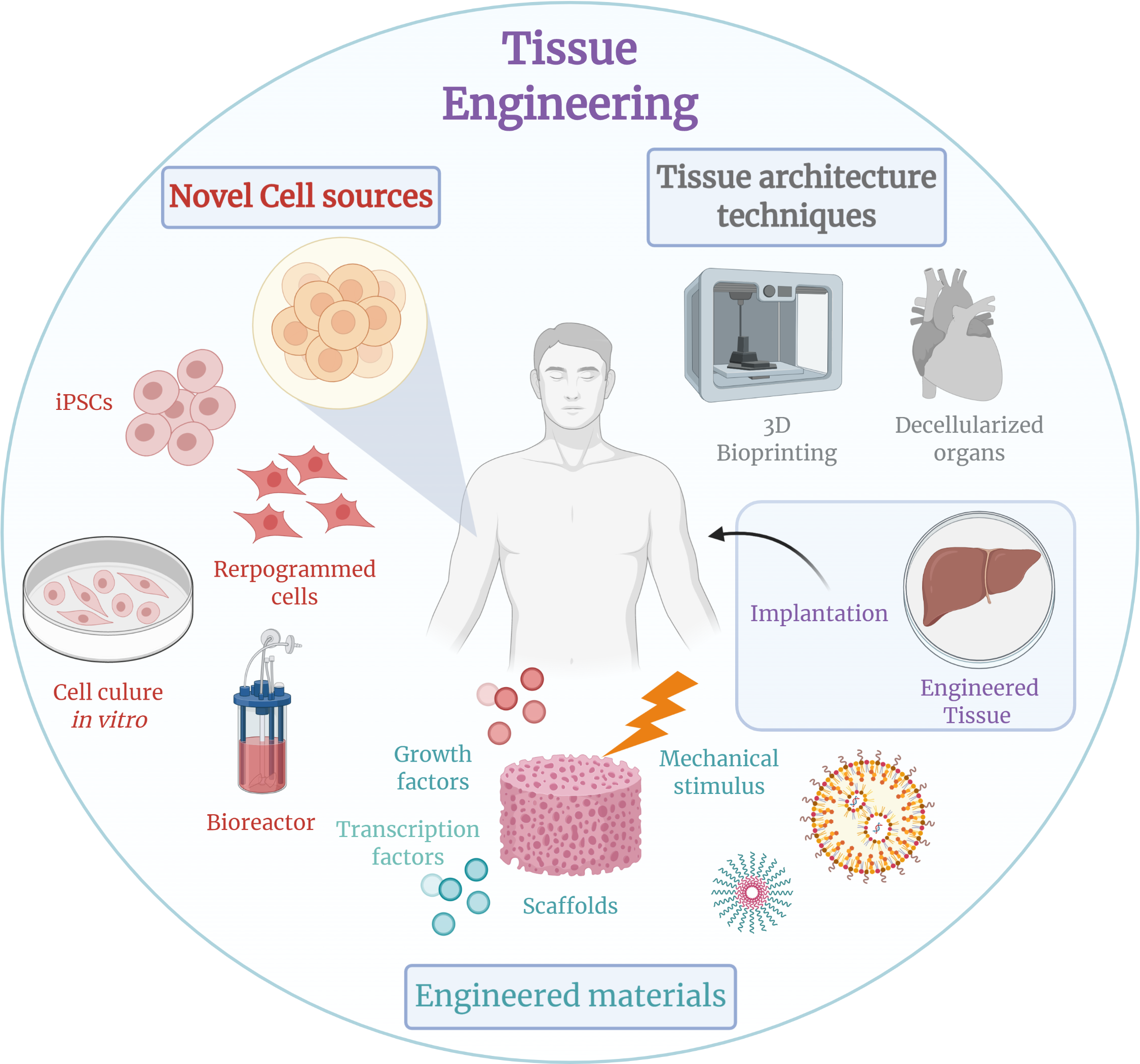
Tissue engineering is a rapidly evolving biomedical engineering discipline that utilizes a combination of cells, engineering methods, materials, and biochemical and physicochemical factors to restore, maintain, improve, or replace various types of biological tissues. With applications ranging from organ replacement to skin regeneration, tissue engineering has the potential to transform the field of medicine. According to the National Institutes of Health (NIH), tissue engineering has already led to the development of numerous medical products, including artificial skin, bone grafts, and heart valves. The global tissue engineering market is projected to reach $11.9 billion by 2025, with a growth rate of 23.5% per annum. As researchers continue to advance the field, tissue engineering is likely to play an increasingly important role in addressing the world's most pressing healthcare challenges, including the shortage of available organs for transplantation and the need for more effective treatments for chronic diseases.
🎵 Origins & History
Tissue engineering has its roots in the 1980s, when researchers such as Yale University's Dr. Joseph Vacanti and Dr. Robert Langer of MIT began exploring the use of cells and biomaterials to create functional tissue substitutes. The field gained momentum in the 1990s, with the establishment of the Tissue Engineering Society and the launch of the journal Tissue Engineering. Today, tissue engineering is a thriving field, with applications in a wide range of areas, including organ transplantation, wound healing, and cancer research.
⚙️ How It Works
The process of tissue engineering typically involves the use of cells, such as stem cells or primary cells, which are seeded onto a tissue scaffold and cultured in a bioreactor. The scaffold provides a framework for the cells to grow and differentiate, while the bioreactor provides a controlled environment for the tissue to develop. The resulting tissue can be used for a variety of applications, including implantation in the body or in vitro testing. Companies like Zimmer Biomet and Stryker Corporation are already using tissue engineering to develop innovative medical products.
📊 Key Facts & Numbers
Some key facts and numbers in the field of tissue engineering include: 23.5% annual growth rate of the global tissue engineering market, $11.9 billion projected market size by 2025, and over 100,000 patients treated with tissue-engineered products in the United States alone. Researchers at Johns Hopkins University and Stanford University are working on developing new tissue engineering technologies, including the use of 3D printing and biomaterials to create complex tissue structures.
👥 Key People & Organizations
Key people and organizations in the field of tissue engineering include Dr. Joseph Vacanti, Dr. Robert Langer, and the National Institutes of Health (NIH). The NIH has provided significant funding for tissue engineering research, including grants to support the development of new tissue engineering technologies and the establishment of the National Center for Advancing Translational Sciences. Companies like United Therapeutics and Celavie Biosciences are also playing a crucial role in advancing the field.
🌍 Cultural Impact & Influence
Tissue engineering has had a significant cultural impact, with applications in a wide range of areas, including medicine, biotechnology, and materials science. The field has also raised important ethical and social questions, such as the use of stem cells in research and the potential for tissue engineering to be used for non-therapeutic purposes. As noted by Francis Collins, Director of the NIH, tissue engineering has the potential to revolutionize the field of medicine and improve human health.
⚡ Current State & Latest Developments
The current state of tissue engineering is one of rapid advancement, with new technologies and applications being developed at a rapid pace. Recent breakthroughs include the use of induced pluripotent stem cells to create functional tissue substitutes and the development of new biomaterials for use in tissue engineering. Researchers at Harvard University and UCLA are working on developing new tissue engineering technologies, including the use of artificial intelligence and machine learning to improve tissue engineering outcomes.
🤔 Controversies & Debates
Despite the many advances in tissue engineering, there are still several controversies and debates in the field. One of the main challenges is the lack of standardization in tissue engineering protocols, which can make it difficult to compare results between different studies. Additionally, there are concerns about the potential risks and benefits of using tissue-engineered products in humans, as well as the need for more research on the long-term effects of these products. As noted by Anthony Atala, Director of the Wake Forest Institute for Regenerative Medicine, tissue engineering has the potential to transform the field of medicine, but more research is needed to fully realize its potential.
🔮 Future Outlook & Predictions
The future outlook for tissue engineering is promising, with many potential applications in a wide range of areas, including medicine, biotechnology, and materials science. As the field continues to advance, we can expect to see new and innovative technologies and products being developed, such as personalized medicine and regenerative medicine. Companies like Google and Microsoft are already investing in tissue engineering research, and the field is likely to have a significant impact on the future of healthcare.
💡 Practical Applications
Tissue engineering has many practical applications, including the development of new medical products, such as artificial skin and artificial organs. The field also has the potential to improve our understanding of human disease and to develop new treatments for a wide range of conditions, including cancer, diabetes, and heart disease. Researchers at Columbia University and University of Pennsylvania are working on developing new tissue engineering technologies, including the use of gene therapy and cell therapy to treat human disease.
Key Facts
- Year
- 1980s
- Origin
- United States
- Category
- chronic-conditions
- Type
- concept
Frequently Asked Questions
What is tissue engineering?
Tissue engineering is a biomedical engineering discipline that uses a combination of cells, engineering, and materials to restore, maintain, improve, or replace biological tissues. The field has applications in medicine, biotechnology, and materials science. As noted by National Institutes of Health, tissue engineering has the potential to transform the field of medicine and improve human health.
What are the applications of tissue engineering?
Tissue engineering has applications in a wide range of areas, including medicine, biotechnology, and materials science. The field has the potential to improve our understanding of human disease and to develop new treatments for a wide range of conditions, including cancer, diabetes, and heart disease. Researchers at Johns Hopkins University and Stanford University are working on developing new tissue engineering technologies, including the use of 3D printing and biomaterials to create complex tissue structures.
What are the challenges in tissue engineering?
Despite the many advances in tissue engineering, there are still several challenges in the field. One of the main challenges is the lack of standardization in tissue engineering protocols, which can make it difficult to compare results between different studies. Additionally, there are concerns about the potential risks and benefits of using tissue-engineered products in humans, as well as the need for more research on the long-term effects of these products. As noted by Anthony Atala, Director of the Wake Forest Institute for Regenerative Medicine, tissue engineering has the potential to transform the field of medicine, but more research is needed to fully realize its potential.
What is the future outlook for tissue engineering?
The future outlook for tissue engineering is promising, with many potential applications in a wide range of areas, including medicine, biotechnology, and materials science. As the field continues to advance, we can expect to see new and innovative technologies and products being developed, such as personalized medicine and regenerative medicine. Companies like Google and Microsoft are already investing in tissue engineering research, and the field is likely to have a significant impact on the future of healthcare.
How does tissue engineering relate to other fields?
Tissue engineering is closely related to other areas of biomedical engineering, such as bioengineering and nanotechnology. The field is also related to biomaterials, stem cells, and regenerative medicine. As noted by Jennifer Lewis, Professor of Biomedical Engineering at Harvard University, tissue engineering has the potential to revolutionize the field of medicine and improve human health.
What are the potential risks and benefits of tissue engineering?
The potential risks and benefits of tissue engineering are still being researched and debated. Some of the potential benefits include the development of new medical products, such as artificial skin and artificial organs, and the potential to improve our understanding of human disease. However, there are also potential risks, such as the potential for tissue-engineered products to be used for non-therapeutic purposes, and the need for more research on the long-term effects of these products. As noted by Francis Collins, Director of the National Institutes of Health, tissue engineering has the potential to transform the field of medicine and improve human health, but more research is needed to fully realize its potential.
How is tissue engineering used in medicine?
Tissue engineering is used in medicine to develop new medical products, such as artificial skin and artificial organs. The field has the potential to improve our understanding of human disease and to develop new treatments for a wide range of conditions, including cancer, diabetes, and heart disease. Researchers at Columbia University and University of Pennsylvania are working on developing new tissue engineering technologies, including the use of gene therapy and cell therapy to treat human disease.
What is the current state of tissue engineering research?
The current state of tissue engineering research is one of rapid advancement, with new technologies and applications being developed at a rapid pace. Recent breakthroughs include the use of induced pluripotent stem cells to create functional tissue substitutes and the development of new biomaterials for use in tissue engineering. Researchers at Harvard University and UCLA are working on developing new tissue engineering technologies, including the use of artificial intelligence and machine learning to improve tissue engineering outcomes.