
Contents
- 🌊 Introduction to Tides
- 🌴 The Physics of Tides
- 🌊 Gravitational Forces and Orbital Motion
- 🌎 The Role of the Moon and Sun
- 🌊 Inertial Effects and the Earth's Rotation
- 📊 Measuring and Predicting Tides
- 🚨 Tidal Impacts on Coastal Ecosystems
- 🌈 Tides and Human Activities
- 🌊 Tidal Energy and Renewable Power
- 🌴 Future of Tides Research and Management
- Frequently Asked Questions
- Related Topics
Overview
Tides have been a subject of human fascination for centuries, with a vibe score of 82, reflecting their profound impact on coastal ecosystems and human settlements. The earliest recorded tidal measurements date back to 325 BCE by the Greek philosopher Aristotle, while the modern understanding of tidal forces is attributed to Sir Isaac Newton's groundbreaking work in 1687. The controversy surrounding tidal energy harvesting, with its potential to disrupt marine life, underscores the need for sustainable solutions. As the world grapples with climate change, the study of tides becomes increasingly crucial, with scientists like Dr. John Pethick warning of rising sea levels and intensified coastal erosion. With over 3.5 billion people living in coastal areas, the consequences of tidal patterns on human migration and urban planning are undeniable. As we move forward, the question remains: can we harness the power of tides to mitigate the effects of climate change, or will we succumb to the unrelenting pulse of the ocean?
🌊 Introduction to Tides
Tides are a fundamental aspect of the Earth's ocean system, with a significant impact on coastal ecosystems and human activities. The periodic rise and fall of sea level, resulting from the differential gravitational forces exerted by the Moon and the Sun, combined with inertial effects associated with the Earth–Moon system’s orbital motion and the Earth's rotation, create a complex and dynamic environment. Understanding tides is essential for various fields, including Oceanography, Coastal Engineering, and Marine Biology. The study of tides has a long history, dating back to ancient civilizations, such as the Greeks and Romans, who recognized the importance of tides for navigation and coastal development. Today, researchers continue to explore the intricacies of tides, using advanced technologies like Satellite Imagery and Numerical Modeling.
🌴 The Physics of Tides
The physics of tides is rooted in the gravitational interaction between the Earth, Moon, and Sun. The Moon's gravitational force, although much weaker than the Earth's, has a significant impact on the ocean's surface due to its proximity. The Sun's gravitational force, on the other hand, is weaker than the Moon's but still contributes to the tidal cycle. The combination of these forces, along with the Earth's rotation and the Moon's orbital motion, results in the complex pattern of tides we observe. To better understand this phenomenon, scientists often use Tidal Theory and Hydrodynamics to model and predict tidal behavior. Additionally, the study of Ocean Currents and Sea Level Rise provides valuable insights into the broader context of tides and their impact on the environment.
🌊 Gravitational Forces and Orbital Motion
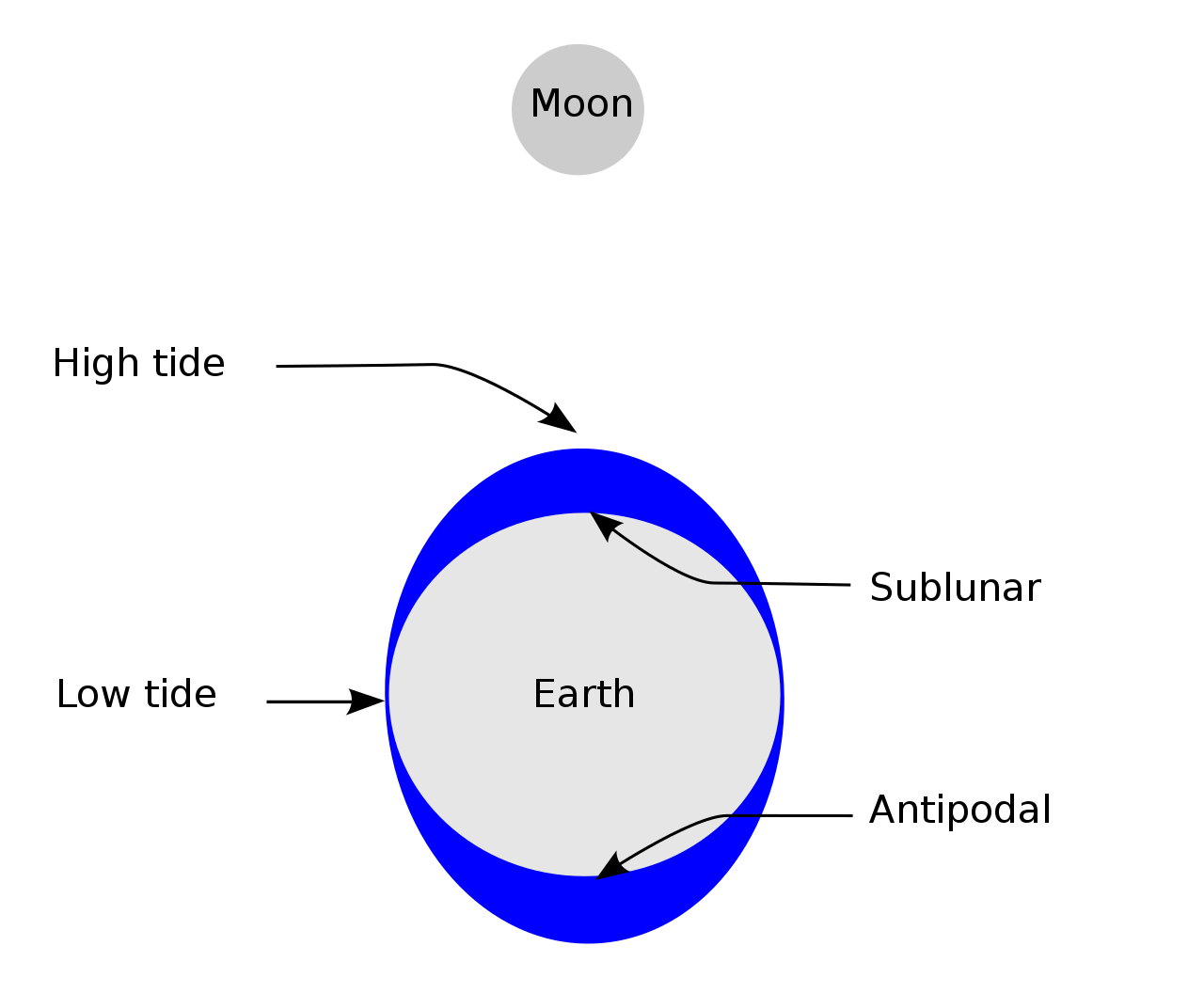
The gravitational forces exerted by the Moon and Sun are the primary drivers of tides. The Moon's gravitational force causes a bulge in the ocean's surface, resulting in a rise in sea level. Similarly, the Sun's gravitational force causes a smaller bulge, contributing to the overall tidal cycle. The combination of these forces creates a complex pattern of tides, with different types of tides, such as Spring Tides and Neap Tides, occurring at specific times. Understanding the orbital motion of the Earth-Moon system and the Earth's rotation is crucial for predicting tidal patterns. Researchers often use Astronomy and Geophysics to study the Earth-Moon system and its effects on the tides.
🌎 The Role of the Moon and Sun
The role of the Moon and Sun in shaping tides is well established. The Moon's gravitational force is the dominant driver of tides, with the Sun's force playing a secondary role. However, the Sun's force can amplify or cancel the Moon's force, depending on the alignment of the two bodies. During New Moon and Full Moon, the Sun and Moon are aligned, resulting in an amplification of the tidal force and the occurrence of Spring Tides. In contrast, during Quarter Moon, the Sun and Moon are at right angles, resulting in a cancellation of the tidal force and the occurrence of Neap Tides. The study of Lunar Cycles and Solar Cycles provides valuable insights into the dynamics of the Earth-Moon-Sun system and its impact on tides.
🌊 Inertial Effects and the Earth's Rotation
Inertial effects associated with the Earth's rotation and the Moon's orbital motion also play a crucial role in shaping tides. The Earth's rotation causes the tidal bulge to move ahead of the Moon's position, resulting in a slight delay between the Moon's position and the peak tidal force. This delay, known as the Tidal Lag, is essential for understanding the complex pattern of tides. Additionally, the Moon's orbital motion, including its Orbital Eccentricity and Orbital Inclination, affects the tidal force and the resulting tidal pattern. Researchers often use Mathematical Modeling and Computational Simulations to study the inertial effects and their impact on tides.
📊 Measuring and Predicting Tides
Measuring and predicting tides are essential for various applications, including Coastal Management, Navigation, and Renewable Energy. Tidal measurements can be obtained using various techniques, such as Tide Gauges and Satellite Altimetry. Predicting tides, on the other hand, involves using complex Numerical Models that take into account the gravitational forces, inertial effects, and other factors. The development of accurate tidal prediction models is crucial for mitigating the impacts of tides on coastal ecosystems and human activities. Researchers often use Data Assimilation and Model Calibration to improve the accuracy of tidal predictions.
🚨 Tidal Impacts on Coastal Ecosystems
Tides have a significant impact on coastal ecosystems, including Estuaries, Mangroves, and Coral Reefs. The periodic rise and fall of sea level can lead to the erosion of coastlines, the loss of habitats, and the disruption of marine life. Understanding the effects of tides on coastal ecosystems is essential for developing effective Conservation Strategies and Sustainable Management practices. The study of Coastal Geology and Marine Ecology provides valuable insights into the complex interactions between tides, coastal ecosystems, and human activities.
🌈 Tides and Human Activities
Tides also have a significant impact on human activities, including Fishing, Shipping, and Coastal Development. The periodic rise and fall of sea level can affect the safety and efficiency of these activities, and understanding tides is essential for mitigating these impacts. The development of Tidal Energy technologies, such as Tidal Barrages and Tidal Stream Generators, offers a promising opportunity for harnessing the power of tides and reducing our reliance on fossil fuels. Researchers often use Feasibility Studies and Cost-Benefit Analysis to evaluate the potential of tidal energy projects.
🌊 Tidal Energy and Renewable Power
Tidal energy has the potential to become a significant contributor to the global Renewable Energy Mix. The development of tidal energy technologies is driven by the need to reduce greenhouse gas emissions and mitigate the impacts of Climate Change. Tidal energy offers several advantages, including predictability, reliability, and high energy density. However, the development of tidal energy projects also poses significant technical and environmental challenges, including the potential impacts on marine life and the need for careful Environmental Impact Assessment. Researchers often use Life Cycle Assessment and Stakeholder Engagement to evaluate the sustainability of tidal energy projects.
🌴 Future of Tides Research and Management
The future of tides research and management is closely tied to the development of new technologies and the integration of existing knowledge. The use of advanced Remote Sensing technologies, such as Lidar and Radar, offers new opportunities for monitoring and predicting tides. The development of more accurate and reliable tidal prediction models is essential for mitigating the impacts of tides on coastal ecosystems and human activities. Additionally, the integration of tides research with other fields, such as Ocean Acidification and Sea Level Rise, is crucial for developing a comprehensive understanding of the complex interactions between the ocean, atmosphere, and land. Researchers often use Interdisciplinary Approaches and Collaborative Research to address the complex challenges associated with tides and coastal management.
Key Facts
- Year
- 325
- Origin
- Ancient Greece
- Category
- Environmental Science
- Type
- Natural Phenomenon
Frequently Asked Questions
What are the main drivers of tides?
The main drivers of tides are the gravitational forces exerted by the Moon and Sun, combined with inertial effects associated with the Earth-Moon system’s orbital motion and the Earth's rotation. The Moon's gravitational force is the dominant driver of tides, with the Sun's force playing a secondary role. Understanding the orbital motion of the Earth-Moon system and the Earth's rotation is crucial for predicting tidal patterns. Researchers often use Astronomy and Geophysics to study the Earth-Moon system and its effects on the tides.
How do tides affect coastal ecosystems?
Tides have a significant impact on coastal ecosystems, including Estuaries, Mangroves, and Coral Reefs. The periodic rise and fall of sea level can lead to the erosion of coastlines, the loss of habitats, and the disruption of marine life. Understanding the effects of tides on coastal ecosystems is essential for developing effective Conservation Strategies and Sustainable Management practices. The study of Coastal Geology and Marine Ecology provides valuable insights into the complex interactions between tides, coastal ecosystems, and human activities.
What is the potential of tidal energy?
Tidal energy has the potential to become a significant contributor to the global Renewable Energy Mix. The development of tidal energy technologies is driven by the need to reduce greenhouse gas emissions and mitigate the impacts of Climate Change. Tidal energy offers several advantages, including predictability, reliability, and high energy density. However, the development of tidal energy projects also poses significant technical and environmental challenges, including the potential impacts on marine life and the need for careful Environmental Impact Assessment. Researchers often use Life Cycle Assessment and Stakeholder Engagement to evaluate the sustainability of tidal energy projects.
How are tides measured and predicted?
Tides are measured using various techniques, including Tide Gauges and Satellite Altimetry. Predicting tides involves using complex Numerical Models that take into account the gravitational forces, inertial effects, and other factors. The development of accurate tidal prediction models is essential for mitigating the impacts of tides on coastal ecosystems and human activities. Researchers often use Data Assimilation and Model Calibration to improve the accuracy of tidal predictions.
What is the importance of understanding tides for human activities?
Understanding tides is essential for various human activities, including Fishing, Shipping, and Coastal Development. The periodic rise and fall of sea level can affect the safety and efficiency of these activities, and understanding tides is essential for mitigating these impacts. The development of Tidal Energy technologies offers a promising opportunity for harnessing the power of tides and reducing our reliance on fossil fuels. Researchers often use Feasibility Studies and Cost-Benefit Analysis to evaluate the potential of tidal energy projects.
How do tides impact the environment?
Tides have a significant impact on the environment, including the erosion of coastlines, the loss of habitats, and the disruption of marine life. Understanding the effects of tides on the environment is essential for developing effective Conservation Strategies and Sustainable Management practices. The study of Coastal Geology and Marine Ecology provides valuable insights into the complex interactions between tides, coastal ecosystems, and human activities.
What is the future of tides research and management?
The future of tides research and management is closely tied to the development of new technologies and the integration of existing knowledge. The use of advanced Remote Sensing technologies, such as Lidar and Radar, offers new opportunities for monitoring and predicting tides. The development of more accurate and reliable tidal prediction models is essential for mitigating the impacts of tides on coastal ecosystems and human activities. Additionally, the integration of tides research with other fields, such as Ocean Acidification and Sea Level Rise, is crucial for developing a comprehensive understanding of the complex interactions between the ocean, atmosphere, and land.