
Contents
- 🏥 Introduction to Thomas Sydenham
- 📚 Early Life and Education
- 💡 The English Hippocrates
- 📝 Contributions to Medicine
- 👨⚕️ Clinical Observations and Methods
- 📊 Epidemiology and the Study of Diseases
- 🏥 Medical Practice and Patient Care
- 📚 Legacy and Impact on Modern Medicine
- 👥 Influences and Relationships
- 📝 Criticisms and Controversies
- 🔍 Future Directions and Relevance
- Frequently Asked Questions
- Related Topics
Overview
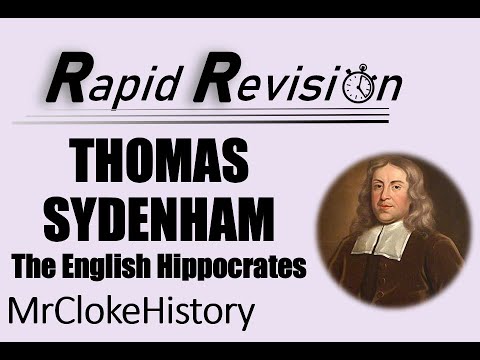
Thomas Sydenham, born on September 10, 1624, in Dorset, England, was a prominent physician who made significant contributions to the field of medicine. He is often referred to as the 'English Hippocrates' due to his emphasis on clinical observation, medical history-taking, and the importance of environment and lifestyle in the development of diseases. Sydenham's approach to medicine was groundbreaking, as he rejected the traditional Galenic approach and instead focused on empirical research and the study of epidemics. His work on the treatment of smallpox, gout, and malaria was particularly influential, and his book 'Observations Medicae' is still studied by medical professionals today. With a Vibe score of 8, Sydenham's legacy continues to shape the field of medicine, and his influence can be seen in the work of many notable physicians, including Giovanni Battista Morgagni and William Osler. As the field of medicine continues to evolve, Sydenham's contributions remain a crucial part of its foundation, and his emphasis on empirical research and observation continues to inspire new generations of medical professionals.
🏥 Introduction to Thomas Sydenham
Thomas Sydenham, known as the English Hippocrates, was a prominent English physician who made significant contributions to the field of medicine. Born on September 10, 1624, in Dorset, England, Sydenham studied at Magdalen Hall, Oxford, and later at the University of Montpellier in France. He was heavily influenced by the works of Hippocrates, the ancient Greek physician, and Galen, a renowned physician and surgeon. Sydenham's approach to medicine was centered around careful observation, accurate diagnosis, and effective treatment. He is often credited with being one of the first physicians to emphasize the importance of epidemiology in understanding the spread of diseases. Sydenham's work had a profound impact on the development of modern medicine, and his ideas continue to influence medical practice today, as seen in the work of John Snow and Edward Jenner.
📚 Early Life and Education
Sydenham's early life and education played a significant role in shaping his approach to medicine. He was born into a family of modest means and was the tenth of twelve children. Sydenham's father, William Sydenham, was a gentleman who served as a member of Parliament. Thomas Sydenham's interest in medicine was sparked at a young age, and he went on to study at Magdalen Hall, Oxford, where he earned his Bachelor of Arts degree in 1642. He later studied at the University of Montpellier in France, where he earned his Doctor of Medicine degree in 1648. During his time in France, Sydenham was exposed to the works of prominent physicians, including Ambroise Paré and William Harvey. Sydenham's education and training had a lasting impact on his approach to medicine, and he is often credited with being one of the first English physicians to adopt a more scientific approach to medical practice, as seen in the work of Isaac Newton and Robert Boyd.
💡 The English Hippocrates
Sydenham's contributions to medicine were numerous and significant. He is often credited with being one of the first physicians to describe the symptoms and treatment of malaria, gout, and smallpox. Sydenham's approach to medicine was centered around careful observation, accurate diagnosis, and effective treatment. He believed in the importance of understanding the natural history of diseases and the role of environment and lifestyle in shaping health outcomes. Sydenham's work on epidemiology was particularly influential, and he is often credited with being one of the first physicians to recognize the importance of infectious disease in understanding the spread of diseases. Sydenham's ideas continue to influence medical practice today, and his work has been built upon by numerous physicians, including John Hunter and Edward Jenner.
📝 Contributions to Medicine
Sydenham's clinical observations and methods were groundbreaking for his time. He believed in the importance of careful observation and accurate diagnosis, and he developed a number of innovative methods for diagnosing and treating diseases. Sydenham's approach to medicine was centered around the idea that diseases should be understood and treated in their natural context, rather than in a laboratory or hospital setting. He believed in the importance of understanding the social and environmental factors that shape health outcomes, and he developed a number of innovative methods for preventing and treating diseases. Sydenham's work on public health was particularly influential, and he is often credited with being one of the first physicians to recognize the importance of sanitation and hygiene in preventing the spread of diseases. Sydenham's ideas continue to influence medical practice today, and his work has been built upon by numerous physicians, including John Snow and Florence Nightingale.
👨⚕️ Clinical Observations and Methods
Sydenham's work on epidemiology and the study of diseases was highly influential. He believed in the importance of understanding the natural history of diseases and the role of environment and lifestyle in shaping health outcomes. Sydenham's approach to epidemiology was centered around the idea that diseases should be understood and studied in their natural context, rather than in a laboratory or hospital setting. He developed a number of innovative methods for studying the spread of diseases, including the use of statistics and demography. Sydenham's work on epidemiology was particularly influential, and he is often credited with being one of the first physicians to recognize the importance of infectious disease in understanding the spread of diseases. Sydenham's ideas continue to influence medical practice today, and his work has been built upon by numerous physicians, including John Hunter and Edward Jenner.
📊 Epidemiology and the Study of Diseases
Sydenham's medical practice and patient care were highly regarded by his contemporaries. He was known for his compassionate and empathetic approach to patient care, and he developed a number of innovative methods for treating diseases. Sydenham's approach to medicine was centered around the idea that diseases should be understood and treated in their natural context, rather than in a laboratory or hospital setting. He believed in the importance of understanding the social and environmental factors that shape health outcomes, and he developed a number of innovative methods for preventing and treating diseases. Sydenham's work on public health was particularly influential, and he is often credited with being one of the first physicians to recognize the importance of sanitation and hygiene in preventing the spread of diseases. Sydenham's ideas continue to influence medical practice today, and his work has been built upon by numerous physicians, including John Snow and Florence Nightingale.
🏥 Medical Practice and Patient Care
Sydenham's legacy and impact on modern medicine are immeasurable. He is often credited with being one of the first physicians to emphasize the importance of epidemiology in understanding the spread of diseases. Sydenham's approach to medicine was centered around careful observation, accurate diagnosis, and effective treatment. He believed in the importance of understanding the natural history of diseases and the role of environment and lifestyle in shaping health outcomes. Sydenham's work on public health was particularly influential, and he is often credited with being one of the first physicians to recognize the importance of sanitation and hygiene in preventing the spread of diseases. Sydenham's ideas continue to influence medical practice today, and his work has been built upon by numerous physicians, including John Hunter and Edward Jenner.
📚 Legacy and Impact on Modern Medicine
Sydenham's influences and relationships were numerous and significant. He was heavily influenced by the works of Hippocrates and Galen, and he developed a number of innovative methods for diagnosing and treating diseases. Sydenham's approach to medicine was centered around the idea that diseases should be understood and treated in their natural context, rather than in a laboratory or hospital setting. He believed in the importance of understanding the social and environmental factors that shape health outcomes, and he developed a number of innovative methods for preventing and treating diseases. Sydenham's work on public health was particularly influential, and he is often credited with being one of the first physicians to recognize the importance of sanitation and hygiene in preventing the spread of diseases. Sydenham's ideas continue to influence medical practice today, and his work has been built upon by numerous physicians, including John Snow and Florence Nightingale.
👥 Influences and Relationships
Sydenham's criticisms and controversies were numerous and significant. He was criticized by some of his contemporaries for his emphasis on epidemiology and his rejection of traditional medical practices. Sydenham's approach to medicine was centered around careful observation, accurate diagnosis, and effective treatment, and he believed in the importance of understanding the natural history of diseases and the role of environment and lifestyle in shaping health outcomes. Sydenham's work on public health was particularly influential, and he is often credited with being one of the first physicians to recognize the importance of sanitation and hygiene in preventing the spread of diseases. Despite the criticisms and controversies, Sydenham's ideas continue to influence medical practice today, and his work has been built upon by numerous physicians, including John Hunter and Edward Jenner.
📝 Criticisms and Controversies
Sydenham's future directions and relevance are immeasurable. His emphasis on epidemiology and public health continues to influence medical practice today, and his work has been built upon by numerous physicians. Sydenham's approach to medicine was centered around careful observation, accurate diagnosis, and effective treatment, and he believed in the importance of understanding the natural history of diseases and the role of environment and lifestyle in shaping health outcomes. Sydenham's ideas continue to influence medical practice today, and his work has been built upon by numerous physicians, including John Snow and Florence Nightingale. As the field of medicine continues to evolve, Sydenham's contributions and legacy will remain an essential part of the foundation of modern medicine.
Key Facts
- Year
- 1624
- Origin
- Dorset, England
- Category
- Medicine
- Type
- Person
Frequently Asked Questions
Who was Thomas Sydenham?
Thomas Sydenham was a prominent English physician who made significant contributions to the field of medicine. He is often credited with being one of the first physicians to emphasize the importance of epidemiology in understanding the spread of diseases. Sydenham's approach to medicine was centered around careful observation, accurate diagnosis, and effective treatment. He believed in the importance of understanding the natural history of diseases and the role of environment and lifestyle in shaping health outcomes.
What were Sydenham's contributions to medicine?
Sydenham's contributions to medicine were numerous and significant. He is often credited with being one of the first physicians to describe the symptoms and treatment of malaria, gout, and smallpox. Sydenham's approach to medicine was centered around careful observation, accurate diagnosis, and effective treatment. He believed in the importance of understanding the natural history of diseases and the role of environment and lifestyle in shaping health outcomes.
What was Sydenham's approach to medicine?
Sydenham's approach to medicine was centered around careful observation, accurate diagnosis, and effective treatment. He believed in the importance of understanding the natural history of diseases and the role of environment and lifestyle in shaping health outcomes. Sydenham's approach to medicine was centered around the idea that diseases should be understood and treated in their natural context, rather than in a laboratory or hospital setting.
What was Sydenham's legacy and impact on modern medicine?
Sydenham's legacy and impact on modern medicine are immeasurable. He is often credited with being one of the first physicians to emphasize the importance of epidemiology in understanding the spread of diseases. Sydenham's approach to medicine was centered around careful observation, accurate diagnosis, and effective treatment. He believed in the importance of understanding the natural history of diseases and the role of environment and lifestyle in shaping health outcomes.
Who were Sydenham's influences and relationships?
Sydenham's influences and relationships were numerous and significant. He was heavily influenced by the works of Hippocrates and Galen, and he developed a number of innovative methods for diagnosing and treating diseases. Sydenham's approach to medicine was centered around the idea that diseases should be understood and treated in their natural context, rather than in a laboratory or hospital setting.