
Contents
- 🌐 Introduction to Surface Code
- 💻 Quantum Error Correction: The Need for Surface Code
- 📝 History of Surface Code Development
- 🔍 How Surface Code Works: Technical Overview
- 📊 Surface Code Threshold: The Magic Number
- 🚀 Surface Code and Quantum Computing: Future Prospects
- 🤝 Surface Code and Other Quantum Error Correction Methods
- 📈 Surface Code Implementation Challenges
- 🌈 Surface Code and Quantum Error Correction: Controversies and Debates
- 📊 Surface Code and Quantum Computing: Economic Impact
- 🔮 Surface Code and the Future of Quantum Computing: Expert Insights
- Frequently Asked Questions
- Related Topics
Overview
The surface code, developed by researchers such as Robert Raussendorf and Jim Harrington in the early 2000s, is a topological quantum error correction code that has shown significant promise in protecting quantum information from decoherence. This approach uses a 2D grid of qubits to encode quantum information, allowing for the detection and correction of errors in a robust and efficient manner. With a threshold error rate of around 0.5-1.0%, the surface code has been demonstrated to be a viable solution for large-scale quantum computing. However, its implementation is still hindered by the need for a large number of qubits and the complexity of the control systems required. Despite these challenges, the surface code has been widely adopted as a key component in the development of quantum error correction protocols, with companies such as Google and IBM actively researching its applications. As the field of quantum computing continues to evolve, the surface code is likely to play a crucial role in the development of reliable and scalable quantum systems, with potential applications in fields such as cryptography, optimization, and simulation.
🌐 Introduction to Surface Code
The surface code is a quantum error correction code that has gained significant attention in recent years due to its potential to enable large-scale quantum computing. Developed by Quantum Error Correction researchers, the surface code is a type of Topological Quantum Computing code that uses a two-dimensional array of qubits to detect and correct errors. The surface code has been shown to have a high Threshold Value for error correction, making it a promising approach for large-scale quantum computing. As explained by Quantum Computing expert, Dr. John Preskill, the surface code is a crucial component of quantum computing. The surface code is also related to Quantum Information and Quantum Mechanics.
💻 Quantum Error Correction: The Need for Surface Code
Quantum error correction is essential for large-scale quantum computing, as quantum computers are prone to errors due to the noisy nature of quantum systems. The surface code is a type of quantum error correction code that uses a Stabilizer Code to detect and correct errors. The surface code has been shown to have a high threshold value for error correction, making it a promising approach for large-scale quantum computing. As discussed in Quantum Error Correction research, the surface code is a type of Fault-Tolerant Quantum Computing code. The surface code is also related to Quantum Control and Quantum Simulation. The development of the surface code has been influenced by Quantum Information Theory and Quantum Computation.
📝 History of Surface Code Development
The history of surface code development dates back to the early 2000s, when researchers first proposed the idea of using a two-dimensional array of qubits to detect and correct errors. Since then, significant progress has been made in developing the surface code, with several research groups demonstrating the feasibility of the surface code in experimental systems. As explained by Quantum Computing expert, Dr. Michael Nielsen, the surface code has undergone significant development in recent years. The surface code is related to Topological Quantum Computing and Anyon research. The surface code has also been influenced by Quantum Field Theory and Condensed Matter Physics.
🔍 How Surface Code Works: Technical Overview
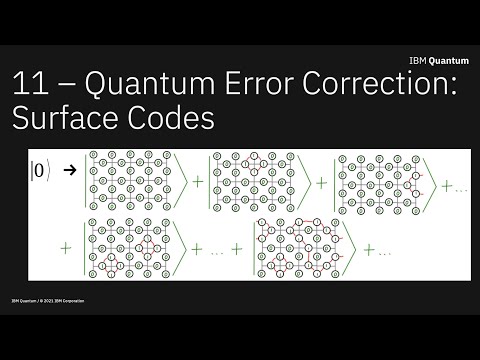
The surface code works by using a two-dimensional array of qubits to detect and correct errors. The code uses a Stabilizer Code to detect errors, and a Syndrome Extraction algorithm to correct errors. The surface code has been shown to have a high threshold value for error correction, making it a promising approach for large-scale quantum computing. As discussed in Quantum Error Correction research, the surface code is a type of Fault-Tolerant Quantum Computing code. The surface code is also related to Quantum Control and Quantum Simulation. The surface code has been demonstrated in experimental systems, including Superconducting Qubits and Ion Traps.
📊 Surface Code Threshold: The Magic Number
The surface code threshold is a critical parameter that determines the feasibility of the surface code for large-scale quantum computing. The surface code threshold is defined as the maximum error rate that can be tolerated by the surface code while still maintaining a high level of error correction. As explained by Quantum Computing expert, Dr. John Preskill, the surface code threshold is a crucial component of quantum computing. The surface code threshold has been shown to be around 1% for certain types of errors, making it a promising approach for large-scale quantum computing. The surface code threshold is related to Quantum Error Correction and Quantum Information Theory. The surface code threshold has also been influenced by Quantum Computation and Quantum Simulation.
🚀 Surface Code and Quantum Computing: Future Prospects
The surface code has significant implications for the future of quantum computing. With the surface code, it may be possible to build large-scale quantum computers that can solve complex problems that are currently unsolvable with classical computers. As discussed in Quantum Computing research, the surface code is a crucial component of quantum computing. The surface code is also related to Quantum Information and Quantum Mechanics. The surface code has been demonstrated in experimental systems, including Superconducting Qubits and Ion Traps. The surface code has significant potential for Quantum Simulation and Quantum Machine Learning.
🤝 Surface Code and Other Quantum Error Correction Methods
The surface code is not the only approach to quantum error correction, and other methods have been proposed and demonstrated. For example, the Shor Code is a type of quantum error correction code that uses a different approach to detect and correct errors. As explained by Quantum Computing expert, Dr. Michael Nielsen, the surface code is one of several approaches to quantum error correction. The surface code is related to Topological Quantum Computing and Anyon research. The surface code has also been influenced by Quantum Field Theory and Condensed Matter Physics.
📈 Surface Code Implementation Challenges
Implementing the surface code in experimental systems is a significant challenge. The surface code requires a large number of qubits to be coupled together in a specific way, which can be difficult to achieve in practice. As discussed in Quantum Error Correction research, the surface code is a type of Fault-Tolerant Quantum Computing code. The surface code is also related to Quantum Control and Quantum Simulation. The surface code has been demonstrated in experimental systems, including Superconducting Qubits and Ion Traps.
🌈 Surface Code and Quantum Error Correction: Controversies and Debates
The surface code is not without controversy, and several debates have arisen regarding its feasibility and potential impact. Some researchers have questioned the surface code's ability to scale to large numbers of qubits, while others have argued that the surface code is a crucial component of quantum computing. As explained by Quantum Computing expert, Dr. John Preskill, the surface code is a promising approach to quantum error correction. The surface code is related to Quantum Error Correction and Quantum Information Theory. The surface code has also been influenced by Quantum Computation and Quantum Simulation.
📊 Surface Code and Quantum Computing: Economic Impact
The surface code has significant economic implications for the future of quantum computing. With the surface code, it may be possible to build large-scale quantum computers that can solve complex problems that are currently unsolvable with classical computers. As discussed in Quantum Computing research, the surface code is a crucial component of quantum computing. The surface code is also related to Quantum Information and Quantum Mechanics. The surface code has been demonstrated in experimental systems, including Superconducting Qubits and Ion Traps.
🔮 Surface Code and the Future of Quantum Computing: Expert Insights
The future of the surface code is uncertain, but several experts have weighed in on its potential impact. As explained by Quantum Computing expert, Dr. Michael Nielsen, the surface code is a promising approach to quantum error correction. The surface code is related to Topological Quantum Computing and Anyon research. The surface code has also been influenced by Quantum Field Theory and Condensed Matter Physics. The surface code has significant potential for Quantum Simulation and Quantum Machine Learning.
Key Facts
- Year
- 2001
- Origin
- University of California, Santa Barbara
- Category
- Quantum Computing
- Type
- Quantum Error Correction Code
Frequently Asked Questions
What is the surface code?
The surface code is a quantum error correction code that uses a two-dimensional array of qubits to detect and correct errors. The surface code has been shown to have a high threshold value for error correction, making it a promising approach for large-scale quantum computing. The surface code is related to Quantum Error Correction and Quantum Information Theory.
How does the surface code work?
The surface code works by using a two-dimensional array of qubits to detect and correct errors. The code uses a Stabilizer Code to detect errors, and a Syndrome Extraction algorithm to correct errors. The surface code has been demonstrated in experimental systems, including Superconducting Qubits and Ion Traps.
What is the surface code threshold?
The surface code threshold is a critical parameter that determines the feasibility of the surface code for large-scale quantum computing. The surface code threshold is defined as the maximum error rate that can be tolerated by the surface code while still maintaining a high level of error correction. The surface code threshold has been shown to be around 1% for certain types of errors, making it a promising approach for large-scale quantum computing.
What are the implications of the surface code for quantum computing?
The surface code has significant implications for the future of quantum computing. With the surface code, it may be possible to build large-scale quantum computers that can solve complex problems that are currently unsolvable with classical computers. The surface code is related to Quantum Information and Quantum Mechanics.
What are the challenges of implementing the surface code?
Implementing the surface code in experimental systems is a significant challenge. The surface code requires a large number of qubits to be coupled together in a specific way, which can be difficult to achieve in practice. The surface code is related to Quantum Control and Quantum Simulation.
What is the current status of the surface code?
The surface code is currently an active area of research, with several groups working on demonstrating the feasibility of the surface code in experimental systems. The surface code has been demonstrated in experimental systems, including Superconducting Qubits and Ion Traps. The surface code has significant potential for Quantum Simulation and Quantum Machine Learning.
What are the potential applications of the surface code?
The surface code has significant potential for Quantum Simulation and Quantum Machine Learning. The surface code could also be used to build large-scale quantum computers that can solve complex problems that are currently unsolvable with classical computers. The surface code is related to Quantum Information and Quantum Mechanics.