
Contents
- 🌌 Introduction to the Kuiper Belt
- 🚀 Discovery and Exploration
- 🔍 Composition and Structure
- 🌊 The Kuiper Belt's Role in the Solar System
- 🌴 Kuiper Belt Objects (KBOs) and Dwarf Planets
- 🛰️ New Horizons and the Exploration of Pluto
- 🌊 The Kuiper Belt's Relationship to the Oort Cloud
- 📊 The Kuiper Belt's Size and Scale
- 🔭 Observational Challenges and Future Missions
- 🌟 The Kuiper Belt's Potential for Astrobiology
- 🌐 The Kuiper Belt in Popular Culture
- 📚 Conclusion and Future Research Directions
- Frequently Asked Questions
- Related Topics
Overview
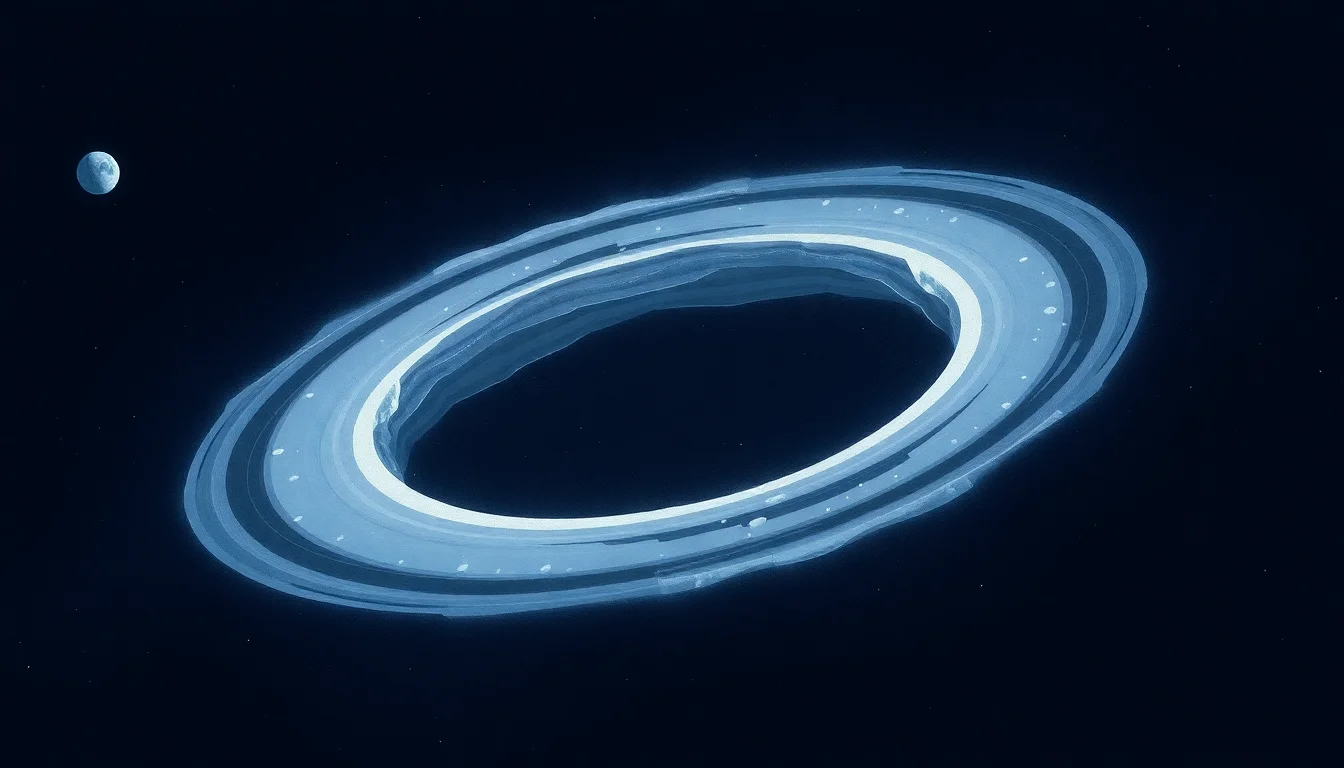
The Kuiper Belt, a region of icy bodies and celestial remnants, stretches from Neptune's orbit to a distance of approximately 55 astronomical units (AU) from the Sun. Discovered in 1992 by David Jewitt and Jane Luu, this vast expanse is home to dwarf planets like Pluto and Eris, with a combined mass estimated to be around 10-20 Earth masses. The Kuiper Belt is thought to be a reservoir for short-period comets, with some estimates suggesting that it contains hundreds of thousands of objects larger than 100 kilometers in diameter. As our understanding of the Kuiper Belt evolves, so too does our appreciation for its role in shaping the solar system's architecture. With a vibe score of 8, the Kuiper Belt is an area of intense research and fascination, with scientists like Mike Brown and Chad Trujillo contributing to its study. The Kuiper Belt's influence on the solar system's dynamics is still being unraveled, with some researchers suggesting that it may hold the key to understanding the solar system's migration patterns.
🌌 Introduction to the Kuiper Belt
The Kuiper Belt is a vast, icy expanse of our solar system, stretching from the orbit of Neptune to a distance of about 55 astronomical units (AU) from the Sun. It is a region of icy bodies, including Kuiper Belt Objects (KBOs), dwarf planets, and other small celestial objects. The Kuiper Belt is thought to be a reservoir for short-period comets, which are perturbed into the inner solar system. The study of the Kuiper Belt is an active area of research, with scientists using telescopes and spacecraft to explore this distant region. For example, the New Horizons spacecraft flew by Pluto in 2015, providing a wealth of information about this dwarf planet and its place in the Kuiper Belt. The Kuiper Belt is also of interest to astrobiologists, who study the origins of life in our solar system and the potential for life on other planets and moons.
🚀 Discovery and Exploration
The discovery of the Kuiper Belt is attributed to Gerard Kuiper, a Dutch-American astronomer who proposed the existence of a belt of icy bodies beyond Neptune in the 1950s. The first Kuiper Belt Object (KBO) was discovered in 1992, and since then, thousands of KBOs have been discovered. The study of the Kuiper Belt has been facilitated by advances in telescope technology and the launch of space missions such as New Horizons. The exploration of the Kuiper Belt is an ongoing process, with scientists using a combination of ground-based observations and space-based observations to study this region. For example, the Hubble Space Telescope has been used to study the Pluto system and other KBOs. The Kuiper Belt is also of interest to planetary scientists, who study the formation and evolution of our solar system.
🔍 Composition and Structure
The Kuiper Belt is thought to be composed of a variety of icy bodies, including water ice, methane ice, and ammonia ice. The Kuiper Belt is also home to a number of dwarf planets, including Pluto and Eris. These dwarf planets are thought to be the remnants of a population of large KBOs that were perturbed into the inner solar system. The Kuiper Belt is a dynamic region, with objects constantly being perturbed into the inner solar system and others being ejected into the outer reaches of the solar system. The study of the Kuiper Belt's composition and structure is an active area of research, with scientists using a combination of spectroscopy and asteroid observations to study this region. For example, the Spitzer Space Telescope has been used to study the infrared emission from KBOs. The Kuiper Belt is also of interest to geologists, who study the composition and evolution of planetary surfaces.
🌊 The Kuiper Belt's Role in the Solar System
The Kuiper Belt plays a crucial role in the solar system, serving as a reservoir for short-period comets and a source of small bodies that are perturbed into the inner solar system. The Kuiper Belt is also thought to be the source of some near-Earth objects, which are asteroids and comets that have been perturbed into orbits that bring them close to Earth. The study of the Kuiper Belt's role in the solar system is an active area of research, with scientists using a combination of computer simulations and observational data to study this region. For example, the orbits of KBOs have been used to study the dynamics of the Kuiper Belt and the effects of gravitational perturbations on the orbits of small bodies. The Kuiper Belt is also of interest to astronomers, who study the formation and evolution of our solar system.
🌴 Kuiper Belt Objects (KBOs) and Dwarf Planets
Kuiper Belt Objects (KBOs) are a class of small, icy bodies that are thought to be the remnants of the solar system's formation. KBOs are typically small, with diameters ranging from a few kilometers to several hundred kilometers. The largest KBOs are thought to be dwarf planets, which are objects that are large enough to have achieved hydrostatic equilibrium but have not cleared their orbits of other objects. The study of KBOs is an active area of research, with scientists using a combination of telescopes and spacecraft to study these objects. For example, the New Horizons spacecraft flew by Pluto in 2015, providing a wealth of information about this dwarf planet and its place in the Kuiper Belt. The Kuiper Belt is also home to a number of other KBOs, including Haumea and Makemake.
🛰️ New Horizons and the Exploration of Pluto
The New Horizons spacecraft was launched in 2006 and flew by Pluto in 2015, providing a wealth of information about this dwarf planet and its place in the Kuiper Belt. The New Horizons spacecraft was designed to study the Pluto system and the Kuiper Belt, and it has provided a wealth of information about the composition, geology, and atmosphere of Pluto. The New Horizons spacecraft has also been used to study other KBOs, including Arrokoth, which is a small, icy body that is thought to be a remnant of the solar system's formation. The study of the Kuiper Belt and the Pluto system is an ongoing process, with scientists using a combination of ground-based observations and space-based observations to study this region. For example, the Hubble Space Telescope has been used to study the Pluto system and other KBOs.
🌊 The Kuiper Belt's Relationship to the Oort Cloud
The Kuiper Belt is thought to be related to the Oort Cloud, which is a distant, spherical shell of icy bodies that surrounds the solar system. The Oort Cloud is thought to be the source of long-period comets, which are comets that have orbital periods of more than 200 years. The Kuiper Belt and the Oort Cloud are thought to be connected by a population of small, icy bodies that are perturbed into the inner solar system. The study of the Kuiper Belt's relationship to the Oort Cloud is an active area of research, with scientists using a combination of computer simulations and observational data to study this region. For example, the orbits of KBOs have been used to study the dynamics of the Kuiper Belt and the effects of gravitational perturbations on the orbits of small bodies.
📊 The Kuiper Belt's Size and Scale
The Kuiper Belt is a vast, icy expanse that stretches from the orbit of Neptune to a distance of about 55 astronomical units (AU) from the Sun. The Kuiper Belt is thought to contain a large number of small, icy bodies, including Kuiper Belt Objects (KBOs), dwarf planets, and other small celestial objects. The study of the Kuiper Belt's size and scale is an active area of research, with scientists using a combination of telescopes and spacecraft to study this region. For example, the New Horizons spacecraft flew by Pluto in 2015, providing a wealth of information about this dwarf planet and its place in the Kuiper Belt. The Kuiper Belt is also of interest to astrobiologists, who study the origins of life in our solar system and the potential for life on other planets and moons.
🔭 Observational Challenges and Future Missions
The study of the Kuiper Belt is an ongoing process, with scientists using a combination of ground-based observations and space-based observations to study this region. The Kuiper Belt is a challenging region to study, due to its distance from the Sun and the small size of the objects that it contains. However, advances in telescope technology and the launch of space missions such as New Horizons have facilitated the study of the Kuiper Belt. The Kuiper Belt is also of interest to planetary scientists, who study the formation and evolution of our solar system. For example, the formation of the Kuiper Belt is thought to have occurred in the early days of the solar system, when the giant planets were still forming and the solar system was still in its early stages of development.
🌟 The Kuiper Belt's Potential for Astrobiology
The Kuiper Belt is a region of our solar system that is of great interest to astrobiologists, who study the origins of life in our solar system and the potential for life on other planets and moons. The Kuiper Belt is thought to contain a large number of small, icy bodies that are rich in organic molecules, which are the building blocks of life. The study of the Kuiper Belt's potential for astrobiology is an active area of research, with scientists using a combination of telescopes and spacecraft to study this region. For example, the New Horizons spacecraft flew by Pluto in 2015, providing a wealth of information about this dwarf planet and its place in the Kuiper Belt. The Kuiper Belt is also of interest to geologists, who study the composition and evolution of planetary surfaces.
🌐 The Kuiper Belt in Popular Culture
The Kuiper Belt has been featured in a number of science fiction stories and films, including the Star Trek franchise and the Star Wars franchise. The Kuiper Belt is often depicted as a region of icy bodies and asteroid fields, and it is sometimes used as a setting for space battles and other science fiction tropes. The Kuiper Belt is also of interest to astronomers, who study the formation and evolution of our solar system. For example, the formation of the Kuiper Belt is thought to have occurred in the early days of the solar system, when the giant planets were still forming and the solar system was still in its early stages of development.
📚 Conclusion and Future Research Directions
In conclusion, the Kuiper Belt is a vast, icy expanse that stretches from the orbit of Neptune to a distance of about 55 astronomical units (AU) from the Sun. The Kuiper Belt is thought to contain a large number of small, icy bodies, including Kuiper Belt Objects (KBOs), dwarf planets, and other small celestial objects. The study of the Kuiper Belt is an ongoing process, with scientists using a combination of ground-based observations and space-based observations to study this region. Future research directions include the study of the Kuiper Belt's composition and structure, the dynamics of the Kuiper Belt, and the potential for astrobiology in the Kuiper Belt.
Key Facts
- Year
- 1992
- Origin
- Solar System
- Category
- Astronomy
- Type
- Astronomical Region
Frequently Asked Questions
What is the Kuiper Belt?
The Kuiper Belt is a vast, icy expanse that stretches from the orbit of Neptune to a distance of about 55 astronomical units (AU) from the Sun. It is a region of icy bodies, including Kuiper Belt Objects (KBOs), dwarf planets, and other small celestial objects. The Kuiper Belt is thought to be a reservoir for short-period comets and a source of small bodies that are perturbed into the inner solar system.
What is the composition of the Kuiper Belt?
The Kuiper Belt is thought to be composed of a variety of icy bodies, including water ice, methane ice, and ammonia ice. The Kuiper Belt is also home to a number of dwarf planets, including Pluto and Eris. These dwarf planets are thought to be the remnants of a population of large KBOs that were perturbed into the inner solar system.
How was the Kuiper Belt discovered?
The discovery of the Kuiper Belt is attributed to Gerard Kuiper, a Dutch-American astronomer who proposed the existence of a belt of icy bodies beyond Neptune in the 1950s. The first Kuiper Belt Object (KBO) was discovered in 1992, and since then, thousands of KBOs have been discovered. The study of the Kuiper Belt has been facilitated by advances in telescope technology and the launch of space missions such as New Horizons.
What is the relationship between the Kuiper Belt and the Oort Cloud?
The Kuiper Belt is thought to be related to the Oort Cloud, which is a distant, spherical shell of icy bodies that surrounds the solar system. The Oort Cloud is thought to be the source of long-period comets, which are comets that have orbital periods of more than 200 years. The Kuiper Belt and the Oort Cloud are thought to be connected by a population of small, icy bodies that are perturbed into the inner solar system.
What is the potential for astrobiology in the Kuiper Belt?
The Kuiper Belt is a region of our solar system that is of great interest to astrobiologists, who study the origins of life in our solar system and the potential for life on other planets and moons. The Kuiper Belt is thought to contain a large number of small, icy bodies that are rich in organic molecules, which are the building blocks of life. The study of the Kuiper Belt's potential for astrobiology is an active area of research, with scientists using a combination of telescopes and spacecraft to study this region.