
Contents
- 🌐 Introduction to Shortest Path Problems
- 📈 Understanding Graph Theory and Weighted Edges
- 🔍 Dijkstra's Algorithm: A Breakthrough in Shortest Path Finding
- 📊 Bellman-Ford Algorithm: Handling Negative Weight Edges
- 🌈 Floyd-Warshall Algorithm: Finding Shortest Paths in Weighted Graphs
- 🚗 Applications of Shortest Path Algorithms in Real-World Scenarios
- 🤔 Challenges and Limitations of Shortest Path Algorithms
- 🔮 Future Directions and Advancements in Shortest Path Research
- 📚 Conclusion: The Importance of Shortest Path Algorithms in Computer Science
- 📊 Case Studies: Real-World Implementations of Shortest Path Algorithms
- 📝 References and Further Reading
- Frequently Asked Questions
- Related Topics
Overview
The concept of the shortest path has been a cornerstone of graph theory and computer science, with applications spanning transportation networks, social media, and logistics. Dijkstra's algorithm, developed in 1959 by Edsger W. Dijkstra, remains a fundamental approach to finding the shortest path between two nodes in a graph. However, other algorithms like A* and Bellman-Ford have also gained prominence, each with its strengths and weaknesses. The shortest path problem has been a subject of intense debate, with some arguing that it is a solved problem, while others claim that there is still room for innovation. With the rise of autonomous vehicles and smart cities, the importance of efficient shortest path algorithms will only continue to grow. As we look to the future, it is likely that we will see the development of even more sophisticated algorithms, capable of handling complex, dynamic networks and real-time data.
🌐 Introduction to Shortest Path Problems
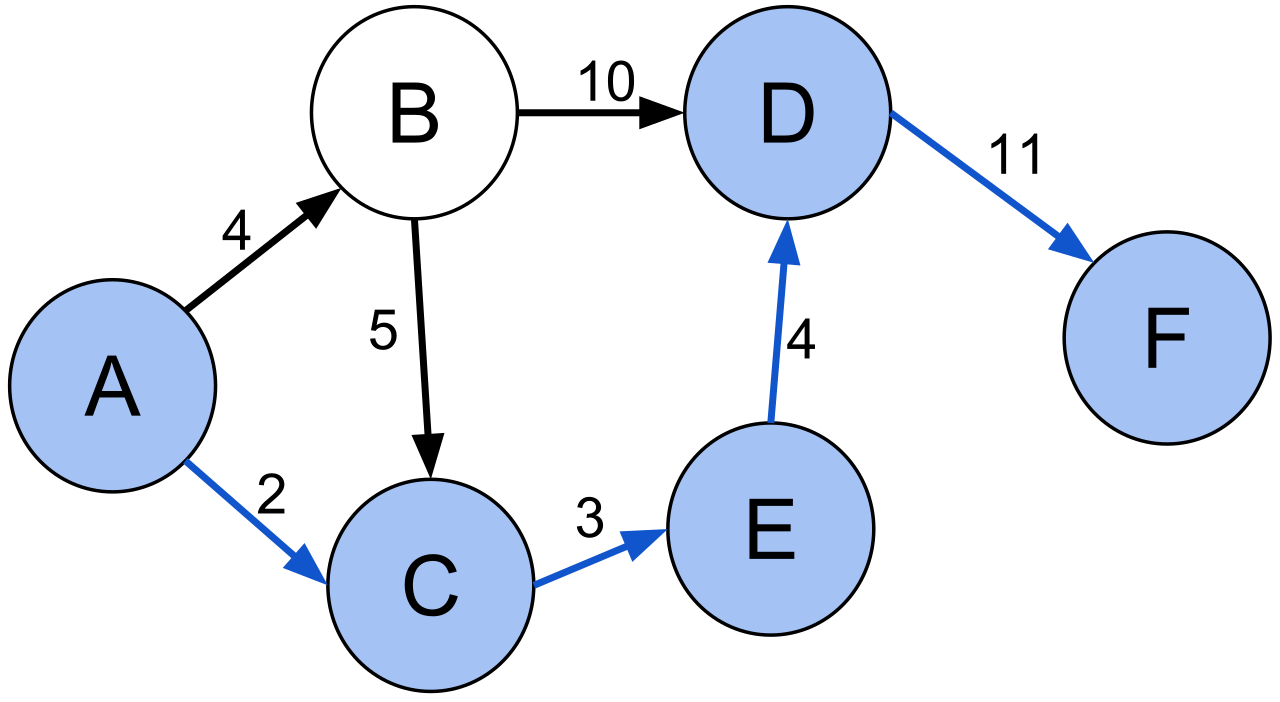
The shortest path problem is a fundamental concept in graph theory, which involves finding the minimum-weight path between two vertices in a weighted graph. This problem has numerous applications in computer science, including network optimization, traffic management, and logistics. The shortest path problem can be solved using various algorithms, including Dijkstra's algorithm and the Bellman-Ford algorithm. These algorithms have been widely used in Google Maps and other GPS navigation systems to find the most efficient routes. The concept of shortest path is also closely related to minimum spanning tree and traveling salesman problem.
📈 Understanding Graph Theory and Weighted Edges
In graph theory, the shortest path problem is often represented as a weighted graph, where each edge is assigned a weight or cost. The goal is to find the path with the minimum total weight between two vertices. This problem can be solved using various algorithms, including Floyd-Warshall algorithm and Johnson's algorithm. These algorithms have been widely used in social network analysis and web search engine optimization. The concept of weighted edges is also closely related to weighted graph and directed graph. The study of graph theory and weighted edges has led to the development of various graph algorithms, including breadth-first search and depth-first search.
🔍 Dijkstra's Algorithm: A Breakthrough in Shortest Path Finding
Dijkstra's algorithm is a well-known algorithm for finding the shortest path in a weighted graph. It was first proposed by Edsger Dijkstra in 1959 and has since become a fundamental algorithm in computer science. The algorithm works by maintaining a priority queue of vertices, where the priority of each vertex is its minimum distance from the source vertex. The algorithm then repeatedly extracts the vertex with the minimum priority and updates the distances of its neighboring vertices. Dijkstra's algorithm has been widely used in network routing and traffic management. The algorithm is also closely related to Bellman-Ford algorithm and Floyd-Warshall algorithm.
📊 Bellman-Ford Algorithm: Handling Negative Weight Edges
The Bellman-Ford algorithm is another popular algorithm for finding the shortest path in a weighted graph. It was first proposed by Richard Bellman and Lester Ford in the 1950s and has since become a fundamental algorithm in computer science. The algorithm works by maintaining a distance array, where each entry represents the minimum distance from the source vertex to the corresponding vertex. The algorithm then repeatedly relaxes the edges of the graph, updating the distances of the vertices as necessary. The Bellman-Ford algorithm can handle negative weight edges, making it more versatile than Dijkstra's algorithm. The algorithm is also closely related to Dijkstra's algorithm and Floyd-Warshall algorithm.
🌈 Floyd-Warshall Algorithm: Finding Shortest Paths in Weighted Graphs
The Floyd-Warshall algorithm is an algorithm for finding the shortest path in a weighted graph. It was first proposed by Robert Floyd and Stephen Warshall in the 1960s and has since become a fundamental algorithm in computer science. The algorithm works by maintaining a matrix of distances, where each entry represents the minimum distance between the corresponding vertices. The algorithm then repeatedly updates the matrix, using the following formula: d[i][j] = min(d[i][j], d[i][k] + d[k][j]). The Floyd-Warshall algorithm can handle negative weight edges and can find the shortest path between all pairs of vertices. The algorithm is also closely related to Dijkstra's algorithm and Bellman-Ford algorithm.
🚗 Applications of Shortest Path Algorithms in Real-World Scenarios
Shortest path algorithms have numerous applications in real-world scenarios, including network optimization, traffic management, and logistics. For example, Google Maps uses shortest path algorithms to find the most efficient routes between two locations. Similarly, UPS and FedEx use shortest path algorithms to optimize their delivery routes. Shortest path algorithms are also used in social network analysis and web search engine optimization. The concept of shortest path is also closely related to minimum spanning tree and traveling salesman problem.
🤔 Challenges and Limitations of Shortest Path Algorithms
Despite the numerous applications of shortest path algorithms, there are several challenges and limitations to their use. For example, shortest path algorithms can be computationally expensive, especially for large graphs. Additionally, shortest path algorithms may not always find the optimal solution, especially in the presence of negative weight edges. Furthermore, shortest path algorithms may not take into account real-world constraints, such as traffic congestion and road closures. To address these challenges, researchers have developed various approximation algorithms and heuristics to improve the efficiency and accuracy of shortest path algorithms. The concept of shortest path is also closely related to network flow and matching theory.
🔮 Future Directions and Advancements in Shortest Path Research
Future research directions in shortest path algorithms include the development of more efficient and accurate algorithms, as well as the application of shortest path algorithms to new domains. For example, researchers are currently exploring the use of shortest path algorithms in artificial intelligence and machine learning. Additionally, researchers are developing new algorithms that can handle dynamic graphs and uncertain graphs. The concept of shortest path is also closely related to graph neural networks and geometric deep learning.
📚 Conclusion: The Importance of Shortest Path Algorithms in Computer Science
In conclusion, shortest path algorithms are a fundamental concept in computer science, with numerous applications in real-world scenarios. The development of efficient and accurate shortest path algorithms is an active area of research, with many challenges and opportunities remaining. The concept of shortest path is also closely related to minimum spanning tree and traveling salesman problem. To learn more about shortest path algorithms, readers can refer to graph theory and algorithm design.
📊 Case Studies: Real-World Implementations of Shortest Path Algorithms
Several case studies have demonstrated the effectiveness of shortest path algorithms in real-world scenarios. For example, Google Maps uses shortest path algorithms to find the most efficient routes between two locations. Similarly, UPS and FedEx use shortest path algorithms to optimize their delivery routes. Shortest path algorithms are also used in social network analysis and web search engine optimization. The concept of shortest path is also closely related to network flow and matching theory.
📝 References and Further Reading
For further reading, readers can refer to graph theory and algorithm design. Additionally, readers can explore the applications of shortest path algorithms in network optimization, traffic management, and logistics. The concept of shortest path is also closely related to minimum spanning tree and traveling salesman problem.
Key Facts
- Year
- 1959
- Origin
- Graph Theory and Computer Science
- Category
- Computer Science
- Type
- Algorithm
Frequently Asked Questions
What is the shortest path problem?
The shortest path problem is a fundamental concept in graph theory, which involves finding the minimum-weight path between two vertices in a weighted graph. This problem has numerous applications in computer science, including network optimization, traffic management, and logistics.
What are some common algorithms for solving the shortest path problem?
Some common algorithms for solving the shortest path problem include Dijkstra's algorithm, Bellman-Ford algorithm, and Floyd-Warshall algorithm. These algorithms have been widely used in Google Maps and other GPS navigation systems to find the most efficient routes.
What are some applications of shortest path algorithms?
Shortest path algorithms have numerous applications in real-world scenarios, including network optimization, traffic management, and logistics. For example, Google Maps uses shortest path algorithms to find the most efficient routes between two locations. Similarly, UPS and FedEx use shortest path algorithms to optimize their delivery routes.
What are some challenges and limitations of shortest path algorithms?
Despite the numerous applications of shortest path algorithms, there are several challenges and limitations to their use. For example, shortest path algorithms can be computationally expensive, especially for large graphs. Additionally, shortest path algorithms may not always find the optimal solution, especially in the presence of negative weight edges.
What are some future research directions in shortest path algorithms?
Future research directions in shortest path algorithms include the development of more efficient and accurate algorithms, as well as the application of shortest path algorithms to new domains. For example, researchers are currently exploring the use of shortest path algorithms in artificial intelligence and machine learning.
How do shortest path algorithms relate to other concepts in computer science?
Shortest path algorithms are closely related to other concepts in computer science, including minimum spanning tree, traveling salesman problem, and network flow. These concepts are all important in graph theory and have numerous applications in real-world scenarios.
What are some real-world examples of shortest path algorithms in use?
Several case studies have demonstrated the effectiveness of shortest path algorithms in real-world scenarios. For example, Google Maps uses shortest path algorithms to find the most efficient routes between two locations. Similarly, UPS and FedEx use shortest path algorithms to optimize their delivery routes.