
Contents
- 🔒 Introduction to Separation of Duties
- 📈 History and Evolution of SoD
- 🔍 Principles of Separation of Duties
- 👥 Roles and Responsibilities in SoD
- 🚫 Benefits of Separation of Duties
- 🚨 Challenges and Limitations of SoD
- 📊 Implementing Separation of Duties in Organisations
- 🔜 Future of Separation of Duties
- 🤝 Relationship with Other Governance Concepts
- 📝 Case Studies and Examples
- 📊 Best Practices for SoD Implementation
- 👮 Compliance and Regulatory Requirements
- Frequently Asked Questions
- Related Topics
Overview
Separation of duties, a concept dating back to the 17th century, remains a crucial aspect of internal control, ensuring that no single individual has unchecked authority over critical processes. This principle, widely adopted in financial institutions, government agencies, and public companies, assigns different people or teams to perform tasks such as authorization, approval, and reconciliation, thereby reducing the risk of fraud, errors, and abuse of power. With the advent of digital technologies, the separation of duties has become even more complex, requiring organizations to adapt and implement robust access controls, segregation of duties matrices, and continuous monitoring. As of 2022, the Committee of Sponsoring Organizations (COSO) emphasized the importance of separation of duties in its Internal Control Framework, highlighting its role in preventing and detecting fraud. The implementation of separation of duties can be challenging, particularly in small and medium-sized enterprises, where resources are limited, and employees often wear multiple hats. Nevertheless, the benefits of separation of duties, including improved accountability, reduced risk, and enhanced compliance, make it an essential component of any organization's internal control framework. The future of separation of duties will likely involve the integration of artificial intelligence and machine learning to enhance access controls and detect potential breaches, according to a report by Gartner, which predicts that by 2025, 70% of organizations will have implemented AI-powered segregation of duties solutions.
🔒 Introduction to Separation of Duties
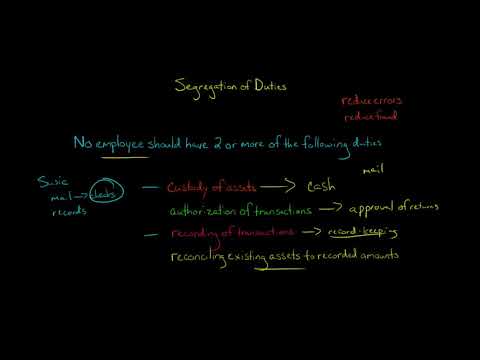
The concept of separation of powers has been a cornerstone of democratic governance for centuries, and its application in the corporate world is known as separation of duties (SoD). SoD is an administrative control used by organisations to prevent fraud, sabotage, theft, misuse of information, and other security compromises. By requiring more than one person to complete a task, SoD ensures that no single individual has too much power or control. This concept is closely related to internal control, which is a crucial aspect of governance and compliance.
📈 History and Evolution of SoD
The history of SoD dates back to the ancient Greeks, who recognised the importance of dividing power among different branches of government. This concept was later adopted by modern democracies, where the government is separated into three independent branches: a legislature, an executive, and a judiciary. In the corporate world, SoD has evolved to include various compliance and regulatory requirements, such as Sarbanes-Oxley Act and HIPAA. The Committee of Sponsoring Organizations (COSO) has also played a significant role in promoting SoD as a key component of internal control.
🔍 Principles of Separation of Duties
The principles of SoD are based on the idea of dividing tasks and responsibilities among multiple individuals or departments. This includes segregation of duties, job rotation, and mandatory vacation policies. By implementing these principles, organisations can reduce the risk of fraud and error, and improve accountability and transparency. SoD is closely related to risk management, which involves identifying and mitigating potential risks to the organisation. The ISO 31000 standard provides a framework for risk management, which includes SoD as a key component.
👥 Roles and Responsibilities in SoD
In an organisation, various roles and responsibilities are involved in implementing SoD. This includes management, audit committee, and compliance officer roles. Each of these roles has a distinct responsibility in ensuring that SoD is effective and efficient. The chief compliance officer plays a critical role in overseeing the implementation of SoD and ensuring that the organisation is in compliance with relevant regulatory requirements. The internal audit function also plays a crucial role in evaluating the effectiveness of SoD and identifying areas for improvement.
🚫 Benefits of Separation of Duties
The benefits of SoD are numerous, including reduced risk of fraud and error, improved accountability and transparency, and enhanced compliance with regulatory requirements. SoD also promotes a culture of compliance within the organisation, which is essential for long-term success. By implementing SoD, organisations can also improve their reputation and brand image, which can lead to increased customer trust and loyalty. The COSO framework provides a structured approach to implementing SoD and evaluating its effectiveness.
🚨 Challenges and Limitations of SoD
Despite its benefits, SoD also has its challenges and limitations. One of the main challenges is the difficulty in implementing SoD in small organisations or those with limited resources. Additionally, SoD can be time-consuming and may require significant investment in training and development. The cost-benefit analysis of SoD implementation should be carefully considered to ensure that the benefits outweigh the costs. The return on investment (ROI) of SoD implementation can be significant, but it requires careful planning and execution.
📊 Implementing Separation of Duties in Organisations
Implementing SoD in organisations requires a structured approach, which includes risk assessment, process mapping, and control design. The project management function plays a critical role in ensuring that SoD is implemented effectively and efficiently. The agile methodology can be used to implement SoD in a flexible and iterative manner, which allows for rapid adaptation to changing circumstances. The waterfall model can also be used, but it may be less flexible and more prone to delays.
🔜 Future of Separation of Duties
The future of SoD is closely tied to the evolving landscape of governance and compliance. As organisations face increasing regulatory requirements and compliance pressures, SoD will become even more critical in ensuring the integrity and accountability of business operations. The artificial intelligence (AI) and machine learning (ML) can be used to enhance SoD by providing real-time monitoring and analytics. The blockchain technology can also be used to provide a secure and transparent platform for SoD implementation.
🤝 Relationship with Other Governance Concepts
SoD is closely related to other governance concepts, such as internal control, risk management, and compliance. These concepts are interconnected and interdependent, and SoD plays a critical role in ensuring their effectiveness. The Committee of Sponsoring Organizations (COSO) has developed a framework that integrates SoD with other governance concepts, providing a comprehensive approach to governance and compliance. The Institute of Internal Auditors (IIA) has also developed a framework for SoD, which provides guidance on implementation and evaluation.
📝 Case Studies and Examples
Several case studies and examples demonstrate the effectiveness of SoD in preventing fraud and error. For instance, the Enron scandal highlights the importance of SoD in preventing corporate fraud. The WorldCom scandal also demonstrates the need for effective SoD in preventing accounting irregularities. The Tyco scandal shows the importance of SoD in preventing executive misconduct. These cases demonstrate the importance of SoD in maintaining the integrity and accountability of business operations.
📊 Best Practices for SoD Implementation
Best practices for SoD implementation include regular review and update of SoD policies and procedures, training and development of personnel, and monitoring and reporting of SoD effectiveness. The chief compliance officer should oversee the implementation of SoD and ensure that the organisation is in compliance with relevant regulatory requirements. The internal audit function should also evaluate the effectiveness of SoD and identify areas for improvement.
👮 Compliance and Regulatory Requirements
Compliance with regulatory requirements is a critical aspect of SoD. Organisations must ensure that they are in compliance with relevant laws and regulations, such as Sarbanes-Oxley Act and HIPAA. The regulatory environment is constantly evolving, and organisations must stay up-to-date with the latest developments and requirements. The compliance officer should ensure that the organisation is in compliance with all relevant regulatory requirements and that SoD is implemented effectively.
Key Facts
- Year
- 2022
- Origin
- 17th Century
- Category
- Governance and Compliance
- Type
- Concept
Frequently Asked Questions
What is the purpose of separation of duties?
The purpose of separation of duties is to prevent fraud, sabotage, theft, misuse of information, and other security compromises by dividing tasks and responsibilities among multiple individuals or departments. This concept is closely related to internal control, which is a crucial aspect of governance and compliance. The Committee of Sponsoring Organizations (COSO) has also played a significant role in promoting SoD as a key component of internal control.
How does separation of duties work?
Separation of duties works by requiring more than one person to complete a task, thereby ensuring that no single individual has too much power or control. This concept is based on the principles of segregation of duties, job rotation, and mandatory vacation policies. By implementing these principles, organisations can reduce the risk of fraud and error, and improve accountability and transparency. The ISO 31000 standard provides a framework for risk management, which includes SoD as a key component.
What are the benefits of separation of duties?
The benefits of separation of duties include reduced risk of fraud and error, improved accountability and transparency, and enhanced compliance with regulatory requirements. SoD also promotes a culture of compliance within the organisation, which is essential for long-term success. By implementing SoD, organisations can also improve their reputation and brand image, which can lead to increased customer trust and loyalty. The COSO framework provides a structured approach to implementing SoD and evaluating its effectiveness.
What are the challenges of implementing separation of duties?
The challenges of implementing separation of duties include the difficulty in implementing SoD in small organisations or those with limited resources, and the potential for SoD to be time-consuming and require significant investment in training and development. The cost-benefit analysis of SoD implementation should be carefully considered to ensure that the benefits outweigh the costs. The return on investment (ROI) of SoD implementation can be significant, but it requires careful planning and execution. The project management function plays a critical role in ensuring that SoD is implemented effectively and efficiently.
How can organisations implement separation of duties effectively?
Organisations can implement separation of duties effectively by following a structured approach, which includes risk assessment, process mapping, and control design. The project management function plays a critical role in ensuring that SoD is implemented effectively and efficiently. The agile methodology can be used to implement SoD in a flexible and iterative manner, which allows for rapid adaptation to changing circumstances. The waterfall model can also be used, but it may be less flexible and more prone to delays. The chief compliance officer should oversee the implementation of SoD and ensure that the organisation is in compliance with relevant regulatory requirements.
What is the relationship between separation of duties and internal control?
Separation of duties is a key component of internal control, which is a crucial aspect of governance and compliance. Internal control refers to the policies, procedures, and processes used by an organisation to ensure the accuracy and reliability of its financial reporting, as well as to prevent fraud and error. SoD is an essential element of internal control, as it helps to ensure that no single individual has too much power or control. The Committee of Sponsoring Organizations (COSO) has developed a framework that integrates SoD with other governance concepts, providing a comprehensive approach to governance and compliance.
How can organisations ensure compliance with regulatory requirements related to separation of duties?
Organisations can ensure compliance with regulatory requirements related to separation of duties by staying up-to-date with the latest developments and requirements, and by implementing a structured approach to SoD. The regulatory environment is constantly evolving, and organisations must stay informed about changes to laws and regulations, such as Sarbanes-Oxley Act and HIPAA. The compliance officer should ensure that the organisation is in compliance with all relevant regulatory requirements and that SoD is implemented effectively. The internal audit function should also evaluate the effectiveness of SoD and identify areas for improvement.