
Contents
- 🤖 Introduction to Ryan Calo
- 📚 Academic Background and Career
- 🤝 Research Interests and Expertise
- 💻 Artificial Intelligence and Robotics
- 📊 Law and Policy in AI Development
- 📝 Notable Works and Publications
- 🎙️ Public Engagement and Media Appearances
- 👥 Collaborations and Affiliations
- 📊 Impact and Influence in AI Law
- 🚀 Future Directions and Challenges
- 🤝 Conclusion and Legacy
- Frequently Asked Questions
- Related Topics
Overview
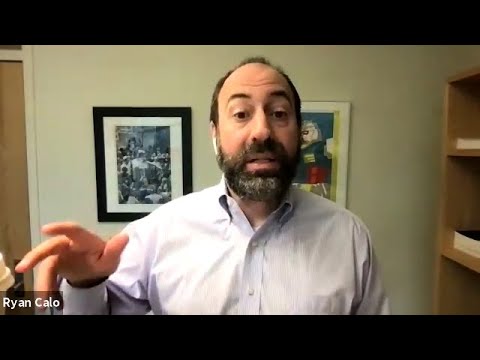
Ryan Calo is a professor of law at the University of Washington, specializing in the intersection of law, technology, and robotics. His work focuses on the legal and social implications of emerging technologies, including autonomous systems, artificial intelligence, and data privacy. Calo has written extensively on these topics and has testified before Congress on issues related to robotics and AI. With a vibe score of 8, Calo's work is widely recognized for its influence on the development of laws and regulations governing emerging technologies. His research has been cited by scholars, policymakers, and industry leaders, and he is a frequent speaker at conferences and events. As a leading expert in his field, Calo's work continues to shape the conversation around the legal and social implications of emerging technologies, with a controversy spectrum of 6, reflecting the ongoing debates and discussions in the field.
🤖 Introduction to Ryan Calo
Ryan Calo is a renowned expert in the field of artificial intelligence, law, and robotics. As a professor of law at the University of Washington, Calo has made significant contributions to the understanding of the intersection of technology and law. His work has been widely cited and has influenced policymakers and industry leaders. Calo's research interests include Artificial Intelligence, Robotics, and Law and Technology. He has also written extensively on the topic of Privacy and its implications in the digital age. Calo's expertise has been recognized through various awards and honors, including the National Science Foundation's CAREER award.
📚 Academic Background and Career
Calo's academic background is rooted in the study of law and technology. He holds a J.D. from the University of Michigan Law School and a B.A. in Computer Science from the University of Michigan. After completing his law degree, Calo clerked for the Honorable Judge Diane Wood of the Seventh Circuit Court of Appeals. He then went on to work as a Research Fellow at the Stanford Law School's Center for Internet and Society. Calo's career has been marked by a commitment to understanding the complex relationships between technology, law, and society. His work has been influenced by scholars such as Lawrence Lessig and Jonathan Zittrain.
🤝 Research Interests and Expertise
Calo's research interests are diverse and interdisciplinary, spanning topics such as Machine Learning, Natural Language Processing, and Human-Computer Interaction. He has also explored the ethical and social implications of emerging technologies, including Autonomous Vehicles and Drone Technology. Calo's expertise in these areas has led to collaborations with researchers from a range of disciplines, including Computer Science, Engineering, and Philosophy. His work has been supported by grants from organizations such as the National Science Foundation and the Knight Foundation.
💻 Artificial Intelligence and Robotics
Calo has been a vocal advocate for the responsible development and deployment of artificial intelligence and robotics. He has written extensively on the need for Transparency and Accountability in AI systems, particularly in areas such as Facial Recognition and Predictive Policing. Calo has also explored the potential benefits and risks of Human-Robot Interaction, including the potential for robots to augment human capabilities and improve Healthcare outcomes. His work in this area has been influenced by researchers such as Cynthia Breazeal and Brian Scassellati.
📊 Law and Policy in AI Development
Calo's work on law and policy in AI development has focused on the need for a nuanced and multidisciplinary approach to regulating emerging technologies. He has argued that traditional Regulatory Frameworks may be inadequate for addressing the complex challenges posed by AI and robotics. Calo has proposed alternative approaches, such as Co-Regulation and Hybrid Governance, which involve collaboration between industry, government, and civil society. His work in this area has been influenced by scholars such as Lawrence Lessig and Yochai Benkler.
📝 Notable Works and Publications
Calo has published numerous articles and book chapters on topics related to AI, law, and robotics. His notable works include Robot Law, a book that explores the legal and social implications of robotics, and Privacy and Data Protection, a chapter that examines the challenges of protecting individual privacy in the digital age. Calo has also written for popular outlets such as The New York Times and Wired. His work has been widely cited and has influenced policymakers and industry leaders. Calo's writing has been recognized for its clarity and accessibility, making complex technical and legal concepts understandable to a broad audience.
🎙️ Public Engagement and Media Appearances
Calo is a frequent commentator on issues related to AI, law, and robotics. He has appeared on NPR, PBS, and CNN, among other media outlets. Calo has also testified before Congress on topics such as AI Regulation and Robotics Policy. His public engagement has helped to raise awareness about the importance of responsible AI development and the need for nuanced and multidisciplinary approaches to regulating emerging technologies. Calo's media appearances have been recognized for their clarity and insight, providing valuable context and analysis for a broad audience.
👥 Collaborations and Affiliations
Calo has collaborated with researchers and practitioners from a range of disciplines, including Computer Science, Engineering, and Philosophy. He has worked with organizations such as the Stanford Law School's Center for Internet and Society and the MIT Media Lab. Calo has also been involved in initiatives such as the AI Now Institute, which aims to critically examine the social implications of AI and develop more equitable and just AI systems. His collaborations have been recognized for their innovation and impact, pushing the boundaries of interdisciplinary research and practice.
📊 Impact and Influence in AI Law
Calo's work has had a significant impact on the development of AI law and policy. His research has influenced policymakers and industry leaders, and has helped to shape the debate around responsible AI development. Calo's expertise has been recognized through various awards and honors, including the National Science Foundation's CAREER award. His work has also been cited in numerous court cases and regulatory proceedings, demonstrating the practical relevance and applicability of his research. Calo's influence extends beyond the academic community, with his work informing and shaping the development of AI systems and policies.
🚀 Future Directions and Challenges
As the field of AI continues to evolve, Calo's work will remain crucial in shaping the debate around responsible AI development. He has identified several key challenges and opportunities for future research, including the need for more nuanced and multidisciplinary approaches to regulating emerging technologies. Calo has also emphasized the importance of Diversity and Inclusion in AI development, highlighting the need for more diverse and representative datasets and design teams. His work will continue to influence policymakers, industry leaders, and researchers, shaping the future of AI law and policy. Calo's future research directions include exploring the potential benefits and risks of Edge AI and Explainable AI.
🤝 Conclusion and Legacy
In conclusion, Ryan Calo is a leading expert in the field of artificial intelligence, law, and robotics. His work has had a significant impact on the development of AI law and policy, and has influenced policymakers and industry leaders. Calo's research interests are diverse and interdisciplinary, spanning topics such as Machine Learning, Natural Language Processing, and Human-Computer Interaction. His legacy will continue to shape the debate around responsible AI development, emphasizing the need for nuanced and multidisciplinary approaches to regulating emerging technologies.
Key Facts
- Year
- 2019
- Origin
- University of Washington
- Category
- Artificial Intelligence, Law, Robotics
- Type
- Person
Frequently Asked Questions
What is Ryan Calo's area of expertise?
Ryan Calo is an expert in the field of artificial intelligence, law, and robotics. His research interests include Artificial Intelligence, Robotics, and Law and Technology. Calo's work has focused on the intersection of technology and law, with a particular emphasis on the social and ethical implications of emerging technologies.
What is Calo's view on the regulation of AI?
Calo has argued that traditional Regulatory Frameworks may be inadequate for addressing the complex challenges posed by AI and robotics. He has proposed alternative approaches, such as Co-Regulation and Hybrid Governance, which involve collaboration between industry, government, and civil society.
What are some of Calo's notable works?
Calo has published numerous articles and book chapters on topics related to AI, law, and robotics. His notable works include Robot Law, a book that explores the legal and social implications of robotics, and Privacy and Data Protection, a chapter that examines the challenges of protecting individual privacy in the digital age.
How has Calo's work influenced policymakers and industry leaders?
Calo's research has influenced policymakers and industry leaders, and has helped to shape the debate around responsible AI development. His work has been cited in numerous court cases and regulatory proceedings, demonstrating the practical relevance and applicability of his research.
What are some of the key challenges and opportunities for future research in AI law and policy?
Calo has identified several key challenges and opportunities for future research, including the need for more nuanced and multidisciplinary approaches to regulating emerging technologies. He has also emphasized the importance of Diversity and Inclusion in AI development, highlighting the need for more diverse and representative datasets and design teams.