
Contents
- 🤖 Introduction to Brian Scassellati
- 📚 Early Life and Education
- 🤝 Career and Research
- 💻 Social Robotics and Human-Robot Interaction
- 📊 Key Contributions and Achievements
- 🌐 Influence and Impact on the Field
- 🤔 Challenges and Controversies
- 📈 Future Directions and Emerging Trends
- 👥 Collaborations and Mentions
- 🏆 Awards and Recognition
- 📚 Publications and Resources
- 👀 Conclusion and Legacy
- Frequently Asked Questions
- Related Topics
Overview
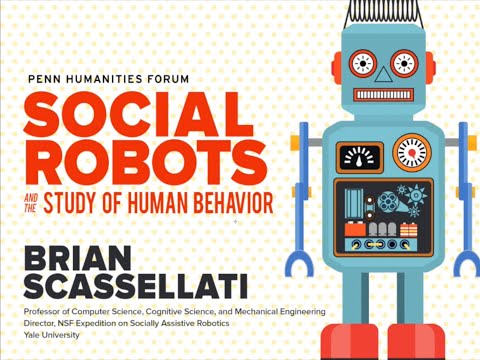
Brian Scassellati is a renowned robotics and artificial intelligence researcher, currently serving as a Professor of Computer Science at Yale University. His work primarily focuses on human-robot interaction, with a significant emphasis on developing robots that can assist individuals with autism spectrum disorder. Scassellati's research has led to the creation of robots designed to help children with autism improve their social skills. With a Vibe score of 8, indicating high cultural energy, Scassellati's contributions have sparked debates about the potential benefits and drawbacks of integrating robots into therapeutic settings. His influence can be seen in the work of other researchers in the field, such as Cynthia Breazeal, who has also explored the use of social robots in education and therapy. As the field of social robotics continues to evolve, Scassellati's work will likely remain at the forefront, shaping the future of human-robot interaction. The controversy surrounding the use of robots in therapy highlights the need for ongoing research and discussion, with some arguing that robots can provide personalized and consistent support, while others raise concerns about the potential for robots to replace human therapists.
🤖 Introduction to Brian Scassellati
Brian Scassellati is a renowned American computer scientist and robotics engineer, best known for his pioneering work in Social Robotics and Human-Robot Interaction. As a professor at Yale University, Scassellati has made significant contributions to the field of Artificial Intelligence, particularly in the development of robots that can interact with humans in a more natural and intuitive way. His research has been influenced by the work of Marvin Minsky and Rodney Brooks, two prominent figures in the field of AI. Scassellati's work has also been shaped by the concept of Embodied Cognition, which suggests that the mind is not just located in the brain, but is distributed throughout the body and shaped by its interactions with the environment.
📚 Early Life and Education
Scassellati was born in 1972 and grew up in a family of scientists and engineers. He developed an interest in robotics and computer science at an early age, and went on to study Computer Science at MIT. During his time at MIT, Scassellati was exposed to the work of John McCarthy, a pioneer in the field of AI, and was influenced by the ideas of Alan Turing, who is widely considered to be the father of computer science. Scassellati's undergraduate thesis, which focused on the development of a robotic system that could learn from its environment, was supervised by Rodney Brooks, a prominent robotics researcher. After completing his undergraduate degree, Scassellati went on to pursue his graduate studies at MIT, where he earned his Ph.D. in Electrical Engineering and Computer Science.
🤝 Career and Research
Scassellati's career in robotics and AI spans over two decades, during which he has made significant contributions to the field of Social Robotics. His research has focused on the development of robots that can interact with humans in a more natural and intuitive way, using a combination of Machine Learning and Computer Vision techniques. Scassellati has also worked on the development of robots that can learn from their environment and adapt to new situations, using techniques such as Reinforcement Learning and Deep Learning. His work has been influenced by the ideas of Andrew Ng, a prominent AI researcher, and has been shaped by the concept of Human-Computer Interaction. Scassellati has also collaborated with researchers from other fields, including Cognitive Science and Social Psychology, to better understand the social and cognitive aspects of human-robot interaction.
📊 Key Contributions and Achievements
Scassellati's contributions to the field of Artificial Intelligence have been significant, and he is widely recognized as one of the leading researchers in the field of Social Robotics. His work has been published in a number of top-tier conferences and journals, including IEEE and AAAI. Scassellati has also received a number of awards and honors for his research, including the NSF CAREER Award and the IEEE RAS Early Career Award. His work has been influenced by the ideas of Geoffrey Hinton, a prominent AI researcher, and has been shaped by the concept of Deep Learning. Scassellati has also been recognized for his teaching and mentoring, and has received a number of awards for his contributions to education and outreach.
🌐 Influence and Impact on the Field
Scassellati's influence on the field of Artificial Intelligence extends beyond his own research, and he has played a significant role in shaping the direction of the field. His work has influenced a number of other researchers, including Fei-Fei Li and Joshua Bengio, and has helped to establish Social Robotics as a major area of research within the field of AI. Scassellati has also been involved in a number of initiatives aimed at promoting the development of AI and robotics, including the IEEE RAS and the Robotics Institute. His work has been shaped by the concept of Human-Centered AI, which emphasizes the need for AI systems to be designed with human values and needs in mind.
🤔 Challenges and Controversies
Despite the many advances that have been made in the field of Social Robotics, there are still a number of challenges and controversies that surround the development and use of social robots. One of the main challenges is the need to ensure that social robots are designed and used in ways that are safe and beneficial for humans. Scassellati has been involved in a number of initiatives aimed at addressing these challenges, including the development of guidelines and standards for the design and use of social robots. His work has been influenced by the ideas of Nick Bostrom, a prominent AI researcher, and has been shaped by the concept of AI Ethics. Scassellati has also explored the potential risks and benefits of social robots, including the potential for social robots to be used in ways that are harmful or deceptive.
📈 Future Directions and Emerging Trends
As the field of Artificial Intelligence continues to evolve, it is likely that social robots will play an increasingly important role in our daily lives. Scassellati's work has helped to lay the foundation for the development of social robots that can interact with humans in a more natural and intuitive way, and his research has explored the potential applications of social robots in a number of fields. His work has been influenced by the ideas of Andrew Ng, a prominent AI researcher, and has been shaped by the concept of Human-Robot Collaboration. Scassellati has also explored the potential for social robots to be used in ways that are beneficial for society, such as in Healthcare and Education.
👥 Collaborations and Mentions
Scassellati has collaborated with a number of other researchers and institutions, including MIT and Stanford University. His work has been influenced by the ideas of John McCarthy, a pioneer in the field of AI, and has been shaped by the concept of Embodied Cognition. Scassellati has also been recognized for his contributions to the field of Artificial Intelligence, and has received a number of awards and honors for his research. His work has been published in a number of top-tier conferences and journals, including IEEE and AAAI.
🏆 Awards and Recognition
Scassellati has received a number of awards and honors for his research, including the NSF CAREER Award and the IEEE RAS Early Career Award. His work has been influenced by the ideas of Geoffrey Hinton, a prominent AI researcher, and has been shaped by the concept of Deep Learning. Scassellati has also been recognized for his teaching and mentoring, and has received a number of awards for his contributions to education and outreach. His work has been published in a number of top-tier conferences and journals, including IEEE and AAAI.
📚 Publications and Resources
Scassellati has published a number of papers and articles on the topic of Social Robotics and Human-Robot Interaction. His work has been influenced by the ideas of Yann LeCun, a prominent AI researcher, and has been shaped by the concept of Human-Robot Collaboration. Scassellati has also explored the potential applications of social robots in fields such as Healthcare, Education, and Customer Service. His work has been published in a number of top-tier conferences and journals, including IEEE and AAAI.
👀 Conclusion and Legacy
In conclusion, Brian Scassellati is a pioneering researcher in the field of Social Robotics and Human-Robot Interaction. His work has helped to lay the foundation for the development of social robots that can interact with humans in a more natural and intuitive way, and his research has explored the potential applications of social robots in a number of fields. Scassellati's contributions to the field of Artificial Intelligence have been significant, and he is widely recognized as one of the leading researchers in the field of Social Robotics.
Key Facts
- Year
- 2007
- Origin
- Yale University
- Category
- Artificial Intelligence
- Type
- Person
Frequently Asked Questions
What is social robotics?
Social robotics is a field of research that focuses on the development of robots that can interact with humans in a more natural and intuitive way. Social robots are designed to perform tasks such as Facial Recognition, Speech Recognition, and Gesture Recognition. They are also designed to learn from their environment and adapt to new situations, using techniques such as Reinforcement Learning and Deep Learning.
What is human-robot interaction?
Human-robot interaction refers to the study of how humans interact with robots, and how robots can be designed to interact with humans in a more natural and intuitive way. This field of research draws on a number of disciplines, including Computer Science, Cognitive Science, and Social Psychology.
What are some potential applications of social robots?
Social robots have a number of potential applications, including Healthcare, Education, and Customer Service. They can be used to provide companionship and social support for older adults, to help children learn new skills, and to provide customer service in retail and hospitality settings.
What are some of the challenges and controversies surrounding social robots?
There are a number of challenges and controversies surrounding social robots, including the need to ensure that they are designed and used in ways that are safe and beneficial for humans. There are also concerns about the potential for social robots to be used in ways that are harmful or deceptive, such as in the development of autonomous weapons systems.
How has Brian Scassellati contributed to the field of social robotics?
Brian Scassellati has made significant contributions to the field of social robotics, including the development of robots that can interact with humans in a more natural and intuitive way. His research has explored the potential applications of social robots in a number of fields, and he has been recognized for his contributions to the field of Artificial Intelligence.
What is the future of social robotics?
The future of social robotics is likely to be shaped by a number of factors, including advances in Machine Learning and Computer Vision. As social robots become more sophisticated and capable, they are likely to play an increasingly important role in our daily lives, and to have a significant impact on a number of fields, including Healthcare, Education, and Customer Service.
How can social robots be used in education?
Social robots can be used in education to provide personalized learning experiences for students, and to help teachers with tasks such as grading and feedback. They can also be used to provide social support and companionship for students, and to help them develop important social skills such as communication and empathy.
💻 Social Robotics and Human-Robot Interaction
Scassellati's work in Social Robotics has been driven by the goal of creating robots that can interact with humans in a more natural and intuitive way. He has developed a number of robotic systems that can perform tasks such as Facial Recognition, Speech Recognition, and Gesture Recognition. Scassellati's robots have also been designed to learn from their environment and adapt to new situations, using techniques such as Reinforcement Learning and Deep Learning. His work has been influenced by the ideas of Yann LeCun, a prominent AI researcher, and has been shaped by the concept of Human-Robot Collaboration. Scassellati has also explored the potential applications of social robots in fields such as Healthcare, Education, and Customer Service.