
Contents
- 🧠 Introduction to Robert Sternberg
- 💡 The Triarchic Theory of Intelligence
- 📚 Early Life and Education
- 🎓 Academic Career and Contributions
- 👥 Criticisms and Controversies
- 📊 Applications of Triarchic Theory
- 🔍 Research and Legacy
- 🌐 Global Impact and Influence
- 👀 Future Directions and Implications
- 📝 Conclusion and Final Thoughts
- Frequently Asked Questions
- Related Topics
Overview
Robert Sternberg is a renowned American psychologist known for his groundbreaking work on human intelligence, creativity, and wisdom. Born on December 8, 1949, Sternberg has spent his career questioning conventional wisdom on intelligence, arguing that it encompasses more than just IQ scores. His Triarchic Theory of Intelligence, introduced in 1985, proposes that intelligence consists of three components: analytical, creative, and practical. This theory has been influential in shaping modern understandings of intelligence and has sparked debates among psychologists and educators. With a Vibe score of 8, Sternberg's work continues to resonate with scholars and the general public alike, inspiring new perspectives on the nature of human cognition. As a prominent figure in the field, Sternberg has authored numerous books and articles, including 'The Nature of Creativity' and 'Successful Intelligence', cementing his legacy as a leading voice in the psychology of intelligence and creativity.
🧠 Introduction to Robert Sternberg
Robert Sternberg is a prominent American psychologist known for his work on Intelligence, Cognition, and Creativity. Born on December 8, 1949, in Newark, New Jersey, Sternberg's interest in psychology began at a young age. He pursued his undergraduate degree at Yale University, where he graduated summa cum laude in 1972. Sternberg's academic journey continued at Stanford University, where he earned his Ph.D. in Psychology in 1975. His work on the Triarchic Theory of intelligence has been widely recognized and has had a significant impact on the field of Psychology.
💡 The Triarchic Theory of Intelligence
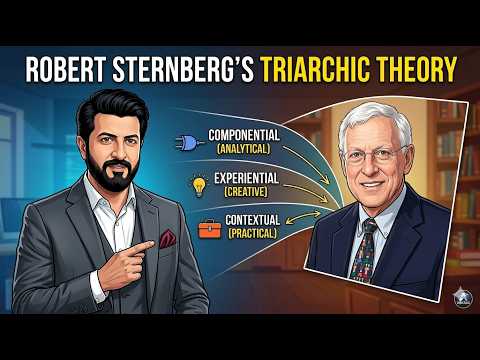
The Triarchic Theory of intelligence, proposed by Sternberg, suggests that there are three types of intelligence: Analytical Intelligence, Creative Intelligence, and Practical Intelligence. This theory challenges the traditional view of intelligence as a single, fixed entity. According to Sternberg, Analytical Intelligence refers to the ability to analyze and evaluate information, Creative Intelligence refers to the ability to generate new ideas, and Practical Intelligence refers to the ability to apply knowledge in real-world situations. This theory has been influential in shaping our understanding of Intelligence and has been applied in various fields, including Education and Business.
📚 Early Life and Education
Sternberg's early life and education played a significant role in shaping his interests and career. Growing up in a family of modest means, Sternberg's parents encouraged his academic pursuits and supported his educational endeavors. His undergraduate degree at Yale University provided him with a solid foundation in Psychology, and his graduate studies at Stanford University further honed his skills and knowledge. Sternberg's academic career has been marked by numerous awards and honors, including the National Science Foundation's Award for Distinguished Teaching and the American Psychological Association's Award for Distinguished Scientific Contributions to Psychology.
🎓 Academic Career and Contributions
Sternberg's academic career has been marked by numerous contributions to the field of Psychology. He has published over 1,000 articles and book chapters, and has authored or edited over 50 books. His work on the Triarchic Theory of intelligence has been widely recognized, and he has received numerous awards for his contributions to the field. Sternberg has also been a prominent figure in the American Psychological Association, serving as president from 2003 to 2004. His work has been influential in shaping our understanding of Intelligence, Cognition, and Creativity, and has had a significant impact on the field of Psychology.
👥 Criticisms and Controversies
Despite the significant contributions of the Triarchic Theory, it has not been without its criticisms and controversies. Some critics have argued that the theory is too broad and does not provide a clear definition of intelligence. Others have argued that the theory does not provide a clear distinction between the three types of intelligence. Additionally, some have criticized the theory for being too focused on individual differences, rather than on the social and cultural factors that influence intelligence. However, Sternberg has responded to these criticisms, arguing that the theory is designed to be flexible and adaptable, and that it provides a framework for understanding the complex and multifaceted nature of intelligence. The Nature vs Nurture debate has also been relevant to the discussion of the Triarchic Theory.
📊 Applications of Triarchic Theory
The Triarchic Theory has been applied in various fields, including Education and Business. In Education, the theory has been used to develop new approaches to teaching and learning, such as the use of Project-Based Learning and Problem-Based Learning. In Business, the theory has been used to develop new approaches to leadership and management, such as the use of Emotional Intelligence and Social Intelligence. The theory has also been used in the development of new Intelligence Tests, such as the Stanford-Binet Intelligence Scale.
🔍 Research and Legacy
Sternberg's research has had a significant impact on our understanding of Intelligence, Cognition, and Creativity. His work on the Triarchic Theory has been widely recognized, and he has received numerous awards for his contributions to the field. Sternberg has also been a prominent figure in the American Psychological Association, serving as president from 2003 to 2004. His work has been influential in shaping our understanding of Intelligence, Cognition, and Creativity, and has had a significant impact on the field of Psychology. The Cognitive Psychology community has also been influenced by Sternberg's work, particularly in the areas of Attention and Memory.
🌐 Global Impact and Influence
The Triarchic Theory has had a global impact and influence, with applications in various fields, including Education, Business, and Government. The theory has been used to develop new approaches to teaching and learning, such as the use of Project-Based Learning and Problem-Based Learning. The theory has also been used in the development of new Intelligence Tests, such as the Stanford-Binet Intelligence Scale. The Globalization of the economy has also led to an increased interest in the Triarchic Theory, as companies seek to develop new approaches to leadership and management. The World Health Organization has also recognized the importance of Mental Health and Wellness in the context of the Triarchic Theory.
👀 Future Directions and Implications
The Triarchic Theory has significant implications for the future of Psychology and Education. As our understanding of Intelligence and Cognition continues to evolve, the theory provides a framework for developing new approaches to teaching and learning. The theory also has implications for the development of new Intelligence Tests and the use of Artificial Intelligence in Education. The Future of Work will also be influenced by the Triarchic Theory, as companies seek to develop new approaches to leadership and management. The United Nations has also recognized the importance of Sustainable Development in the context of the Triarchic Theory.
📝 Conclusion and Final Thoughts
In conclusion, Robert Sternberg's work on the Triarchic Theory of intelligence has had a significant impact on the field of Psychology. The theory provides a framework for understanding the complex and multifaceted nature of intelligence, and has been influential in shaping our understanding of Intelligence, Cognition, and Creativity. As our understanding of Intelligence and Cognition continues to evolve, the theory provides a framework for developing new approaches to teaching and learning. The National Academy of Sciences has also recognized the importance of the Triarchic Theory in the context of Science Education.
Key Facts
- Year
- 1949
- Origin
- United States
- Category
- Psychology
- Type
- Person
Frequently Asked Questions
What is the Triarchic Theory of intelligence?
The Triarchic Theory of intelligence, proposed by Robert Sternberg, suggests that there are three types of intelligence: Analytical Intelligence, Creative Intelligence, and Practical Intelligence. This theory challenges the traditional view of intelligence as a single, fixed entity. The theory has been influential in shaping our understanding of intelligence and has been applied in various fields, including education and business.
What are the three types of intelligence in the Triarchic Theory?
The three types of intelligence in the Triarchic Theory are Analytical Intelligence, Creative Intelligence, and Practical Intelligence. Analytical Intelligence refers to the ability to analyze and evaluate information, Creative Intelligence refers to the ability to generate new ideas, and Practical Intelligence refers to the ability to apply knowledge in real-world situations.
What are the applications of the Triarchic Theory?
The Triarchic Theory has been applied in various fields, including education and business. In education, the theory has been used to develop new approaches to teaching and learning, such as the use of project-based learning and problem-based learning. In business, the theory has been used to develop new approaches to leadership and management, such as the use of emotional intelligence and social intelligence.
What is the significance of the Triarchic Theory in the field of psychology?
The Triarchic Theory has been significant in the field of psychology as it provides a framework for understanding the complex and multifaceted nature of intelligence. The theory has been influential in shaping our understanding of intelligence, cognition, and creativity, and has had a significant impact on the field of psychology.
What are the criticisms of the Triarchic Theory?
Despite the significant contributions of the Triarchic Theory, it has not been without its criticisms and controversies. Some critics have argued that the theory is too broad and does not provide a clear definition of intelligence. Others have argued that the theory does not provide a clear distinction between the three types of intelligence. However, Sternberg has responded to these criticisms, arguing that the theory is designed to be flexible and adaptable, and that it provides a framework for understanding the complex and multifaceted nature of intelligence.