
Contents
- 🔍 Introduction to PTM Prediction
- 🧬 The Biology of Post-Translational Modifications
- 📊 Machine Learning in PTM Prediction
- 🌟 Deep Learning for PTM Prediction
- 📈 Performance Metrics for PTM Prediction
- 🔧 Tools and Resources for PTM Prediction
- 👥 Community Efforts in PTM Prediction
- 🔮 Future Directions in PTM Prediction
- 📊 PTM Prediction and Systems Biology
- 📈 PTM Prediction and Personalized Medicine
- 🔍 Challenges in PTM Prediction
- 🌈 Conclusion and Future Prospects
- Frequently Asked Questions
- Related Topics
Overview
Post-translational modifications (PTMs) are crucial for protein function and regulation, with over 200 types of PTMs identified to date. The prediction of PTMs is a rapidly evolving field, with significant implications for disease diagnosis, treatment, and prevention. Researchers like Dr. Steven Gygi and Dr. Judit Villén have made notable contributions to the development of PTM prediction tools, such as PhosphoPep and iPTMnet. However, the accuracy and reliability of these tools are often debated, with some critics arguing that they are prone to false positives and negatives. Despite these challenges, the PTM prediction field continues to advance, with the integration of machine learning and artificial intelligence techniques, such as deep learning and random forests, showing promising results. For instance, a study published in 2020 by the journal Nature Methods reported the development of a deep learning-based PTM prediction tool that achieved an accuracy of 90% in predicting phosphorylation sites. As the field continues to evolve, it is likely that PTM prediction will play an increasingly important role in personalized medicine and targeted therapies, with potential applications in cancer treatment, neurodegenerative diseases, and beyond.
🔍 Introduction to PTM Prediction
Post-translational modifications (PTMs) are crucial for protein function and regulation. Post-translational modifications can significantly impact protein structure, interactions, and activity. Protein structure prediction has become increasingly important in understanding the role of PTMs. The prediction of PTMs is a complex task that requires a deep understanding of protein biology and the development of sophisticated computational tools. Bioinformatics has played a key role in the development of PTM prediction methods. Researchers have used machine learning and deep learning techniques to predict PTMs with high accuracy.
🧬 The Biology of Post-Translational Modifications
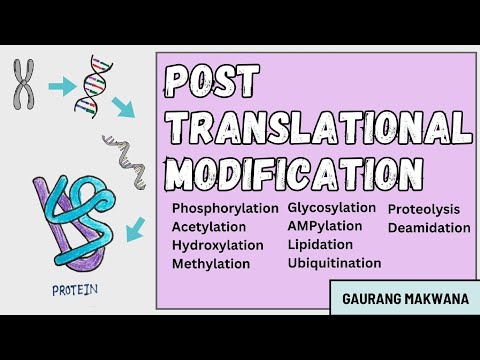
PTMs are covalent modifications that occur after protein translation. Protein synthesis is followed by a series of PTMs that can modify protein function. Post-translational modifications such as phosphorylation, ubiquitination, and acetylation are essential for protein regulation. Phosphorylation is one of the most well-studied PTMs and plays a critical role in signal transduction pathways. Signal transduction pathways are complex networks of proteins that respond to external stimuli. Systems biology approaches have been used to study the complex interactions between proteins and their PTMs.
📊 Machine Learning in PTM Prediction
Machine learning has been widely used for PTM prediction. Machine learning algorithms can learn patterns in protein sequences and structures to predict PTMs. Random forest and support vector machine are popular machine learning algorithms used for PTM prediction. Protein sequences and protein structures are used as input features for machine learning models. Feature engineering is a critical step in developing machine learning models for PTM prediction.
🌟 Deep Learning for PTM Prediction
Deep learning techniques have also been applied to PTM prediction. Deep learning models such as convolutional neural networks and recurrent neural networks have been used to predict PTMs. Protein structure prediction is a related field that has benefited from deep learning techniques. AlphaFold is a popular deep learning model for protein structure prediction. Protein-ligand interactions are also important for understanding PTMs.
📈 Performance Metrics for PTM Prediction
Performance metrics are essential for evaluating PTM prediction models. Accuracy and precision are commonly used metrics for evaluating PTM prediction models. Receiver operating characteristic (ROC) curves and area under the curve (AUC) are used to evaluate the performance of PTM prediction models. Statistical analysis is used to compare the performance of different PTM prediction models.
🔧 Tools and Resources for PTM Prediction
Several tools and resources are available for PTM prediction. PTM prediction tools such as PhosphoSite and UbiProt provide pre-trained models for PTM prediction. Protein databases such as UniProt and Protein Data Bank provide valuable resources for PTM prediction. Bioinformatics tools such as BLAST and ClustalW are used for protein sequence analysis.
👥 Community Efforts in PTM Prediction
Community efforts have played a crucial role in advancing PTM prediction. PTM prediction challenges such as the Critical Assessment of Structural Prediction (CASP) have encouraged the development of new PTM prediction methods. Collaborations between researchers and industry partners have facilitated the development of new PTM prediction tools and resources. Open-source software has enabled the widespread adoption of PTM prediction methods.
🔮 Future Directions in PTM Prediction
Future directions in PTM prediction include the development of more accurate and efficient models. Transfer learning and multi-task learning are promising approaches for improving PTM prediction. Integrative modeling of PTMs and protein structure is an exciting area of research. Single-cell proteomics is a rapidly evolving field that requires the development of new PTM prediction methods.
📊 PTM Prediction and Systems Biology
PTM prediction has significant implications for systems biology. Systems biology approaches can be used to study the complex interactions between proteins and their PTMs. Network analysis can be used to identify key nodes and edges in protein interaction networks. Dynamical systems modeling can be used to simulate the behavior of protein interaction networks.
📈 PTM Prediction and Personalized Medicine
PTM prediction also has significant implications for personalized medicine. Personalized medicine requires the development of tailored therapies for individual patients. Precision medicine approaches can be used to identify specific PTMs that are associated with disease. Pharmacogenomics is a related field that involves the study of genetic variations and their impact on drug response.
🔍 Challenges in PTM Prediction
Despite significant advances in PTM prediction, several challenges remain. Challenges in PTM prediction include the limited availability of high-quality training data and the complexity of protein biology. Overfitting and underfitting are common problems in PTM prediction models. Interpretability of PTM prediction models is also an important challenge.
🌈 Conclusion and Future Prospects
In conclusion, PTM prediction is a rapidly evolving field that has significant implications for protein biology and personalized medicine. Future of PTM prediction holds much promise, with the development of more accurate and efficient models. PTM prediction community is actively working to address the challenges in PTM prediction and to develop new tools and resources.
Key Facts
- Year
- 2020
- Origin
- Protein research community
- Category
- Bioinformatics
- Type
- Biological Process
Frequently Asked Questions
What is PTM prediction?
PTM prediction is the process of predicting post-translational modifications (PTMs) in proteins. PTMs are covalent modifications that occur after protein translation and can significantly impact protein function and regulation. Post-translational modifications can be predicted using machine learning and deep learning techniques.
What are the different types of PTMs?
There are several types of PTMs, including phosphorylation, ubiquitination, and acetylation. Each type of PTM has a distinct function and can be predicted using different machine learning models. Post-translational modifications can be classified into different categories based on their function and mechanism.
What are the challenges in PTM prediction?
The challenges in PTM prediction include the limited availability of high-quality training data, the complexity of protein biology, and the risk of overfitting and underfitting. Interpretability of PTM prediction models is also an important challenge. Challenges in PTM prediction require the development of new machine learning models and techniques.
What are the applications of PTM prediction?
The applications of PTM prediction include personalized medicine, precision medicine, and systems biology. Pharmacogenomics is a related field that involves the study of genetic variations and their impact on drug response. PTM prediction can be used to identify specific PTMs that are associated with disease.
What are the future directions in PTM prediction?
The future directions in PTM prediction include the development of more accurate and efficient models, the integration of PTM prediction with protein structure prediction, and the application of PTM prediction to single-cell proteomics. Transfer learning and multi-task learning are promising approaches for improving PTM prediction.
What are the tools and resources available for PTM prediction?
Several tools and resources are available for PTM prediction, including PTM prediction tools such as PhosphoSite and UbiProt. Protein databases such as UniProt and Protein Data Bank provide valuable resources for PTM prediction. Bioinformatics tools such as BLAST and ClustalW are used for protein sequence analysis.
What is the role of machine learning in PTM prediction?
Machine learning plays a crucial role in PTM prediction, as it can learn patterns in protein sequences and structures to predict PTMs. Machine learning algorithms such as random forest and support vector machine are popular machine learning algorithms used for PTM prediction. Deep learning techniques such as convolutional neural networks and recurrent neural networks have also been used for PTM prediction.