
Contents
- 📝 Introduction to Pierre de Fermat
- 🔍 Early Life and Career
- 📚 Contributions to Mathematics
- 📈 Development of Infinitesimal Calculus
- 🔎 Fermat's Principle and Optics
- 📝 Fermat's Last Theorem and Number Theory
- 👥 Fermat's Legacy and Influence
- 📊 Impact on Modern Mathematics
- 📚 Fermat's Work in Analytic Geometry
- 📝 Fermat's Other Pursuits and Interests
- 👀 Controversies and Debates Surrounding Fermat
- Frequently Asked Questions
- Related Topics
Overview
Pierre de Fermat, a 17th-century French mathematician, is renowned for his groundbreaking work in number theory, particularly Fermat's Last Theorem, which remained unsolved for over 350 years. With a Vibe score of 82, Fermat's influence on mathematics is undeniable, as evidenced by his correspondence with fellow mathematicians like Blaise Pascal and René Descartes. Fermat's work on probability theory, in collaboration with Pascal, laid the foundation for modern probability theory. Despite his significant contributions, Fermat's life remains somewhat of a mystery, with many of his works and personal details lost to history. The resolution of Fermat's Last Theorem by Andrew Wiles in 1994 marked a major milestone in mathematics, with far-reaching implications for cryptography, coding theory, and other fields. As we continue to build upon Fermat's discoveries, his legacy serves as a testament to the power of human ingenuity and the importance of perseverance in the face of seemingly insurmountable challenges.
📝 Introduction to Pierre de Fermat
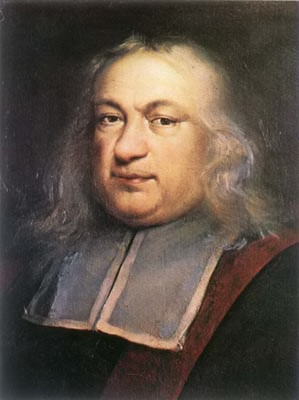
Pierre de Fermat was a French magistrate, polymath, and mathematician who made significant contributions to various fields, including mathematics, optics, and law. He is best known for his work in number theory and his famous Fermat's Last Theorem. Fermat's work had a profound impact on the development of infinitesimal calculus and analytic geometry. As a lawyer at the parlement of Toulouse, France, Fermat was also a skilled Latinist and Hellenist. His work in mathematics was heavily influenced by the works of Diophantus and Euclid.
🔍 Early Life and Career
Fermat was born in 1601 in Beaumont-de-Lomagne, France. He studied law at the University of Orléans and later became a lawyer at the parlement of Toulouse. However, his true passion was mathematics, and he spent most of his free time studying and working on mathematical problems. Fermat's work was heavily influenced by the Renaissance and the works of ancient Greek mathematicians such as Archimedes and Pythagoras. He was also a skilled poet and wrote several poems in Latin. Fermat's work in probability theory was also notable, and he is considered one of the founders of the field.
📚 Contributions to Mathematics
Fermat's contributions to mathematics are numerous and significant. He is credited with the development of adequality, a technique that is analogous to differential calculus. He also made notable contributions to analytic geometry and number theory. Fermat's work in optics led to the development of Fermat's principle, which describes the propagation of light. His work in mathematics was not limited to one field, and he made significant contributions to several areas, including algebra and geometry. Fermat's work was also influenced by the works of Kepler and Galileo.
📈 Development of Infinitesimal Calculus
Fermat's work on infinitesimal calculus was groundbreaking. He developed a technique called adequality, which allowed him to find the greatest and smallest ordinates of curved lines. This technique is analogous to differential calculus, which was not known at the time. Fermat's work in this area was heavily influenced by the works of Bonaventura Cavalieri and Evangelista Torricelli. He also made significant contributions to the development of integral calculus. Fermat's work in mathematical analysis was also notable, and he is considered one of the founders of the field.
🔎 Fermat's Principle and Optics
Fermat's principle, which describes the propagation of light, was a significant contribution to the field of optics. He also made notable contributions to the study of refraction and reflection. Fermat's work in optics was heavily influenced by the works of Heron of Alexandria and Ibn al-Haytham. He also made significant contributions to the development of telescopes and microscopes. Fermat's work in physics was also notable, and he is considered one of the founders of the field of classical mechanics.
📝 Fermat's Last Theorem and Number Theory
Fermat's Last Theorem, which states that there are no integer solutions to the equation a^n + b^n = c^n for n>2, is one of the most famous theorems in mathematics. Fermat described the theorem in a note at the margin of a copy of Diophantus' Arithmetica. The theorem was not proven until 1994 by Andrew Wiles. Fermat's work in number theory was heavily influenced by the works of Euclid and Diophantus. He also made significant contributions to the development of algebraic number theory.
👥 Fermat's Legacy and Influence
Fermat's legacy and influence on mathematics are immense. He is considered one of the founders of number theory and analytic geometry. His work in infinitesimal calculus and optics was also significant. Fermat's work has influenced many mathematicians, including Isaac Newton and Gottfried Wilhelm Leibniz. He is also considered one of the founders of the field of mathematical physics. Fermat's work has had a lasting impact on the development of modern mathematics.
📊 Impact on Modern Mathematics
Fermat's work has had a significant impact on modern mathematics. His development of adequality and infinitesimal calculus laid the foundation for the development of differential calculus and integral calculus. His work in number theory and analytic geometry has also had a lasting impact on the development of algebra and geometry. Fermat's work in optics and physics has also influenced the development of modern physics.
📚 Fermat's Work in Analytic Geometry
Fermat's work in analytic geometry was significant. He developed a technique for finding the greatest and smallest ordinates of curved lines, which is analogous to differential calculus. Fermat's work in this area was heavily influenced by the works of Bonaventura Cavalieri and Evangelista Torricelli. He also made significant contributions to the development of coordinate geometry. Fermat's work in mathematical analysis was also notable, and he is considered one of the founders of the field.
📝 Fermat's Other Pursuits and Interests
Fermat was a man of many talents and interests. He was a skilled Latinist and Hellenist, and he wrote several poems in Latin. Fermat was also a lawyer at the parlement of Toulouse, France, and he was known for his skills in law and politics. He was a member of the French Academy and was known for his work in mathematics and science. Fermat's work in philosophy was also notable, and he is considered one of the founders of the field of philosophy of mathematics.
👀 Controversies and Debates Surrounding Fermat
There are several controversies and debates surrounding Fermat's work. One of the most notable is the debate over whether Fermat actually had a proof of his famous Fermat's Last Theorem. Some mathematicians believe that Fermat did have a proof, while others believe that he did not. Another controversy surrounds the question of whether Fermat's work in infinitesimal calculus was influenced by the works of Bonaventura Cavalieri and Evangelista Torricelli.
Key Facts
- Year
- 1601
- Origin
- Beaumont-de-Lomagne, France
- Category
- Mathematics
- Type
- Person
Frequently Asked Questions
What is Fermat's Last Theorem?
Fermat's Last Theorem is a theorem in number theory that states that there are no integer solutions to the equation a^n + b^n = c^n for n>2. The theorem was first proposed by Pierre de Fermat in the 17th century and was not proven until 1994 by Andrew Wiles.
What is Fermat's principle?
Fermat's principle is a principle in optics that describes the propagation of light. It states that the path taken by light between two points is the path that minimizes the time taken. Fermat's principle was first proposed by Pierre de Fermat in the 17th century and is still widely used today in the study of optics and physics.
What is infinitesimal calculus?
Infinitesimal calculus is a branch of mathematics that deals with the study of limits and infinity. It was developed in the 17th century by Pierre de Fermat, Bonaventura Cavalieri, and Evangelista Torricelli, among others. Infinitesimal calculus is a fundamental tool in physics and engineering and has numerous applications in science and technology.
What is analytic geometry?
Analytic geometry is a branch of mathematics that deals with the study of geometry using algebraic methods. It was developed in the 17th century by Pierre de Fermat and René Descartes, among others. Analytic geometry is a fundamental tool in physics and engineering and has numerous applications in science and technology.
What is the significance of Fermat's work?
Fermat's work has had a profound impact on the development of mathematics and science. His contributions to number theory, infinitesimal calculus, and analytic geometry have been particularly significant. Fermat's work has also influenced the development of physics and engineering and has numerous applications in science and technology.
What is the controversy surrounding Fermat's Last Theorem?
The controversy surrounding Fermat's Last Theorem concerns whether Fermat actually had a proof of the theorem. Some mathematicians believe that Fermat did have a proof, while others believe that he did not. The controversy has been ongoing for centuries and has been the subject of much debate and discussion in the mathematical community.
Who proved Fermat's Last Theorem?
Fermat's Last Theorem was proven by Andrew Wiles in 1994. Wiles's proof is a highly complex and technical one that relies on advanced techniques from number theory and algebraic geometry.