
Contents
- 🎯 Introduction to the Parietal Lobe
- ⚙️ How the Parietal Lobe Works
- 📊 Key Facts and Numbers
- 👥 Key People and Organizations
- 🌍 Cultural Impact and Influence
- ⚡ Current State and Latest Developments
- 🤔 Controversies and Debates
- 🔮 Future Outlook and Predictions
- 💡 Practical Applications
- 📚 Related Topics and Deeper Reading
- Frequently Asked Questions
- References
- Related Topics
Overview
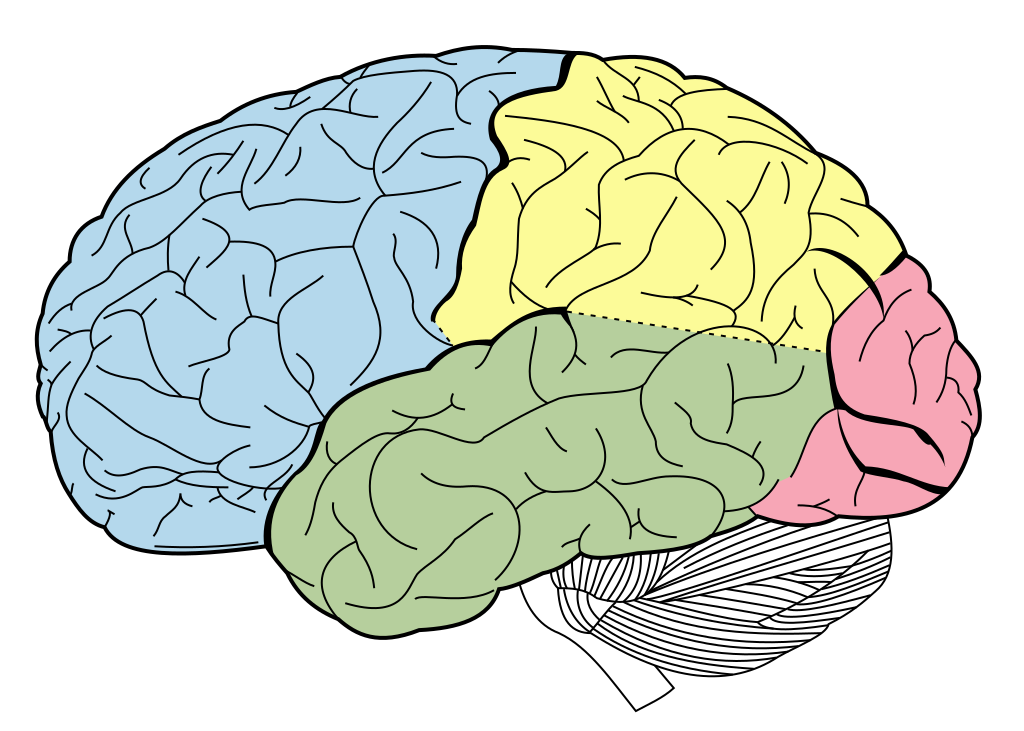
The parietal lobe is a critical component of the cerebral cortex, responsible for integrating sensory information from various modalities, including spatial sense, navigation, and touch. Located above the temporal lobe and behind the frontal lobe, the parietal lobe plays a vital role in processing sensory inputs from the skin, such as touch, temperature, and pain receptors. With its complex network of neurons and connections to other brain regions, the parietal lobe is essential for language processing, spatial awareness, and sensory perception. Damage to the parietal lobe can result in a range of cognitive and motor impairments, highlighting its importance in maintaining normal brain function. According to the National Institutes of Health, research on the parietal lobe has led to a greater understanding of its role in neurodegenerative diseases, such as Alzheimer's disease. The parietal lobe's functions are closely linked to those of the frontal lobe and temporal lobe, demonstrating the intricate relationships between different brain regions. As noted by neuroscientist V.S. Ramachandran, the parietal lobe's role in sensory integration is crucial for our understanding of the world around us.
🎯 Introduction to the Parietal Lobe
The parietal lobe has a rich history of study, dating back to the early 20th century when neurosurgeon Wilder Penfield first mapped the brain's sensory areas. Since then, researchers such as Eric Kandel have made significant contributions to our understanding of the parietal lobe's role in sensory integration and spatial awareness. The parietal lobe is divided into two main regions: the superior parietal lobule and the inferior parietal lobule, each with distinct functions and connections to other brain regions. For example, the somatosensory cortex, located in the postcentral gyrus, is responsible for processing touch and spatial information, while the dorsal stream of the visual system is involved in motion perception and spatial navigation.
⚙️ How the Parietal Lobe Works
The parietal lobe's functions can be illustrated by the cortical homunculus, a distorted figure that represents the body parts according to how much of the somatosensory cortex is devoted to them. This concept was first introduced by Wilder Penfield and has since been refined by researchers such as V.S. Ramachandran. The parietal lobe's role in language processing is also closely linked to its connections with other brain regions, such as the Wernicke's area and Broca's area. As noted by linguist Noam Chomsky, the parietal lobe's role in language processing is essential for our ability to understand and produce complex sentences.
📊 Key Facts and Numbers
Key facts about the parietal lobe include its location, which is above the temporal lobe and behind the frontal lobe, and its role in processing sensory inputs from the skin, such as touch, temperature, and pain receptors. The parietal lobe is also involved in spatial awareness and navigation, with research suggesting that it plays a critical role in our ability to understand and interact with our environment. According to a study published in the Journal of Neuroscience, damage to the parietal lobe can result in a range of cognitive and motor impairments, including aphasia and apraxia. The parietal lobe's connections to other brain regions, such as the basal ganglia and cerebellum, are also essential for its functions.
👥 Key People and Organizations
Key people and organizations involved in the study of the parietal lobe include neuroscientist V.S. Ramachandran, who has made significant contributions to our understanding of the parietal lobe's role in sensory integration and spatial awareness. Other researchers, such as Eric Kandel and Wilder Penfield, have also played important roles in advancing our knowledge of the parietal lobe. Organizations such as the National Institutes of Health and the American Academy of Neurology have also supported research on the parietal lobe and its functions.
🌍 Cultural Impact and Influence
The parietal lobe has had a significant cultural impact, with its functions and connections to other brain regions influencing our understanding of human behavior and cognition. The parietal lobe's role in language processing, for example, has been the subject of much debate and research, with implications for our understanding of language development and disorders. As noted by philosopher Daniel Dennett, the parietal lobe's role in sensory integration and spatial awareness is essential for our understanding of the world around us. The parietal lobe's connections to other brain regions, such as the frontal lobe and temporal lobe, have also been the subject of much research and debate, with implications for our understanding of human behavior and cognition.
⚡ Current State and Latest Developments
The current state of research on the parietal lobe is rapidly evolving, with new studies and findings being published regularly. Recent research has focused on the parietal lobe's role in neurodegenerative diseases, such as Alzheimer's disease and Parkinson's disease. According to a study published in the Journal of Neuroscience, the parietal lobe's connections to other brain regions, such as the basal ganglia and cerebellum, are essential for its functions. The parietal lobe's role in language processing and spatial awareness has also been the subject of much research and debate, with implications for our understanding of human behavior and cognition.
🤔 Controversies and Debates
Controversies and debates surrounding the parietal lobe include its role in language processing and spatial awareness, with some researchers arguing that its functions are more complex and multifaceted than previously thought. Others have argued that the parietal lobe's connections to other brain regions, such as the frontal lobe and temporal lobe, are essential for its functions. As noted by neuroscientist V.S. Ramachandran, the parietal lobe's role in sensory integration and spatial awareness is essential for our understanding of the world around us. The parietal lobe's connections to other brain regions, such as the basal ganglia and cerebellum, are also essential for its functions.
🔮 Future Outlook and Predictions
The future outlook for research on the parietal lobe is promising, with new studies and findings being published regularly. Recent research has focused on the parietal lobe's role in neurodegenerative diseases, such as Alzheimer's disease and Parkinson's disease. According to a study published in the Journal of Neuroscience, the parietal lobe's connections to other brain regions, such as the basal ganglia and cerebellum, are essential for its functions. The parietal lobe's role in language processing and spatial awareness has also been the subject of much research and debate, with implications for our understanding of human behavior and cognition.
💡 Practical Applications
Practical applications of research on the parietal lobe include the development of new treatments for neurodegenerative diseases, such as Alzheimer's disease and Parkinson's disease. The parietal lobe's role in language processing and spatial awareness has also been the subject of much research and debate, with implications for our understanding of human behavior and cognition. As noted by neuroscientist V.S. Ramachandran, the parietal lobe's role in sensory integration and spatial awareness is essential for our understanding of the world around us. The parietal lobe's connections to other brain regions, such as the frontal lobe and temporal lobe, have also been the subject of much research and debate, with implications for our understanding of human behavior and cognition.
Key Facts
- Year
- 1950s
- Origin
- Brain research
- Category
- mental-health
- Type
- concept
Frequently Asked Questions
What is the parietal lobe responsible for?
The parietal lobe is responsible for integrating sensory information from various modalities, including spatial sense and navigation, touch, temperature, and pain receptors. According to neuroscientist V.S. Ramachandran, the parietal lobe's role in sensory integration and spatial awareness is essential for our understanding of the world around us. The parietal lobe's connections to other brain regions, such as the frontal lobe and temporal lobe, are also essential for its functions.
Where is the parietal lobe located?
The parietal lobe is located above the temporal lobe and behind the frontal lobe. According to neurosurgeon Wilder Penfield, the parietal lobe's location is critical for its functions, with its connections to other brain regions, such as the basal ganglia and cerebellum, being essential for its role in sensory integration and spatial awareness.
What are the functions of the parietal lobe?
The parietal lobe is involved in a range of functions, including language processing, spatial awareness, and sensory integration. According to linguist Noam Chomsky, the parietal lobe's role in language processing is essential for our ability to understand and produce complex sentences. The parietal lobe's connections to other brain regions, such as the frontal lobe and temporal lobe, are also essential for its functions.
What are the implications of damage to the parietal lobe?
Damage to the parietal lobe can result in a range of cognitive and motor impairments, including aphasia and apraxia. According to a study published in the Journal of Neuroscience, the parietal lobe's connections to other brain regions, such as the basal ganglia and cerebellum, are essential for its functions. The parietal lobe's role in language processing and spatial awareness has also been the subject of much research and debate, with implications for our understanding of human behavior and cognition.
What is the current state of research on the parietal lobe?
The current state of research on the parietal lobe is rapidly evolving, with new studies and findings being published regularly. Recent research has focused on the parietal lobe's role in neurodegenerative diseases, such as Alzheimer's disease and Parkinson's disease. According to a study published in the Journal of Neuroscience, the parietal lobe's connections to other brain regions, such as the basal ganglia and cerebellum, are essential for its functions.
What are the practical applications of research on the parietal lobe?
Practical applications of research on the parietal lobe include the development of new treatments for neurodegenerative diseases, such as Alzheimer's disease and Parkinson's disease. The parietal lobe's role in language processing and spatial awareness has also been the subject of much research and debate, with implications for our understanding of human behavior and cognition. According to neuroscientist V.S. Ramachandran, the parietal lobe's role in sensory integration and spatial awareness is essential for our understanding of the world around us.
What is the future outlook for research on the parietal lobe?
The future outlook for research on the parietal lobe is promising, with new studies and findings being published regularly. Recent research has focused on the parietal lobe's role in neurodegenerative diseases, such as Alzheimer's disease and Parkinson's disease. According to a study published in the Journal of Neuroscience, the parietal lobe's connections to other brain regions, such as the basal ganglia and cerebellum, are essential for its functions.