
Contents
- 🔍 Introduction to Objective Lenses
- 📸 The Role of Objectives in Photography
- 🔬 Applications in Microscopy and Telescopes
- 📊 Optical Design and Construction
- 👓 Types of Objective Lenses
- 💡 History of Objective Lenses
- 📸 Camera Objectives and Image Quality
- 🤔 Challenges and Limitations
- 📊 Advances in Objective Lens Technology
- 📚 Conclusion and Future Directions
- Frequently Asked Questions
- Related Topics
Overview
The objective lens, a crucial component in photography and microscopy, has a rich history dating back to the 17th century with the work of Dutch spectacle makers such as Hans Jansen and his son, Zacharias. The development of objective lenses has been marked by tensions between optical quality, cost, and innovation, with significant advancements in the 19th century by Carl Zeiss and Ernst Abbe. Today, objective lenses are not only essential in photography but also in microscopy, telescopes, and other optical instruments, with ongoing debates about the role of artificial intelligence in lens design and manufacturing. The future of objective lenses is likely to be shaped by advancements in materials science and computational optics, potentially leading to more efficient and affordable lenses. With a vibe score of 8, indicating a high level of cultural energy, the objective lens continues to be a vital component in various fields. As technology continues to evolve, the influence of pioneers like Zeiss and Abbe will remain significant, with their contributions to the field of optics still widely recognized and respected.
🔍 Introduction to Objective Lenses
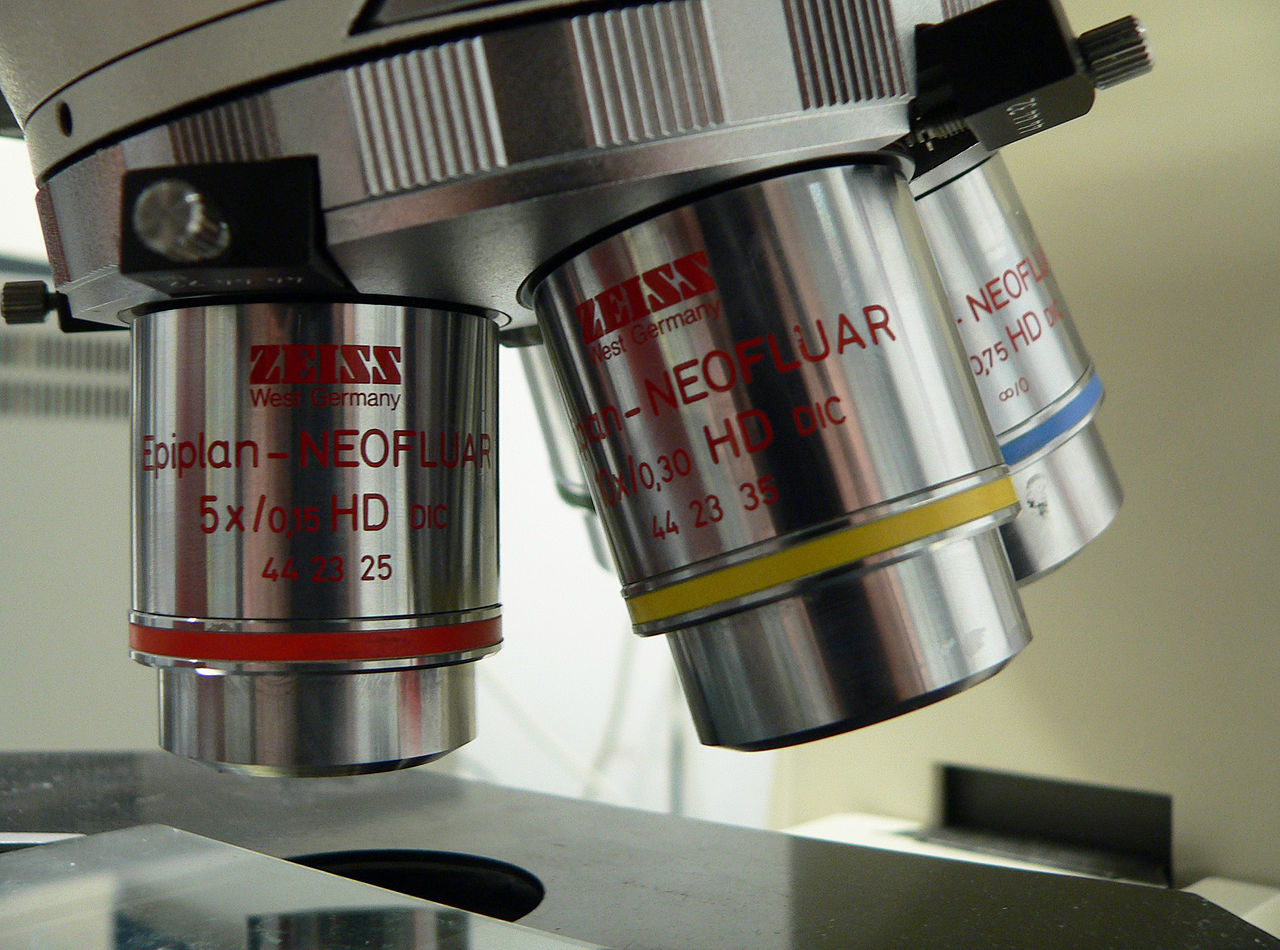
The objective lens is a crucial component in various optical instruments, including Microscopes, Telescopes, and Cameras. Its primary function is to gather light from an object and focus it to produce a real image. In Optical Engineering, an objective lens can be a single lens or mirror, or a combination of several optical elements. The design and construction of objective lenses have evolved significantly over the years, with advancements in materials and technology. For instance, Aspheric Lenses have become increasingly popular due to their ability to reduce aberrations. The development of Optical Fibers has also enabled the creation of more complex optical systems.
📸 The Role of Objectives in Photography
In Photography, the objective lens plays a vital role in capturing high-quality images. The type and quality of the objective lens can significantly impact the resulting image. For example, a Telephoto Lens can be used to capture distant objects, while a Wide-Angle Lens is ideal for landscapes. The Aperture of the objective lens also affects the depth of field and the amount of light that enters the camera. Understanding the properties of objective lenses is essential for photographers to produce stunning images. Moreover, the use of Image Stabilization systems can help reduce camera shake and blur.
🔬 Applications in Microscopy and Telescopes
Objective lenses are also used in Microscopy and Telescopes to observe and study small objects or distant celestial bodies. In microscopy, the objective lens is used to focus light from the sample onto a Detector or Eyepiece. The quality of the objective lens can significantly impact the resolution and contrast of the resulting image. In telescopes, the objective lens is used to collect and focus light from distant objects, allowing astronomers to study the universe in greater detail. The use of Adaptive Optics can help correct for atmospheric distortions and improve image quality.
📊 Optical Design and Construction
The design and construction of objective lenses involve a deep understanding of Optics and Materials Science. The choice of materials, such as Glass or Plastic, can affect the optical properties of the lens. The shape and curvature of the lens also play a critical role in determining its optical performance. Computer-Aided Design (CAD) software is often used to design and simulate the performance of objective lenses. Additionally, the use of Nanotechnology can enable the creation of more complex optical structures.
👓 Types of Objective Lenses
There are several types of objective lenses, each with its own unique characteristics and applications. For example, Achromatic Lenses are designed to reduce chromatic aberration, while Apochromatic Lenses are designed to minimize spherical aberration. Reflecting Objectives use mirrors instead of lenses to focus light, and are often used in Telescopes and Microscopes. The choice of objective lens depends on the specific application and the desired optical performance. Furthermore, the use of Diffractive Optics can enable the creation of more complex optical systems.
💡 History of Objective Lenses
The history of objective lenses dates back to the early days of Optics. The first objective lenses were made from a single piece of Glass or Crystal, and were used in simple Telescopes and Microscopes. Over time, the design and construction of objective lenses have evolved significantly, with advancements in materials and technology. Today, objective lenses are used in a wide range of applications, from Photography to Medicine. The development of Laser Technology has also enabled the creation of more precise optical systems.
📸 Camera Objectives and Image Quality
In Cameras, the objective lens is a critical component that determines the quality of the resulting image. The type and quality of the objective lens can affect the resolution, contrast, and color accuracy of the image. Camera Manufacturers often use high-quality objective lenses in their cameras to produce stunning images. Additionally, the use of Image Processing algorithms can help enhance image quality. The development of Artificial Intelligence has also enabled the creation of more sophisticated image processing systems.
🤔 Challenges and Limitations
Despite the many advances in objective lens technology, there are still several challenges and limitations to overcome. For example, Optical Aberrations can affect the quality of the resulting image, and Distortion can occur due to the shape and curvature of the lens. Chromatic Aberration can also occur due to the different refractive indices of different wavelengths of light. Researchers are continually working to develop new materials and technologies to overcome these challenges. Furthermore, the use of Machine Learning algorithms can help optimize optical system design.
📊 Advances in Objective Lens Technology
Recent advances in objective lens technology have enabled the creation of more complex and sophisticated optical systems. For example, Nanostructured Materials can be used to create optical elements with unique properties. Metamaterials can also be used to create optical elements with negative refractive index. These advances have the potential to revolutionize a wide range of fields, from Medicine to Astronomy. The development of Quantum Optics has also enabled the creation of more precise optical systems.
📚 Conclusion and Future Directions
In conclusion, the objective lens is a critical component in various optical instruments, and its design and construction have evolved significantly over the years. As technology continues to advance, we can expect to see even more sophisticated and complex optical systems. The future of objective lens technology holds much promise, and researchers are continually working to develop new materials and technologies to overcome the challenges and limitations of current systems. The use of Optical Simulation software can help optimize optical system design and predict performance.
Key Facts
- Year
- 1670
- Origin
- Netherlands
- Category
- Optics and Photography
- Type
- Optical Component
Frequently Asked Questions
What is the primary function of an objective lens?
The primary function of an objective lens is to gather light from an object and focus it to produce a real image. This is achieved through the use of one or more optical elements, such as lenses or mirrors. The quality of the objective lens can significantly impact the resulting image, and is critical in applications such as Photography and Microscopy. The use of Image Stabilization systems can also help reduce camera shake and blur.
What are the different types of objective lenses?
There are several types of objective lenses, each with its own unique characteristics and applications. For example, Achromatic Lenses are designed to reduce chromatic aberration, while Apochromatic Lenses are designed to minimize spherical aberration. Reflecting Objectives use mirrors instead of lenses to focus light, and are often used in Telescopes and Microscopes. The choice of objective lens depends on the specific application and the desired optical performance.
What are the challenges and limitations of objective lens technology?
Despite the many advances in objective lens technology, there are still several challenges and limitations to overcome. For example, Optical Aberrations can affect the quality of the resulting image, and Distortion can occur due to the shape and curvature of the lens. Chromatic Aberration can also occur due to the different refractive indices of different wavelengths of light. Researchers are continually working to develop new materials and technologies to overcome these challenges.
What are the recent advances in objective lens technology?
Recent advances in objective lens technology have enabled the creation of more complex and sophisticated optical systems. For example, Nanostructured Materials can be used to create optical elements with unique properties. Metamaterials can also be used to create optical elements with negative refractive index. These advances have the potential to revolutionize a wide range of fields, from Medicine to Astronomy.
What is the future of objective lens technology?
The future of objective lens technology holds much promise, and researchers are continually working to develop new materials and technologies to overcome the challenges and limitations of current systems. The use of Optical Simulation software can help optimize optical system design and predict performance. Additionally, the development of Artificial Intelligence and Machine Learning algorithms can help enhance image quality and optimize optical system design.