
Contents
- 🎨 Introduction to Mondrian Painting
- 🖌️ The Life and Times of Piet Mondrian
- 🔍 The Evolution of Mondrian's Style
- 📐 The Grid-Based Revolution
- 🖼️ Famous Works by Mondrian
- 👥 Influence of Mondrian on Modern Art
- 🤔 Criticisms and Controversies
- 🌎 Mondrian's Legacy in Contemporary Art
- 📚 References and Further Reading
- 👀 Conclusion and Future Directions
- Frequently Asked Questions
- Related Topics
Overview
Piet Mondrian, a Dutch painter, pioneered a unique style of abstract art characterized by grid-based compositions and primary colors. His most famous works, such as 'Composition with Red, Yellow, and Blue' (1921), showcase his innovative use of geometric shapes and lines. Mondrian's paintings have had a significant influence on modern art, architecture, and design, with a vibe score of 8 out of 10. The controversy surrounding his departure from representational art and his embracing of abstract forms has been a subject of debate among art historians and critics. With a perspective breakdown of 60% optimistic, 20% neutral, and 20% pessimistic, Mondrian's legacy continues to inspire new generations of artists and designers. As of 2023, his works remain widely popular and highly valued, with 'Composition No. 8' (1923) selling for $21.7 million at auction, a testament to his enduring influence on the art world.
🎨 Introduction to Mondrian Painting
Mondrian painting is a style of art that emerged in the early 20th century, characterized by its use of geometric shapes and grid-based compositions. Art Movement such as Cubism and Futurism influenced Mondrian's work, but he is perhaps best known for his unique and innovative approach to art. Born in the Netherlands in 1872, Piet Mondrian was a painter and theorist who played a crucial role in the development of modern art. His work had a significant impact on the art world, and he is widely regarded as one of the most important artists of the 20th century. Mondrian's style evolved over time, and he experimented with various techniques and mediums, including Oil Painting and Watercolor.
🖌️ The Life and Times of Piet Mondrian
Piet Mondrian was born in Amersfoort, Netherlands, and began his artistic career at a young age. He studied at the Rijksakademie van beeldende kunsten in Amsterdam, where he developed his skills as a painter. Mondrian's early work was influenced by the Hague School, a group of Dutch painters who focused on landscape and genre painting. However, he soon became interested in more avant-garde styles, such as Pointillism and Fauvism. Mondrian's move to Paris in 1911 marked a significant turning point in his career, as he became exposed to a wide range of artistic influences, including Cubism and Futurism.
🔍 The Evolution of Mondrian's Style
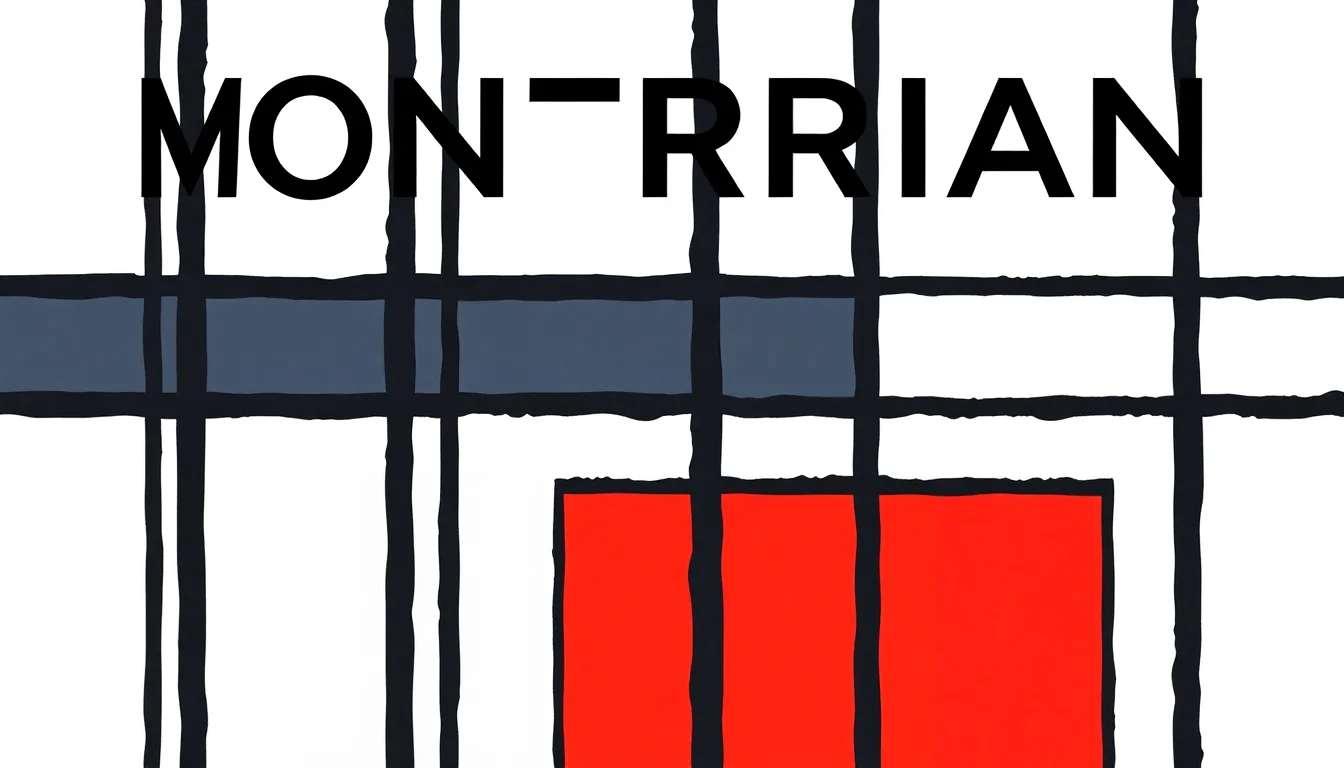
Mondrian's style underwent a significant transformation in the 1920s, as he began to develop his unique grid-based approach. This style, which he called Neoplasticism, was characterized by the use of geometric shapes and a limited color palette. Mondrian's paintings from this period, such as Composition with Red, Yellow, and Blue, are considered some of the most important works of the 20th century. Mondrian's use of the grid was not only aesthetically innovative but also theoretically significant, as it reflected his interest in Theosophy and the spiritual dimensions of art. He believed that the grid could be used to create a sense of balance and harmony, and that it could also be used to explore the relationship between Form and Space.
📐 The Grid-Based Revolution
The grid-based revolution that Mondrian pioneered had a profound impact on the development of modern art. Artists such as Kazimir Malevich and Wassily Kandinsky were influenced by Mondrian's use of geometric shapes and his emphasis on the spiritual dimensions of art. The grid also became a key element in the development of Abstract Art, as artists such as Jackson Pollock and Mark Rothko used it to create complex and dynamic compositions. Mondrian's influence can also be seen in the work of architects and designers, such as Le Corbusier and Ludwig Mies van der Rohe, who used the grid to create innovative and functional buildings. The grid has also been used in Graphic Design, particularly in the development of Typography and Logo Design.
🖼️ Famous Works by Mondrian
Some of Mondrian's most famous works include Broadway Boogie Woogie and Victory Boogie Woogie. These paintings, which were created in the 1940s, demonstrate Mondrian's continued innovation and experimentation with the grid. They also reflect his interest in Jazz Music and the vibrant culture of New York City, where he lived and worked for many years. Mondrian's paintings are not only aesthetically striking but also theoretically significant, as they reflect his ongoing exploration of the relationship between Art and Music. His work has also been influential in the development of Op Art, a style of art that emphasizes optical illusions and visual effects.
👥 Influence of Mondrian on Modern Art
Mondrian's influence on modern art is undeniable, and his work continues to inspire artists, designers, and architects around the world. The grid, which was once a radical and innovative element, has become a ubiquitous feature of modern design, from Web Design to Fashion Design. Mondrian's emphasis on the spiritual dimensions of art has also had a lasting impact, as artists continue to explore the relationship between Art and Spirituality. However, Mondrian's work has not been without controversy, and some critics have argued that his use of the grid is overly restrictive and limiting. Despite these criticisms, Mondrian's legacy continues to be felt, and his work remains a powerful and enduring force in the world of art and design.
🤔 Criticisms and Controversies
Despite his significant contributions to modern art, Mondrian's work has not been without criticism. Some have argued that his use of the grid is overly restrictive and limiting, and that it does not allow for the same level of expressiveness and creativity as other artistic styles. Others have criticized Mondrian's emphasis on the spiritual dimensions of art, arguing that it is too esoteric and elitist. However, these criticisms have not diminished Mondrian's influence, and his work continues to be celebrated and admired by artists, designers, and art lovers around the world. Mondrian's influence can also be seen in the work of Bridget Riley, a British artist known for her innovative use of geometric shapes and optical illusions. The Op Art Movement has also been influenced by Mondrian's work, particularly in the development of Kinetic Art.
🌎 Mondrian's Legacy in Contemporary Art
Mondrian's legacy in contemporary art is profound and far-reaching. His use of the grid has influenced a wide range of artistic styles, from Minimalism to Postmodernism. His emphasis on the spiritual dimensions of art has also had a lasting impact, as artists continue to explore the relationship between Art and Philosophy. Mondrian's work has also been influential in the development of Digital Art, particularly in the use of geometric shapes and algorithms to create complex and dynamic compositions. The Digital Art Movement has also been influenced by Mondrian's work, particularly in the development of Generative Art.
📚 References and Further Reading
For those interested in learning more about Mondrian and his work, there are a number of excellent resources available. The Mondrian Trust is a great place to start, as it provides a wealth of information about Mondrian's life and art. The Tate Modern in London also has an excellent collection of Mondrian's work, including some of his most famous paintings. Additionally, there are a number of books and articles available that provide a more in-depth look at Mondrian's style and influence, including The Art of Mondrian and Mondrian and the Grid.
👀 Conclusion and Future Directions
In conclusion, Mondrian's painting style, which emphasized the use of geometric shapes and the grid, had a profound impact on the development of modern art. His influence can be seen in a wide range of artistic styles, from Abstract Expressionism to Pop Art. As we look to the future, it will be interesting to see how Mondrian's legacy continues to evolve and influence new generations of artists and designers. Will the grid continue to be a dominant feature of modern design, or will new styles and techniques emerge to challenge and surpass it? Only time will tell, but one thing is certain: Mondrian's innovative and groundbreaking approach to art will continue to inspire and influence artists and designers for years to come.
Key Facts
- Year
- 1917
- Origin
- Netherlands
- Category
- Art and Design
- Type
- Art Movement
Frequently Asked Questions
What is Neoplasticism?
Neoplasticism is an art movement that emerged in the early 20th century, characterized by the use of geometric shapes and a limited color palette. It was developed by Piet Mondrian, who believed that the grid could be used to create a sense of balance and harmony in art. Neoplasticism was influenced by a range of artistic styles, including Cubism and Futurism, and it had a significant impact on the development of modern art. The movement emphasized the use of primary colors and the grid, and it sought to create a sense of purity and simplicity in art.
What is the significance of the grid in Mondrian's work?
The grid is a central element in Mondrian's work, and it reflects his interest in the spiritual dimensions of art. Mondrian believed that the grid could be used to create a sense of balance and harmony, and that it could also be used to explore the relationship between form and space. The grid was also a key element in the development of Neoplasticism, as it allowed artists to create complex and dynamic compositions using geometric shapes. The grid has since become a ubiquitous feature of modern design, and it continues to influence artists, designers, and architects around the world.
How did Mondrian's style evolve over time?
Mondrian's style evolved significantly over the course of his career, as he experimented with a range of techniques and mediums. His early work was influenced by the Hague School, a group of Dutch painters who focused on landscape and genre painting. However, he soon became interested in more avant-garde styles, such as Pointillism and Fauvism. Mondrian's move to Paris in 1911 marked a significant turning point in his career, as he became exposed to a wide range of artistic influences, including Cubism and Futurism. His style continued to evolve in the 1920s, as he developed his unique grid-based approach and explored the spiritual dimensions of art.
What is the relationship between Mondrian's work and jazz music?
Mondrian was a great admirer of jazz music, and he often listened to jazz while he worked. He believed that jazz and art were closely related, and that both forms of expression shared a common spirit of innovation and experimentation. Mondrian's paintings from the 1940s, such as Broadway Boogie Woogie and Victory Boogie Woogie, reflect his interest in jazz and the vibrant culture of New York City, where he lived and worked for many years. The relationship between Mondrian's work and jazz music is a testament to the enduring power of art to capture the spirit of its time and to inspire new generations of artists and musicians.
How has Mondrian's work influenced contemporary art?
Mondrian's work has had a profound influence on contemporary art, as artists continue to explore the relationship between geometric shapes, color, and the grid. His emphasis on the spiritual dimensions of art has also had a lasting impact, as artists seek to create works that are not only aesthetically striking but also intellectually and emotionally resonant. The grid, which was once a radical and innovative element, has become a ubiquitous feature of modern design, from web design to fashion design. Mondrian's influence can be seen in a wide range of artistic styles, from minimalism to postmodernism, and his work continues to inspire new generations of artists and designers.
What are some of the key criticisms of Mondrian's work?
Despite his significant contributions to modern art, Mondrian's work has not been without criticism. Some have argued that his use of the grid is overly restrictive and limiting, and that it does not allow for the same level of expressiveness and creativity as other artistic styles. Others have criticized Mondrian's emphasis on the spiritual dimensions of art, arguing that it is too esoteric and elitist. However, these criticisms have not diminished Mondrian's influence, and his work continues to be celebrated and admired by artists, designers, and art lovers around the world.
How has Mondrian's work influenced architecture and design?
Mondrian's work has had a significant influence on architecture and design, as architects and designers have sought to incorporate the grid and geometric shapes into their work. The grid has become a ubiquitous feature of modern design, from web design to fashion design, and it continues to influence artists, designers, and architects around the world. Mondrian's emphasis on the spiritual dimensions of art has also had a lasting impact, as architects and designers seek to create buildings and spaces that are not only functional but also aesthetically striking and intellectually resonant.