
Contents
- 🌟 Introduction to Molecular Simulation
- 🔍 Theoretical Foundations of Molecular Modelling
- 🧬 Applications in Computational Biology
- 💻 Computational Chemistry and Drug Design
- 🔩 Materials Science and Molecular Simulation
- 🤖 The Role of Artificial Intelligence in Molecular Simulation
- 📊 Challenges and Limitations of Molecular Modelling
- 🔜 The Future of Molecular Simulation
- 📈 Impact on Industry and Society
- 👥 Collaborations and Research Initiatives
- 📚 Educational Resources and Training
- 📰 Recent Breakthroughs and Discoveries
- Frequently Asked Questions
- Related Topics
Overview
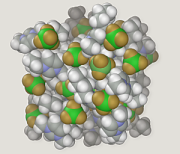
Molecular simulation is a rapidly evolving field that has revolutionized the way scientists study molecular systems. By using computational methods to model and mimic the behaviour of molecules, researchers can gain valuable insights into the properties and interactions of complex systems. Molecular modelling encompasses all methods, theoretical and computational, used to model or mimic the behaviour of molecules. The methods are used in the fields of computational chemistry, drug design, computational biology and materials science to study molecular systems ranging from small chemical systems to large biological molecules and material assemblies. For instance, the work of Frank Stillinger has been instrumental in shaping our understanding of molecular interactions. The simplest calculations can be performed by hand, but inevitably computers are required to perform molecular modelling of any reasonably sized system.
🔍 Theoretical Foundations of Molecular Modelling
The theoretical foundations of molecular modelling are rooted in quantum mechanics and classical mechanics. Quantum mechanics provides a framework for understanding the behaviour of molecules at the atomic and subatomic level, while classical mechanics describes the motion of molecules in terms of position, momentum, and energy. The common feature of molecular modelling methods is the atomistic level description of the molecular systems. This may include treating atoms as the smallest individual unit, or explicitly modelling protons and neutrons with its quarks, anti-quarks and gluons and electrons with its photons. Researchers like Martin Karplus have made significant contributions to the development of molecular modelling methods.
🧬 Applications in Computational Biology
Molecular simulation has numerous applications in computational biology, including the study of protein-ligand interactions, protein folding, and molecular recognition. Protein-ligand interactions play a crucial role in many biological processes, and molecular simulation can provide valuable insights into the mechanisms underlying these interactions. For example, the work of Jane S. Richardson has focused on the development of methods for predicting protein structure and function. Additionally, molecular simulation can be used to study the behaviour of biological membranes and the transport of molecules across these membranes.
💻 Computational Chemistry and Drug Design
Computational chemistry and drug design are two fields that have greatly benefited from molecular simulation. Computational chemistry involves the use of computational methods to study the behaviour of molecules and predict their properties, while drug design involves the use of computational methods to design new drugs with specific properties. Molecular simulation can be used to predict the binding affinity of small molecules to proteins, which is a critical step in the drug design process. Researchers like Andrew McCammon have made significant contributions to the development of computational methods for drug design.
🔩 Materials Science and Molecular Simulation
Molecular simulation is also widely used in materials science to study the properties of materials at the atomic and molecular level. Materials science involves the study of the properties and applications of various materials, including metals, semiconductors, and polymers. Molecular simulation can be used to predict the mechanical, thermal, and electrical properties of materials, which is essential for the design and development of new materials. For instance, the work of David Vanderbilt has focused on the development of computational methods for studying the properties of materials.
🤖 The Role of Artificial Intelligence in Molecular Simulation
The role of artificial intelligence in molecular simulation is becoming increasingly important. Artificial intelligence can be used to accelerate the simulation process, predict the behaviour of molecules, and identify new materials with specific properties. Machine learning algorithms can be trained on large datasets of molecular simulations to predict the properties of new molecules and materials. Researchers like Yann LeCun have made significant contributions to the development of artificial intelligence methods for molecular simulation.
📊 Challenges and Limitations of Molecular Modelling
Despite the many advances in molecular simulation, there are still several challenges and limitations that need to be addressed. One of the major challenges is the development of accurate and efficient algorithms for simulating the behaviour of complex molecular systems. Algorithm development is an active area of research, with many scientists working on the development of new algorithms and methods for molecular simulation. Another challenge is the interpretation of simulation results, which requires a deep understanding of the underlying physics and chemistry. For example, the work of Michael L. Klein has focused on the development of methods for interpreting simulation results.
🔜 The Future of Molecular Simulation
The future of molecular simulation is exciting and rapidly evolving. Future developments in molecular simulation will likely involve the integration of artificial intelligence, machine learning, and data science to accelerate the simulation process and predict the behaviour of complex molecular systems. Additionally, the development of new algorithms and methods will be critical for simulating the behaviour of complex systems and predicting their properties. Researchers like Giovanni Ciccotti have made significant contributions to the development of new methods for molecular simulation.
📈 Impact on Industry and Society
The impact of molecular simulation on industry and society is significant. Industry applications of molecular simulation include the design and development of new materials, the optimization of chemical processes, and the prediction of the behaviour of complex systems. Molecular simulation can also be used to predict the environmental impact of industrial processes and the behaviour of molecules in the environment. For instance, the work of Klaus Schulten has focused on the development of methods for simulating the behaviour of biological molecules in the environment.
👥 Collaborations and Research Initiatives
Collaborations and research initiatives are essential for advancing the field of molecular simulation. Collaborations between researchers from different disciplines, including chemistry, physics, biology, and computer science, are critical for developing new methods and algorithms for molecular simulation. Additionally, research initiatives and funding agencies play a crucial role in supporting research in molecular simulation. For example, the work of Richard L. Berger has focused on the development of methods for simulating the behaviour of complex molecular systems.
📚 Educational Resources and Training
Educational resources and training are essential for educating the next generation of researchers in molecular simulation. Educational resources include textbooks, online courses, and workshops, which provide a comprehensive introduction to the principles and methods of molecular simulation. Additionally, research experiences and internships provide hands-on training in molecular simulation and related fields. Researchers like John McCammon have made significant contributions to the development of educational resources for molecular simulation.
📰 Recent Breakthroughs and Discoveries
Recent breakthroughs and discoveries in molecular simulation have been significant. Recent breakthroughs include the development of new algorithms and methods for simulating the behaviour of complex molecular systems, the prediction of the properties of new materials, and the simulation of the behaviour of biological molecules in the environment. For instance, the work of Michael Levitt has focused on the development of methods for simulating the behaviour of proteins and other biological molecules.
Key Facts
- Year
- 2022
- Origin
- The concept of molecular simulation originated in the 1950s, with the work of scientists such as John Barker and Robert Parr, who developed the first molecular dynamics simulations.
- Category
- Science and Technology
- Type
- Scientific Concept
Frequently Asked Questions
What is molecular simulation?
Molecular simulation is a computational method used to study the behaviour of molecules and predict their properties. It involves the use of algorithms and computational models to simulate the behaviour of molecules and materials at the atomic and molecular level. Molecular simulation is widely used in fields such as chemistry, physics, biology, and materials science.
What are the applications of molecular simulation?
Molecular simulation has numerous applications in fields such as chemistry, physics, biology, and materials science. It can be used to predict the properties of materials, design new drugs, and study the behaviour of biological molecules. Additionally, molecular simulation can be used to optimize chemical processes, predict the environmental impact of industrial processes, and simulate the behaviour of complex systems.
What is the role of artificial intelligence in molecular simulation?
Artificial intelligence plays a significant role in molecular simulation, as it can be used to accelerate the simulation process, predict the behaviour of molecules, and identify new materials with specific properties. Machine learning algorithms can be trained on large datasets of molecular simulations to predict the properties of new molecules and materials.
What are the challenges and limitations of molecular simulation?
Despite the many advances in molecular simulation, there are still several challenges and limitations that need to be addressed. One of the major challenges is the development of accurate and efficient algorithms for simulating the behaviour of complex molecular systems. Another challenge is the interpretation of simulation results, which requires a deep understanding of the underlying physics and chemistry.
What is the future of molecular simulation?
The future of molecular simulation is exciting and rapidly evolving. Future developments in molecular simulation will likely involve the integration of artificial intelligence, machine learning, and data science to accelerate the simulation process and predict the behaviour of complex molecular systems. Additionally, the development of new algorithms and methods will be critical for simulating the behaviour of complex systems and predicting their properties.
How does molecular simulation impact industry and society?
The impact of molecular simulation on industry and society is significant. Molecular simulation can be used to design and develop new materials, optimize chemical processes, and predict the environmental impact of industrial processes. Additionally, molecular simulation can be used to simulate the behaviour of biological molecules in the environment and predict the behaviour of complex systems.
What are the educational resources and training available for molecular simulation?
Educational resources and training are essential for educating the next generation of researchers in molecular simulation. Educational resources include textbooks, online courses, and workshops, which provide a comprehensive introduction to the principles and methods of molecular simulation. Additionally, research experiences and internships provide hands-on training in molecular simulation and related fields.