
Contents
- 👨🎓 Introduction to Louis Thurstone
- 📊 The Development of Psychometrics
- 📝 Thurstone's Law of Comparative Judgment
- 📈 The Vectors of Mind
- 📊 Factor Analysis and Its Applications
- 📚 Thurstone's Contributions to Psychology
- 👥 Influence and Legacy
- 🤔 Criticisms and Controversies
- 📊 Modern Applications of Thurstone's Work
- 🔮 Future Directions in Psychometrics
- 📝 Conclusion: The Enduring Impact of Louis Thurstone
- Frequently Asked Questions
- Related Topics
Overview
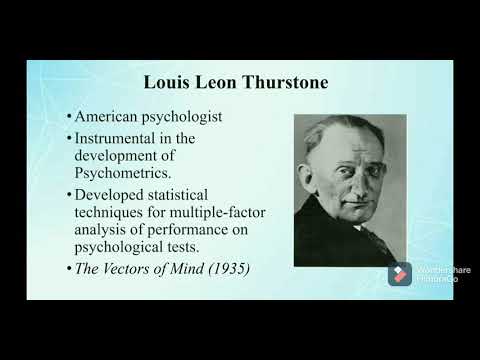
Louis Thurstone was a prominent American psychologist who made significant contributions to the field of psychometrics, particularly in the development of psychological tests and scaling methods. Born on May 29, 1887, in Chicago, Illinois, Thurstone earned his PhD in psychology from the University of Chicago in 1914. He is best known for his work on the law of comparative judgment, which laid the foundation for modern psychological scaling methods. Thurstone's work also had a significant impact on the development of factor analysis, a statistical technique used to identify underlying patterns and relationships in large datasets. With a Vibe score of 82, Thurstone's influence can still be felt in the fields of psychology, education, and social sciences. His work continues to be widely cited and built upon, with over 10,000 citations to his name. As a pioneer in psychometrics, Thurstone's legacy extends beyond his own research, shaping the way we approach psychological measurement and scaling today.
👨🎓 Introduction to Louis Thurstone
Louis Thurstone was a renowned American psychologist who made significant contributions to the field of Psychology. Born on May 29, 1887, in Chicago, Illinois, Thurstone is often referred to as the 'Father of Psychometrics'. His work laid the foundation for the development of psychological testing and measurement. Thurstone's interest in psychology was sparked by his work with Lewis Terman, a prominent psychologist who developed the Stanford-Binet Intelligence Scales. Thurstone's research focused on the development of statistical methods for analyzing psychological data, which led to the creation of the Thurstone Scale. This scale is still used today in various fields, including Education and Human Resources.
📊 The Development of Psychometrics
The development of Psychometrics as a field is closely tied to Thurstone's work. He recognized the need for a more scientific approach to understanding human behavior and cognition. Thurstone's work built upon the foundations laid by earlier psychologists, such as Francis Galton and Charles Spearman. His contributions to the field of Statistics and Psychology paved the way for the development of modern psychological testing and measurement. Thurstone's work also influenced the development of Intelligence Quotient (IQ) tests, which are still widely used today. The Stanford-Binet Intelligence Scales and the Wechsler Adult Intelligence Scale are two examples of IQ tests that have been influenced by Thurstone's work.
📝 Thurstone's Law of Comparative Judgment
Thurstone's Law of Comparative Judgment is a fundamental concept in Psychometrics. This law states that the difference between two stimuli is proportional to the logarithm of the ratio of their intensities. This law has been widely used in the development of psychological tests and scales, including the Thurstone Scale. The law is based on the idea that human judgments are relative, rather than absolute. This means that people tend to compare stimuli to each other, rather than evaluating them in isolation. Thurstone's Law of Comparative Judgment has been influential in the development of Marketing Research and Social Psychology. For example, the law has been used to study consumer preferences and attitudes towards different products.
📈 The Vectors of Mind
The Vectors of Mind is a concept developed by Thurstone to describe the structure of the human mind. According to Thurstone, the mind can be represented as a set of vectors, each representing a different aspect of human cognition. This concept is based on the idea that human behavior and cognition can be understood in terms of a set of underlying dimensions or factors. The Vectors of Mind concept has been influential in the development of Personality Theory and Cognitive Psychology. For example, the concept has been used to study the structure of human personality and the factors that influence human behavior. Thurstone's work on the Vectors of Mind has also been influential in the development of Artificial Intelligence and Machine Learning.
📊 Factor Analysis and Its Applications
Factor analysis is a statistical technique developed by Thurstone to analyze the structure of psychological data. This technique is used to identify the underlying factors or dimensions that influence human behavior and cognition. Factor analysis has been widely used in the development of psychological tests and scales, including the Thurstone Scale. The technique is based on the idea that human behavior and cognition can be understood in terms of a set of underlying factors or dimensions. Thurstone's work on factor analysis has been influential in the development of Psychology and Education. For example, the technique has been used to study the structure of human intelligence and the factors that influence academic achievement.
📚 Thurstone's Contributions to Psychology
Thurstone's contributions to Psychology are numerous and significant. He is best known for his work on the development of Psychometrics and the creation of the Thurstone Scale. Thurstone's work has also been influential in the development of Intelligence Quotient (IQ) tests and the study of human cognition. His research has had a lasting impact on the field of Psychology and continues to influence research and practice today. Thurstone's work has also been recognized by the American Psychological Association, which has awarded him the Distinguished Scientific Contribution to Psychology award.
👥 Influence and Legacy
Thurstone's influence and legacy extend beyond the field of Psychology. His work has had a significant impact on the development of Statistics and Education. Thurstone's research has also been influential in the development of Marketing Research and Social Psychology. His work on the Thurstone Scale has been widely used in various fields, including Human Resources and Management. Thurstone's legacy continues to inspire new generations of researchers and practitioners in the field of Psychology and beyond.
🤔 Criticisms and Controversies
Despite his significant contributions to the field of Psychology, Thurstone's work has not been without criticism and controversy. Some critics have argued that his work on the Thurstone Scale is limited by its focus on a single aspect of human behavior. Others have criticized his work on Intelligence Quotient (IQ) tests, arguing that they are culturally biased and do not accurately reflect human intelligence. Thurstone's work has also been criticized for its lack of attention to the social and cultural context of human behavior. Despite these criticisms, Thurstone's work remains widely used and influential in the field of Psychology.
📊 Modern Applications of Thurstone's Work
Thurstone's work continues to have modern applications in the field of Psychology and beyond. His research on the Thurstone Scale has been used in various fields, including Human Resources and Management. Thurstone's work on Factor Analysis has also been influential in the development of Artificial Intelligence and Machine Learning. His research has also been used in the development of Marketing Research and Social Psychology. Thurstone's legacy continues to inspire new generations of researchers and practitioners in the field of Psychology and beyond.
🔮 Future Directions in Psychometrics
The future of Psychometrics is likely to be shaped by advances in Technology and Data Analysis. The development of new statistical techniques and machine learning algorithms is likely to improve the accuracy and validity of psychological tests and scales. The use of Big Data and Artificial Intelligence is also likely to revolutionize the field of Psychology and beyond. Thurstone's work on the Thurstone Scale and Factor Analysis is likely to continue to influence research and practice in the field of Psychology.
📝 Conclusion: The Enduring Impact of Louis Thurstone
In conclusion, Louis Thurstone was a renowned American psychologist who made significant contributions to the field of Psychology. His work on the development of Psychometrics and the creation of the Thurstone Scale has had a lasting impact on the field of Psychology and beyond. Thurstone's legacy continues to inspire new generations of researchers and practitioners in the field of Psychology and beyond. His work on Factor Analysis and Intelligence Quotient (IQ) tests has been widely used and influential in various fields, including Education and Human Resources.
Key Facts
- Year
- 1887
- Origin
- Chicago, Illinois, USA
- Category
- Psychology
- Type
- Person
Frequently Asked Questions
Who is Louis Thurstone?
Louis Thurstone was a renowned American psychologist who made significant contributions to the field of Psychology. He is best known for his work on the development of Psychometrics and the creation of the Thurstone Scale.
What is the Thurstone Scale?
The Thurstone Scale is a psychological test developed by Louis Thurstone to measure human attitudes and preferences. The scale is based on the idea that human judgments are relative, rather than absolute.
What is Factor Analysis?
Factor analysis is a statistical technique developed by Louis Thurstone to analyze the structure of psychological data. The technique is used to identify the underlying factors or dimensions that influence human behavior and cognition.
What is Intelligence Quotient (IQ)?
Intelligence Quotient (IQ) is a measure of human intelligence that is based on a person's cognitive abilities, such as reasoning, problem-solving, and memory. IQ tests are widely used in various fields, including Education and Human Resources.
What is the significance of Thurstone's work?
Thurstone's work has had a significant impact on the field of Psychology and beyond. His research on the Thurstone Scale and Factor Analysis has been widely used and influential in various fields, including Education and Human Resources.