
Contents
- 🏯 Introduction to Islamic Art
- 🖌️ Characteristics of Islamic Art
- 📚 History of Islamic Art
- 🕊️ Islamic Calligraphy and Geometry
- 🌿 Arabesque and Plant Forms
- 🏞️ Architectural Decorations
- 🎨 Islamic Miniature Painting
- 👗 Textile Arts in Islamic Culture
- 🤝 Influence of Islamic Art on Other Cultures
- 📊 Preservation and Conservation of Islamic Art
- 👀 Contemporary Islamic Art Scene
- 👫 Future of Islamic Art
- Frequently Asked Questions
- Related Topics
Overview
Islamic art, spanning over 1,400 years, is a testament to the synthesis of faith, culture, and aesthetics. Characterized by geometric patterns, arabesques, and calligraphic masterpieces, it reflects the Islamic worldview and its emphasis on unity, harmony, and the infinite. The influence of Islamic art can be seen in various forms, from the intricate mosaics of the Umayyad Mosque in Damascus to the illuminated manuscripts of the Quran. With a vibe score of 8, indicating a high level of cultural energy, Islamic art continues to inspire artists, designers, and architects worldwide. The controversy spectrum surrounding Islamic art often revolves around the role of figural representation, with some arguing it is haram (forbidden) and others seeing it as a legitimate form of artistic expression. As Islamic art continues to evolve, incorporating modern techniques and mediums, it remains a powerful symbol of Islamic heritage and a bridge between cultures.
🏯 Introduction to Islamic Art
The term Islamic Art refers to the visual arts produced in the Islamic world since the 7th century CE. It encompasses a wide range of artistic traditions, including calligraphy, geometric patterns, and arabesque designs. Islamic art is characterized by its use of non-representational forms, with the exception of plant forms and Islamic calligraphy. The use of geometric patterns and arabesque designs is a distinctive feature of Islamic art, and can be seen in a variety of media, from ceramics and metalwork to textile arts. For example, the Alhambra palace in Spain is a famous example of Islamic architecture, with its intricate geometric patterns and arabesque designs.
🖌️ Characteristics of Islamic Art
One of the key characteristics of Islamic Art is its use of non-representational forms. This means that Islamic art does not typically depict human or animal figures, instead relying on geometric patterns and arabesque designs to create visually striking compositions. This approach is rooted in the Islamic theology of the time, which emphasized the importance of avoiding idolatry. As a result, Islamic artists developed a range of innovative techniques for creating beautiful and intricate designs, including the use of calligraphy and geometric patterns. For instance, the Blue Mosque in Istanbul is a stunning example of Islamic architecture, with its intricate calligraphy and geometric patterns. The Islamic glass and pottery of the time also reflect this emphasis on non-representational forms.
📚 History of Islamic Art
The history of Islamic Art spans over 1,000 years, and encompasses a wide range of artistic traditions. From the early Umayyad Caliphate to the modern day, Islamic art has continued to evolve and adapt to new cultural and historical contexts. One of the key factors that has shaped the development of Islamic art is the Islamic Golden Age, which saw a flourishing of artistic and intellectual activity in the Islamic world. This period, which lasted from the 8th to the 13th centuries, saw the development of new artistic techniques and styles, including the use of calligraphy and geometric patterns. The Abbasid Caliphate also played a significant role in the development of Islamic art, with its emphasis on calligraphy and geometric patterns.
🕊️ Islamic Calligraphy and Geometry
Islamic Calligraphy is a highly respected art form in the Islamic world, and is often used to adorn mosques and other important buildings. The use of calligraphy in Islamic art is not only decorative, but also serves to convey important Islamic theological and Quranic messages. In addition to its aesthetic value, Islamic calligraphy is also highly valued for its ability to convey complex spiritual and philosophical ideas. For example, the Quran is often decorated with intricate calligraphy, which serves to emphasize the importance of the text. The Hadith also contains examples of calligraphy used to convey important messages.
🌿 Arabesque and Plant Forms
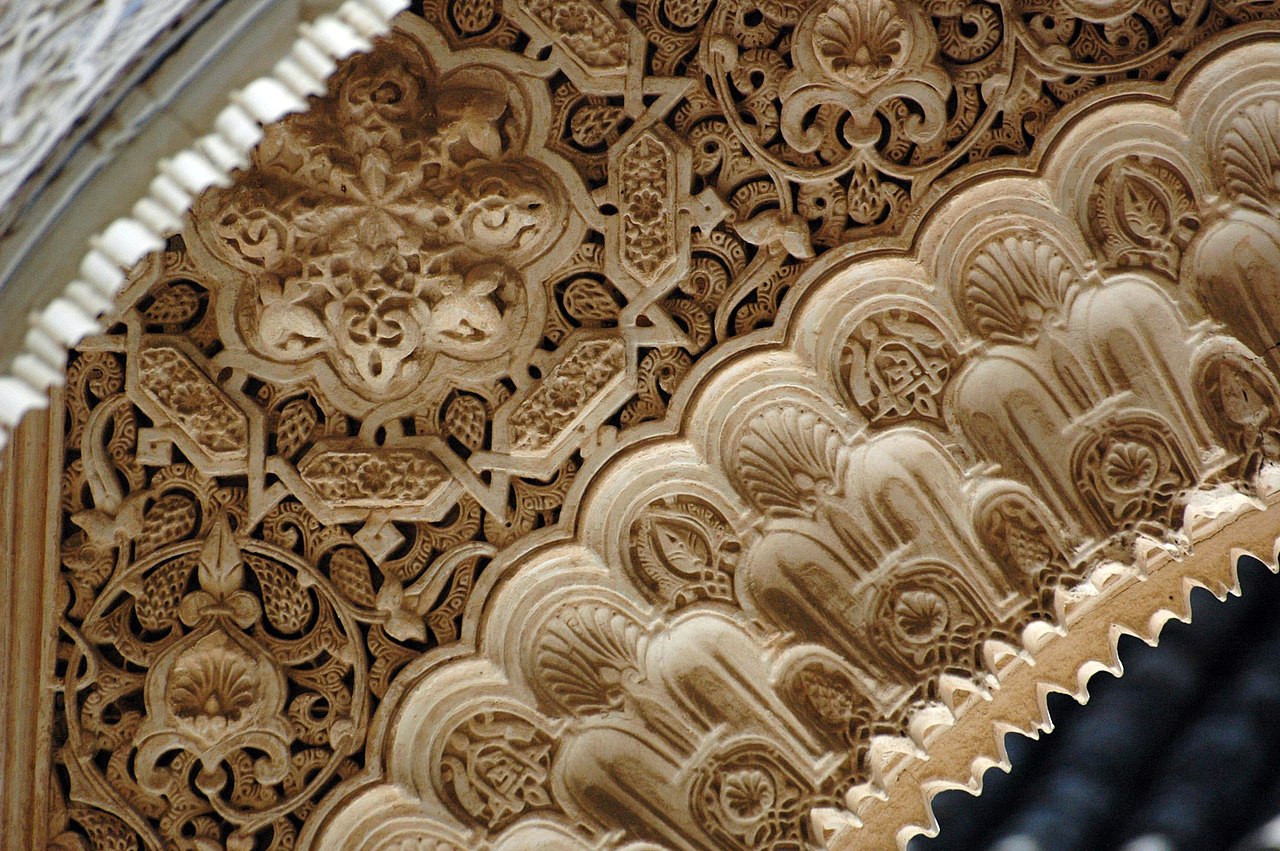
The arabesque is a distinctive feature of Islamic art, and is characterized by its use of spiraling lines and geometric patterns. The arabesque is often combined with Islamic calligraphy and other decorative elements to create intricate and beautiful designs. The use of the arabesque in Islamic art serves to create a sense of movement and energy, and is often used to adorn mosques and other important buildings. For instance, the Alhambra palace in Spain is a famous example of Islamic architecture, with its intricate arabesque designs. The Topkapi Palace in Istanbul is another example of the use of arabesque designs in Islamic architecture.
🏞️ Architectural Decorations
Islamic art is not limited to small decorative objects, but can also be seen in the architectural decorations of mosques and other important buildings. The use of geometric patterns, arabesque designs, and Islamic calligraphy can be seen in the tiling and other decorative elements of these buildings. For example, the Hagia Sophia in Istanbul is a famous example of Islamic architecture, with its intricate geometric patterns and arabesque designs. The Sultan Ahmed Mosque in Istanbul is another example of the use of geometric patterns and arabesque designs in Islamic architecture.
🎨 Islamic Miniature Painting
Islamic Miniature Painting is a highly respected art form in the Islamic world, and is characterized by its use of small, intricate paintings to depict a wide range of subjects. These paintings are often used to illustrate Quranic stories and other important Islamic theological texts. The use of miniature painting in Islamic art serves to create a sense of intimacy and immediacy, and is often used to convey complex spiritual and philosophical ideas. For instance, the Shahnama is a famous example of Islamic miniature painting, with its intricate depictions of Persian mythology.
👗 Textile Arts in Islamic Culture
The textile arts are an important part of Islamic culture, and include a wide range of techniques such as weaving, embroidery, and carpet weaving. These techniques are often used to create beautiful and intricate designs, which are highly valued for their aesthetic and cultural significance. The use of textile arts in Islamic culture serves to create a sense of community and shared identity, and is often used to convey important Islamic theological and Quranic messages. For example, the Turkish carpet is a famous example of textile arts in Islamic culture, with its intricate geometric patterns and arabesque designs.
🤝 Influence of Islamic Art on Other Cultures
The influence of Islamic Art on other cultures is a significant one, and can be seen in a wide range of artistic traditions. From the Gothic architecture of Europe to the Mughal architecture of India, Islamic art has had a profound impact on the development of artistic styles and techniques. The use of geometric patterns, arabesque designs, and Islamic calligraphy can be seen in a wide range of cultural contexts, and serves to create a sense of shared cultural heritage. For instance, the Alcazar of Seville in Spain is a famous example of the influence of Islamic Art on European architecture, with its intricate geometric patterns and arabesque designs.
📊 Preservation and Conservation of Islamic Art
The preservation and conservation of Islamic Art is a highly important issue, and requires a deep understanding of the cultural and historical context of the art. The use of traditional techniques and materials is essential to preserving the integrity of the art, and requires a high degree of skill and craftsmanship. The Museum of Islamic Art in Doha, Qatar is a leading institution in the preservation and conservation of Islamic art, and has a highly respected collection of Islamic Art from around the world. For example, the Museum of Islamic Art has a stunning collection of Islamic glass and pottery, which reflects the emphasis on non-representational forms in Islamic art.
👀 Contemporary Islamic Art Scene
The contemporary Islamic Art scene is a vibrant and dynamic one, and includes a wide range of artists and styles. From the Iranian art of Parviz Tanavoli to the Palestinian art of Nabil Anani, contemporary Islamic art is characterized by its use of traditional techniques and materials to create innovative and thought-provoking works of art. The use of digital art and other new media is also becoming increasingly popular in contemporary Islamic art, and serves to create new and exciting possibilities for artistic expression. For instance, the Iranian artist Shirin Neshat is a famous example of a contemporary Islamic artist, with her thought-provoking works on Islamic feminism.
👫 Future of Islamic Art
The future of Islamic Art is a bright and exciting one, and will likely be shaped by a wide range of cultural, historical, and technological factors. The use of new media and technologies will likely play a significant role in the development of Islamic art, and will serve to create new and innovative possibilities for artistic expression. The Islamic art market is also becoming increasingly important, and will likely play a significant role in shaping the future of Islamic art. For example, the Dubai Art Fair is a leading platform for contemporary Islamic art, with its diverse range of artists and styles. As Islamic art continues to evolve and adapt to new cultural and historical contexts, it will be exciting to see how it continues to shape and reflect the values and traditions of the Islamic world.
Key Facts
- Year
- 632
- Origin
- Middle East
- Category
- Art and Culture
- Type
- Art Movement
Frequently Asked Questions
What is Islamic art?
Islamic art refers to the visual arts produced in the Islamic world since the 7th century CE. It encompasses a wide range of artistic traditions, including calligraphy, geometric patterns, and arabesque designs. Islamic art is characterized by its use of non-representational forms, with the exception of plant forms and Islamic calligraphy. The use of geometric patterns and arabesque designs is a distinctive feature of Islamic art, and can be seen in a variety of media, from ceramics and metalwork to textile arts.
What are the key characteristics of Islamic art?
The key characteristics of Islamic art include its use of non-representational forms, geometric patterns, and arabesque designs. Islamic art is also characterized by its use of calligraphy, which is often used to convey important Islamic theological and Quranic messages. The use of geometric patterns and arabesque designs serves to create a sense of movement and energy, and is often used to adorn mosques and other important buildings.
What is the significance of Islamic calligraphy?
Islamic calligraphy is a highly respected art form in the Islamic world, and is often used to adorn mosques and other important buildings. The use of calligraphy in Islamic art serves to convey important Islamic theological and Quranic messages, and is highly valued for its aesthetic and cultural significance. Islamic calligraphy is also used to create intricate and beautiful designs, which are highly valued for their beauty and craftsmanship.
What is the influence of Islamic art on other cultures?
The influence of Islamic art on other cultures is a significant one, and can be seen in a wide range of artistic traditions. From the Gothic architecture of Europe to the Mughal architecture of India, Islamic art has had a profound impact on the development of artistic styles and techniques. The use of geometric patterns, arabesque designs, and Islamic calligraphy can be seen in a wide range of cultural contexts, and serves to create a sense of shared cultural heritage.
What is the future of Islamic art?
The future of Islamic art is a bright and exciting one, and will likely be shaped by a wide range of cultural, historical, and technological factors. The use of new media and technologies will likely play a significant role in the development of Islamic art, and will serve to create new and innovative possibilities for artistic expression. The Islamic art market is also becoming increasingly important, and will likely play a significant role in shaping the future of Islamic art.
How is Islamic art preserved and conserved?
The preservation and conservation of Islamic art is a highly important issue, and requires a deep understanding of the cultural and historical context of the art. The use of traditional techniques and materials is essential to preserving the integrity of the art, and requires a high degree of skill and craftsmanship. The Museum of Islamic Art in Doha, Qatar is a leading institution in the preservation and conservation of Islamic art, and has a highly respected collection of Islamic art from around the world.
What is the significance of textile arts in Islamic culture?
The textile arts are an important part of Islamic culture, and include a wide range of techniques such as weaving, embroidery, and carpet weaving. These techniques are often used to create beautiful and intricate designs, which are highly valued for their aesthetic and cultural significance. The use of textile arts in Islamic culture serves to create a sense of community and shared identity, and is often used to convey important Islamic theological and Quranic messages.