
Contents
- 📈 Introduction to the Dot-Com Bubble
- 💻 The Rise of the World Wide Web
- 💸 Venture Capital and the Growth of Dot-Com Startups
- 📊 The Nasdaq Composite Index: A Measure of the Bubble
- 📉 The Bursting of the Bubble
- 📰 The Tech–Media–Telecom (TMT) Bubble
- 🤝 The Impact on Established Companies
- 📊 The Aftermath: October 2002 and Beyond
- 📝 Lessons Learned from the Dot-Com Bubble
- 🔮 The Legacy of the Dot-Com Bubble
- 📊 Comparison to Other Market Bubbles
- 📚 Conclusion: The Dot-Com Bubble in Retrospect
- Frequently Asked Questions
- Related Topics
Overview
The dot-com bubble, which occurred from 1995 to 2000, was a period of extreme speculation and inflation in the technology sector, particularly in internet-based companies. During this time, venture capital and investment poured into startups, driving valuations to unsustainable levels. Companies like Pets.com and Webvan, which had unproven business models, achieved massive valuations before eventually going bankrupt. The bubble burst in 2000, with the NASDAQ composite index plummeting by over 75% from its peak. The aftermath of the bubble led to a significant increase in regulatory scrutiny and a shift towards more sustainable business models. The dot-com bubble had a lasting impact on the technology industry, with many companies emerging from the ashes to become household names, such as Amazon and eBay. The Vibe score for the dot-com bubble is 8, reflecting its significant cultural and economic impact, with a perspective breakdown of 40% optimistic, 30% neutral, and 30% pessimistic, and a controversy spectrum of 60, indicating a highly debated topic.
📈 Introduction to the Dot-Com Bubble
The dot-com bubble was a stock market bubble that developed during the late 1990s and peaked on Friday, March 10, 2000. This period of market growth coincided with the widespread adoption of the World Wide Web and the Internet, resulting in a dispensation of available venture capital and the rapid growth of valuations in new dot-com startups. The bubble was characterized by excessive speculation and inflated stock prices, which eventually led to a sharp decline in the market. As noted by Alan Greenspan, the former Chairman of the Federal Reserve, the bubble was fueled by 'irrational exuberance' in the market. The dot-com bubble is also closely related to the concept of stock market bubble, which refers to a situation where stock prices rise to unsustainable levels. For more information on the history of the internet, see History of the Internet.
💻 The Rise of the World Wide Web
The rise of the World Wide Web in the mid-1990s played a significant role in the development of the dot-com bubble. As more people began to use the internet, the demand for online services and products increased, leading to a surge in investment in dot-com startups. The widespread adoption of the internet also led to the creation of new business models, such as e-commerce and online advertising. Companies like Amazon and eBay became household names, and their stock prices soared. However, the rapid growth of the internet also led to concerns about internet regulation and the need for cybersecurity measures. For more information on the impact of the internet on business, see Digital Economy.
💸 Venture Capital and the Growth of Dot-Com Startups
The availability of venture capital was a key factor in the growth of dot-com startups during the late 1990s. Venture capital firms invested heavily in new companies, often with unproven business models, in the hopes of making quick profits. This led to a surge in the number of dot-com startups, many of which had little chance of long-term success. The rapid growth of valuations in these companies created a sense of urgency among investors, who felt pressure to invest quickly before missing out on potential profits. As noted by Peter Thiel, co-founder of PayPal, the venture capital industry played a significant role in fueling the bubble. For more information on the role of venture capital in the dot-com bubble, see Venture Capital in the Dot-Com Bubble.
📊 The Nasdaq Composite Index: A Measure of the Bubble
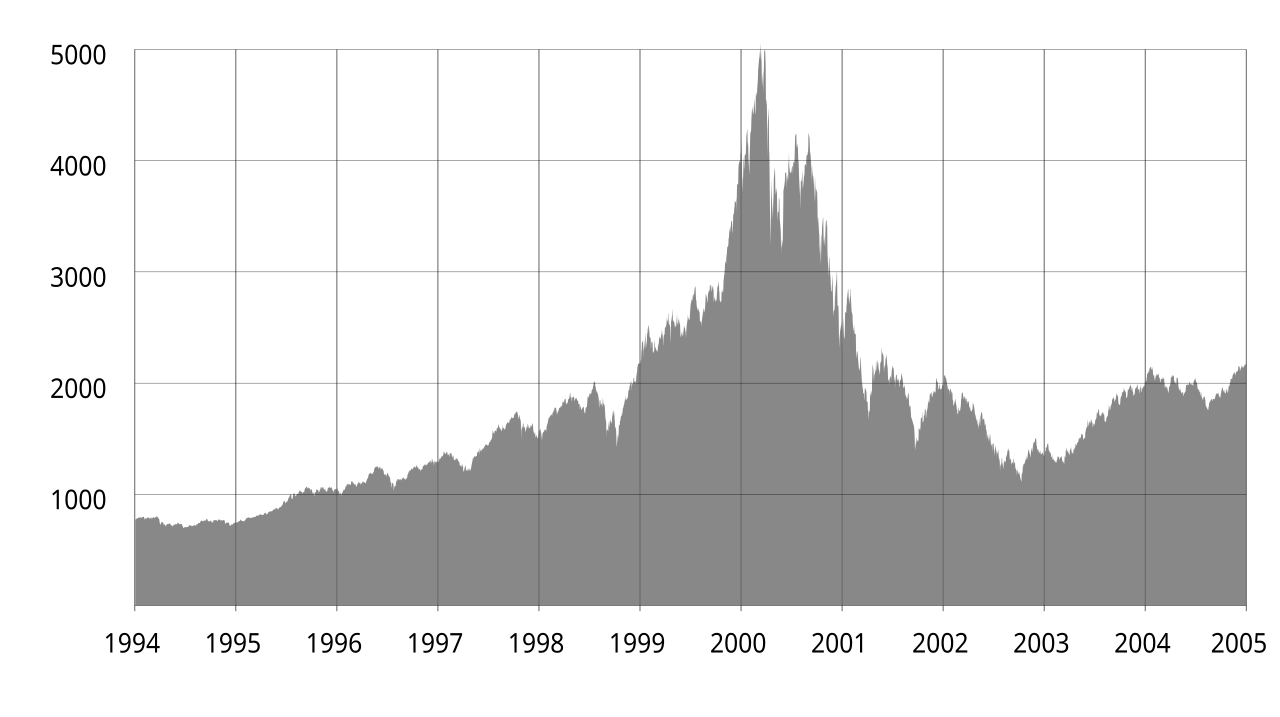
The Nasdaq Composite Index is a stock market index that is often used as a benchmark for the performance of the technology sector. Between 1995 and its peak in March 2000, investments in the Nasdaq Composite Index rose by 600%, only to fall 78% from its peak by October 2002, giving up all its gains during the bubble. This rapid growth and subsequent decline in the index is a clear indication of the speculative nature of the dot-com bubble. The Nasdaq Composite Index is closely related to the concept of stock market index, which refers to a statistical measure of the performance of a group of stocks. For more information on the Nasdaq Composite Index, see Nasdaq Composite Index.
📉 The Bursting of the Bubble
The bursting of the dot-com bubble was a gradual process that occurred over several months. As the market began to decline, investors became increasingly nervous, leading to a sharp sell-off in technology stocks. The collapse of the bubble had a significant impact on the economy, leading to a recession in 2001. The bursting of the bubble also led to a re-evaluation of the role of financial regulation in preventing similar bubbles from forming in the future. As noted by Ben Bernanke, the former Chairman of the Federal Reserve, the bursting of the bubble was a significant event in the history of the US economy. For more information on the impact of the dot-com bubble on the economy, see Impact of the Dot-Com Bubble on the Economy.
📰 The Tech–Media–Telecom (TMT) Bubble
The dot-com bubble is also known retrospectively as the tech–media–telecom (TMT) bubble, since it boosted established companies in those sectors as well as internet startups. The TMT bubble was characterized by excessive investment in companies that were perceived to have strong growth potential, regardless of their underlying financials. The bubble led to a significant increase in the valuations of companies such as Cisco Systems and Lucent Technologies, which were seen as leaders in the technology sector. However, the bubble also led to concerns about the sustainability of the business models of these companies. For more information on the TMT bubble, see Tech Media Telecom Bubble.
🤝 The Impact on Established Companies
The dot-com bubble had a significant impact on established companies in the technology, media, and telecom sectors. Many of these companies saw their stock prices soar as investors became increasingly optimistic about their growth potential. However, the bubble also led to a significant increase in competition, as new entrants into the market attempted to challenge the dominance of established players. Companies such as Microsoft and IBM were forced to adapt to the changing market conditions, investing heavily in new technologies and business models. As noted by Bill Gates, the co-founder of Microsoft, the dot-com bubble was a significant event in the history of the technology industry. For more information on the impact of the dot-com bubble on established companies, see Impact of the Dot-Com Bubble on Established Companies.
📊 The Aftermath: October 2002 and Beyond
The aftermath of the dot-com bubble was marked by a significant decline in the valuations of technology stocks. By October 2002, the Nasdaq Composite Index had fallen by 78% from its peak, giving up all its gains during the bubble. The decline in the market led to a significant increase in unemployment, as many dot-com startups went out of business. However, the bursting of the bubble also led to a re-evaluation of the role of financial analysis in evaluating the potential of technology companies. As noted by Warren Buffett, the legendary investor, the dot-com bubble was a significant event in the history of the stock market. For more information on the aftermath of the dot-com bubble, see Aftermath of the Dot-Com Bubble.
📝 Lessons Learned from the Dot-Com Bubble
The dot-com bubble provides several lessons for investors and policymakers. One of the most important lessons is the need for financial discipline in evaluating the potential of companies. The bubble also highlights the importance of regulatory oversight in preventing similar bubbles from forming in the future. As noted by Joseph Stiglitz, the Nobel laureate in economics, the dot-com bubble was a significant event in the history of the global economy. For more information on the lessons learned from the dot-com bubble, see Lessons Learned from the Dot-Com Bubble.
🔮 The Legacy of the Dot-Com Bubble
The legacy of the dot-com bubble can be seen in the modern technology industry. Many of the companies that survived the bubble, such as Google and Amazon, have gone on to become leaders in their respective fields. The bubble also led to a significant increase in investment in research and development, as companies sought to create new technologies and business models. However, the bubble also highlights the need for sustainability in the technology industry, as companies must balance their growth ambitions with the need for financial discipline. For more information on the legacy of the dot-com bubble, see Legacy of the Dot-Com Bubble.
📊 Comparison to Other Market Bubbles
The dot-com bubble can be compared to other market bubbles, such as the housing bubble that occurred in the mid-2000s. Both bubbles were characterized by excessive speculation and inflated asset prices, which eventually led to a sharp decline in the market. However, the dot-com bubble was unique in its focus on technology stocks, and its impact on the economy was significant. As noted by Nouriel Roubini, the economist, the dot-com bubble was a significant event in the history of the stock market. For more information on the comparison of the dot-com bubble to other market bubbles, see Comparison of the Dot-Com Bubble to Other Market Bubbles.
📚 Conclusion: The Dot-Com Bubble in Retrospect
In conclusion, the dot-com bubble was a significant event in the history of the stock market. The bubble was characterized by excessive speculation and inflated stock prices, which eventually led to a sharp decline in the market. The bursting of the bubble had a significant impact on the economy, leading to a recession in 2001. However, the bubble also led to a significant increase in investment in research and development, and the creation of new technologies and business models. As noted by Robert Shiller, the economist, the dot-com bubble was a significant event in the history of the stock market. For more information on the dot-com bubble, see Dot-Com Bubble.
Key Facts
- Year
- 2000
- Origin
- United States
- Category
- Economics
- Type
- Historical Event
Frequently Asked Questions
What was the dot-com bubble?
The dot-com bubble was a stock market bubble that developed during the late 1990s and peaked on Friday, March 10, 2000. The bubble was characterized by excessive speculation and inflated stock prices, which eventually led to a sharp decline in the market. For more information on the dot-com bubble, see Dot-Com Bubble. The bubble was fueled by the widespread adoption of the World Wide Web and the Internet, which led to a surge in investment in dot-com startups. As noted by Alan Greenspan, the former Chairman of the Federal Reserve, the bubble was fueled by 'irrational exuberance' in the market.
What caused the dot-com bubble to burst?
The dot-com bubble burst due to a combination of factors, including the realization that many dot-com startups had unproven business models and were not generating sufficient revenue to justify their high valuations. The bubble was also fueled by excessive speculation and inflated stock prices, which eventually led to a sharp decline in the market. For more information on the bursting of the dot-com bubble, see Bursting of the Dot-Com Bubble. The bursting of the bubble had a significant impact on the economy, leading to a recession in 2001. As noted by Ben Bernanke, the former Chairman of the Federal Reserve, the bursting of the bubble was a significant event in the history of the US economy.
What were the consequences of the dot-com bubble?
The consequences of the dot-com bubble were significant, leading to a sharp decline in the stock market and a recession in 2001. Many dot-com startups went out of business, and investors lost significant amounts of money. However, the bubble also led to a significant increase in investment in research and development, and the creation of new technologies and business models. For more information on the consequences of the dot-com bubble, see Consequences of the Dot-Com Bubble. The bubble also highlights the need for financial discipline in evaluating the potential of companies. As noted by Warren Buffett, the legendary investor, the dot-com bubble was a significant event in the history of the stock market.
What lessons can be learned from the dot-com bubble?
The dot-com bubble provides several lessons for investors and policymakers. One of the most important lessons is the need for financial discipline in evaluating the potential of companies. The bubble also highlights the importance of regulatory oversight in preventing similar bubbles from forming in the future. For more information on the lessons learned from the dot-com bubble, see Lessons Learned from the Dot-Com Bubble. The bubble also highlights the need for sustainability in the technology industry, as companies must balance their growth ambitions with the need for financial discipline. As noted by Joseph Stiglitz, the Nobel laureate in economics, the dot-com bubble was a significant event in the history of the global economy.
How does the dot-com bubble compare to other market bubbles?
The dot-com bubble can be compared to other market bubbles, such as the housing bubble that occurred in the mid-2000s. Both bubbles were characterized by excessive speculation and inflated asset prices, which eventually led to a sharp decline in the market. However, the dot-com bubble was unique in its focus on technology stocks, and its impact on the economy was significant. For more information on the comparison of the dot-com bubble to other market bubbles, see Comparison of the Dot-Com Bubble to Other Market Bubbles. The bubble also highlights the need for financial analysis in evaluating the potential of companies. As noted by Nouriel Roubini, the economist, the dot-com bubble was a significant event in the history of the stock market.