
Contents
- 📁 Introduction to Document-Oriented Databases
- 🔍 Key Characteristics of Document-Oriented Databases
- 📈 Advantages of Document-Oriented Databases
- 📊 Disadvantages of Document-Oriented Databases
- 🛠️ Use Cases for Document-Oriented Databases
- 📚 Data Modeling in Document-Oriented Databases
- 🔒 Security Considerations for Document-Oriented Databases
- 📊 Performance Optimization for Document-Oriented Databases
- 📈 Scalability and High Availability in Document-Oriented Databases
- 🤝 Comparison with Other Database Management Systems
- 📊 Real-World Applications of Document-Oriented Databases
- 🔮 Future of Document-Oriented Databases
- Frequently Asked Questions
- Related Topics
Overview
Document-oriented databases, such as MongoDB and Couchbase, have gained popularity in recent years due to their flexibility and scalability. They store data in self-describing documents, such as JSON or XML, allowing for efficient querying and indexing. This approach is particularly useful for handling large amounts of unstructured or semi-structured data, and has been adopted by companies like LinkedIn and eBay. However, critics argue that document-oriented databases can lead to data redundancy and inconsistencies, and may not be suitable for complex transactions. Despite these challenges, the use of document-oriented databases is expected to continue growing, with the global market projected to reach $14.2 billion by 2025. As the amount of data generated by businesses and individuals continues to increase, the need for efficient and flexible data storage solutions will become even more pressing, and document-oriented databases are likely to play a key role in this landscape.
📁 Introduction to Document-Oriented Databases
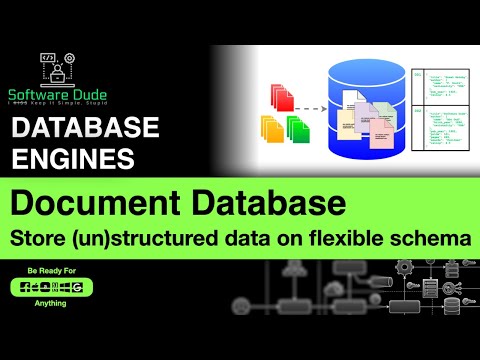
A document-oriented database, or document store, is a computer program and data storage system designed for storing, retrieving, and managing document-oriented information, also known as semi-structured data. This type of database is particularly useful for handling large amounts of unstructured or semi-structured data, such as JSON documents or XML files. Document-oriented databases are often used in big data and NoSQL applications, where the data is too large or complex to be handled by traditional relational databases. For example, Mongodb is a popular document-oriented database that uses BSON (Binary JSON) to store data. Document-oriented databases are also used in cloud computing and real-time web applications, where data needs to be processed and retrieved quickly.
🔍 Key Characteristics of Document-Oriented Databases
The key characteristics of document-oriented databases include flexible schema design, high performance, and ease of use. Unlike traditional relational databases, document-oriented databases do not require a predefined schema, which makes them ideal for handling large amounts of semi-structured data. Document-oriented databases also support ACID transactions, which ensure that database transactions are processed reliably and securely. Additionally, document-oriented databases often support map-reduce operations, which enable parallel processing of large datasets. For example, CouchDB is a document-oriented database that uses map-reduce to process large amounts of data. Document-oriented databases are also used in data warehousing and business intelligence applications, where data needs to be analyzed and reported quickly.
📈 Advantages of Document-Oriented Databases
The advantages of document-oriented databases include flexibility, scalability, and high performance. Document-oriented databases are designed to handle large amounts of semi-structured data, which makes them ideal for big data and NoSQL applications. Document-oriented databases are also highly scalable, which means they can handle large amounts of data and high traffic without compromising performance. For example, Amazon DynamoDB is a fully managed document-oriented database that provides high performance and scalability. Document-oriented databases are also used in real-time web applications, where data needs to be processed and retrieved quickly. Additionally, document-oriented databases support event-driven architecture, which enables real-time processing of data.
📊 Disadvantages of Document-Oriented Databases
The disadvantages of document-oriented databases include limited support for transactions and lack of standardization. Unlike traditional relational databases, document-oriented databases do not support complex transactions, which can make them less suitable for certain applications. Document-oriented databases also lack standardization, which can make it difficult to migrate data between different document-oriented databases. For example, Mongodb and CouchDB are two popular document-oriented databases that have different data models and query languages. Document-oriented databases are also used in data integration and data migration applications, where data needs to be integrated and migrated between different systems.
🛠️ Use Cases for Document-Oriented Databases
Document-oriented databases are commonly used in web development and mobile app development applications, where data needs to be processed and retrieved quickly. For example, Facebook uses a document-oriented database to store user data and provide real-time updates. Document-oriented databases are also used in IoT applications, where data needs to be processed and analyzed in real-time. Additionally, document-oriented databases support graph database functionality, which enables efficient storage and querying of graph data. For example, Neo4j is a graph database that uses document-oriented storage to store graph data.
📚 Data Modeling in Document-Oriented Databases
Data modeling in document-oriented databases is flexible and dynamic, which means that the schema can be changed at any time without compromising data integrity. Document-oriented databases support schema-less data models, which enable flexible and dynamic data modeling. For example, Mongodb supports a schema-less data model that enables flexible and dynamic data modeling. Document-oriented databases are also used in data warehousing and business intelligence applications, where data needs to be analyzed and reported quickly. Additionally, document-oriented databases support data virtualization, which enables real-time access to data from multiple sources.
🔒 Security Considerations for Document-Oriented Databases
Security considerations for document-oriented databases include data encryption, access control, and authentication. Document-oriented databases support encryption and access control mechanisms, which ensure that data is protected from unauthorized access. For example, Mongodb supports encryption and access control mechanisms that ensure data is protected from unauthorized access. Document-oriented databases are also used in cloud computing and real-time web applications, where data needs to be processed and retrieved quickly. Additionally, document-oriented databases support audit trail functionality, which enables tracking of all changes to data.
📊 Performance Optimization for Document-Oriented Databases
Performance optimization for document-oriented databases includes indexing, caching, and query optimization. Document-oriented databases support indexing mechanisms, which enable fast querying of data. For example, CouchDB supports indexing mechanisms that enable fast querying of data. Document-oriented databases are also used in big data and NoSQL applications, where data needs to be processed and retrieved quickly. Additionally, document-oriented databases support load balancing and content delivery network functionality, which enables efficient distribution of data.
📈 Scalability and High Availability in Document-Oriented Databases
Scalability and high availability in document-oriented databases are critical for handling large amounts of data and high traffic. Document-oriented databases support sharding and replication mechanisms, which enable horizontal scaling and high availability. For example, Amazon DynamoDB is a fully managed document-oriented database that provides high scalability and availability. Document-oriented databases are also used in real-time web applications, where data needs to be processed and retrieved quickly. Additionally, document-oriented databases support auto-scaling functionality, which enables automatic scaling of resources based on demand.
🤝 Comparison with Other Database Management Systems
Document-oriented databases are often compared with other database management systems, such as relational databases and graph databases. While relational databases are ideal for handling structured data, document-oriented databases are ideal for handling semi-structured data. For example, MySQL is a popular relational database that is ideal for handling structured data. Document-oriented databases are also used in data warehousing and business intelligence applications, where data needs to be analyzed and reported quickly. Additionally, document-oriented databases support polyglot persistence, which enables storage of data in multiple formats.
📊 Real-World Applications of Document-Oriented Databases
Real-world applications of document-oriented databases include web development, mobile app development, and IoT applications. For example, Facebook uses a document-oriented database to store user data and provide real-time updates. Document-oriented databases are also used in big data and NoSQL applications, where data needs to be processed and retrieved quickly. Additionally, document-oriented databases support event-driven architecture, which enables real-time processing of data.
🔮 Future of Document-Oriented Databases
The future of document-oriented databases is promising, with increasing adoption in cloud computing and real-time web applications. Document-oriented databases are expected to play a critical role in handling large amounts of semi-structured data and providing real-time updates. For example, Amazon DynamoDB is a fully managed document-oriented database that provides high performance and scalability. Document-oriented databases are also expected to support artificial intelligence and machine learning applications, where data needs to be processed and analyzed in real-time.
Key Facts
- Year
- 1998
- Origin
- Lotus Notes
- Category
- Database Management
- Type
- Technology
Frequently Asked Questions
What is a document-oriented database?
A document-oriented database, or document store, is a computer program and data storage system designed for storing, retrieving, and managing document-oriented information, also known as semi-structured data. Document-oriented databases are particularly useful for handling large amounts of unstructured or semi-structured data, such as JSON documents or XML files. For example, Mongodb is a popular document-oriented database that uses BSON (Binary JSON) to store data.
What are the advantages of document-oriented databases?
The advantages of document-oriented databases include flexibility, scalability, and high performance. Document-oriented databases are designed to handle large amounts of semi-structured data, which makes them ideal for big data and NoSQL applications. Document-oriented databases are also highly scalable, which means they can handle large amounts of data and high traffic without compromising performance. For example, Amazon DynamoDB is a fully managed document-oriented database that provides high performance and scalability.
What are the disadvantages of document-oriented databases?
The disadvantages of document-oriented databases include limited support for transactions and lack of standardization. Unlike traditional relational databases, document-oriented databases do not support complex transactions, which can make them less suitable for certain applications. Document-oriented databases also lack standardization, which can make it difficult to migrate data between different document-oriented databases. For example, Mongodb and CouchDB are two popular document-oriented databases that have different data models and query languages.
What are the use cases for document-oriented databases?
Document-oriented databases are commonly used in web development and mobile app development applications, where data needs to be processed and retrieved quickly. For example, Facebook uses a document-oriented database to store user data and provide real-time updates. Document-oriented databases are also used in IoT applications, where data needs to be processed and analyzed in real-time. Additionally, document-oriented databases support graph database functionality, which enables efficient storage and querying of graph data.
How do document-oriented databases support data modeling?
Data modeling in document-oriented databases is flexible and dynamic, which means that the schema can be changed at any time without compromising data integrity. Document-oriented databases support schema-less data models, which enable flexible and dynamic data modeling. For example, Mongodb supports a schema-less data model that enables flexible and dynamic data modeling. Document-oriented databases are also used in data warehousing and business intelligence applications, where data needs to be analyzed and reported quickly.
What are the security considerations for document-oriented databases?
Security considerations for document-oriented databases include data encryption, access control, and authentication. Document-oriented databases support encryption and access control mechanisms, which ensure that data is protected from unauthorized access. For example, Mongodb supports encryption and access control mechanisms that ensure data is protected from unauthorized access. Document-oriented databases are also used in cloud computing and real-time web applications, where data needs to be processed and retrieved quickly.
How do document-oriented databases support performance optimization?
Performance optimization for document-oriented databases includes indexing, caching, and query optimization. Document-oriented databases support indexing mechanisms, which enable fast querying of data. For example, CouchDB supports indexing mechanisms that enable fast querying of data. Document-oriented databases are also used in big data and NoSQL applications, where data needs to be processed and retrieved quickly. Additionally, document-oriented databases support load balancing and content delivery network functionality, which enables efficient distribution of data.