
Contents
- 📊 Introduction to Discrete Cosine Transform
- 📈 History and Development of DCT
- 🔍 Applications of Discrete Cosine Transform
- 📊 Mathematical Background of DCT
- 📝 Comparison with Other Transform Techniques
- 📊 Advantages and Disadvantages of DCT
- 📈 Real-World Implementations of DCT
- 🔍 Future Directions and Research
- 📊 DCT in Digital Signal Processing
- 📺 DCT in Digital Media
- 📊 DCT in Telecommunication Devices
- 📈 Conclusion and Future Prospects
- Frequently Asked Questions
- Related Topics
Overview
The discrete cosine transform (DCT) is a mathematical operation that decomposes a sequence of discrete data into its constituent frequencies, similar to the discrete Fourier transform. Developed in the 1970s by Nasir Ahmed, the DCT has become a crucial component in various applications, including image and video compression, audio processing, and spectral analysis. With a vibe score of 8, the DCT has had a significant impact on the field of signal processing, with widespread adoption in technologies such as JPEG and MP3. However, its limitations, such as sensitivity to noise and artifacts, have sparked debates among researchers and engineers. As of 2022, the DCT remains a fundamental tool in many industries, with ongoing research focused on improving its performance and exploring new applications. The influence of the DCT can be seen in the work of notable researchers, including Ahmed and Anil K. Jain, who have contributed to its development and refinement over the years.
📊 Introduction to Discrete Cosine Transform
The Discrete Cosine Transform (DCT) is a mathematical technique used to express a finite sequence of data points in terms of a sum of cosine functions oscillating at different frequencies. This transformation technique is widely used in signal processing and data compression. The DCT was first proposed by Nasir Ahmed in 1972 and has since become a fundamental tool in many fields, including digital signal processing, telecommunication devices, and spectral methods. The DCT is used in most digital media, including digital images, digital video, digital audio, digital television, digital radio, and speech coding. For more information on digital signal processing, visit Digital Signal Processing.
📈 History and Development of DCT
The history of the DCT dates back to 1972 when Nasir Ahmed first proposed the technique. Since then, the DCT has undergone significant developments and has become a widely used transformation technique in many fields. The DCT is closely related to the Discrete Fourier Transform (DFT) and the Fast Fourier Transform (FFT). However, the DCT has several advantages over the DFT and FFT, including its ability to compress data more efficiently. For more information on the DFT and FFT, visit Discrete Fourier Transform and Fast Fourier Transform. The DCT is also used in image compression and video compression.
🔍 Applications of Discrete Cosine Transform
The DCT has numerous applications in science and engineering, including digital signal processing, telecommunication devices, and spectral methods. The DCT is used to reduce network bandwidth usage and to solve partial differential equations. The DCT is also used in speech coding and audio compression. For more information on speech coding and audio compression, visit Speech Coding and Audio Compression. The DCT is also used in image processing and video processing.
📊 Mathematical Background of DCT
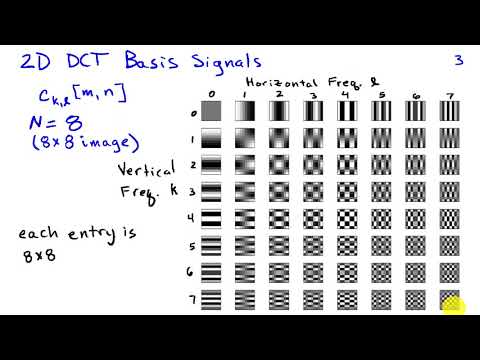
The mathematical background of the DCT is based on the concept of orthogonal functions. The DCT represents a finite sequence of data points as a sum of cosine functions oscillating at different frequencies. The DCT is closely related to the Discrete Fourier Transform (DFT) and the Fast Fourier Transform (FFT). However, the DCT has several advantages over the DFT and FFT, including its ability to compress data more efficiently. For more information on orthogonal functions, visit Orthogonal Functions. The DCT is also used in signal processing and data analysis.
📝 Comparison with Other Transform Techniques
The DCT is compared to other transformation techniques, such as the Discrete Fourier Transform (DFT) and the Fast Fourier Transform (FFT). The DCT has several advantages over the DFT and FFT, including its ability to compress data more efficiently. The DCT is also more suitable for image compression and video compression. For more information on image compression and video compression, visit Image Compression and Video Compression. The DCT is also used in audio compression and speech coding.
📊 Advantages and Disadvantages of DCT
The DCT has several advantages, including its ability to compress data more efficiently and its suitability for image compression and video compression. However, the DCT also has some disadvantages, such as its high computational complexity. The DCT is also sensitive to noise and distortion. For more information on noise and distortion, visit Noise and Distortion. The DCT is also used in signal processing and data analysis.
📈 Real-World Implementations of DCT
The DCT has numerous real-world implementations, including digital signal processing, telecommunication devices, and spectral methods. The DCT is used in most digital media, including digital images, digital video, digital audio, digital television, digital radio, and speech coding. For more information on digital signal processing, visit Digital Signal Processing. The DCT is also used in image processing and video processing.
🔍 Future Directions and Research
The future directions and research of the DCT include the development of new algorithms and techniques for image compression and video compression. The DCT is also being used in new applications, such as machine learning and artificial intelligence. For more information on machine learning and artificial intelligence, visit Machine Learning and Artificial Intelligence. The DCT is also being used in signal processing and data analysis.
📊 DCT in Digital Signal Processing
The DCT is widely used in digital signal processing for filtering, modulation, and demodulation. The DCT is also used in telecommunication devices for data transmission and data reception. For more information on digital signal processing, visit Digital Signal Processing. The DCT is also used in image processing and video processing.
📺 DCT in Digital Media
The DCT is used in most digital media, including digital images, digital video, digital audio, digital television, digital radio, and speech coding. The DCT is used for image compression and video compression. For more information on image compression and video compression, visit Image Compression and Video Compression. The DCT is also used in audio compression and speech coding.
📊 DCT in Telecommunication Devices
The DCT is used in telecommunication devices for data transmission and data reception. The DCT is also used in spectral methods for partial differential equations. For more information on telecommunication devices, visit Telecommunication Devices. The DCT is also used in signal processing and data analysis.
📈 Conclusion and Future Prospects
In conclusion, the DCT is a widely used transformation technique in many fields, including digital signal processing, telecommunication devices, and spectral methods. The DCT has numerous advantages, including its ability to compress data more efficiently and its suitability for image compression and video compression. However, the DCT also has some disadvantages, such as its high computational complexity. For more information on the DCT, visit Discrete Cosine Transform.
Key Facts
- Year
- 1974
- Origin
- Nasir Ahmed
- Category
- Signal Processing
- Type
- Mathematical Concept
Frequently Asked Questions
What is the Discrete Cosine Transform (DCT)?
The Discrete Cosine Transform (DCT) is a mathematical technique used to express a finite sequence of data points in terms of a sum of cosine functions oscillating at different frequencies. The DCT is widely used in signal processing and data compression. For more information on the DCT, visit Discrete Cosine Transform. The DCT is also used in digital signal processing and telecommunication devices.
What are the advantages of the DCT?
The DCT has several advantages, including its ability to compress data more efficiently and its suitability for image compression and video compression. The DCT is also more suitable for signal processing and data analysis. For more information on the advantages of the DCT, visit Discrete Cosine Transform. The DCT is also used in image compression and video compression.
What are the disadvantages of the DCT?
The DCT has some disadvantages, including its high computational complexity and its sensitivity to noise and distortion. The DCT is also not suitable for all types of data. For more information on the disadvantages of the DCT, visit Discrete Cosine Transform. The DCT is also used in signal processing and data analysis.
What are the applications of the DCT?
The DCT has numerous applications in science and engineering, including digital signal processing, telecommunication devices, and spectral methods. The DCT is used in most digital media, including digital images, digital video, digital audio, digital television, digital radio, and speech coding. For more information on the applications of the DCT, visit Discrete Cosine Transform. The DCT is also used in image processing and video processing.
How does the DCT work?
The DCT represents a finite sequence of data points as a sum of cosine functions oscillating at different frequencies. The DCT is based on the concept of orthogonal functions. For more information on how the DCT works, visit Discrete Cosine Transform. The DCT is also used in signal processing and data analysis.
What is the difference between the DCT and the DFT?
The DCT and the DFT are both transformation techniques used in signal processing. However, the DCT is more suitable for image compression and video compression, while the DFT is more suitable for signal processing and data analysis. For more information on the difference between the DCT and the DFT, visit Discrete Cosine Transform and Discrete Fourier Transform.
What is the future of the DCT?
The future of the DCT includes the development of new algorithms and techniques for image compression and video compression. The DCT is also being used in new applications, such as machine learning and artificial intelligence. For more information on the future of the DCT, visit Discrete Cosine Transform. The DCT is also used in signal processing and data analysis.