
Contents
- 🤖 Introduction to Connectionist Models
- 📈 History of Connectionism
- 🔍 Key Components of Connectionist Networks
- 📊 Mathematical Foundations of Connectionism
- 🤝 Relationship Between Connectionism and Cognitive Science
- 📚 Applications of Connectionist Models
- 🤔 Limitations and Criticisms of Connectionism
- 🚀 Future Directions of Connectionist Research
- 📊 Comparison with Other AI Approaches
- 🌐 Connectionist Models in Real-World Scenarios
- 📝 Conclusion and Future Prospects
- Frequently Asked Questions
- Related Topics
Overview
Connectionist models, a subset of artificial intelligence, have been a cornerstone of machine learning since the 1940s. Pioneers like Warren McCulloch and Walter Pitts laid the groundwork with their artificial neuron model in 1943. The field gained significant traction in the 1980s with the introduction of backpropagation by David Rumelhart, Geoffrey Hinton, and Ronald Williams. Today, connectionist models, particularly deep learning, are at the heart of breakthroughs in image recognition, natural language processing, and autonomous vehicles. However, they are not without controversy, with debates surrounding explainability, ethical use, and potential biases. As we move forward, the future of connectionist models is intertwined with advancements in computing power, data availability, and our understanding of human cognition, promising to revolutionize industries and challenge our understanding of intelligence itself.
🤖 Introduction to Connectionist Models
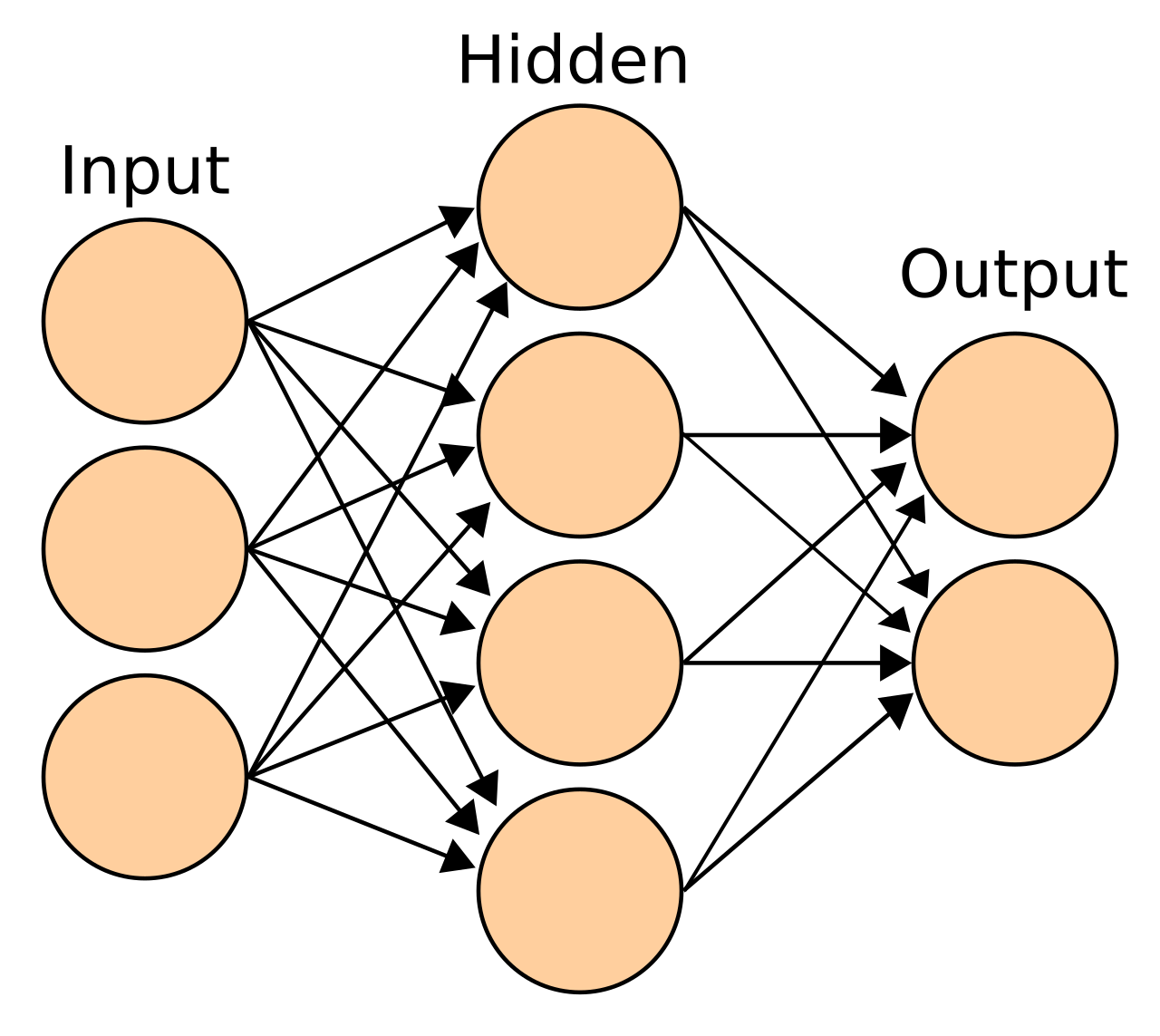
Connectionist models, also known as artificial neural networks, are a fundamental component of Artificial Intelligence (AI) research. These models are designed to mimic the behavior of the human brain, with Neural Networks composed of interconnected nodes (neurons) that process and transmit information. The study of connectionism has a rich history, dating back to the 1940s, when Warren McCulloch and Walter Pitts first proposed the concept of artificial neural networks. Today, connectionist models are a crucial part of many AI applications, including Natural Language Processing and Computer Vision.
📈 History of Connectionism
The history of connectionism is marked by significant milestones, including the development of the Perceptron algorithm by Frank Rosenblatt in the 1950s. This early work laid the foundation for the development of more complex connectionist models, such as the Backpropagation algorithm, which is still widely used today. The 1980s saw a resurgence of interest in connectionism, with the publication of David Rumelhart and James McClelland's book on Parallel Distributed Processing. This work helped to establish connectionism as a major area of research in AI and Cognitive Science.
🔍 Key Components of Connectionist Networks
Connectionist networks are composed of several key components, including Artificial Neurons, Synapses, and Activation Functions. These components work together to enable the network to learn and represent complex patterns in data. The mathematical foundations of connectionism are based on Linear Algebra and Calculus, which provide the tools for analyzing and optimizing the behavior of connectionist networks. Researchers such as Yann LeCun and Leon Bottou have made significant contributions to the development of connectionist models, including the creation of the LeNet and AlexNet architectures.
📊 Mathematical Foundations of Connectionism
The relationship between connectionism and Cognitive Science is complex and multifaceted. Connectionist models have been used to simulate a wide range of cognitive processes, including Perception, Attention, and Memory. Researchers such as Elizabeth Spelke and Steven Pinker have used connectionist models to study the development of cognitive abilities in children. However, connectionism has also been criticized for its lack of transparency and interpretability, which can make it difficult to understand how the models are making their decisions. Despite these limitations, connectionist models remain a powerful tool for understanding the human mind and developing more advanced AI systems.
🤝 Relationship Between Connectionism and Cognitive Science
Connectionist models have a wide range of applications, including Image Recognition, Natural Language Processing, and Robotics. Companies such as Google and Facebook are using connectionist models to develop more advanced AI systems, such as Chatbots and Self-Driving Cars. Researchers such as Andrew Ng and Fei-Fei Li are working to develop more advanced connectionist models, including Generative Adversarial Networks and Transformers.
📚 Applications of Connectionist Models
Despite their many successes, connectionist models are not without their limitations and criticisms. One of the main challenges facing connectionist models is their lack of transparency and interpretability, which can make it difficult to understand how the models are making their decisions. Additionally, connectionist models can be prone to Overfitting, which can reduce their performance on new, unseen data. Researchers such as Gary Marcus and Ernest Davis have criticized connectionism for its lack of cognitive plausibility, arguing that the models do not accurately reflect the workings of the human mind.
🤔 Limitations and Criticisms of Connectionism
Future directions of connectionist research include the development of more advanced Neural Network Architectures, such as Graph Neural Networks and Attention Mechanisms. Researchers such as Demis Hassabis and David Silver are working to develop more advanced connectionist models, including Deep Reinforcement Learning and Multi-Agent Systems. Additionally, there is a growing interest in developing more Explainable AI systems, which can provide insights into the decision-making processes of connectionist models.
🚀 Future Directions of Connectionist Research
Connectionist models can be compared to other AI approaches, such as Symbolic AI and Evolutionary Computation. While symbolic AI approaches are based on the use of symbols and rules to represent knowledge, connectionist models are based on the use of Distributed Representations to represent complex patterns in data. Evolutionary computation approaches, on the other hand, are based on the use of Evolutionary Algorithms to search for optimal solutions to complex problems. Researchers such as Stuart Russell and Peter Norvig have compared and contrasted these different AI approaches in their book on Artificial Intelligence.
📊 Comparison with Other AI Approaches
Connectionist models are being used in a wide range of real-world scenarios, including Healthcare, Finance, and Education. Companies such as IBM and Microsoft are using connectionist models to develop more advanced AI systems, such as Chatbots and Virtual Assistants. Researchers such as Andrew Moore and Jeff Dean are working to develop more advanced connectionist models, including Natural Language Processing and Computer Vision.
🌐 Connectionist Models in Real-World Scenarios
In conclusion, connectionist models are a powerful tool for understanding the human mind and developing more advanced AI systems. While they have many successes, they also have limitations and criticisms, including their lack of transparency and interpretability. Future directions of connectionist research include the development of more advanced neural network architectures and the creation of more explainable AI systems. As connectionist models continue to evolve, they are likely to have a significant impact on a wide range of fields, including Cognitive Science, Computer Science, and Engineering.
Key Facts
- Year
- 1943
- Origin
- Artificial Neuron Model by Warren McCulloch and Walter Pitts
- Category
- Artificial Intelligence
- Type
- Concept
Frequently Asked Questions
What is connectionism?
Connectionism is an approach to the study of human mental processes and cognition that utilizes mathematical models known as connectionist networks or artificial neural networks. Connectionist models are designed to mimic the behavior of the human brain, with neural networks composed of interconnected nodes (neurons) that process and transmit information.
What are the key components of connectionist networks?
The key components of connectionist networks include artificial neurons, synapses, and activation functions. These components work together to enable the network to learn and represent complex patterns in data.
What are the applications of connectionist models?
Connectionist models have a wide range of applications, including image recognition, natural language processing, and robotics. Companies such as Google and Facebook are using connectionist models to develop more advanced AI systems, such as chatbots and self-driving cars.
What are the limitations and criticisms of connectionist models?
Despite their many successes, connectionist models are not without their limitations and criticisms. One of the main challenges facing connectionist models is their lack of transparency and interpretability, which can make it difficult to understand how the models are making their decisions. Additionally, connectionist models can be prone to overfitting, which can reduce their performance on new, unseen data.
What is the future of connectionist research?
Future directions of connectionist research include the development of more advanced neural network architectures, such as graph neural networks and attention mechanisms. Researchers are also working to develop more explainable AI systems, which can provide insights into the decision-making processes of connectionist models.
How do connectionist models compare to other AI approaches?
Connectionist models can be compared to other AI approaches, such as symbolic AI and evolutionary computation. While symbolic AI approaches are based on the use of symbols and rules to represent knowledge, connectionist models are based on the use of distributed representations to represent complex patterns in data.
What are the real-world applications of connectionist models?
Connectionist models are being used in a wide range of real-world scenarios, including healthcare, finance, and education. Companies such as IBM and Microsoft are using connectionist models to develop more advanced AI systems, such as chatbots and virtual assistants.