
Contents
- 🔌 Introduction to Thevenin and Norton Theorems
- 📊 Thevenin Theorem: A Detailed Explanation
- 📝 Norton Theorem: Understanding the Concept
- 🤔 Key Differences: Thevenin vs Norton
- 📈 Applications of Thevenin and Norton Theorems
- 📊 Example Problems: Thevenin and Norton
- 📚 Historical Context: Development of Thevenin and Norton Theorems
- 🔍 Real-World Applications: Thevenin and Norton in Practice
- 📊 Comparison of Thevenin and Norton: A Numerical Analysis
- 📝 Conclusion: Thevenin vs Norton Theorems
- 📚 Future Directions: Advancements in Thevenin and Norton Theorems
- Frequently Asked Questions
- Related Topics
Overview
The Thevenin and Norton theorems are two cornerstone concepts in electrical engineering, enabling the simplification of complex circuits into equivalent, more manageable forms. Developed by Leon Charles Thevenin and E.L. Norton in the early 20th century, these theorems have been pivotal in the analysis and design of electrical circuits. While both theorems serve the purpose of circuit simplification, they approach the problem from different perspectives: Thevenin's theorem focuses on voltage and series resistance, whereas Norton's theorem emphasizes current and parallel resistance. This fundamental difference in approach makes one more suitable than the other depending on the specific characteristics of the circuit being analyzed. For instance, Thevenin's theorem is particularly useful when the circuit's voltage characteristics are of primary interest, whereas Norton's theorem is advantageous when current is the key parameter. The choice between the two theorems can significantly impact the efficiency and accuracy of circuit analysis, making their comparison and understanding crucial for electrical engineers. With the increasing complexity of modern electrical systems, the ability to apply these theorems effectively is more critical than ever.
🔌 Introduction to Thevenin and Norton Theorems
The Thevenin and Norton theorems are two fundamental concepts in electrical engineering, used to simplify complex circuits and analyze their behavior. The Thevenin theorem, developed by Leon Charles Thevenin, states that any linear electrical network can be replaced by a single voltage source and a series resistor. In contrast, the Norton theorem, developed by E.L. Norton, states that any linear electrical network can be replaced by a single current source and a parallel resistor. Both theorems are essential tools for electrical circuit analysis and are widely used in the design and development of electrical systems. The Thevenin theorem is often used in conjunction with the superposition theorem to analyze complex circuits. The Norton theorem, on the other hand, is commonly used in power system analysis.
📊 Thevenin Theorem: A Detailed Explanation
The Thevenin theorem is a powerful tool for simplifying complex electrical circuits. It states that any linear electrical network can be replaced by a single voltage source and a series resistor. The voltage source is equal to the open-circuit voltage of the network, and the series resistor is equal to the resistance of the network when the voltage source is short-circuited. The Thevenin theorem is widely used in electrical engineering to analyze and design electrical systems, including power electronics and control systems. The theorem is also used in conjunction with the maximum power transfer theorem to optimize the performance of electrical systems. For example, the Thevenin theorem can be used to analyze the behavior of a solar panel connected to a load. The Thevenin theorem can also be used to design filter circuits and amplifier circuits.
📝 Norton Theorem: Understanding the Concept
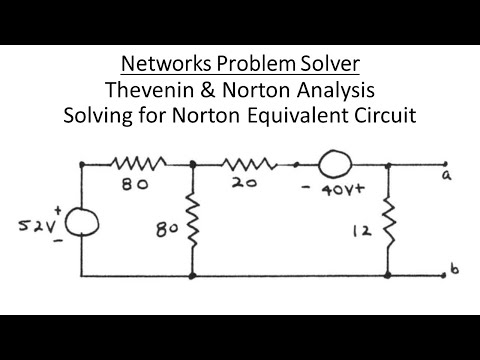
The Norton theorem is another fundamental concept in electrical engineering, used to simplify complex circuits and analyze their behavior. It states that any linear electrical network can be replaced by a single current source and a parallel resistor. The current source is equal to the short-circuit current of the network, and the parallel resistor is equal to the resistance of the network when the current source is open-circuited. The Norton theorem is widely used in telecommunications and computer networks to analyze and design communication systems. The theorem is also used in conjunction with the Millman theorem to analyze complex circuits. For example, the Norton theorem can be used to analyze the behavior of a transmission line connected to a load. The Norton theorem can also be used to design impedance matching networks and antenna systems.
🤔 Key Differences: Thevenin vs Norton
The key differences between the Thevenin and Norton theorems lie in their approach to simplifying complex circuits. The Thevenin theorem uses a voltage source and a series resistor to represent the circuit, while the Norton theorem uses a current source and a parallel resistor. The choice of which theorem to use depends on the specific application and the type of circuit being analyzed. In general, the Thevenin theorem is more suitable for circuits with a high voltage and low current, while the Norton theorem is more suitable for circuits with a high current and low voltage. Both theorems are essential tools for circuit analysis and are widely used in the design and development of electrical systems. The Thevenin theorem is often used in conjunction with the node voltage method to analyze complex circuits. The Norton theorem, on the other hand, is commonly used in conjunction with the mesh current method.
📈 Applications of Thevenin and Norton Theorems
The Thevenin and Norton theorems have a wide range of applications in electrical engineering, including power systems, control systems, and communication systems. The theorems are used to analyze and design electrical systems, including filter circuits, amplifier circuits, and impedance matching networks. The Thevenin theorem is also used in power electronics to optimize the performance of power electronic systems. The Norton theorem, on the other hand, is commonly used in telecommunications to analyze and design communication systems. Both theorems are essential tools for electrical engineers and are widely used in the design and development of electrical systems. For example, the Thevenin theorem can be used to analyze the behavior of a DC-DC converter connected to a load. The Norton theorem can also be used to design RF amplifier circuits.
📊 Example Problems: Thevenin and Norton
Example problems are an essential part of understanding the Thevenin and Norton theorems. For example, consider a circuit with a voltage source, a resistor, and a capacitor. The Thevenin theorem can be used to simplify the circuit and analyze its behavior. The Norton theorem can also be used to simplify the circuit and analyze its behavior. The choice of which theorem to use depends on the specific application and the type of circuit being analyzed. In general, the Thevenin theorem is more suitable for circuits with a high voltage and low current, while the Norton theorem is more suitable for circuits with a high current and low voltage. Both theorems are essential tools for circuit analysis and are widely used in the design and development of electrical systems. For example, the Thevenin theorem can be used to analyze the behavior of a solar panel connected to a load. The Norton theorem can also be used to design transmission line circuits.
📚 Historical Context: Development of Thevenin and Norton Theorems
The historical context of the Thevenin and Norton theorems is an important part of understanding their development and application. The Thevenin theorem was developed by Leon Charles Thevenin in the late 19th century, while the Norton theorem was developed by E.L. Norton in the early 20th century. Both theorems were developed in response to the need for a simplified approach to circuit analysis. The Thevenin theorem was initially used in the analysis of telegraph systems, while the Norton theorem was initially used in the analysis of radio communication systems. Both theorems have since been widely adopted in electrical engineering and are used in a wide range of applications. The Thevenin theorem is often used in conjunction with the superposition theorem to analyze complex circuits. The Norton theorem, on the other hand, is commonly used in conjunction with the Millman theorem.
🔍 Real-World Applications: Thevenin and Norton in Practice
The Thevenin and Norton theorems have a wide range of real-world applications, including power systems, control systems, and communication systems. The theorems are used to analyze and design electrical systems, including filter circuits, amplifier circuits, and impedance matching networks. The Thevenin theorem is also used in power electronics to optimize the performance of power electronic systems. The Norton theorem, on the other hand, is commonly used in telecommunications to analyze and design communication systems. Both theorems are essential tools for electrical engineers and are widely used in the design and development of electrical systems. For example, the Thevenin theorem can be used to analyze the behavior of a DC-DC converter connected to a load. The Norton theorem can also be used to design RF amplifier circuits.
📊 Comparison of Thevenin and Norton: A Numerical Analysis
A numerical analysis of the Thevenin and Norton theorems can provide valuable insights into their application and limitations. For example, consider a circuit with a voltage source, a resistor, and a capacitor. The Thevenin theorem can be used to simplify the circuit and analyze its behavior. The Norton theorem can also be used to simplify the circuit and analyze its behavior. The choice of which theorem to use depends on the specific application and the type of circuit being analyzed. In general, the Thevenin theorem is more suitable for circuits with a high voltage and low current, while the Norton theorem is more suitable for circuits with a high current and low voltage. Both theorems are essential tools for circuit analysis and are widely used in the design and development of electrical systems. For example, the Thevenin theorem can be used to analyze the behavior of a solar panel connected to a load. The Norton theorem can also be used to design transmission line circuits.
📝 Conclusion: Thevenin vs Norton Theorems
In conclusion, the Thevenin and Norton theorems are two fundamental concepts in electrical engineering, used to simplify complex circuits and analyze their behavior. The Thevenin theorem uses a voltage source and a series resistor to represent the circuit, while the Norton theorem uses a current source and a parallel resistor. The choice of which theorem to use depends on the specific application and the type of circuit being analyzed. Both theorems are essential tools for circuit analysis and are widely used in the design and development of electrical systems. The Thevenin theorem is often used in conjunction with the node voltage method to analyze complex circuits. The Norton theorem, on the other hand, is commonly used in conjunction with the mesh current method.
📚 Future Directions: Advancements in Thevenin and Norton Theorems
The future of the Thevenin and Norton theorems is likely to involve the development of new applications and the extension of their use to new areas of electrical engineering. For example, the Thevenin theorem could be used to analyze the behavior of renewable energy systems, while the Norton theorem could be used to design wireless communication systems. Both theorems are essential tools for electrical engineers and are widely used in the design and development of electrical systems. As technology continues to evolve, it is likely that the Thevenin and Norton theorems will play an increasingly important role in the development of new electrical systems and technologies.
Key Facts
- Year
- 1926
- Origin
- Leon Charles Thevenin and E.L. Norton
- Category
- Electrical Engineering
- Type
- Concept
Frequently Asked Questions
What is the Thevenin theorem?
The Thevenin theorem is a fundamental concept in electrical engineering, used to simplify complex circuits and analyze their behavior. It states that any linear electrical network can be replaced by a single voltage source and a series resistor. The voltage source is equal to the open-circuit voltage of the network, and the series resistor is equal to the resistance of the network when the voltage source is short-circuited. The Thevenin theorem is widely used in electrical engineering to analyze and design electrical systems, including power electronics and control systems.
What is the Norton theorem?
The Norton theorem is another fundamental concept in electrical engineering, used to simplify complex circuits and analyze their behavior. It states that any linear electrical network can be replaced by a single current source and a parallel resistor. The current source is equal to the short-circuit current of the network, and the parallel resistor is equal to the resistance of the network when the current source is open-circuited. The Norton theorem is widely used in telecommunications and computer networks to analyze and design communication systems.
What are the key differences between the Thevenin and Norton theorems?
The key differences between the Thevenin and Norton theorems lie in their approach to simplifying complex circuits. The Thevenin theorem uses a voltage source and a series resistor to represent the circuit, while the Norton theorem uses a current source and a parallel resistor. The choice of which theorem to use depends on the specific application and the type of circuit being analyzed. In general, the Thevenin theorem is more suitable for circuits with a high voltage and low current, while the Norton theorem is more suitable for circuits with a high current and low voltage.
What are the applications of the Thevenin and Norton theorems?
The Thevenin and Norton theorems have a wide range of applications in electrical engineering, including power systems, control systems, and communication systems. The theorems are used to analyze and design electrical systems, including filter circuits, amplifier circuits, and impedance matching networks.
How do the Thevenin and Norton theorems relate to other concepts in electrical engineering?
The Thevenin and Norton theorems are related to other concepts in electrical engineering, such as the superposition theorem and the Millman theorem. The Thevenin theorem is often used in conjunction with the node voltage method to analyze complex circuits, while the Norton theorem is commonly used in conjunction with the mesh current method.
What is the future of the Thevenin and Norton theorems?
The future of the Thevenin and Norton theorems is likely to involve the development of new applications and the extension of their use to new areas of electrical engineering. For example, the Thevenin theorem could be used to analyze the behavior of renewable energy systems, while the Norton theorem could be used to design wireless communication systems.
How do the Thevenin and Norton theorems impact the design of electrical systems?
The Thevenin and Norton theorems have a significant impact on the design of electrical systems. They provide a simplified approach to circuit analysis, allowing engineers to quickly and easily analyze complex circuits and design new electrical systems. The theorems are essential tools for electrical engineers and are widely used in the design and development of electrical systems.