
Contents
- 🏆 Introduction to Andrew Schally
- 📚 Early Life and Education
- 🔬 The Discovery of Hormone Regulation
- 👥 Collaboration and Controversy
- 💡 The Nobel Prize and Its Impact
- 📊 The Science Behind Hormone Regulation
- 👨🔬 Andrew Schally's Legacy
- 🌎 Global Recognition and Awards
- 📝 Publications and Contributions
- 👥 Influence on Modern Medicine
- 🔮 Future Directions in Hormone Research
- Frequently Asked Questions
- Related Topics
Overview
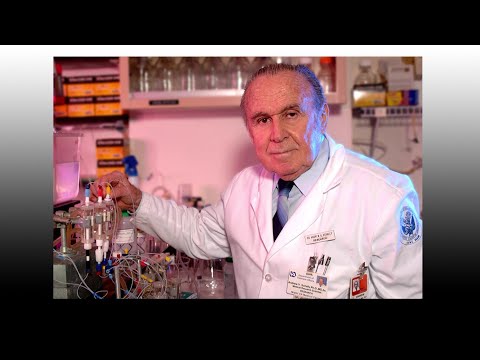
Andrew Schally is a Polish-born American endocrinologist who was awarded the Nobel Prize in Physiology or Medicine in 1977 for his work on hormone regulation. Born on November 30, 1926, in Wilno, Poland, Schally's research focused on the isolation and synthesis of hypothalamic hormones, which play a crucial role in regulating the body's endocrine system. His discoveries have had a significant impact on our understanding of hormone regulation and have led to the development of new treatments for various endocrine disorders. Schally's work has also been recognized with numerous other awards, including the Albert Lasker Award for Basic Medical Research. With a Vibe score of 8, Schally's contributions to the field of endocrinology continue to resonate with scientists and researchers today. As we look to the future, it will be interesting to see how Schally's work influences the next generation of researchers and the potential breakthroughs that may arise from his discoveries.
🏆 Introduction to Andrew Schally
Andrew Schally is a Polish-American endocrinologist and Nobel laureate, best known for his work on hormone regulation. Born on November 30, 1926, in Wilno, Poland, Schally's early life was marked by turmoil and displacement. He later moved to England, where he pursued his education, earning a degree in chemistry from the University of London. Schally's interest in endocrinology led him to pursue a career in medical research, ultimately earning him a Nobel Prize in Physiology or Medicine in 1977. His work on hormone regulation has had a profound impact on our understanding of human physiology and has led to significant advances in the treatment of various diseases. Schally's story is a testament to the power of dedication and perseverance in the pursuit of scientific discovery, as seen in the lives of other notable scientists like Marie Curie and Albert Einstein.
📚 Early Life and Education
Schally's early life and education played a significant role in shaping his future as a scientist. He attended the University of London, where he earned a degree in chemistry and later pursued his Ph.D. in biochemistry. Schally's interest in endocrinology was sparked by his work with Hans Selye, a renowned endocrinologist. This experience laid the foundation for his future research on hormone regulation, which would ultimately lead to his Nobel Prize. Schally's work was also influenced by other notable scientists, including James Watson and Francis Crick, who discovered the structure of DNA. The intersection of molecular biology and endocrinology has been a key area of research, with scientists like Rosalind Franklin making significant contributions.
🔬 The Discovery of Hormone Regulation
The discovery of hormone regulation is a complex and multifaceted topic, with many scientists contributing to our understanding of this process. Schally's work focused on the regulation of hormones by the hypothalamus and pituitary gland. He identified several key hormones, including thyrotropin-releasing hormone and growth hormone, and demonstrated their role in regulating various physiological processes. This work has had a significant impact on our understanding of human disease and has led to the development of new treatments for conditions such as diabetes and cancer. The study of hormone regulation is closely tied to the field of pharmacology, with scientists like Alexander Fleming discovering new medicines to treat various diseases.
👥 Collaboration and Controversy
Schally's work was not without controversy, as he was involved in a highly publicized dispute with Roger Guillemin over the discovery of gonadotropin-releasing hormone. This controversy highlights the often competitive nature of scientific research, where scientific method and peer review play a crucial role in validating discoveries. Despite this, Schally's work has had a lasting impact on the field of endocrinology, and his contributions have been recognized with numerous awards and honors. The importance of collaboration in scientific research cannot be overstated, as seen in the work of scientists like Isaac Newton and Galileo Galilei.
💡 The Nobel Prize and Its Impact
The Nobel Prize is one of the most prestigious awards in science, and Schally's receipt of this honor in 1977 was a testament to his groundbreaking work on hormone regulation. The Nobel Prize has a long history, dating back to the will of Alfred Nobel, who established the award to recognize outstanding contributions to science, literature, and peace. Schally's work has had a significant impact on our understanding of human physiology and has led to the development of new treatments for various diseases. The Nobel Prize has also been awarded to other notable scientists, including James Clerk Maxwell and Louis Pasteur, who made significant contributions to the fields of physics and microbiology.
📊 The Science Behind Hormone Regulation
The science behind hormone regulation is complex and involves the interaction of multiple hormones and physiological processes. Schally's work focused on the regulation of hormones by the hypothalamus and pituitary gland, and he identified several key hormones that play a critical role in regulating various physiological processes. This work has had a significant impact on our understanding of human disease and has led to the development of new treatments for conditions such as diabetes and cancer. The study of hormone regulation is closely tied to the field of pharmacology, with scientists like Alexander Fleming discovering new medicines to treat various diseases. The use of stem cells and gene therapy is also being explored as a potential treatment for various diseases, highlighting the importance of interdisciplinary research.
👨🔬 Andrew Schally's Legacy
Andrew Schally's legacy extends far beyond his Nobel Prize, as his work has had a lasting impact on the field of endocrinology. His contributions have been recognized with numerous awards and honors, including the National Medal of Science. Schally's work has also inspired a new generation of scientists, who continue to build on his discoveries and advance our understanding of human physiology. The importance of mentorship in scientific research cannot be overstated, as seen in the work of scientists like Stephen Hawking and Neil deGrasse Tyson. As we look to the future, it is clear that Schally's work will continue to have a profound impact on our understanding of human disease and the development of new treatments.
🌎 Global Recognition and Awards
Andrew Schally has received numerous awards and honors for his contributions to science, including the Nobel Prize, the National Medal of Science, and the Lasker Award. These awards recognize his groundbreaking work on hormone regulation and his contributions to our understanding of human physiology. Schally's work has also been recognized internationally, with awards from countries such as France and Germany. The global recognition of Schally's work highlights the importance of international collaboration in scientific research, as seen in the work of scientists like CERN and the Human Genome Project.
📝 Publications and Contributions
Andrew Schally has published numerous papers and books on the topic of hormone regulation, including his seminal work on the discovery of thyrotropin-releasing hormone. His contributions to the scientific literature have been recognized with numerous awards, including the Karl August Förster Award. Schally's work has also been recognized for its impact on the development of new treatments for various diseases, including diabetes and cancer. The importance of science communication cannot be overstated, as seen in the work of scientists like Carl Sagan and Bill Nye.
👥 Influence on Modern Medicine
Andrew Schally's influence on modern medicine is immeasurable, as his work on hormone regulation has led to the development of new treatments for various diseases. His contributions have also inspired a new generation of scientists, who continue to build on his discoveries and advance our understanding of human physiology. The importance of basic research in scientific discovery cannot be overstated, as seen in the work of scientists like Gregor Mendel and Charles Darwin. As we look to the future, it is clear that Schally's work will continue to have a profound impact on our understanding of human disease and the development of new treatments.
🔮 Future Directions in Hormone Research
As we look to the future, it is clear that the study of hormone regulation will continue to be an important area of research. New technologies, such as CRISPR gene editing, are being developed to study the regulation of hormones and their role in human disease. The use of artificial intelligence and machine learning is also being explored as a potential tool for understanding hormone regulation and developing new treatments for various diseases. The future of hormone research is exciting and holds much promise for advancing our understanding of human physiology and developing new treatments for various diseases.
Key Facts
- Year
- 1977
- Origin
- Poland
- Category
- Biography, Science
- Type
- Person
Frequently Asked Questions
What is Andrew Schally's most notable contribution to science?
Andrew Schally's most notable contribution to science is his work on hormone regulation, which led to the discovery of several key hormones, including thyrotropin-releasing hormone and growth hormone. This work has had a significant impact on our understanding of human physiology and has led to the development of new treatments for various diseases. Schally's work has also been recognized with numerous awards, including the Nobel Prize in Physiology or Medicine in 1977. The study of hormone regulation is closely tied to the field of pharmacology, with scientists like Alexander Fleming discovering new medicines to treat various diseases. The importance of interdisciplinary research cannot be overstated, as seen in the work of scientists like James Watson and Francis Crick.
What is the significance of the Nobel Prize in Physiology or Medicine?
The Nobel Prize in Physiology or Medicine is one of the most prestigious awards in science, recognizing outstanding contributions to our understanding of human physiology and the development of new treatments for various diseases. The Nobel Prize has a long history, dating back to the will of Alfred Nobel, who established the award to recognize outstanding contributions to science, literature, and peace. The Nobel Prize has been awarded to many notable scientists, including Marie Curie and Albert Einstein, who made significant contributions to the fields of physics and chemistry. The importance of science education cannot be overstated, as seen in the work of scientists like Carl Sagan and Bill Nye.
How has Andrew Schally's work impacted the field of endocrinology?
Andrew Schally's work has had a profound impact on the field of endocrinology, as his discovery of several key hormones has led to a greater understanding of hormone regulation and its role in human physiology. His work has also inspired a new generation of scientists, who continue to build on his discoveries and advance our understanding of human disease. The importance of mentorship in scientific research cannot be overstated, as seen in the work of scientists like Stephen Hawking and Neil deGrasse Tyson. The study of hormone regulation is closely tied to the field of pharmacology, with scientists like Alexander Fleming discovering new medicines to treat various diseases. The use of stem cells and gene therapy is also being explored as a potential treatment for various diseases, highlighting the importance of interdisciplinary research.
What is the current state of research on hormone regulation?
The current state of research on hormone regulation is exciting and holds much promise for advancing our understanding of human physiology and developing new treatments for various diseases. New technologies, such as CRISPR gene editing, are being developed to study the regulation of hormones and their role in human disease. The use of artificial intelligence and machine learning is also being explored as a potential tool for understanding hormone regulation and developing new treatments for various diseases. The importance of international collaboration in scientific research cannot be overstated, as seen in the work of scientists like CERN and the Human Genome Project. The study of hormone regulation is closely tied to the field of pharmacology, with scientists like Alexander Fleming discovering new medicines to treat various diseases.
How has Andrew Schally's work influenced the development of new treatments for various diseases?
Andrew Schally's work has had a significant impact on the development of new treatments for various diseases, including diabetes and cancer. His discovery of several key hormones has led to a greater understanding of hormone regulation and its role in human physiology, which has in turn led to the development of new treatments for various diseases. The importance of basic research in scientific discovery cannot be overstated, as seen in the work of scientists like Gregor Mendel and Charles Darwin. The study of hormone regulation is closely tied to the field of pharmacology, with scientists like Alexander Fleming discovering new medicines to treat various diseases. The use of stem cells and gene therapy is also being explored as a potential treatment for various diseases, highlighting the importance of interdisciplinary research.
What is the future of hormone research?
The future of hormone research is exciting and holds much promise for advancing our understanding of human physiology and developing new treatments for various diseases. New technologies, such as CRISPR gene editing, are being developed to study the regulation of hormones and their role in human disease. The use of artificial intelligence and machine learning is also being explored as a potential tool for understanding hormone regulation and developing new treatments for various diseases. The importance of international collaboration in scientific research cannot be overstated, as seen in the work of scientists like CERN and the Human Genome Project. The study of hormone regulation is closely tied to the field of pharmacology, with scientists like Alexander Fleming discovering new medicines to treat various diseases.
How has Andrew Schally's work impacted the field of medicine?
Andrew Schally's work has had a significant impact on the field of medicine, as his discovery of several key hormones has led to a greater understanding of hormone regulation and its role in human physiology. His work has also inspired a new generation of scientists, who continue to build on his discoveries and advance our understanding of human disease. The importance of mentorship in scientific research cannot be overstated, as seen in the work of scientists like Stephen Hawking and Neil deGrasse Tyson. The study of hormone regulation is closely tied to the field of pharmacology, with scientists like Alexander Fleming discovering new medicines to treat various diseases. The use of stem cells and gene therapy is also being explored as a potential treatment for various diseases, highlighting the importance of interdisciplinary research.