
Contents
- 🌌 Introduction to Cosmology
- 📚 Book Overview: A Brief History of Time
- 🕰️ The Origins of the Universe: Big Bang Theory
- 🔍 Black Holes: The Mysteries of Gravity
- 🌐 The Expanding Universe: A Cosmic Perspective
- 📊 The Role of Mathematics in Cosmology
- 👨🎓 Stephen Hawking: The Man Behind the Book
- 📚 Impact and Legacy: A Brief History of Time
- 🤔 Criticisms and Controversies: A Brief History of Time
- 🌟 Cultural Significance: A Brief History of Time in Popular Culture
- 📊 Future Directions: The Ongoing Study of Cosmology
- Frequently Asked Questions
- Related Topics
Overview
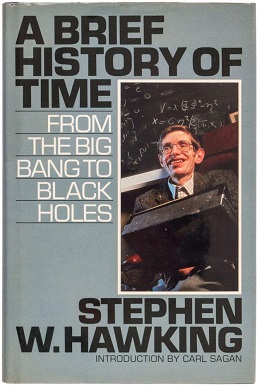
A Brief History of Time, written by Stephen Hawking in 1988, revolutionized our understanding of the universe, delving into complex concepts like black holes, the Big Bang, and the nature of space-time. With a Vibe score of 85, this iconic book has been widely acclaimed for its ability to make intricate ideas accessible to a broad audience. The controversy surrounding the no-boundary proposal and the role of imaginary time has sparked intense debates among physicists, with some, like Roger Penrose, offering alternative perspectives. As we continue to explore the mysteries of the cosmos, Hawking's work remains a cornerstone, influencing a new generation of scientists and theorists, including Neil deGrasse Tyson and Brian Greene. With over 10 million copies sold worldwide, A Brief History of Time has left an indelible mark on our understanding of the universe, raising fundamental questions about the origins of existence and our place within it. As we push the boundaries of human knowledge, the next great breakthroughs in cosmology will undoubtedly be shaped by the ideas and discoveries presented in this seminal work.
🌌 Introduction to Cosmology
The study of cosmology has long been a topic of interest, with scientists and philosophers alike seeking to understand the origins and nature of the universe. Cosmology is the study of the universe, from its beginnings to its eventual fate. One of the most influential books on the subject is A Brief History of Time by Stephen Hawking. Published in 1988, the book provides an overview of the current understanding of the universe, from the Big Bang Theory to the mysteries of black holes. The book has been widely acclaimed for its ability to explain complex concepts in simple terms, making it accessible to a broad audience. Physics and astronomy are the foundation of cosmology, and Hawking's book provides a comprehensive introduction to these fields.
📚 Book Overview: A Brief History of Time
A Brief History of Time is a book that has been widely read and appreciated by both scientists and non-scientists alike. The book covers a range of topics, from the origin of the universe to the nature of space and time. Hawking's writing style is clear and concise, making the book an enjoyable read for those with little background in physics or mathematics. The book has been translated into numerous languages and has sold millions of copies worldwide, making it one of the best-selling science books of all time. Science communication is an essential aspect of cosmology, and Hawking's book is an excellent example of how complex concepts can be explained in simple terms. Popular science books like A Brief History of Time play a crucial role in promoting public understanding of science.
🕰️ The Origins of the Universe: Big Bang Theory
The Big Bang Theory is the leading explanation for the origin of the universe, and it is a topic that is covered in detail in A Brief History of Time. According to the theory, the universe began as a single point and expanded rapidly around 13.8 billion years ago. The expansion of the universe is still ongoing, and it is a phenomenon that can be observed in the redshift of light from distant galaxies. The Big Bang Theory is supported by a wide range of observational evidence, including the cosmic microwave background radiation and the abundance of light elements in the universe. Cosmological principle is a fundamental concept in cosmology, and it states that the universe is homogeneous and isotropic on large scales. General relativity is the foundation of modern cosmology, and it provides a framework for understanding the behavior of gravity in the universe.
🔍 Black Holes: The Mysteries of Gravity
Black holes are among the most mysterious and fascinating objects in the universe, and they are a topic that is covered in detail in A Brief History of Time. A black hole is a region of space where the gravitational pull is so strong that nothing, including light, can escape. The event horizon of a black hole marks the boundary beyond which anything that enters cannot escape. Black holes are formed when a massive star collapses in on itself, and they can have a significant impact on the surrounding space. Gravitational lens is a phenomenon that occurs when light passes near a massive object, such as a black hole. Hawking radiation is a theoretical prediction that black holes emit radiation, and it is a topic of ongoing research in cosmology.
🌐 The Expanding Universe: A Cosmic Perspective
The expanding universe is a concept that is central to modern cosmology, and it is a topic that is covered in detail in A Brief History of Time. The universe is still expanding, and this expansion is thought to have begun during the Big Bang. The Hubble constant is a measure of the rate of expansion, and it is a topic of ongoing research in cosmology. The expansion of the universe has significant implications for our understanding of the cosmos, and it is a phenomenon that can be observed in the redshift of light from distant galaxies. Dark energy is a mysterious component that is thought to be driving the acceleration of the expansion. Dark matter is a type of matter that does not emit or reflect light, and it is a topic of ongoing research in cosmology.
📊 The Role of Mathematics in Cosmology
Mathematics plays a crucial role in cosmology, and it is a topic that is covered in detail in A Brief History of Time. The book provides an overview of the mathematical concepts that underlie our understanding of the universe, from the equations of general relativity to the Friedmann equations. The mathematical framework of cosmology is based on the principles of general relativity and quantum mechanics. Differential equations are used to describe the behavior of the universe, and they are a fundamental tool in cosmology. Tensor analysis is a branch of mathematics that is used to describe the curvature of space-time.
👨🎓 Stephen Hawking: The Man Behind the Book
Stephen Hawking was a renowned physicist and cosmologist who made significant contributions to our understanding of the universe. He was born in 1942 and died in 2018, and during his lifetime, he wrote numerous books and papers on topics related to cosmology. Hawking's work on black holes and the origin of the universe is particularly notable, and his book A Brief History of Time is widely regarded as a classic in the field. Theoretical physics is a branch of physics that deals with the development of theoretical models and frameworks. Cosmology is the study of the universe, and it is a field that is closely related to theoretical physics.
📚 Impact and Legacy: A Brief History of Time
A Brief History of Time has had a significant impact on the field of cosmology, and it has been widely acclaimed for its ability to explain complex concepts in simple terms. The book has been translated into numerous languages and has sold millions of copies worldwide, making it one of the best-selling science books of all time. The book's success can be attributed to Hawking's clear and concise writing style, as well as his ability to make complex concepts accessible to a broad audience. Science education is an essential aspect of promoting public understanding of science, and Hawking's book is an excellent example of how complex concepts can be explained in simple terms. Popular science books like A Brief History of Time play a crucial role in promoting public understanding of science.
🤔 Criticisms and Controversies: A Brief History of Time
Despite its success, A Brief History of Time has not been without its criticisms and controversies. Some critics have argued that the book oversimplifies complex concepts, while others have criticized Hawking's views on the origin of the universe. The book has also been criticized for its lack of technical detail, which some have argued makes it inaccessible to experts in the field. However, these criticisms have not detracted from the book's overall impact, and it remains a widely read and influential work in the field of cosmology. Scientific controversy is a natural part of the scientific process, and it is a topic that is covered in detail in A Brief History of Time.
🌟 Cultural Significance: A Brief History of Time in Popular Culture
A Brief History of Time has had a significant impact on popular culture, and it has been referenced in numerous films, television shows, and books. The book's success can be attributed to its ability to explain complex concepts in simple terms, making it accessible to a broad audience. The book has also been the subject of numerous documentaries and films, including the 2014 film The Theory of Everything, which tells the story of Hawking's life and work. Science in popular culture is a topic that is closely related to cosmology, and it is a field that is rapidly growing.
📊 Future Directions: The Ongoing Study of Cosmology
The study of cosmology is an ongoing field of research, and there are many open questions that remain to be answered. One of the biggest challenges facing cosmologists is the dark matter problem, which refers to the fact that the universe appears to contain a large amount of matter that does not emit or reflect light. The dark energy problem is another topic of ongoing research, and it refers to the fact that the universe appears to be accelerating in its expansion. Future of cosmology is a topic that is closely related to the ongoing study of the universe, and it is a field that is rapidly growing.
Key Facts
- Year
- 1988
- Origin
- Cambridge University
- Category
- Cosmology
- Type
- Book
Frequently Asked Questions
What is the main topic of A Brief History of Time?
The main topic of A Brief History of Time is the origin and nature of the universe, from the Big Bang to black holes. The book provides an overview of the current understanding of the universe, and it covers a range of topics, including the Big Bang Theory, the expansion of the universe, and the nature of space and time. Cosmology is the study of the universe, and it is a field that is closely related to theoretical physics. The book has been widely acclaimed for its ability to explain complex concepts in simple terms, making it accessible to a broad audience.
Who wrote A Brief History of Time?
A Brief History of Time was written by Stephen Hawking, a renowned physicist and cosmologist. Hawking was born in 1942 and died in 2018, and during his lifetime, he wrote numerous books and papers on topics related to cosmology. Theoretical physics is a branch of physics that deals with the development of theoretical models and frameworks. Hawking's work on black holes and the origin of the universe is particularly notable, and his book A Brief History of Time is widely regarded as a classic in the field.
What is the significance of A Brief History of Time?
A Brief History of Time is a significant book because it provides an overview of the current understanding of the universe, and it covers a range of topics, including the Big Bang Theory, the expansion of the universe, and the nature of space and time. The book has been widely acclaimed for its ability to explain complex concepts in simple terms, making it accessible to a broad audience. Science communication is an essential aspect of promoting public understanding of science, and Hawking's book is an excellent example of how complex concepts can be explained in simple terms.
What are some of the criticisms of A Brief History of Time?
Some critics have argued that A Brief History of Time oversimplifies complex concepts, while others have criticized Hawking's views on the origin of the universe. The book has also been criticized for its lack of technical detail, which some have argued makes it inaccessible to experts in the field. However, these criticisms have not detracted from the book's overall impact, and it remains a widely read and influential work in the field of cosmology. Scientific controversy is a natural part of the scientific process, and it is a topic that is covered in detail in A Brief History of Time.
What is the current state of cosmology?
The current state of cosmology is a rapidly evolving field, with new discoveries and advances being made regularly. One of the biggest challenges facing cosmologists is the dark matter problem, which refers to the fact that the universe appears to contain a large amount of matter that does not emit or reflect light. The dark energy problem is another topic of ongoing research, and it refers to the fact that the universe appears to be accelerating in its expansion. Future of cosmology is a topic that is closely related to the ongoing study of the universe, and it is a field that is rapidly growing.