
Contents
- 📈 Introduction to SWOT Analysis
- 💡 Understanding the SWOT Framework
- 🔍 Identifying Strengths and Weaknesses
- 🌐 Analyzing Opportunities and Threats
- 📊 Applying SWOT Analysis in Business
- 📈 Case Studies and Real-World Examples
- 🤝 Collaborative SWOT Analysis
- 📊 Limitations and Criticisms of SWOT Analysis
- 📈 Best Practices for Effective SWOT Analysis
- 🔮 Future of SWOT Analysis in Strategic Planning
- 📊 SWOT Analysis Tools and Software
- 📚 Conclusion and Recommendations
- Frequently Asked Questions
- Related Topics
Overview
SWOT analysis, developed by Albert Humphrey in the 1960s, is a widely used framework for evaluating an organization's strategic position. It involves identifying the company's strengths, weaknesses, opportunities, and threats to inform business decisions. With a vibe rating of 8, SWOT analysis is a highly influential tool, but its effectiveness is debated among scholars and practitioners. The concept has been applied in various fields, including marketing, finance, and human resources. Despite its popularity, SWOT analysis has been criticized for its simplicity and lack of quantifiable data. As businesses navigate complex and dynamic environments, the relevance of SWOT analysis remains a topic of discussion, with some arguing it is a timeless framework, while others see it as a limited approach. The future of SWOT analysis will depend on its ability to adapt to emerging trends and technologies, such as artificial intelligence and data analytics.
📈 Introduction to SWOT Analysis
SWOT analysis is a widely used decision-making technique in strategic planning and strategic management. It helps organizations identify their strengths, weaknesses, opportunities, and threats. By understanding these factors, businesses can develop strategies to capitalize on their strengths, address their weaknesses, and mitigate potential threats. For instance, a company like Apple might use SWOT analysis to identify its strengths in innovation and brand loyalty, while also recognizing its weaknesses in supply chain management. This analysis can inform strategic decisions, such as investing in research and development or diversifying its supply chain.
💡 Understanding the SWOT Framework
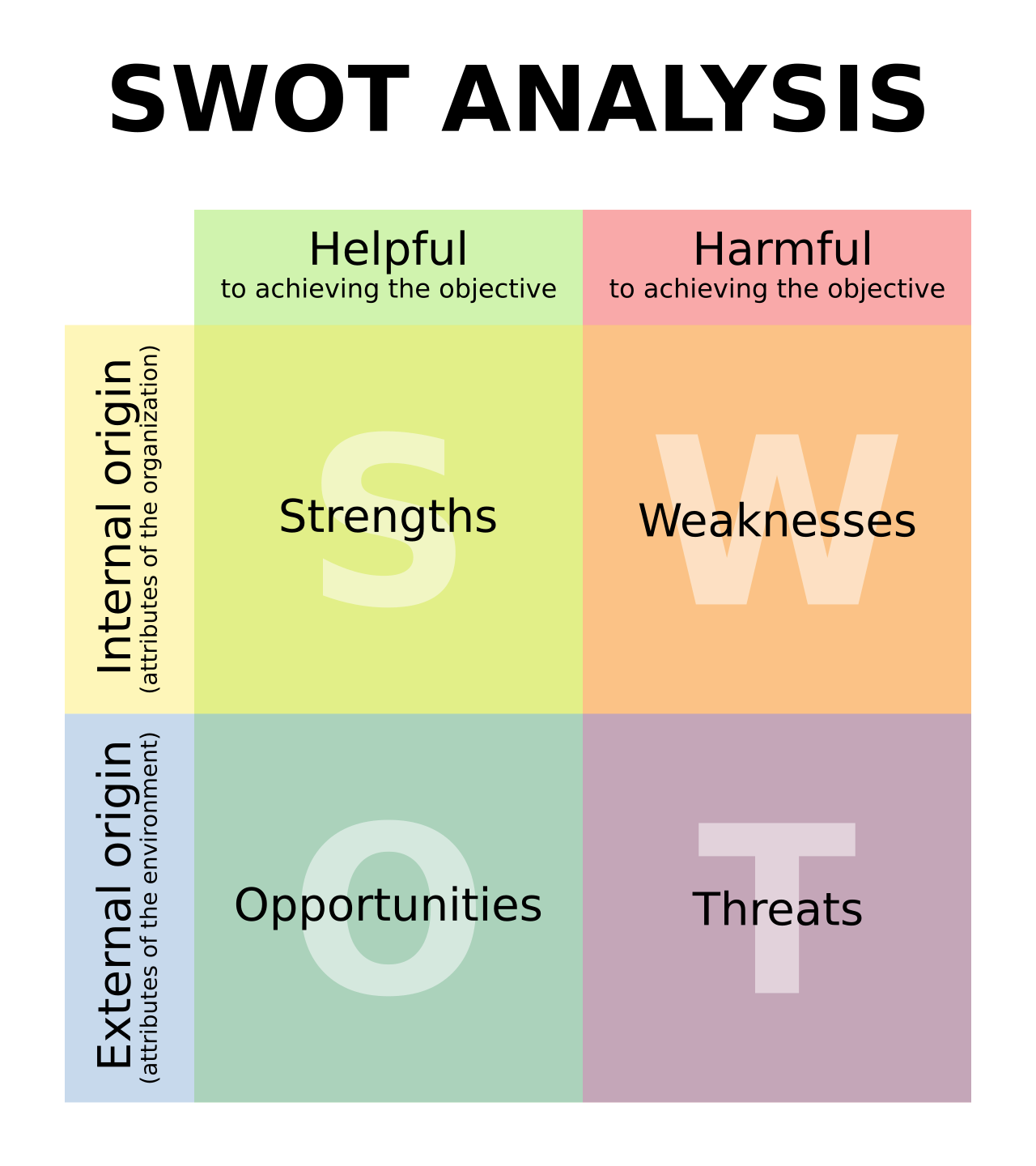
The SWOT framework consists of four components: strengths, weaknesses, opportunities, and threats. Strengths refer to the internal capabilities and resources that give an organization a competitive advantage. Weaknesses are the internal factors that hinder an organization's performance. Opportunities are external factors that an organization can leverage to its advantage, while threats are external factors that could harm the organization. A company like Amazon might identify its strengths in e-commerce and logistics, while also recognizing opportunities in emerging markets like India and China.
🔍 Identifying Strengths and Weaknesses
Identifying strengths and weaknesses is a critical step in the SWOT analysis process. This involves assessing an organization's internal capabilities, such as its financial resources, human capital, and operational efficiency. For example, a company like Google might identify its strengths in innovation and talent acquisition, while also recognizing its weaknesses in bureaucratic decision-making. This analysis can help organizations develop strategies to build on their strengths and address their weaknesses. Additionally, companies can use SWOT analysis to identify areas for improvement and optimize their supply chain management.
🌐 Analyzing Opportunities and Threats
Analyzing opportunities and threats requires an understanding of the external environment in which an organization operates. This includes factors such as market trends, customer needs, and competitor activity. A company like Microsoft might identify opportunities in the growing demand for cloud computing and artificial intelligence, while also recognizing threats from competitors like Amazon and Google. By understanding these external factors, organizations can develop strategies to capitalize on opportunities and mitigate threats. Furthermore, companies can use market research to stay informed about the latest trends and developments in their industry.
📊 Applying SWOT Analysis in Business
SWOT analysis has numerous applications in business, from strategic planning to marketing strategy development. By identifying an organization's strengths, weaknesses, opportunities, and threats, businesses can develop targeted strategies to achieve their goals. For instance, a company like Facebook might use SWOT analysis to inform its social media marketing strategy, while also recognizing opportunities in emerging markets like Africa and Latin America. Additionally, companies can use SWOT analysis to evaluate the potential risks and benefits of mergers and acquisitions.
📈 Case Studies and Real-World Examples
Numerous case studies demonstrate the effectiveness of SWOT analysis in real-world business scenarios. For example, a company like Coca-Cola might use SWOT analysis to identify its strengths in brand recognition and marketing, while also recognizing opportunities in the growing demand for sustainable products. By applying SWOT analysis, organizations can develop strategies to build on their strengths, address their weaknesses, and capitalize on opportunities. Furthermore, companies can use benchmarking to compare their performance with that of their competitors and identify areas for improvement.
🤝 Collaborative SWOT Analysis
Collaborative SWOT analysis involves engaging stakeholders from across an organization to contribute to the analysis process. This can help ensure that all relevant perspectives are considered and that the analysis is comprehensive and accurate. A company like IBM might use collaborative SWOT analysis to identify its strengths in innovation and research, while also recognizing opportunities in emerging technologies like blockchain and Internet of Things. By engaging stakeholders in the analysis process, organizations can build consensus and drive strategic decision-making. Additionally, companies can use design thinking to develop innovative solutions to complex business problems.
📊 Limitations and Criticisms of SWOT Analysis
Despite its widespread use, SWOT analysis has several limitations and criticisms. Some argue that the framework is too simplistic or that it fails to account for complex interrelationships between factors. A company like Tesla might recognize the limitations of SWOT analysis in its electric vehicle business, where the interplay between technological innovation, regulatory environments, and consumer demand is highly complex. To address these limitations, organizations can use more advanced analytical tools, such as scenario planning or system dynamics.
📈 Best Practices for Effective SWOT Analysis
To conduct effective SWOT analysis, organizations should follow best practices such as engaging stakeholders, using credible data sources, and regularly reviewing and updating the analysis. A company like Procter & Gamble might use SWOT analysis to inform its brand management strategy, while also recognizing the importance of continuous monitoring and adaptation. By following these best practices, businesses can ensure that their SWOT analysis is comprehensive, accurate, and actionable. Furthermore, companies can use balanced scorecard to measure their performance and track their progress towards their strategic objectives.
🔮 Future of SWOT Analysis in Strategic Planning
The future of SWOT analysis in strategic planning is likely to involve increased use of advanced analytical tools and techniques, such as artificial intelligence and machine learning. A company like Salesforce might use SWOT analysis to inform its customer relationship management strategy, while also recognizing the potential of emerging technologies to enhance the analysis process. By leveraging these technologies, organizations can develop more sophisticated and dynamic SWOT analyses that drive strategic decision-making. Additionally, companies can use predictive analytics to forecast future trends and developments in their industry.
📊 SWOT Analysis Tools and Software
Numerous tools and software are available to support SWOT analysis, from simple templates to complex data analytics platforms. A company like Oracle might use SWOT analysis to inform its enterprise resource planning strategy, while also recognizing the importance of selecting the right tools and software to support the analysis process. By choosing the right tools, organizations can streamline their SWOT analysis and develop more effective strategic plans. Furthermore, companies can use cloud-based software to collaborate with stakeholders and share their SWOT analysis with others.
📚 Conclusion and Recommendations
In conclusion, SWOT analysis is a powerful tool for strategic planning and decision-making. By understanding an organization's strengths, weaknesses, opportunities, and threats, businesses can develop targeted strategies to achieve their goals. While SWOT analysis has its limitations, it remains a widely used and effective framework for driving strategic success. As organizations continue to navigate complex and dynamic business environments, the importance of SWOT analysis will only continue to grow. Therefore, companies should prioritize SWOT analysis in their strategic planning and decision-making processes, and continuously monitor and adapt their strategies to stay ahead of the competition.
Key Facts
- Year
- 1960
- Origin
- Stanford Research Institute
- Category
- Business Strategy
- Type
- Concept
Frequently Asked Questions
What is SWOT analysis?
SWOT analysis is a decision-making technique that identifies the strengths, weaknesses, opportunities, and threats of an organization or project. It is widely used in strategic planning and strategic management to inform business decisions and drive strategic success.
What are the components of SWOT analysis?
The SWOT framework consists of four components: strengths, weaknesses, opportunities, and threats. Strengths refer to the internal capabilities and resources that give an organization a competitive advantage, while weaknesses are the internal factors that hinder an organization's performance. Opportunities are external factors that an organization can leverage to its advantage, while threats are external factors that could harm the organization.
How is SWOT analysis used in business?
SWOT analysis has numerous applications in business, from strategic planning to marketing strategy development. By identifying an organization's strengths, weaknesses, opportunities, and threats, businesses can develop targeted strategies to achieve their goals and drive strategic success.
What are the limitations of SWOT analysis?
Despite its widespread use, SWOT analysis has several limitations and criticisms. Some argue that the framework is too simplistic or that it fails to account for complex interrelationships between factors. To address these limitations, organizations can use more advanced analytical tools, such as scenario planning or system dynamics.
How can organizations conduct effective SWOT analysis?
To conduct effective SWOT analysis, organizations should follow best practices such as engaging stakeholders, using credible data sources, and regularly reviewing and updating the analysis. By following these best practices, businesses can ensure that their SWOT analysis is comprehensive, accurate, and actionable.
What is the future of SWOT analysis in strategic planning?
The future of SWOT analysis in strategic planning is likely to involve increased use of advanced analytical tools and techniques, such as artificial intelligence and machine learning. By leveraging these technologies, organizations can develop more sophisticated and dynamic SWOT analyses that drive strategic decision-making.
What tools and software are available to support SWOT analysis?
Numerous tools and software are available to support SWOT analysis, from simple templates to complex data analytics platforms. By choosing the right tools, organizations can streamline their SWOT analysis and develop more effective strategic plans.