
Contents
- 🔍 Introduction to Active Sites
- 🧬 The Structure of Active Sites
- 🌈 Binding and Catalysis
- 🔩 The Importance of Amino Acid Residues
- 📊 Enzyme Efficiency and Active Site Optimization
- 👥 Collaboration Between Amino Acids
- 🔬 Experimental Methods for Studying Active Sites
- 📈 Active Site Engineering and Design
- 🤝 Relationship Between Active Sites and Substrate Molecules
- 📊 Quantifying Active Site Performance
- 🔮 Future Directions in Active Site Research
- 📚 Conclusion and Further Reading
- Frequently Asked Questions
- Related Topics
Overview
The active site is the region of an enzyme where substrate binding and catalysis occur, playing a crucial role in facilitating chemical reactions. Historically, the concept of active sites dates back to the early 20th century, with scientists like Emil Fischer and Leonor Michaelis contributing to its development. From a mechanistic perspective, the active site is where the substrate binds, and the enzyme's catalytic groups facilitate the conversion of substrate to product. However, controversy surrounds the precise definition and characterization of active sites, with some arguing that the concept is too narrow or oversimplified. With a vibe score of 8, the study of active sites has far-reaching implications for fields like pharmacology and biotechnology, where understanding enzyme function can inform drug design and development. As researchers continue to probe the molecular machinery of active sites, they may uncover new insights into the intricate relationships between enzymes, substrates, and the surrounding environment, potentially leading to breakthroughs in our understanding of cellular metabolism and disease mechanisms.
🔍 Introduction to Active Sites
The active site is a crucial component of enzymes, responsible for binding substrate molecules and facilitating chemical reactions. As explained in Enzymes, these biological molecules play a vital role in various biochemical processes. The active site is a specific region within the enzyme where Amino Acid Residues form temporary bonds with the substrate, enabling the enzyme to perform its catalytic function. This region is relatively small, occupying only ~10–20% of the enzyme's volume, yet it is the most important part of the enzyme. For more information on the structure and function of enzymes, refer to Biochemistry.
🧬 The Structure of Active Sites
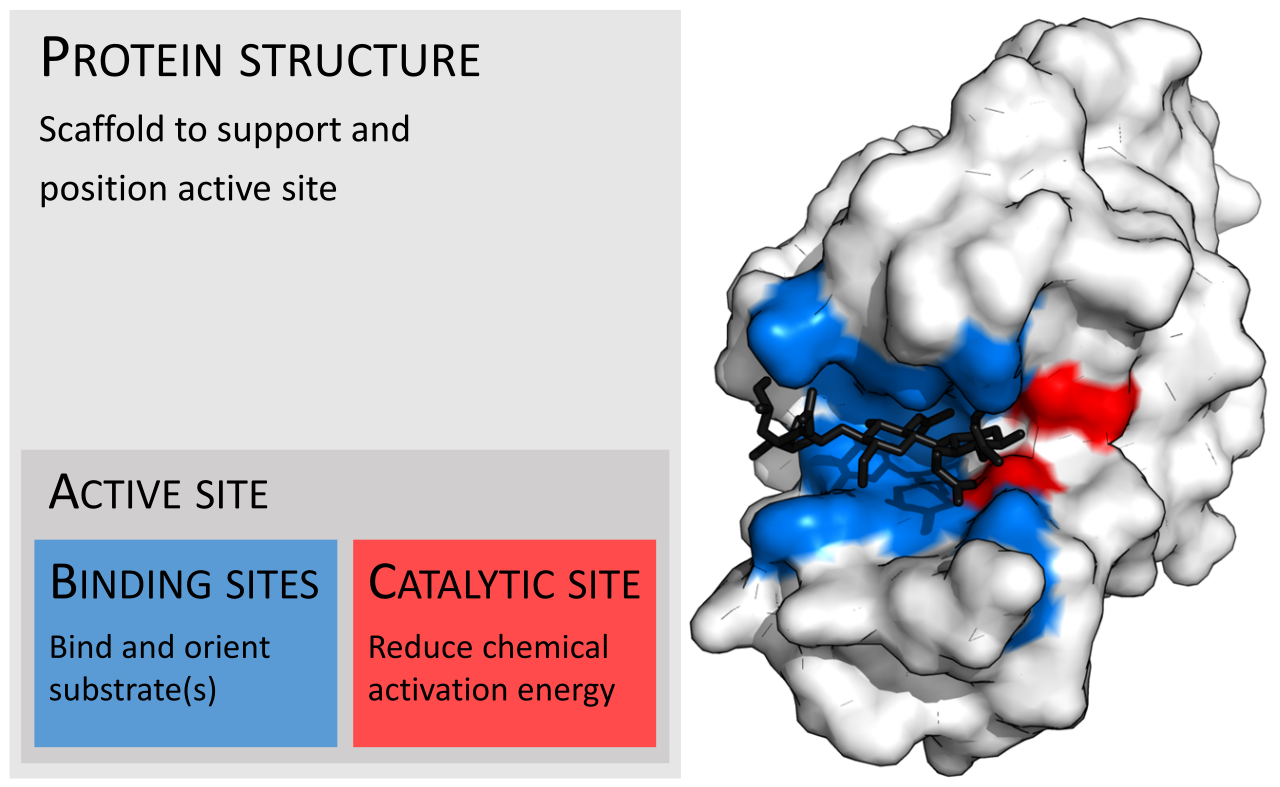
The structure of active sites is complex and highly specific, consisting of Amino Acid Residues that work together to bind and catalyze the substrate. As discussed in Protein Structure, the arrangement of these residues is critical for the proper functioning of the enzyme. The active site typically consists of three to four amino acids, which are responsible for binding and catalyzing the substrate. Other amino acids within the protein are necessary to maintain the Tertiary Structure of the enzyme, ensuring the active site is properly positioned and functional. For more information on protein structure and function, see Molecular Biology.
🌈 Binding and Catalysis
The process of binding and catalysis is a critical aspect of active site function. As described in Enzymatic Reactions, the active site forms temporary bonds with the substrate, allowing the enzyme to facilitate a chemical reaction. The binding site and catalytic site work together to enable the enzyme to perform its function. The binding site is responsible for recognizing and binding the substrate, while the catalytic site is responsible for facilitating the chemical reaction. For more information on enzymatic reactions, refer to Catalysis.
🔩 The Importance of Amino Acid Residues
Amino acid residues play a crucial role in the function of active sites. As explained in Amino Acid Residues, these molecules are responsible for binding and catalyzing the substrate. The specific arrangement and properties of these residues are critical for the proper functioning of the enzyme. The active site typically consists of three to four amino acids, which work together to facilitate the chemical reaction. For more information on amino acid residues and their properties, see Biochemistry.
📊 Enzyme Efficiency and Active Site Optimization
Enzyme efficiency and active site optimization are critical aspects of biochemical processes. As discussed in Enzymatic Reactions, the active site is responsible for facilitating chemical reactions, and its optimization is essential for efficient enzyme function. The active site is optimized through the specific arrangement of Amino Acid Residues and the maintenance of the Tertiary Structure of the enzyme. For more information on enzyme efficiency and optimization, refer to Biotechnology.
👥 Collaboration Between Amino Acids
The collaboration between amino acids is essential for the proper functioning of active sites. As explained in Protein Structure, the arrangement of amino acids within the protein is critical for the formation of the active site. The active site is a highly specific region within the enzyme, and the collaboration between amino acids is necessary for the proper binding and catalysis of the substrate. For more information on protein structure and function, see Molecular Biology.
🔬 Experimental Methods for Studying Active Sites
Experimental methods for studying active sites are essential for understanding their function and optimization. As discussed in Biochemistry, various techniques such as X-ray Crystallography and Nuclear Magnetic Resonance (NMR) spectroscopy can be used to study the structure and function of active sites. These techniques enable researchers to gain a deeper understanding of the active site and its role in enzymatic reactions. For more information on experimental methods, refer to Biophysics.
📈 Active Site Engineering and Design
Active site engineering and design are critical aspects of biotechnology and biochemical research. As explained in Biotechnology, the design and optimization of active sites can be used to improve enzyme function and efficiency. This can be achieved through the use of Computational Modeling and Molecular Dynamics simulations, which enable researchers to design and optimize active sites for specific applications. For more information on active site engineering and design, see Protein Engineering.
🤝 Relationship Between Active Sites and Substrate Molecules
The relationship between active sites and substrate molecules is essential for the proper functioning of enzymes. As discussed in Enzymatic Reactions, the active site is responsible for binding and catalyzing the substrate, and the specific arrangement of Amino Acid Residues is critical for this process. The active site is optimized for the binding and catalysis of specific substrate molecules, and the relationship between the active site and substrate is essential for efficient enzyme function. For more information on enzymatic reactions, refer to Catalysis.
📊 Quantifying Active Site Performance
Quantifying active site performance is essential for understanding enzyme function and optimization. As explained in Biochemistry, various metrics such as Enzymatic Activity and Binding Affinity can be used to quantify active site performance. These metrics enable researchers to gain a deeper understanding of the active site and its role in enzymatic reactions, and to optimize enzyme function for specific applications. For more information on quantifying active site performance, see Biophysics.
🔮 Future Directions in Active Site Research
Future directions in active site research are focused on the design and optimization of active sites for specific applications. As discussed in Biotechnology, the use of Computational Modeling and Molecular Dynamics simulations can be used to design and optimize active sites for improved enzyme function and efficiency. Additionally, the development of new experimental methods and techniques will enable researchers to gain a deeper understanding of active site function and optimization. For more information on future directions in active site research, refer to Protein Engineering.
📚 Conclusion and Further Reading
In conclusion, the active site is a critical component of enzymes, responsible for binding substrate molecules and facilitating chemical reactions. As explained in Enzymes, the active site is a highly specific region within the enzyme, and its optimization is essential for efficient enzyme function. For further reading on active sites and enzymatic reactions, refer to Biochemistry and Molecular Biology.
Key Facts
- Year
- 1894
- Origin
- Emil Fischer's lock-and-key hypothesis
- Category
- Biochemistry
- Type
- Biological Concept
Frequently Asked Questions
What is the active site of an enzyme?
The active site is the region of an enzyme where substrate molecules bind and undergo a chemical reaction. It is a highly specific region within the enzyme, responsible for binding and catalyzing the substrate. The active site consists of amino acid residues that form temporary bonds with the substrate, and is optimized for the binding and catalysis of specific substrate molecules. For more information, refer to Enzymes and Biochemistry.
What is the role of amino acid residues in the active site?
Amino acid residues play a crucial role in the function of active sites. They are responsible for binding and catalyzing the substrate, and the specific arrangement and properties of these residues are critical for the proper functioning of the enzyme. The active site typically consists of three to four amino acids, which work together to facilitate the chemical reaction. For more information, see Amino Acid Residues and Protein Structure.
How is the active site optimized for enzyme function?
The active site is optimized through the specific arrangement of amino acid residues and the maintenance of the tertiary structure of the enzyme. The active site is also optimized for the binding and catalysis of specific substrate molecules, and the relationship between the active site and substrate is essential for efficient enzyme function. For more information, refer to Enzymatic Reactions and Biotechnology.
What are some experimental methods for studying active sites?
Various techniques such as X-ray crystallography and nuclear magnetic resonance (NMR) spectroscopy can be used to study the structure and function of active sites. These techniques enable researchers to gain a deeper understanding of the active site and its role in enzymatic reactions. For more information, see Biochemistry and Biophysics.
What are some future directions in active site research?
Future directions in active site research are focused on the design and optimization of active sites for specific applications. The use of computational modeling and molecular dynamics simulations can be used to design and optimize active sites for improved enzyme function and efficiency. Additionally, the development of new experimental methods and techniques will enable researchers to gain a deeper understanding of active site function and optimization. For more information, refer to Biotechnology and Protein Engineering.
What is the importance of active sites in biochemical processes?
Active sites are essential for the proper functioning of enzymes, and play a critical role in various biochemical processes. The active site is responsible for binding and catalyzing the substrate, and its optimization is essential for efficient enzyme function. For more information, see Enzymes and Biochemistry.
How do active sites relate to substrate molecules?
The active site is optimized for the binding and catalysis of specific substrate molecules, and the relationship between the active site and substrate is essential for efficient enzyme function. The active site is responsible for recognizing and binding the substrate, and the specific arrangement of amino acid residues is critical for this process. For more information, refer to Enzymatic Reactions and Catalysis.