
Contents
Overview
Web 2.0, which emerged in the early 2000s, refers to the second generation of the World Wide Web, characterized by increased interactivity, user-generated content, and social networking. This shift was driven by the widespread adoption of broadband internet, the development of new technologies such as Ajax and JavaScript, and the rise of social media platforms like Facebook, Twitter, and YouTube. The Web 2.0 era saw the emergence of new business models, such as freemium and advertising-based revenue streams, and the growth of online communities centered around shared interests. However, it also raised concerns about data privacy, online harassment, and the spread of misinformation. As of 2023, the Web 2.0 ecosystem continues to evolve, with the integration of artificial intelligence, blockchain, and the Internet of Things (IoT). The future of the web is likely to be shaped by the ongoing tensions between openness and control, decentralization and centralization, and the need for greater accountability and transparency in online interactions.
🌐 Introduction to Web 2.0
The term Web 2.0 was first coined in 2004 by Dale Dougherty, a vice president at O'Reilly Media. It refers to websites that emphasize user-generated content, ease of use, participatory culture, and interoperability for end users. This evolution of the internet has transformed the way people interact, share information, and conduct business online. With the rise of social media platforms like Facebook and Twitter, Web 2.0 has become an integral part of modern life. As Tim Berners-Lee, the inventor of the World Wide Web, once said, 'The Web is a tool for people to communicate with each other.'
💻 Evolution of the Internet
The Internet has undergone significant changes since its inception in the 1960s. The early days of the internet were marked by a lack of user-friendly interfaces and limited access to information. However, with the advent of Web 1.0, the internet became more accessible to the general public. Web 1.0 was characterized by static websites, limited user interaction, and a focus on providing information. The transition to Web 2.0 marked a significant shift towards a more interactive and participatory internet. This evolution has been driven by advances in technology, changes in user behavior, and the rise of new business models. As Clay Shirky notes, 'The internet is the first medium that allows for many-to-many communication.'
📈 Key Features of Web 2.0
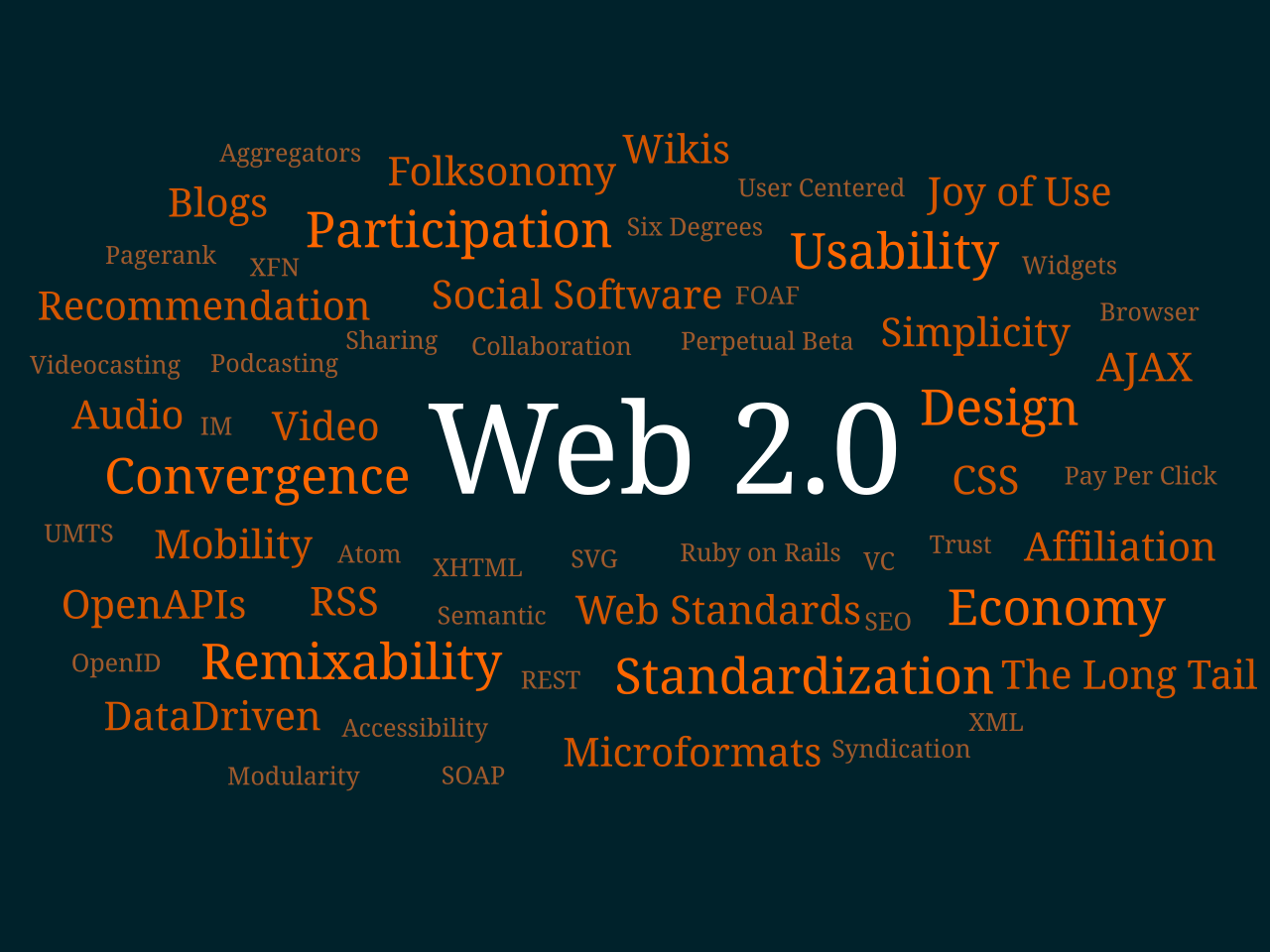
So, what are the key features of Web 2.0? Some of the most notable characteristics include AJAX, RSS feeds, and APIs. These technologies enable websites to provide a more dynamic and interactive user experience. Additionally, Web 2.0 websites often incorporate social media features, such as commenting, sharing, and rating. This has led to the creation of online communities and social networks, where users can connect with each other and share content. As Chris Anderson notes, 'The Long Tail of the internet is where the real action is.'
👥 User-Generated Content
One of the defining characteristics of Web 2.0 is the emphasis on user-generated content. This refers to content created by users, such as blog posts, videos, and comments. YouTube, Flickr, and WordPress are all examples of platforms that rely heavily on user-generated content. This shift towards user-generated content has democratized the internet, allowing anyone to become a publisher or creator. As Dan Gillmor notes, 'The former audience is now a participant.'
📊 Participatory Culture
The rise of Web 2.0 has also led to the growth of participatory culture. This refers to the idea that users are no longer just passive consumers of information, but are instead active participants in the creation and sharing of content. Wikipedia is a prime example of participatory culture, where users can contribute to and edit articles. This has led to the creation of a vast, user-generated encyclopedia that is widely used and respected. As Lawrence Lessig notes, 'The internet is a platform for participation, not just consumption.'
🔗 Interoperability
Another key feature of Web 2.0 is interoperability. This refers to the ability of different systems and platforms to communicate with each other seamlessly. APIs and microformats are examples of technologies that enable interoperability. This has led to the creation of mashups, where data from multiple sources is combined to create new and innovative applications. As David Weinberger notes, 'The internet is a network of networks, and it's the connections between them that matter.'
🚀 Impact of Web 2.0
The impact of Web 2.0 has been significant, with far-reaching consequences for business, society, and culture. The rise of social media has transformed the way companies interact with their customers, while the growth of user-generated content has democratized the media landscape. However, the impact of Web 2.0 has not been without its challenges. Issues such as online privacy, cyberbullying, and information overload have become increasingly prominent. As Evgeny Morozov notes, 'The internet is a reflection of our society, with all its flaws and contradictions.'
🤔 Challenges and Criticisms
Despite the many benefits of Web 2.0, there are also several challenges and criticisms. One of the main concerns is the issue of online privacy, as users are often required to share personal data in order to use online services. Additionally, the rise of user-generated content has led to concerns about the accuracy and reliability of information. As Nick Carr notes, 'The internet is a medium that is both powerful and flawed.'
📊 Future of Web 2.0
So, what does the future of Web 2.0 hold? As technology continues to evolve, we can expect to see even more innovative applications and services emerge. The growth of artificial intelligence, Internet of Things, and blockchain technologies will likely have a significant impact on the development of Web 2.0. As Jaron Lanier notes, 'The most important thing about a technology is how it changes people.'
📈 Conclusion
In conclusion, Web 2.0 has revolutionized the way we interact with the internet and with each other. The emphasis on user-generated content, participatory culture, and interoperability has created a more dynamic and interactive online environment. As we look to the future, it will be exciting to see how Web 2.0 continues to evolve and shape our online experiences. As Tim Berners-Lee notes, 'The Web is a tool for people to communicate with each other, and it's up to us to make it work.'
Key Facts
- Year
- 2004
- Origin
- Dale Dougherty, O'Reilly Media
- Category
- Technology
- Type
- Concept
Frequently Asked Questions
What is Web 2.0?
Web 2.0 refers to websites that emphasize user-generated content, ease of use, participatory culture, and interoperability for end users. It is a term that was first coined in 2004 by Dale Dougherty, a vice president at O'Reilly Media. Web 2.0 has transformed the way people interact, share information, and conduct business online. With the rise of social media platforms like Facebook and Twitter, Web 2.0 has become an integral part of modern life.
What are the key features of Web 2.0?
The key features of Web 2.0 include AJAX, RSS feeds, and APIs. These technologies enable websites to provide a more dynamic and interactive user experience. Additionally, Web 2.0 websites often incorporate social media features, such as commenting, sharing, and rating. This has led to the creation of online communities and social networks, where users can connect with each other and share content.
What is user-generated content?
User-generated content refers to content created by users, such as blog posts, videos, and comments. YouTube, Flickr, and WordPress are all examples of platforms that rely heavily on user-generated content. This shift towards user-generated content has democratized the internet, allowing anyone to become a publisher or creator.
What is participatory culture?
Participatory culture refers to the idea that users are no longer just passive consumers of information, but are instead active participants in the creation and sharing of content. Wikipedia is a prime example of participatory culture, where users can contribute to and edit articles. This has led to the creation of a vast, user-generated encyclopedia that is widely used and respected.
What is interoperability?
Interoperability refers to the ability of different systems and platforms to communicate with each other seamlessly. APIs and microformats are examples of technologies that enable interoperability. This has led to the creation of mashups, where data from multiple sources is combined to create new and innovative applications.
What are the challenges and criticisms of Web 2.0?
Despite the many benefits of Web 2.0, there are also several challenges and criticisms. One of the main concerns is the issue of online privacy, as users are often required to share personal data in order to use online services. Additionally, the rise of user-generated content has led to concerns about the accuracy and reliability of information.
What does the future of Web 2.0 hold?
As technology continues to evolve, we can expect to see even more innovative applications and services emerge. The growth of artificial intelligence, Internet of Things, and blockchain technologies will likely have a significant impact on the development of Web 2.0. As Jaron Lanier notes, 'The most important thing about a technology is how it changes people.'